
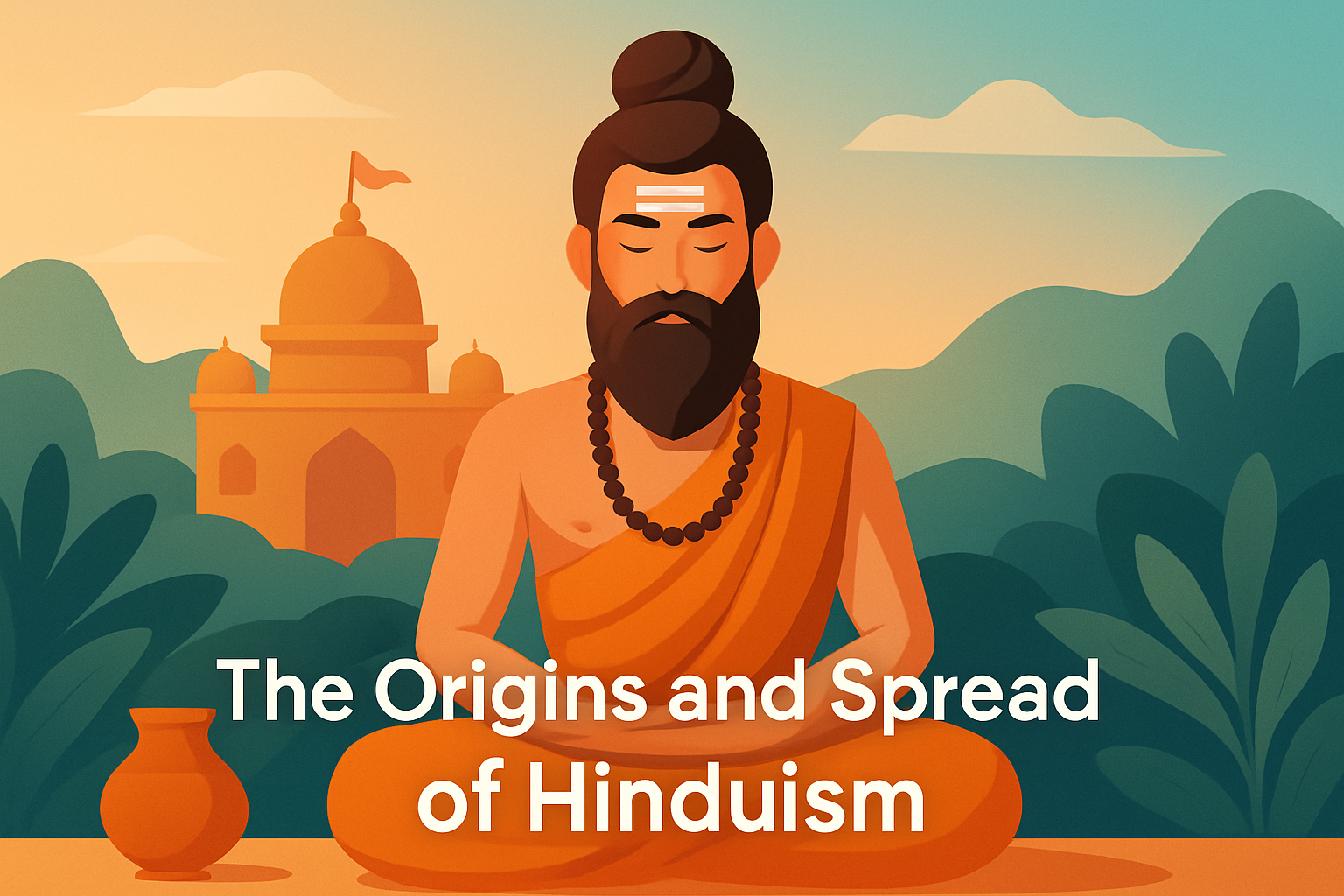
Introduction: Understanding the Significance of Hinduism’s Origins
Hinduism is one of the world’s oldest religions, with a history that stretches back over 4,000 years. It is not only the dominant religion in India but also influences many cultures and societies worldwide. Understanding the origins and spread of Hinduism provides critical insights into the development of human civilization, religious practices, and cultural diversity. Hinduism is not a monolithic faith but an umbrella term that encompasses a wide variety of beliefs and practices. This diversity makes it both a fascinating and complex subject of study, especially for those interested in the development of human spirituality and cultural exchanges.
The term “Hinduism” itself is relatively modern, coined during the British colonial era to summarize a vast range of indigenous Indian spiritual practices. These practices are rooted in sacred texts like the Vedas, which form the core of Hindu philosophy and theology. Despite its ancient origins, Hinduism remains highly relevant today, continuing to offer profound insights into the nature of existence and the human spirit. The rich tapestry of Hindu mythology, ethics, and rituals has influenced not just religious practices but also art, architecture, and philosophy around the globe. Understanding Hinduism’s beginnings and its spread enriches our perspective on cultural diffusion and religious evolution throughout history.
The Vedic Period: Genesis of Hindu Thought
The Vedic period, around 1500 to 500 BCE, marked the genesis of Hindu thought. During this era, the sacred texts known as the Vedas were composed. These texts are considered the world’s oldest religious writings and form the foundation of Hindu philosophy. The Vedas consist of four main collections: Rigveda, Samaveda, Yajurveda, and Atharvaveda. Each serves a unique purpose, ranging from hymns and rituals to philosophical discussions and practical guidelines for life.
The development of these texts is attributed to ancient Indo-Aryans who migrated into the Indian subcontinent and established their culture and beliefs there. This influx played a pivotal role in forming the basis of what we call Hinduism today. The Vedic period was marked by the worship of numerous deities representing natural forces such as Indra, the god of thunder, and Agni, the god of fire. This polytheistic system laid the groundwork for Hinduism’s rich pantheon and the diverse ways of worship that would later evolve.
A real-world example of the Vedic influence can be seen in modern Hindu rituals like the ‘Homa’ or fire ritual, which is directly descended from Vedic traditions. This ritual involves the offering of ghee (clarified butter) and other sacred materials into a consecrated fire, symbolizing the conveyance of offerings to the gods.
Development of Hindu Philosophy: The Upanishadic Era
Following the Vedic period was the Upanishadic era, around 800 to 400 BCE. During this time, the focus of Hindu thought shifted from ritualistic practices to philosophical inquiries about the nature of the self and the universe. The Upanishads are a collection of texts that explore these deep metaphysical questions. They introduce key concepts that are central to Hindu philosophy, such as ‘Brahman’ (the ultimate reality) and ‘Atman’ (the soul or self).
One of the most profound ideas from this period is the concept of ‘moksha’, or liberation from the cycle of birth and rebirth (‘samsara’). The Upanishads emphasize meditation and self-inquiry as pathways to achieving spiritual enlightenment. This philosophical shift shows Hinduism’s adaptability and capacity to encompass diverse beliefs and practices, ranging from rituals to deep metaphysical speculation.
An example of Upanishadic influence is observed in the widespread acceptance of meditation as a tool for self-discovery, not only among Hindus but also in other spiritual practices worldwide, such as Buddhism and Jainism. The dialogue-driven approach of the Upanishads also influenced later philosophical traditions, providing a framework for exploring profound questions about life and consciousness.
The Epic Age: Cultural Integration and Moral Narratives
The Epic Age, around 400 BCE to 200 CE, witnessed the composition of significant Hindu texts like the Mahabharata and the Ramayana. These epics are integral to Hindu culture, offering more than just religious teachings—they encapsulate social, moral, and ethical lessons that are still relevant today. The Mahabharata, for instance, includes the Bhagavad Gita, a philosophical dialogue between Prince Arjuna and the god Krishna, addressing complex issues of duty, righteousness, and spirituality.
These epics served to unify diverse and disparate groups within the subcontinent by providing common narratives and moral frameworks. The stories, characters, and moral dilemmas presented in these texts have deeply influenced Indian art, theatre, and dance. The epic narratives have also been adapted into countless regional languages and cultures, demonstrating their universal appeal and timeless wisdom.
A real-world example is the annual celebration of Ramayana-themed festivals in countries like Indonesia and Thailand, which illustrates the spread of Hindu culture beyond India, carried by traders and seafarers. The Ramayana’s depiction in dance dramas and shadow puppetry highlights the integration of Hindu narratives into local art forms, showcasing its cultural and religious impact.
Spread of Hinduism: From the Indian Subcontinent to the World
Hinduism’s spread beyond the Indian subcontinent can largely be attributed to trade, travel, and cultural exchanges. During the classical period, Hindu traders and scholars traveled to Southeast Asia, carrying with them religious texts and artifacts. As a result, Hinduism was introduced to countries like Indonesia, Cambodia, and Thailand, where it intermingled with local traditions and evolved into new forms.
Temples such as Angkor Wat in Cambodia stand as testament to Hinduism’s influence in the region, originally constructed as a Hindu shrine before becoming a Buddhist temple. The architectural style, iconography, and temple rituals reflect a deep blend of Hindu and local cultural elements.
The spread of Hinduism was not limited to ancient times. Today, Hindu communities thrive around the world due to migration, diaspora communities, and the global popularity of yoga and meditation. These practices, rooted in Hindu philosophy, have become mainstream in many parts of the world, often embraced for their physical and mental health benefits.
To illustrate, here’s an outline of the modern global Hindu diaspora:
- United States: Home to vibrant Hindu communities, with prominent temples and cultural centers in states like California and New Jersey.
- United Kingdom: Celebrates festivals like Diwali with community events and public recognition, reflecting Hinduism’s integration into British society.
- Fiji: Possesses a significant Hindu population with deep-rooted traditions.
- Mauritius: A majority-Hindu nation showcasing the fusion of Indian and African cultures.
Hinduism and the Modern World: Challenges and Contributions
In the modern context, Hinduism faces both challenges and opportunities. On one hand, global migration and technological advancements allow the vibrant exchange of ideas and cultural practices, helping preserve and revitalize Hindu traditions worldwide. On the other hand, issues such as cultural appropriation, identity politics, and inter-religious tensions pose challenges that require careful navigation.
Hinduism’s contributions to modern society are numerous. Concepts such as Dharma (duty/ethics), Karma (action and consequence), and Ahimsa (non-violence) resonate with contemporary ethical and philosophical discussions. Furthermore, practices like yoga and Ayurveda have gained international acclaim for their holistic approach to health and well-being.
A real-world example of Hinduism’s modern impact is International Yoga Day, celebrated annually on June 21st. Proposed by India and endorsed by the United Nations, it underscores yoga’s global appeal and symbolizes the profound influence of Hindu spiritual practices on worldwide wellness trends. The event encourages people to embrace mindfulness, peace, and harmony, aligning with the core principles of Hindu philosophy.
Conclusion: Embracing the Rich Legacy of Hinduism
The exploration of Hinduism’s origins and spread illuminates its profound influence on global culture and religious thought. From the ancient Vedic hymns to the modern embrace of yoga, Hinduism remains a vital and dynamic spiritual tradition. Its adaptability, diversity, and emphasis on personal enlightenment offer timeless wisdom for individuals seeking a deeper understanding of themselves and the universe.
By acknowledging and appreciating Hinduism’s rich legacy, we can foster greater intercultural understanding and respect for spiritual diversity. For readers intrigued by the depth and complexity of Hindu philosophy and culture, diving into Hindu texts and practices like the Vedas, Upanishads, or yoga can be a transformative experience. Such exploration not only honors Hinduism’s historical impact but also invites a meaningful engagement with its enduring lessons for personal and communal well-being.
As a call-to-action, consider exploring Hindu literature or participating in local cultural events related to Hindu practices. These opportunities provide a meaningful way to connect with the traditions and ideas that have shaped millions of lives across centuries.
Frequently Asked Questions
1. What are the origins of Hinduism?
The origins of Hinduism are deeply rooted in the history of the Indian subcontinent, dating back over 4,000 years. Its beginnings can be traced to the Indus Valley Civilization, which thrived around 2500 to 1500 BCE in what is now modern-day Pakistan and northwest India. Unlike many world religions, Hinduism does not have a single founder or a specific moment of origin. Instead, it evolved gradually through the synthesis of various cultural and spiritual traditions over centuries.
As the Indus Valley Civilization declined, the Indo-Aryan people migrated into the region and brought with them the early texts of the Vedic religion, which laid the foundation for Hinduism. The Vedas, composed in Sanskrit, are some of the oldest religious texts in the world and form a critical component of Hindu philosophy and practice. This blend of indigenous beliefs and Aryan traditions over time formed a complex and diverse religious framework that eventually became known as Hinduism.
2. How did Hinduism spread across India and beyond?
The spread of Hinduism across India was greatly facilitated by a combination of migration, trade, conquest, and cultural assimilation. As various kingdoms and empires rose and fell throughout Indian history, Hindu beliefs and practices were shared and adapted by different cultures and peoples, creating a rich tapestry of regional traditions and sects.
One major vehicle for the spread of Hinduism was the Mauryan and Gupta empires, which promoted Hindu values and traditions as part of their governance and administration, helping to unify the Indian subcontinent under a shared set of cultural norms. Additionally, the influence of Hindu epics like the Ramayana and the Mahabharata played a critical role in disseminating religious and ethical ideals across different regions.
Beyond India, Hinduism spread to other parts of Asia through trade and the movement of people. Ancient trade routes connected India with Southeast Asia, where Hinduism was adopted and integrated into local cultures, giving rise to new expressions of the religion. Countries such as Indonesia, Cambodia, Thailand, and Vietnam still bear cultural and historical traces of Hindu influence today.
3. What are the key characteristics that define Hinduism?
Hinduism is characterized by its diversity and adaptability, which is evident in its wide array of beliefs, practices, and sects. Several key characteristics define Hinduism:
- Belief in a Supreme Being: Hindus believe in a supreme, all-encompassing reality known as Brahman. Different deities such as Vishnu, Shiva, and Devi are considered manifestations or aspects of Brahman, reflecting the religion’s polytheistic nature.
- Reincarnation and Karma: The concepts of samsara (the cycle of rebirth) and karma (the law of cause and effect) are central to Hindu belief. The soul’s actions in this life influence its future incarnations, with the ultimate goal being moksha, or liberation from the cycle of rebirth.
- Scriptures and Philosophies: Hinduism encompasses a vast body of sacred texts, including the Vedas, Upanishads, Bhagavad Gita, and the epics Ramayana and Mahabharata. It also includes various philosophical schools, such as Vedanta, Yoga, and Samkhya, which offer different paths to understanding and enlightenment.
- Rituals and Practices: Hinduism is rich in rituals, practices, and festivals. Daily worship (puja), meditation, yoga, and pilgrimage to sacred sites are common practices that vary across regions and communities.
- Inclusivity and Pluralism: Hinduism’s lack of a central religious authority allows for a wide range of beliefs and practices, making it an inclusive and pluralistic faith.
4. How has Hinduism influenced other cultures and religions?
Hinduism has had a profound impact on the cultural, spiritual, and social landscapes of many regions, shaping other religious traditions and societies in various ways. Its most direct influence can be seen in the religions of Buddhism, Jainism, and Sikhism, which originated in the Indian subcontinent and share several philosophical concepts with Hinduism, such as karma, dharma, and the cycle of rebirth.
The influence of Hindu philosophy and spirituality is also evident in the development of yoga and meditation practices, which have become integral to spiritual and health practices worldwide. Moreover, the concept of non-duality (Advaita) from Hindu Vedanta philosophy has influenced modern spiritual movements and thinkers across the globe.
In cultural terms, Hindu epics, art, architecture, and literature have been instrumental in shaping the cultural identity of regions across Asia. For example, the classical dance forms of Southeast Asia, like the Balinese dances, are heavily influenced by Hindu mythology and storytelling traditions. Additionally, ancient Hindu temples across India and Southeast Asia showcase the architectural prowess and artistic dedication associated with Hinduism.
5. How does Hinduism address contemporary social and ethical issues?
Hinduism’s adaptability and diverse philosophical framework enable it to engage with contemporary social and ethical issues in various ways. One significant aspect of Hinduism that addresses modern issues is the emphasis on dharma, or duty, which encourages individuals to live ethically, responsibly, and in harmony with all beings.
Environmental conservation is an area where Hindu values are increasingly relevant. The respect for nature and the interconnectedness of all life, as taught in Hindu scriptures, provide a spiritual foundation for many Hindu-led environmental efforts and ecological movements.
Similarly, the principle of ahimsa (non-violence) is central to Hindu ethics, promoting peace, compassion, and non-violent resolutions to conflicts. This principle has influenced prominent leaders like Mahatma Gandhi, whose nonviolent resistance played a crucial role in India’s independence movement.
Moreover, Hinduism’s inclusivity allows for ongoing reinterpretation and engagement with issues such as gender equality, social justice, and secular governance, making it relevant in the discourse on contemporary challenges. As Hindu communities continue to evolve, they find ways to integrate traditional teachings with modern values and contexts, demonstrating the religion’s enduring dynamism and adaptability.