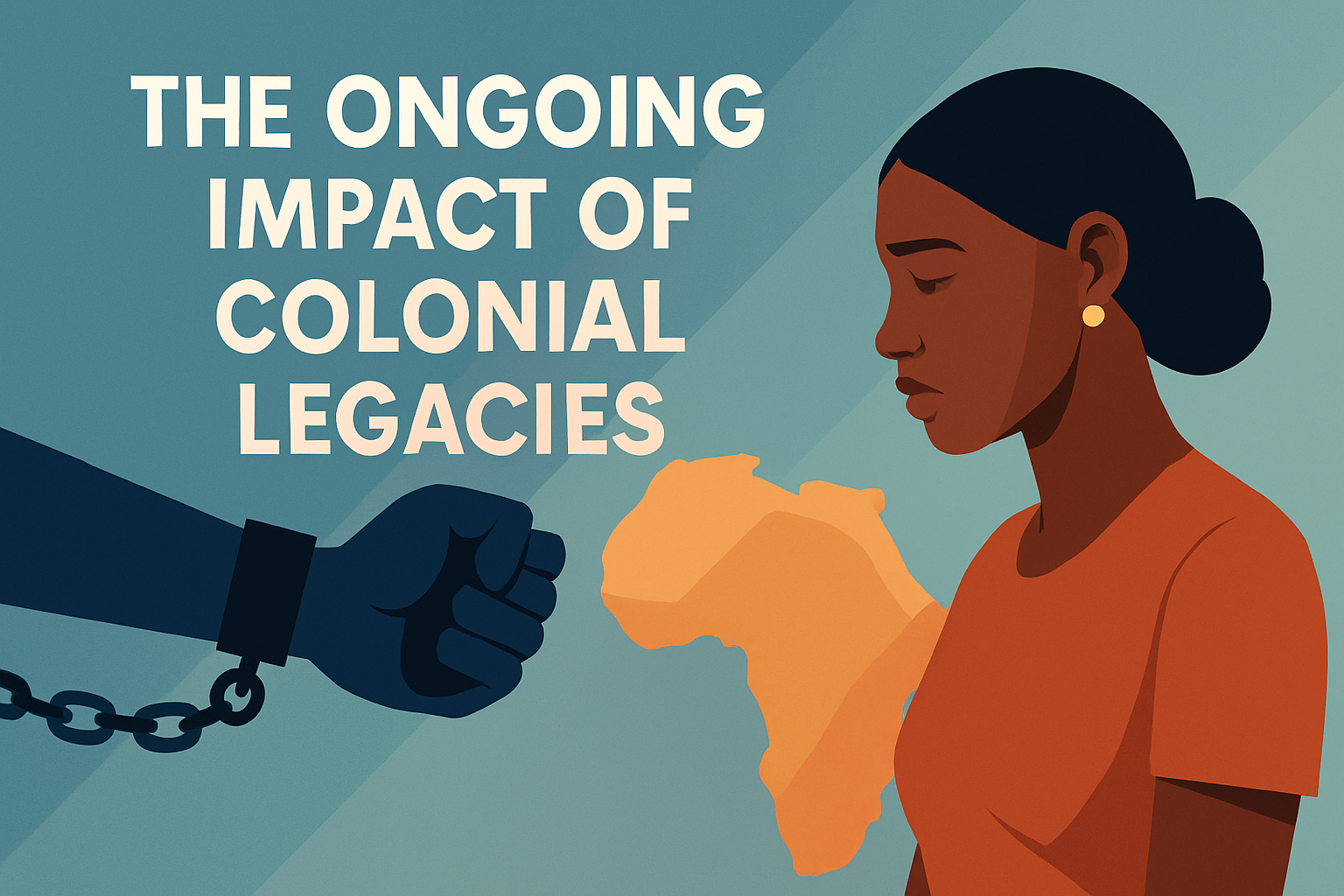
Colonialism refers to the domination and exploitation of foreign territories, which were often inhabited by indigenous populations, by a more powerful nation-state. This historical process involved the imposition of the colonizer’s economic, social, and political systems, profoundly disrupting native cultures and societies. Although many colonies gained independence throughout the 20th century, the consequences of colonialism continue to reverberate into the present day. Understanding the ongoing impact of colonial legacies is essential, as it affects global development, politics, economics, and social structures. By exploring how colonial legacies manifest in different contexts, we are better equipped to address contemporary challenges rooted in historical injustices.
Economic Inequality: A Legacy of Colonial Exploitation
One of the most significant impacts of colonialism is the economic disparity it created between nations. Colonizers extracted valuable resources, labor, and wealth from the territories they controlled, often leaving the colonized regions devoid of the means to build sustainable economies. This exploitation laid the foundation for the economic inequalities observed today. For example, Africa’s colonization led to systemic underdevelopment. Infrastructure catered primarily to extraction industries rather than local needs, and investments focused on maximizing profits for the colonizers rather than the well-being of the local population. These historical patterns have resulted in persistent economic challenges across many African nations.
In modern times, the effects of these disparities are observable in the pronounced divide between the rich and poor nations. The colonial era set up an economic dependency, where former colonies remained reliant on exports of raw materials while importing manufactured goods, perpetuating terms of trade unfavorable to them. As a result, many developing countries struggle to progress beyond primary-sector economies, hindering their economic development. Addressing these disparities requires acknowledging historical causes and promoting policies that encourage more equitable economic growth.
Political Instability: A Fragmented Legacy
Colonialism often imposed arbitrary borders that amalgamated distinct ethnic, cultural, and political entities into single colonies, which later became independent nations. This artificial creation of states without consideration for historical territorial boundaries or sociopolitical cohesiveness has led to intense internal conflicts and political instability. A prime example is Nigeria, where British colonial administration disregarded ethnic and regional differences, leading to a fraught post-independence era characterized by coups, ethnic tensions, and civil wars.
The legacy of political instability is also evident in ongoing disputes and power struggles in many former colonies. Political systems structured by colonists often lacked mechanisms for local governance, resulting in weak state institutions that struggled after independence. As we strive for a more peaceful global order, recognizing and addressing the colonial roots of political instability is crucial to fostering political cohesion and stability in former colonies.
Cultural Identity: Blending and Erasure
The colonial era was marked by a profound imposition of foreign cultural norms, languages, and religions onto colonized societies. This cultural imperialism aimed to suppress native traditions and practices, leading to a loss of cultural identity for many indigenous groups. While some blending of cultures occurred, creating syncretic practices and identities, much of this was accomplished through coercion and suppression.
India provides a pertinent example where British colonial rule promoted English language and Western education at the expense of indigenous languages and knowledge systems. While contemporary India is a vibrant mix of traditional and Western influences, it grapples with the ramifications of having its cultural identity shaped significantly by colonial powers. Nations are now engaging in a renaissance of cultural identity reclamation, emphasizing the importance of preserving indigenous languages, arts, and traditions that were at risk of being lost.
Social Strata: Reinforced Class and Racial Divisions
Colonial administrations often entrenched social strata by privileging certain groups over others based on race, ethnicity, or class. This stratification was a tool of control, ensuring the colonizers maintained power by dividing local populations. Apartheid in South Africa is an extreme example of a legalized racial hierarchy rooted in colonial rule. Although apartheid as a formal system has been dismantled, the social and economic inequalities created during that period linger on.
In many former colonies, post-colonial societies continue to face challenges stemming from deeply ingrained social divisions. Social mobility is hindered by inequalities perpetuated through education, employment, and access to resources. To address these legacy issues, we must foster policies aimed at greater inclusivity and equality across all sectors of society.
| Legacy Issue | Impact | Contemporary Action |
|---|---|---|
| Economic Inequality | Poverty and lack of infrastructure | Equitable economic policies and investment |
| Political Instability | Ethnic conflict and weak governance | Building cohesive political frameworks |
| Cultural Erosion | Loss of indigenous traditions | Cultural revival and preservation |
| Social Strata | Racial and class divisions | Inclusive social policies |
The Environment: Colonial Impact on Natural Resources
Colonizers exploited natural resources, often depleting them without concern for ecological sustainability. Extensive logging, mining, and agricultural practices disrupted ecosystems, leading to environmental degradation. Brazil, with its colonization by the Portuguese, saw massive deforestation to cultivate sugar plantations, an environmental legacy that continues through ongoing deforestation driven by global demand for commodities.
Addressing environmental degradation requires acknowledging these historical contexts and implementing sustainable practices. Former colonies are increasingly prioritizing environmental conservation, yet they require global support that accounts for the historical exploitation of their resources. Therefore, a collaborative international effort involving both reparative justice and sustainable development is essential for ecological restoration.
Global Relations: Shaping Post-Colonial Dynamics
Colonial legacies continue to influence global diplomatic and economic relations. Former colonizers often maintain a significant level of influence over their ex-colonies through economic aid, trade agreements, and cultural exchanges, cultivating neo-colonialist dynamics in which power imbalances persist. Françafrique describes the continued influence of France in African affairs, highlighting how colonial relationships transform rather than disappear.
To foster equitable global relations, these neo-colonial ties must be reassessed, ensuring that former colonies can engage internationally on equal terms. It involves empowering post-colonial nations to assert independence in their international relations and fostering partnerships based on mutual benefit rather than paternalistic dependency.
Summary and Call to Action
The enduring effects of colonial legacies are complex and multifaceted, impacting economies, politics, cultures, societal structures, the environment, and global relationships. These impacts demand not only historical understanding but also dynamic action to create equitable and sustainable futures. By recognizing the intricate web of historical influences, we can address today’s disparities and conflicts while promoting inclusive development.
For individuals and policymakers, acknowledging colonial legacies is an essential first step towards meaningful change. We must endorse and advocate for policies that dismantle entrenched inequalities and support initiatives focused on sustainable development and justice. It is crucial to collaborate on constructing systems that uplift formerly colonized societies, ensuring that all nations have the opportunity to thrive autonomously.
As we move forward, engage with historical literature, support reparative initiatives, and prioritize culturally sensitive developmental policies. Understanding the lasting impact of colonialism informs how we address present global challenges and fosters a world where historical wrongs are conscientiously acknowledged and actively remedied. Let us take these learnings to heart as together, we strive to make the world a more equitable and just place for all its inhabitants.
Frequently Asked Questions
1. What are colonial legacies and how do they affect modern societies?
Colonial legacies refer to the lasting impacts left by colonial rule that continue to shape the political, economic, and social realities of former colonies. These legacies can be observed in the form of skewed economic structures, social inequalities, and political instabilities, among other things. For instance, many countries continue to grapple with borders drawn arbitrarily by colonial powers that ignored ethnic, cultural, or geographical realities, often leading to conflicts. Additionally, the focus on resource extraction established during colonial times has left many post-colonies with economies primarily reliant on exporting raw materials, hindering diversified economic development. This dependency often perpetuates economic imbalances and underdevelopment. Furthermore, colonial rule frequently imposed foreign languages and educational systems, which can contribute to a sense of alienation and loss of indigenous culture and identity. All these factors combine to create challenging living conditions in many post-colonial societies, impacting governance, societal cohesion, and even international relations to this day.
2. How did colonialism impact indigenous cultures?
Colonialism profoundly disrupted indigenous cultures, often leading to their marginalization or near-eradication. Colonial powers imposed their own cultural norms, languages, and religions, frequently portraying indigenous ways of life as inferior. This imposition resulted in the suppression of local traditions, languages, and belief systems. In many regions, the colonial education systems undermined indigenous knowledge and practices while promoting Western ideologies. The forced conversion to Christianity replaced indigenous spiritual beliefs, often severing the cultural and spiritual ties that bound communities together. Traditional land use and social structures were overshadowed by the colonial emphasis on resource extraction and European socio-economic models. Additionally, indigenous art, music, and expressions were often dismissed or appropriated without recognition or compensation. These disruptions continue to impact indigenous communities, contributing to struggles to preserve cultural identity and navigate the contemporary socio-political landscape.
3. Why do colonial borders remain problematic today?
During the colonial era, borders were frequently drawn with little regard for the existing ethnic, cultural, or linguistic groups. Colonial powers often prioritized access to resources, trade routes, and strategic advantages over the socio-cultural coherence of the populations living there. This led to borders that split communities and lumped together disparate groups, generating tensions that affect national cohesion and identity. These arbitrarily imposed borders have sowed discord, inciting territorial disputes and fueling ongoing ethnic conflicts as newly independent states struggled to unify their diverse populations. The lack of attention to indigenous territorial organization has left a legacy of political instability and conflict in many regions. These issues persist as governments contend with the challenge of fostering national identity and unity in the face of artificial borders that do not reflect the lived realities of their people.
4. How does the colonial economic model impact present-day development?
The economic model established during colonial rule was primarily exploitative, focusing on the extraction and exportation of raw materials to benefit the colonizer’s economy. This model created economies heavily reliant on a narrow range of exports, such as cash crops or minerals, which persisted after independence. Such dependency has made many post-colonial countries vulnerable to global market fluctuations and limited their economic diversification. Infrastructure was often developed with the intention of benefiting colonial interests, such as resource extraction and transport, rather than national development, leaving many regions lacking essential infrastructure and services. Furthermore, colonization left a legacy of unequal land distribution and ownership patterns, often benefiting small elites and foreign companies, while disempowering local populations. These factors have contributed to persistent poverty and inequality, frustrating efforts to achieve sustainable development and economic self-sufficiency.
5. In what ways can former colonies address and overcome the legacies of colonialism?
Addressing colonial legacies requires a multifaceted approach that includes reconciling historical grievances, fostering inclusive governance, and pursuing economic reforms. Truth and reconciliation processes can help acknowledge and heal historical injustices, while policies promoting multiculturalism and preserving indigenous languages and traditions can revitalize cultural identities. Governments can invest in inclusive education systems that honor and integrate indigenous knowledge. Economic policies should aim to diversify economies beyond resource extraction, enhance local industry, and encourage foreign direct investment that benefits local communities. Land reforms can redress historical inequities and empower local populations. Additionally, building strong, accountable governance structures and promoting political participation across all societal groups can help stabilize political systems. International collaboration and support are also essential in addressing structural imbalances in global trade and finance systems. These actions, while challenging, are key to overcoming the constraints imposed by colonial era structures and fostering sustainable progress in former colonies.