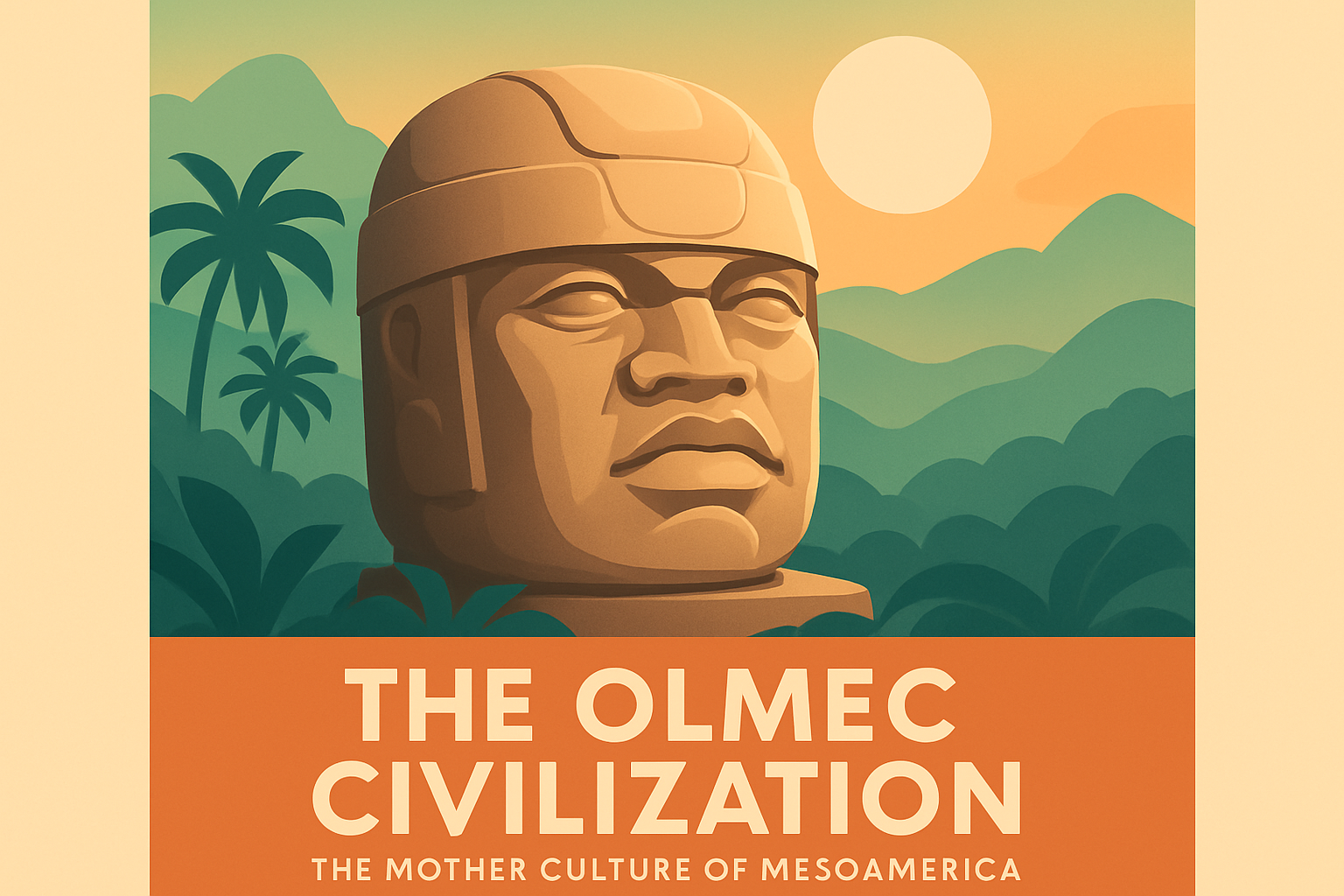
The Olmec civilization, often referred to as the “Mother Culture of Mesoamerica,” played a pivotal role in shaping the course of pre-Columbian history in the region. As one of the earliest known Mesoamerican civilizations, the Olmecs laid the groundwork for cultural and technological developments that influenced subsequent societies such as the Maya and the Aztec. Emerging around 1600 BCE along the Gulf Coast of present-day Mexico, the Olmecs have left behind a legacy characterized by architectural innovations, intricate art, and complex societal structures. Understanding the Olmec civilization is crucial for historians and archaeologists because it helps shed light on the foundational aspects of Mesoamerican cultures, providing insights into the development of complex societies, religion, and trade networks. By examining the Olmec civilization, we can better comprehend the roots of cultural practices and innovations that persisted for centuries across Mesoamerica. In this article, we will delve into various aspects of Olmec society, their contributions to Mesoamerican culture, and the reasons they are deemed the “Mother Culture.”
Origins and Geographic Context
The Olmec civilization originated in the humid lowlands of the Gulf Coast of Mexico, primarily in what is now the states of Veracruz and Tabasco. This region, with its fertile soil and abundant water sources, provided an ideal environment for agriculture, allowing the Olmec people to cultivate maize and other crops essential for sustaining large populations. The strategic location also facilitated trade and interaction with neighboring regions, contributing to the dissemination of Olmec culture across Mesoamerica.
Archaeologists believe that the Olmec society began to take shape around 1600 BCE, with the rise of ceremonial centers such as San Lorenzo and La Venta. These sites became centers of political, economic, and religious activity, featuring impressive architecture and monumental art. For instance, San Lorenzo, one of the oldest known Olmec centers, is famous for its colossal stone heads, weighing several tons each, which are believed to represent the Olmec rulers. These sculptures underscore the complex social hierarchy and centralized authority within Olmec society.
Art and Iconography
Olmec art is renowned for its intricate and symbolically rich designs, which have provided valuable insights into the values and beliefs of the civilization. The most iconic Olmec artworks are the colossal heads, which are believed to depict rulers adorned in ceremonial headdresses. These heads reflect the importance of leadership and power in Olmec society and highlight the remarkable skill of Olmec artisans in stone carving.
Beyond the colossal heads, Olmec art includes jade figurines, pottery, and relief carvings that showcase complex iconography, often featuring motifs such as jaguars, serpents, and other mythological creatures. The recurring jaguar imagery is particularly significant, as it is thought to symbolize spiritual leadership and transformation, suggesting the Olmecs’ belief in shamans or divine rulers who wielded both temporal and supernatural influence.
- Colossal Stone Heads – Representing rulers or important figures.
- Jade Figurines – Intricate carvings signifying spiritual and cultural motifs.
- Relief Carvings – Featuring mythological symbols and narratives.
Societal Structure and Influence
The Olmec civilization was characterized by a complex societal structure with a distinct hierarchical organization. At the top of this structure were religious and political leaders, likely revered as intermediaries between the earthly realm and the spiritual world. The authority of these leaders was often supported by the construction of large ceremonial centers that served as both political hubs and religious sites. These centers were crucial in establishing the Olmecs as a dominant cultural force in the region.
The Olmec influence extended well beyond their immediate geographical area, as evidenced by the widespread adoption of Olmec motifs and religious beliefs across Mesoamerica. For example, the practice of constructing pyramids for religious purposes, which became a hallmark of later Mesoamerican civilizations, can be traced back to Olmec prototypes found at sites like La Venta.
Moreover, the Olmecs are credited with the development of early forms of writing and the Mesoamerican calendar, innovations that later cultures adapted and refined. This wide-ranging influence underscores the Olmecs’ role as a foundational culture that paved the way for the rise of complex societies throughout Mesoamerica.
Religion and Mythology
Religion played a central role in Olmec society, shaping their cultural practices and societal organization. The Olmecs practiced a polytheistic religion that involved the worship of multiple deities, many of whom were associated with natural elements such as water, fertility, and agriculture. One of the most significant mythological figures in Olmec religion was the “Olmec Dragon,” a composite creature that represented the earth and the cyclical nature of life.
Olmec religious practices included ceremonial offerings, bloodletting rituals, and possibly human sacrifice, aimed at appeasing their deities and ensuring the fertility of the land. The presence of ball courts at Olmec sites also suggests the practice of the Mesoamerican ballgame, which held religious significance as a symbolic representation of cosmic struggles.
These religious practices and mythologies not only reinforced the authority of Olmec rulers but also influenced the development of spiritual beliefs in subsequent Mesoamerican cultures, who adopted similar deities and ritualistic practices.
The Legacy of the Olmec Civilization
The impact of the Olmec civilization on subsequent Mesoamerican cultures is evident in various aspects of life, from religious practices to artistic expression. As the “Mother Culture,” the Olmecs set the stage for the emergence of new political entities and cultural traditions throughout the region.
One of the key legacies of the Olmecs is their contributions to the development of writing systems. While the Olmec script remains undeciphered, it represents one of the earliest known forms of writing in the Americas and serves as a precursor to the writing systems used by later civilizations such as the Maya and Aztec.
Additionally, the Olmec’s advancements in urban planning and architectural design influenced the layout of ceremonial centers in subsequent cultures. Their innovative use of materials, such as the employment of basalt in sculpture and construction, demonstrated technical prowess that resonated in future Mesoamerican engineering endeavors.
Real-World Example: Olmec Influence on Modern Culture
The Olmec civilization’s influence extends beyond ancient history, as aspects of their culture continue to permeate present-day societies. For instance, the concept of the Mesoamerican Ballgame, with roots traceable back to the Olmecs, has been adopted by modern sports and cultural festivals across Mexico and Central America. These modern iterations serve as a testament to the enduring legacy of Olmec traditions, providing contemporary communities with a sense of cultural continuity and identity.
Moreover, Olmec art and iconography have inspired modern artists and designers who draw upon the rich symbolism and aesthetic motifs of the civilization. This renewed interest in Olmec culture underscores its significance as a touchstone for creativity and cultural expression in today’s world.
Summary and Conclusion
The Olmec civilization, often dubbed the “Mother Culture of Mesoamerica,” holds a crucial position in the history of pre-Columbian Americas. Through their innovative contributions to art, architecture, religion, and societal organization, the Olmecs paved the way for the rise of later Mesoamerican civilizations, leaving an indelible mark on the region’s cultural landscape. Exploring the Olmec legacy not only enriches our understanding of ancient societies but also reveals the interconnectedness of human cultures across time, demonstrating how ancient advancements continue to influence modern life.
For readers interested in further exploring the Olmec civilization and its impact on subsequent cultures, a visit to museums with Olmec artifacts or archaeological sites can provide valuable insights into this fascinating civilization. Additionally, engaging with academic literature and documentaries on Mesoamerican history can offer a deeper understanding of the Olmec people and their enduring legacy. By acknowledging the foundational role of the Olmec civilization, we gain a greater appreciation for the complexities and achievements of ancient Mesoamerican societies, enriching our global cultural heritage.
Frequently Asked Questions
1. What is the significance of the Olmec civilization in Mesoamerican history?
The Olmec civilization holds a special place in Mesoamerican history as it is often called the “Mother Culture.” This means that the Olmecs are credited with setting many precedents for the cultures that followed, such as the Maya and Aztec. They emerged around 1600 BCE in what is now the Gulf Coast of Mexico and developed a highly influential cultural and technological legacy. This includes the establishment of urban centers, ceremonial complexes, and the development of sophisticated art and architecture characterized by massive stone heads, pyramids, and intricate carvings. The Olmecs are also believed to have been pioneers in introducing features like writing systems, calendar technology, and possibly even ball games, all of which were adopted and adapted by later Mesoamerican civilizations. Their influence is so profound that aspects of their culture can be seen echoed throughout Mesoamerican history.
2. What are some notable achievements of the Olmec civilization?
The Olmec civilization achieved many notable feats that have long fascinated historians and archaeologists. One of their most iconic accomplishments is the creation of colossal stone heads, which can weigh up to 40 tons and stand nearly ten feet tall. These are believed to be representations of their leaders, showcasing remarkable skill in stone carving. Furthermore, the Olmecs are credited with developing one of the earliest known writing systems in the Americas, potentially being one of the first to use hieroglyphs. Additionally, their advances in astronomy and the creation of the Long Count Calendar set foundations that influenced later societies. Olmec art also reveals a deep religious and cultural narrative, with elaborate depictions often featuring jaguars, serpents, and other deities, hinting at their complex pantheon of gods. Beyond artistic and technological achievements, their societal structures indicated a sophisticated understanding of governance and trade, facilitating exchanges that spread their influence far and wide.
3. How did the Olmec civilization influence the societies that followed them?
The Olmec civilization served as a cultural blueprint for subsequent Mesoamerican societies. Their introduction of monumental architecture, in the form of pyramids and ceremonial sites, set standards that civilizations like the Maya and Aztecs would follow and expand upon. The concept of the “sacred ballgame,” which was both a ritual and a sport, is believed to have started with the Olmecs. Elements of Olmec religious practices, like ceremonial centers and the construction of offerings to deities, were mirrored in later traditions. Their artistic styles, featuring certain motifs and iconographies, were carried forward and adapted by future societies. Notably, their trade networks likely facilitated the spread of these ideas across vast regions. Through these trade routes, technological knowledge and cultural practices were exchanged, allowing the Olmec influence to permeate and evolve in distant communities, further illustrating their role as a foundational culture in Mesoamerican history.
4. What led to the decline of the Olmec civilization?
The decline of the Olmec civilization is a topic of intrigue and debate among scholars. Around 400 BCE, the primary Olmec centers began to decline, marking the end of their dominance. One theory suggests that environmental changes played a significant role. The Olmec heartland was marshy and, over time, could have become unsustainable for large populations due to over-farming, leading to soil depletion or flooding. Another contributing factor could have been increased societal stress from political conflicts or invasions by other groups. Archaeological evidence indicates a pattern of intentional destruction or abandonment in Olmec sites, which may imply internal strife or the loss of trade routes that supported their economic framework. While the exact reasons remain elusive, it is clear that the composition of political, environmental, and social factors likely led to their decline, allowing other emerging cultures to rise in their stead, though their cultural legacy continued to endure across Mesoamerica.
5. What kind of religious beliefs did the Olmec people have?
The Olmec people had a rich and complex belief system that played a vital role in their daily lives and structures. Their religion was polytheistic, featuring numerous deities often represented as part-human, part-animal figures reflecting their reverence for the natural world. Central to Olmec religion was the jaguar, which was a recurring motif and believed to hold significant spiritual power as a symbol of authority and fertility. Ritualistic activities were a cornerstone of Olmec society, with ceremonial centers serving as focal points for religious gatherings and offerings. Artifacts and carvings often depict scenes of rituals involving bloodletting and other sanctified practices intended to appease gods and ensure cosmic balance. Olmec priests or shaman were likely crucial intermediaries between the people and their deities. Despite the challenges in interpreting their beliefs due to limited written records, it is evident that religion deeply influenced their art, architecture, and governance, reflecting a society intricately bound to its spiritual framework.