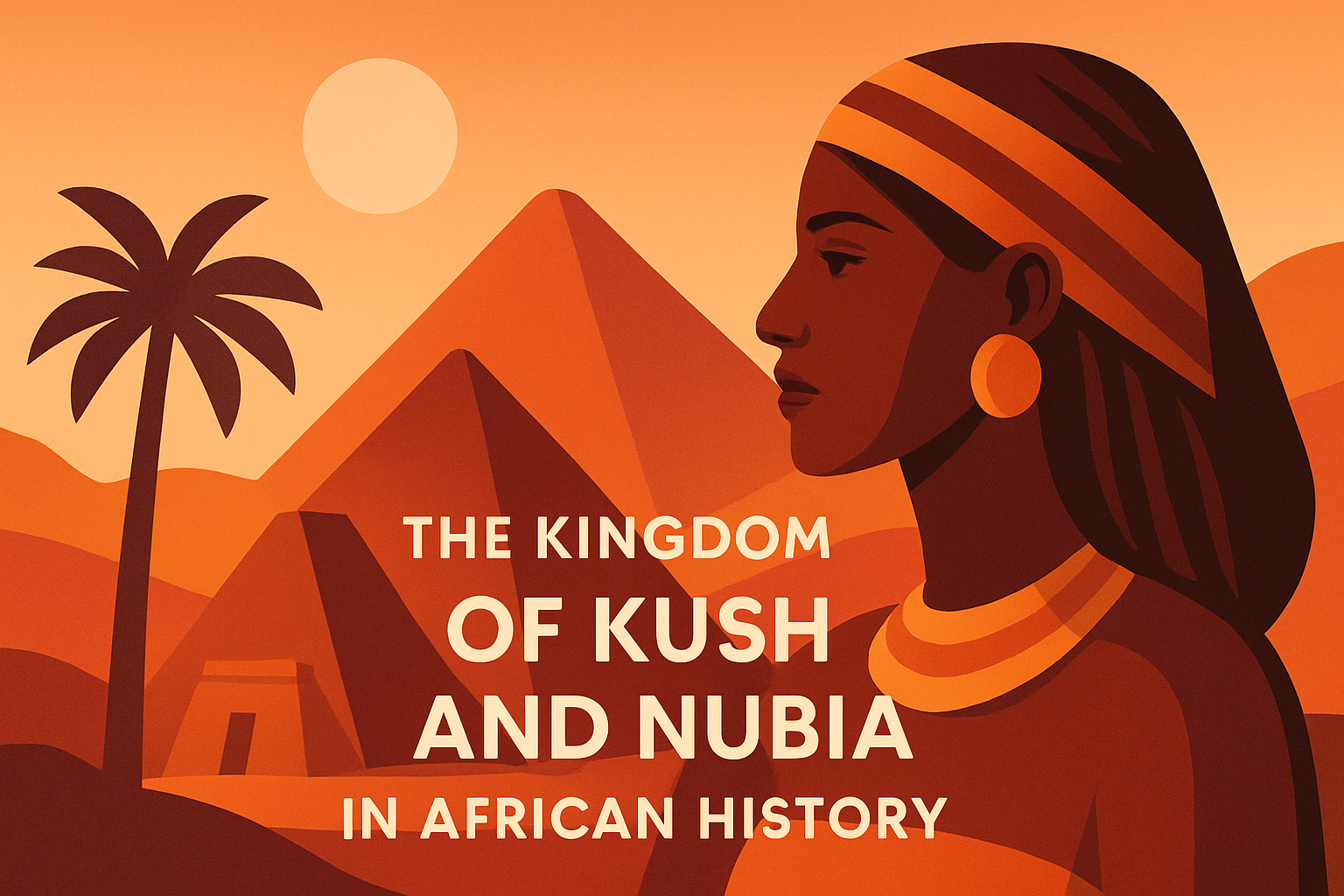
Introduction to the Kingdom of Kush and Nubia
The Kingdom of Kush and the region known as Nubia occupy a significant place in African history, embodying a rich tapestry of cultural and political developments that span thousands of years. Located in what is present-day Sudan, these ancient civilizations were integral players in the tapestry of African and even global history during their time. The Kingdom of Kush, in particular, erupted into prominence following the decline of Pharaonic Egypt, often mirroring and competing with its illustrious neighbor to the north. Similarly, Nubia served as a cradle for some of the earliest civilizations in sub-Saharan Africa, characterized by complex societies and formidable architecture.
Key terms in understanding this historical context include ‘Kush’, referring to the powerful and influential kingdom that arose in Nubian territories; ‘Nubia’, a region that acted as a crossroad for different cultures and trade routes; and ‘Pharaohs’, the rulers of Egypt who occasionally held sway over Nubian lands. Understanding these terms is crucial as they highlight the interconnectedness and cultural exchanges that shaped the African continent.
Why does this matter? Simply put, the history of Kush and Nubia challenges existing perceptions of ancient civilizations by showcasing Africa’s contribution to human progress. These societies developed complex governmental structures, adopted influential religious practices, and engaged in extensive trade networks. By exploring the legacy of these civilizations, we gain a more nuanced understanding of ancient history that transcends Eurocentric narratives, fostering appreciation for Africa’s rich historical tapestry and its contributions to the shared human story.
The Emergence and Flourishing of the Kingdom of Kush
The Kingdom of Kush emerged as a formidable force in northeastern Africa around 1070 BCE, soon after the disintegration of New Kingdom Egypt. Initially, Kush was heavily influenced by Egyptian culture, a relationship reflected in its partially Egyptianized art, religion, and governance. However, as time passed, the kingdom began to cultivate distinct cultural practices that distinguished it from Egypt.
Kush’s political and military achievements were marked by the establishment of the Napatan dynasty, which around the 8th century BCE, managed to conquer Egypt itself, founding the 25th Dynasty and ruling as pharaohs. One of the most notable rulers of this period was King Piye, whose campaign unified the Nile Valley as he overtly declared the Kushite supremacy over Egypt. This era represents a fascinating instance of cultural interplay and power shifts within early African history.
The rich mineral resources of the Nubian region, including gold, further contributed to Kush’s ascendancy. The kingdom became a vital node in trans-Saharan trade networks, facilitating the exchange of goods such as ivory, incense, and exotic animals. Such economic prosperity enabled Kush to establish Meroë as a new royal capital by around 300 BCE, named after the Meroitic language that emerged. Meroë became renowned for its iron production, with ironworking technology advancing the kingdom’s socio-economic status further.
Nubia: A Cultural Melting Pot
Nubia served as a mixer for various cultures and peoples throughout ancient history. Its geographic positioning along the Nile made it a conduit between central Africa and the Mediterranean, thus playing a pivotal role in the diffusion of cultural and technological innovations. The people of Nubia engaged with Egyptian, Greek, and Roman cultures, drawing influences from these civilizations while maintaining their distinct heritage.
A poignant example of Nubia’s cultural amalgamation can be seen in its funerary architecture. The Nubians are renowned for their pyramids in Meroë and Nuri, which although smaller in scale, demonstrate an aesthetic closely aligned with ancient Egypt. Yet, the Nubians also developed unique burial customs, incorporating elements from sub-Saharan African traditions, which included rituals and ceremonies unique to their society.
Moreover, linguistic diversity in Nubia reveals its role as a cultural nexus. Besides Egyptian, languages such as Meroitic, Nubian, and Greek were prevalent, reflecting a multicultural society that valued and promoted cross-cultural exchanges. The written records in these languages have been pivotal in reconstructing the history and development of the region.
Religion and Spiritual Practices in Kushite and Nubian Societies
Religion in ancient Kush and Nubia was a complex fusion of indigenous practices interwoven with Egyptian religious beliefs. The high god Amun was worshipped within both cultures, and Kushite rulers often depicted themselves as divine beings in their own right. The Kushites respected many deities common to both cultures, but over time, localized worship evolved into distinct religious traditions.
Archaeological explorations have unearthed numerous temples dedicated to deities like Apedemak, the lion-headed god who held a preeminent position in Meroitic religion. Temples such as those at Naqa and Musawwarat es-Sufra illustrate these religious complexes’ elaborate architectural style and spiritual importance. Apedemak was a uniquely Meroitic deity, symbolizing both war and fertility, encapsulating dual attributes that were central to sustaining and growing the community.
- The Temple of Amun at Jebel Barkal: Pharaohs of the Napatan dynasty, such as Taharqa, were deeply involved in its construction, signifying a commitment to both Egyptian and indigenous deities.
- Festival practices: The conspicuous celebration of festivals like the ‘Shed Festival’ showcased the intersection of religious and social life as leaders received public affirmation of their divine right to rule.
The Decline and Legacy of the Kingdom of Kush
The decline of the Kingdom of Kush began around the 4th century CE, attributed largely to environmental changes and external pressures from neighboring tribes. Overexploitation of the region’s natural resources, combined with a shift in trade routes, rendered Meroë and other urban centers less economically viable, gradually weakening Kushite influence.
Despite its decline, the legacy of Kush and Nubia persists, not only in the physical remnants of their civilization—pyramids, temples, and artifacts—but also in their lasting influence on later African empires and cultures. With the advent of Christianity, much of Kushite religious customs were assimilated into the new faith, a transformation mirrored in subsequent Nubian Christian kingdoms.
The rediscovery of Kushite and Nubian history through modern archaeology and scholarship has allowed for the reevaluation of Africa’s role in ancient history. Understanding this past opens up new perspectives on African agency, innovation, and interaction with the rest of the ancient world.
Conclusion: Embracing Africa’s Rich Historical Tapestry
In conclusion, exploring the Kingdom of Kush and Nubia within African history reveals not just a story of conquest and cultural amalgamation, but also a narrative of resilience and innovation. These ancient civilizations were significant not only due to their own internal feats but also due to their interactions with surrounding cultures. The trade routes, religious practices, and political endeavors of Kush and Nubia underscore their vital roles within a broader historical context.
For modern readers and scholars, delving into the history of Kush and Nubia helps debunk stereotypes about African societies, underscoring the continent’s dynamic and extensive contributions to human civilization. By acknowledging and celebrating this inheritance, contemporary discussions about history can become more inclusive and representative of the world’s myriad narratives. To fully appreciate our shared global heritage, we must continue to explore and engage with Africa’s ancient past.
As you reflect on the significance of the Kingdom of Kush and Nubia, consider how this historical insight can enrich your understanding of the intertwined destinies that shape humanity’s collective story. Seek out further research, visit museums, and support educational initiatives that acknowledge the importance of these African civilizations in shaping a historical narrative that is both inclusive and enlightening.
Frequently Asked Questions
1. What was the Kingdom of Kush, and how did it rise to prominence?
The Kingdom of Kush was an ancient African kingdom situated in what is today northern Sudan. Its rise to prominence was chiefly tied to the decline of Pharaonic Egypt, occurring around the 11th century BCE. As Egypt’s influence waned, the Kushites began to assert their own identity and influence over the Nile Valley. This process culminated around the 8th century BCE when the Kushite king, Piye, conquered Egypt, establishing the 25th Dynasty of Egyptian Pharaohs, often referred to as the “Kushite Dynasty.” This marked a high point for Kush, demonstrating its military prowess and political shrewdness. The kingdom became a hub of trade and culture, borrowing and adapting Egyptian customs while strongly emphasizing its distinct cultural roots. The capital city of Napata and later Meroë became centers of economic wealth where iron production flourished. These advancements solidified their reputation as a powerful and influential force in Northeast Africa.
2. How did the geography of Nubia influence the development of these ancient civilizations?
Nubia’s location, stretching along the Nile River, was pivotal to its development. The river provided a fertile floodplain that supported agriculture, the backbone of both the Kingdom of Kush and earlier Nubian societies. This access to water enabled farming communities to thrive despite the arid environment surrounding them. Moreover, Nubia was rich in natural resources, particularly gold, which became a source of wealth and trade leverage. The region’s strategic position between sub-Saharan Africa and Egypt facilitated its role as a bridge for exchanging goods, ideas, and cultures. This advantageous placement allowed the Kushites to influence and be influenced by neighboring civilizations, leading to a cultural mosaic characterized by Egyptian, African, and later Greco-Roman elements. The terrain also played a role in shaping the defense strategies of these kingdoms as they capitalized on the area’s natural barriers to protect against invasions, further ensuring their longevity and resilience.
3. What were the significant cultural contributions of Kush and Nubia?
The cultural contributions of Kush and Nubia were diverse and enduring, leaving influences that reached across the African continent and into the Mediterranean world. Kushite rulers, particularly during the 25th Dynasty, left a legacy of monumental architecture, notably pyramids, which were smaller yet plentiful compared to their Egyptian counterparts. Nubian art skillfully melds Egyptian artistic styles with indigenous forms, demonstrating a unique syncretism. Additionally, the Meroitic script, developed during the later Meroë period of Kush, represents one of Africa’s early written languages, adding linguistic diversity to historical records. The kingdom was a crucible for religious practices, as well; the worship of the lion-headed god Apedemak and the fertility goddess Isis echoed through different societal strata. These cultural artifacts and practices reflect a society rich in innovation, resilience, and adaptability.
4. How did the Kingdom of Kush interact with its neighboring states?
The Kingdom of Kush engaged in complex interactions with neighboring states, notably Egypt and the Roman Empire. Early on, Nubians traded extensively with Egyptians, exchanging gold, ivory, and other luxury goods for commodities like grain and crafted items. The Kushite control of Egypt during the 25th Dynasty marked the peak of their influence, but it was also a time marked by cultural exchanges and religious syncretism as they embraced the title of Pharaoh and integrated Egyptian traditions with their indigenous customs. Eventually, conflict and cooperation alternated because as Egyptian power reasserted itself, they often vied for control over the lucrative trade routes running through Nubia. Despite attempts at conquest by the Romans after Egypt fell under Roman control, Kush managed to maintain a degree of autonomy, engaging in a durable treaty negotiated by the Kandake Amanirenas. This demonstrated Kush’s diplomatic tact and martial discipline.
5. What led to the decline of the Kingdom of Kush and Nubia?
The decline of the Kingdom of Kush and Nubia resulted from a combination of environmental, economic, and political factors. Beginning in the 1st millennium CE, climatic changes may have contributed to the alteration of Nile flooding patterns, adversely impacting agriculture, the economic bedrock of the kingdom. Additionally, the siltation of the Nile and the decline of gold mines diminished their economic strength, compounded by the loss of lucrative trade routes as global trade dynamics shifted over centuries. Politically, the rise of neighboring powers, such as Aksum to the southeast, applied additional pressure; Aksumites conducted campaigns that further weakened Kushite resources and political structures. Internally, the overextension of resources and potential shifts in governance may have led to social unrest. By the 4th century CE, these factors coalesced, resulting in the gradual absorption of the region into emerging political entities, marking an end to the distinct historical narrative of Kush and Nubia, though their cultural legacies significantly influenced future African societies.