
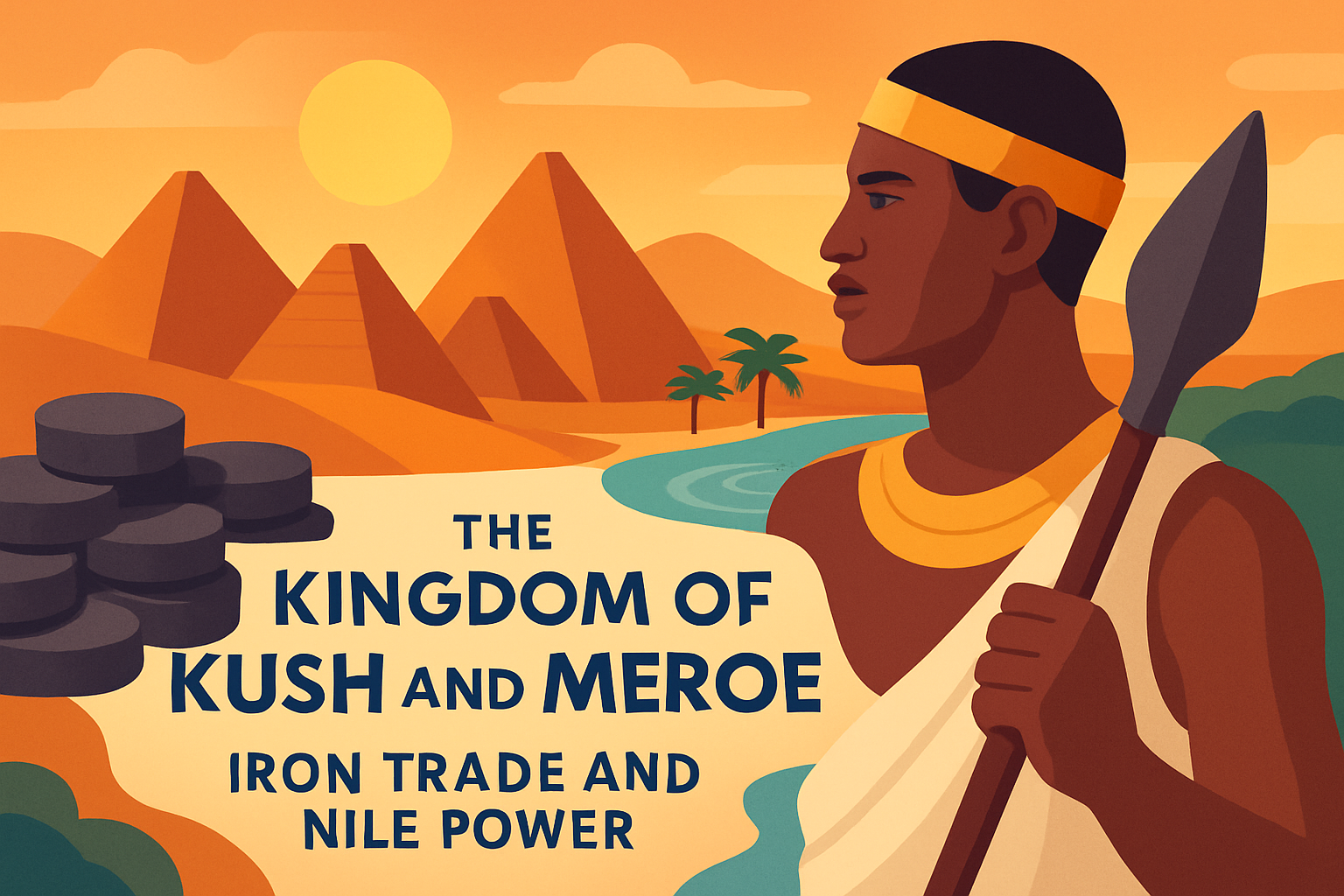
Introduction to the Kingdom of Kush and Meroe
The ancient Kingdom of Kush was a remarkable civilization that thrived along the Nile River in what is now Sudan. This African kingdom was known for its powerful cities, significant iron production, and vibrant trade networks. Among its greatest centers, Meroe stands out as a pivotal hub of culture and commerce. Understanding the rise of Kush and Meroe in the context of iron trade and Nile dominance offers an intriguing perspective into how ancient powers shaped regional geopolitics and economy.
The Kingdom of Kush held sway over the Nile Valley from approximately 1070 BC to 350 AD, with Meroe becoming the heart of the empire in its later stages. The strategic geographic location of the kingdom—in close proximity to Egypt and South Africa—allowed it to act as a cultural bridge and a trade powerhouse. But what set this civilization apart was its expertise in ironworking and the utilization of the lush and resource-rich land along the Nile.
Examining the factors behind the prosperity of Kush and Meroe is essential to appreciate their advancements and contributions to world heritage. Their strategic manipulation of iron resources, innovative irrigation techniques, and robust trade networks provide invaluable insights into ancient statecraft and economic structuring. Furthermore, understanding the strengths and strategies of Kush and Meroe sheds light on a less-discussed, yet pivotal period in African history.
The Rise of the Iron Industry in Meroe
As Meroe became the epicenter of the Kingdom of Kush around 590 BC, it distinguished itself with some of the most advanced ironworks of its time. The city’s mastery in iron production was not merely a technological advantage but a strategic toolkit that facilitated extensive trade with neighboring regions and beyond. This thriving iron industry provided tools, weapons, and other significant goods that fueled not only local development but also contributed to the economic network dependent on Meroe.
Iron production in Meroe utilized substantial deposits of iron ore found locally. The ancient iron smelting processes involved in converting ore to usable iron required both technical knowledge and organized labor. The competence of Kushite smiths in crafting weapons, tools, and decorative pieces positioned Meroe as a leading center for iron products, which were highly sought after by Egypt and other civilizations.
Trade Networks and Economic Influence
Beyond its prowess in iron production, Meroe’s geographic position enabled a flourishing trade network that stretched across Africa and beyond. The inhabited regions along the Nile provided fertile grounds for agriculture, which bolstered sustenance and trade. The connection along the Nile acted much like a superhighway, moving goods swiftly between African regions and the Mediterranean world.
The trade was diverse and expansive, centered on iron, but also encompassing ivory, gold, ebony, and slaves. Meroe managed to maintain prominent trading relationships with Egypt, West Asia, Greece, and the Roman Empire, facilitating cultural and technological exchanges alongside the movement of goods.
The blending of African, Middle Eastern, and Mediterranean cultures created a unique society in Meroe that was cosmopolitan yet distinctly African. This cultural fusion further solidified Meroe’s pivotal role in antiquity, highlighting its ability to adapt and thrive through extensive international interactions.
| Goods Traded | Trade Partners | Primary Market |
|---|---|---|
| Iron & Iron Products | Egypt, Middle East | Local and International |
| Ivory | Rome, Greece | International |
| Gold | Egypt, Mediterranean | International |
| Slaves | Various African Tribes | International |
Impact of Geography on Kushite Power
The power of the Kingdom of Kush was inherently tied to its geography. The Nile, with its predictable flooding patterns and fertile banks, allowed for successful agriculture, sustaining large populations and complex societal structures. This support of agrarian practices enabled Meroe to focus on innovation and trade, rather than mere subsistence.
Located just south of Egypt, Meroe acted as a crossroads of cultures. The Kushites capitalized on this by establishing roads, trading routes, and diplomatic ties with neighboring countries. Their proximity to dynamic markets in Egypt and wider Africa meant they could competitively trade local goods such as iron and gold, which were abundant in the Nubian hills.
Additionally, the natural barriers of deserts and cataracts along the Nile acted as fortifications against invasions, while the efficient movement of goods and people via the river allowed for regional dominance. This strategic use of geography not only fortified the Kushite state but provided substantial leverage in political and military engagements with neighboring territories.
Decline and Legacy of Meroe
While the Kingdom of Kush and the city of Meroe flourished for several centuries, internal and external pressures eventually led to their decline. Changes in trade routes, coupled with emerging powers, weakened Meroe’s economic sovereignty. Additionally, environmental changes, such as desertification and overuse of resources, contributed to the stresses felt by the civilization.
In around 350 AD, the Kingdom of Kush was ultimately conquered by the Kingdom of Aksum. Despite its fall, the legacy of Kush and Meroe lived on through the archaeological record, and the cultural influences they imparted to Africa and beyond. The introduction of advanced iron technologies had revolutionary implications for societies that encountered them, influencing both societal structures and economic dynamics in the ancient world.
Conclusion: The Enduring Importance of Kush and Meroe
The Kingdom of Kush and its capital city of Meroe hold an enduring place in the history of ancient civilizations. This rich civilization not only exemplified the power of iron trade and adept use of local geographic advantages but also highlighted the complex sociopolitical structures that arose in Africa. Their influence on contemporary civilizations demonstrated the interconnectedness of ancient African cultures with the rest of the world.
Drawing lessons from the Kingdom of Kush, modern societies can appreciate the importance of utilizing local resources wisely, developing sustainable trade networks, and nurturing cultural and economic collaborations. For historians, archaeologists, and all those curious about human civilization, exploring the advancements and eventual decline of Kush and Meroe offers invaluable insight into the evolution of human ingenuity.
As we continue to unearth and analyze the artifacts and evidence left by the Kushites, understanding their story invites further inquiry and celebrates an essential, though sometimes overlooked, chapter of African and global history. A simple action for enthusiasts today may be to delve into further studies about ancient African civilizations and recognize their contributions to shaping our modern world.
Frequently Asked Questions
1. What was the Kingdom of Kush and why was it significant?
The Kingdom of Kush was an ancient civilization that thrived along the Nile River in the region of modern-day Sudan. Known for its unique culture, wealth, and powerful cities, the kingdom was a key player in regional politics and economics. Kush’s significance lies in its role as a cultural bridge between Africa and the Mediterranean world. Its leaders, known as the Kushite Pharaohs, even ruled over Egypt as the 25th Dynasty. The kingdom’s city of Meroe was a major center of iron production, contributing significantly to the richness and resilience of Kush. Meroe’s strategic location and resources facilitated an advanced iron industry, which was a cornerstone of Kushite economy and military power.
2. What role did iron have in the economy of Kush and Meroe?
Iron played a crucial role in the economic strength and sustainability of Kush, particularly in Meroe, which was the heart of iron production in the kingdom. The technological expertise in iron smelting and toolmaking allowed the Kushites to produce weapons, tools, and other objects more efficiently and with greater durability. This not only bolstered their agricultural productivity but also enhanced military capabilities. Meroe’s iron production became a linchpin for trade, attracting merchants from different regions and facilitating the exchange of iron goods for other valuable items, such as gold, ivory, and incense. The extensive iron trade networks helped to forge alliances and opened economic corridors to Egypt, the Middle East, and beyond, deeply embedding Kush within the trade dynamics of the ancient world.
3. How did the Nile River influence the power and prosperity of Kush?
The Nile River was foundational to the power and prosperity of Kush. As the primary water source, it supported agricultural activities, enabling the cultivation of crops such as sorghum, barley, and millet, which were vital for sustenance and trade. Its rich alluvial soil ensured bountiful harvests, underpinning the food security of the kingdom. Furthermore, the Nile facilitated transport and trade, providing an efficient route for the movement of goods and armies between Kush and other civilizations, including Egypt. The river’s strategic significance allowed the Kushites to extend their influence along its banks and control key trade routes. Additionally, the cultural and spiritual aspects of the Nile were interwoven with Kushite religious practices, highlighting its integral role in the socio-political framework of the kingdom.
4. What made Meroe a unique and pivotal hub in the Kingdom of Kush?
Meroe was a unique and pivotal hub in the Kingdom of Kush due to its strategic geographic location, which straddled central trade routes in Africa and connections to other towering civilizations. Over time, Meroe evolved from being a regional power into a cultural and economic epicenter renowned for its diverse populations and innovative craftsmanship. The city was distinguished by its advanced architecture, including royal pyramids and palaces, and art forms that captured the essence of both African and Mediterranean traditions. As a center for the iron industry, Meroe’s large-scale production facilities employed a high degree of metallurgical expertise. The capital served as a melting pot for traders from across Africa, the Arabian Peninsula, and the Mediterranean, facilitating a rich exchange of goods, ideas, and technologies, which helped to cement its legacy as a dynamic and influential city-state within the kingdom of Kush.
5. How did trade networks impact the relationship between Kush and other ancient civilizations?
The trade networks of Kush were pivotal in shaping its relationships with other ancient civilizations. Positioned strategically along the Nile and near the Red Sea, Kush was well-placed to engage in commerce with multiple regions, including Egypt, the Middle East, and sub-Saharan Africa. Iron, gold, ivory, and exotic goods from the African interior were traded for Mediterranean commodities such as olive oil, wine, and linen. These exchanges facilitated not just economic interdependence but also cross-cultural interactions that enriched Kushite society and spurred developments in art, architecture, and technology. Furthermore, trade aided diplomatic relations, allowing Kush to establish alliances, avoid conflicts, and exert influence on the international stage. The prosperity fostered by these vibrant trade networks amplified Kush’s status and power among contemporaneous civilizations, securing its position as a core node in the ancient world’s economic and cultural fabric.