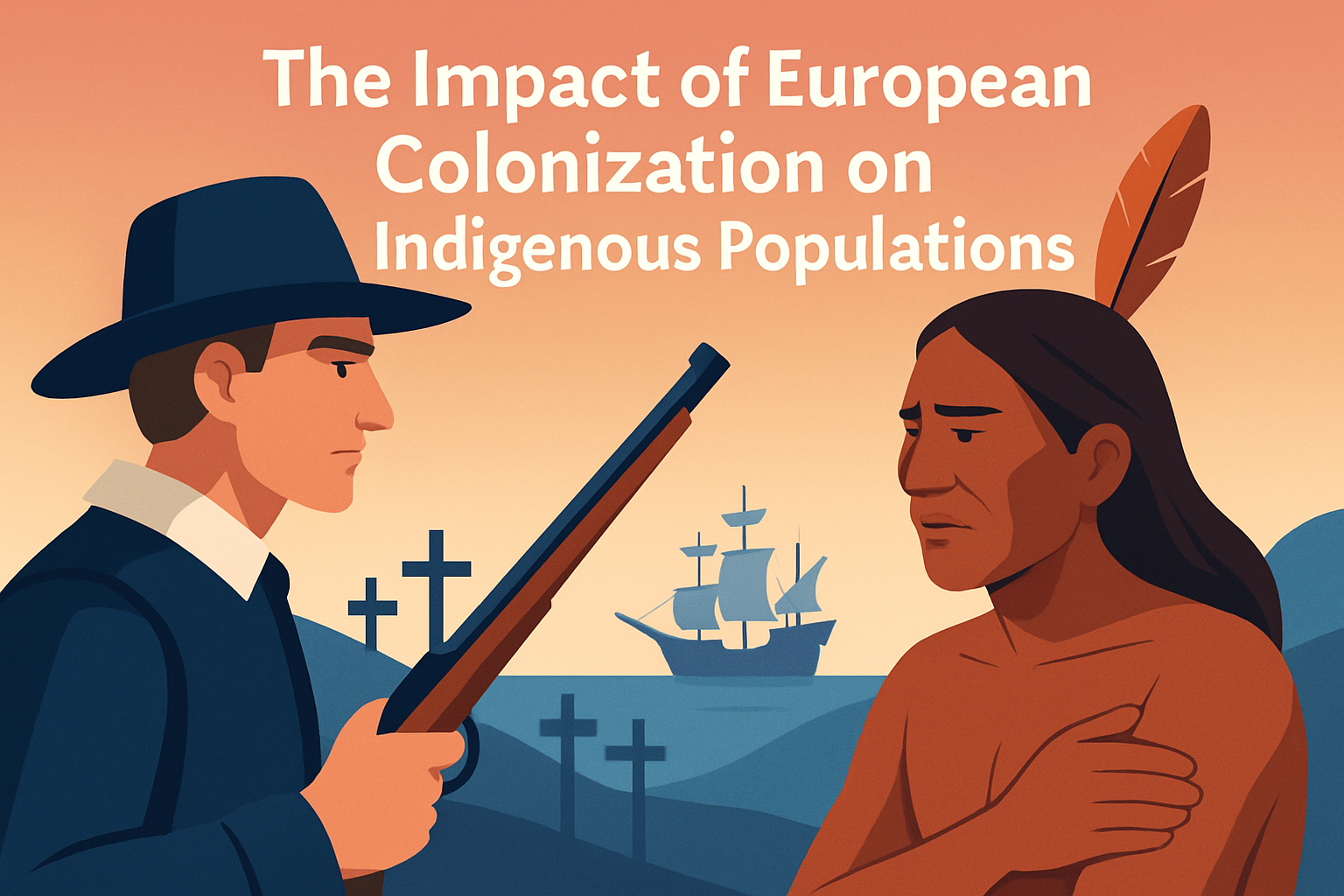
The colonization of indigenous lands by European powers is a critical component of world history, one that continues to shape cultural, economic, and political landscapes across the globe. The term “European colonization” broadly refers to the expansion of European nations, such as Britain, France, Spain, and Portugal, into foreign territories primarily between the 15th and 20th centuries. “Indigenous populations,” on the other hand, refer to the original inhabitants of these lands who have richly diverse cultures, languages, and social systems. The consequences of these invasions were far-reaching and complex, affecting indigenous societies on multiple levels. This topic is essential because understanding the historical contexts and the profound impacts of colonization enables us to comprehend present-day global inequality, social justice issues, and ongoing struggles for indigenous rights and sovereignty.
Economic Exploitation and Land Dispossession
One of the primary impacts of European colonization was the economic exploitation and land dispossession experienced by indigenous populations. Colonizers often seized land and resources from indigenous people to utilize them for profit, displacing communities and disrupting traditional ways of life. An example of this can be found in the colonization of North America, where European settlers claimed vast amounts of territory to mine for valuable minerals, farm cash crops like tobacco and cotton, and profit from the fur trade. The Homestead Act of 1862 in the United States facilitated the appropriation of indigenous lands for European settlers, pushing native communities to the margins.
The consequences of this economic exploitation were grave. Indigenous societies that were self-reliant and prosperous before colonization soon faced poverty and dependency on colonial economies. The disruption of traditional land ownership and usage systems not only destroyed livelihoods but also eroded cultural and social structures that were intimately connected to the land.
Cultural Erosion and Forced Assimilation
European colonization also initiated an era of cultural erosion and forced assimilation for indigenous populations. Indigenous cultures include unique languages, religions, and traditions that were systematically suppressed by colonial powers in an attempt to homogenize diverse peoples into a European mold. For instance, the establishment of residential schools in Canada aimed to assimilate indigenous children by separating them from their families and eradicating their native languages and customs. This not only inflicted psychological and emotional trauma but also led to a significant loss of cultural heritage.
The effects of cultural erosion are profound and persistent. The loss of language and traditional knowledge has disrupted the transmission of cultural values and practices across generations. Furthermore, forced assimilation policies have left many indigenous communities struggling to reclaim their identities and rebuild their cultural foundations even today.
Impact on Health and Population Decline
Another devastating impact of European colonization was the introduction of diseases to which indigenous populations had no immunity. The arrival of Europeans brought with it illnesses like smallpox, measles, and influenza, leading to catastrophic declines in indigenous populations. In the Caribbean, for example, the Taino people who once inhabited the islands suffered significant population loss after contact with Spanish explorers.
In addition to diseases, colonial practices such as forced labor and inadequate living conditions further contributed to declining health among indigenous communities. Malnutrition, overwork, and exposure to foreign pathogens created public health crises that profoundly affected the demographic landscape. These events highlight the stark contrast between pre- and post-colonization health and demographic realities for indigenous peoples.
| Region | Indigenous Population Before Colonization | Percentage Decline After Colonization |
|---|---|---|
| North America | Estimated 5-15 million (circa 1500) | 80-90% |
| Caribbean | Approximately 6 million (circa 1492) | Greater than 90% |
| Australia | Estimated 750,000 (circa 1788) | 50% |
Social Displacement and Political Marginalization
The social displacement caused by European colonization extended beyond mere physical relocation. Indigenous communities experienced profound political marginalization as colonial powers imposed foreign governance systems and excluded indigenous voices from political decision-making processes. The disintegration of indigenous leadership structures led to social fragmentation and loss of self-determination, further marginalizing native populations within their own homelands.
In Australia, for example, the enactment of policies such as the “Stolen Generations” saw thousands of Aboriginal children forcibly removed from their families to assimilate them into European society. This systematic erasure of indigenous family structures aimed to sever connections to cultural identity and ensure compliance with colonial rule, perpetuating cycles of social dislocation and disenfranchisement.
Modern Repercussions and Path to Reconciliation
The modern world continues to grapple with the repercussions of European colonization. Indigenous communities across the globe contend with socio-economic disparities, cultural loss, and political disenfranchisement as legacies of colonial history. The pursuit of reconciliation and restoration of rights requires introspection and tangible action toward equity and justice for indigenous peoples.
An example of striving for reconciliation can be seen in New Zealand, where the Treaty of Waitangi negotiations have facilitated dialogue between the government and Maori tribes. Reparations, recognition of land rights, and acknowledgement of historical injustices are steps toward healing, though much work remains. These efforts highlight the importance of acknowledging the truth of our colonial past to address continuing inequalities.
Concluding Thoughts and Call to Action
In summary, European colonization had widespread detrimental effects on indigenous populations through economic exploitation, cultural erosion, health crises, social displacement, and political marginalization. Acknowledging this history is vital to comprehending the present challenges faced by indigenous peoples and fostering meaningful change. The path to reconciliation involves a commitment to recognizing the lasting impacts of colonization and working collaboratively to restore justice and respect for indigenous rights.
As global citizens, the responsibility lies in supporting policies and initiatives that aim to elevate indigenous voices and empower communities to reclaim their cultural, social, and economic agency. Engage with indigenous-led organizations and listen to the voices that are often sidelined to drive forward a shared vision for a more equitable world. The enduring legacy of colonization requires our attention and action to mend divides and forge a future of inclusion and mutual respect.
Call to Action: Support local indigenous initiatives and advocate for policy changes that recognize and elevate the rights of indigenous peoples. Work collectively to create spaces that honor, celebrate, and learn from indigenous cultures and histories.
Frequently Asked Questions
1. What were the primary motivations behind European colonization?
The drives igniting European colonization were multifaceted, encompassing economic, religious, and political ambitions. To start with, the word “economics” played a prominent role. European nations were on the hunt for new trade routes and resources. Think spices, textiles, and gold. These were like European power-ups, fueling wealth and vaulting them up the geopolitical leaderboard. Besides wealth, religious fervor drove them too. Many Europeans felt a divine calling to spread Christianity and convert indigenous peoples, part of a grand worldwide mission. Politically speaking, colonization fostered nationalism. This was the age of empires, where land meant power, and European countries yearned to expand their territories to increase their prestige on the international stage.
2. How did colonization affect the culture and society of indigenous populations?
Colonization left deep grooves and scars on the cultures and societies of indigenous peoples. For starters, cultural assimilation became widespread as European colonizers imposed their languages, religions, and customs on native communities. Indigenous languages often faced eradication, replaced by the colonizer’s tongue, which was seen as the “language of the future” or progress. When it came to religion, traditional spiritual practices were suppressed, often violently, with Christianity taking precedence. Social structures were also upended. Colonizers imposed new governance systems, frequently ignoring indigenous political organizations, and reshaping societies in ways that fractured traditional roles and societal norms. This intoxicating blend of cultures often led to a loss of identity for many indigenous people, breeding a sentiment of displacement in their own ancestral lands.
3. What economic impacts did colonization have on indigenous populations?
Economically, colonization was an earthquake of upheaval. European colonization often meant the expropriation of land, which was the cornerstone of indigenous economies. Land was not just a resource; it was a lifeline. This widespread land grab led to the disruption of traditional agricultural practices. Indigenous peoples were often forced into labor systems introduced by the colonizers, such as plantations or mines, where they worked under brutal conditions. Commodities like tobacco, cotton, and sugar became the mainstay of these forced labor systems. Traditional trade networks were disrupted, replaced by European-controlled trade systems that prioritized profit over people. This left indigenous communities economically dependent on their colonizers, essentially turning them into economic subjects within their own lands.
4. How did disease brought by Europeans impact indigenous populations?
European diseases cut a devastating swath through indigenous populations, acting as an unwelcome guest in a home it was never asked to enter. Indigenous peoples largely lacked immunity to illnesses like smallpox, measles, and influenza, so when these diseases hitchhiked over with the Europeans, they sparked epidemics with calamitous consequences. Death toll estimates from these epidemics are staggering, with some communities losing 90% or more of their population. This wasn’t merely a tragic health crisis; it was an extinction event that shattered societies and cultures. Large populations were reduced to small, struggling communities; traditional knowledge, belonging to elders who succumbed to disease, was lost; families were fractured. Disease spread its shadow, inevitably, across every aspect of life, leaving echoes of its impact for generations.
5. How have indigenous populations worked to reclaim and preserve their heritage post-colonization?
The resilience and tenacity of indigenous peoples in reclaiming and preserving their heritage post-colonization is a tale of strength and revitalization. Many indigenous communities have embarked on missions to revive traditional languages, often initiating educational programs to teach younger generations the speech of their ancestors. Reclaiming land remains a central struggle, rooted in both legal battles and grassroots activism. Cultural revitalization is another key focus, with indigenous peoples actively practicing and promoting traditional art, music, dance, and spiritual customs. Additionally, there’s been an increasing push for political representation and assertion of rights on global platforms. Alliances, both locally and internationally, have been fostered to advocate for indigenous rights, health, and education. While the effects of colonization etch deep lines in history, the efforts to uphold and invigorate indigenous identity are fervent and steadfast, a testimony to human endurance and cultural sanctity.