
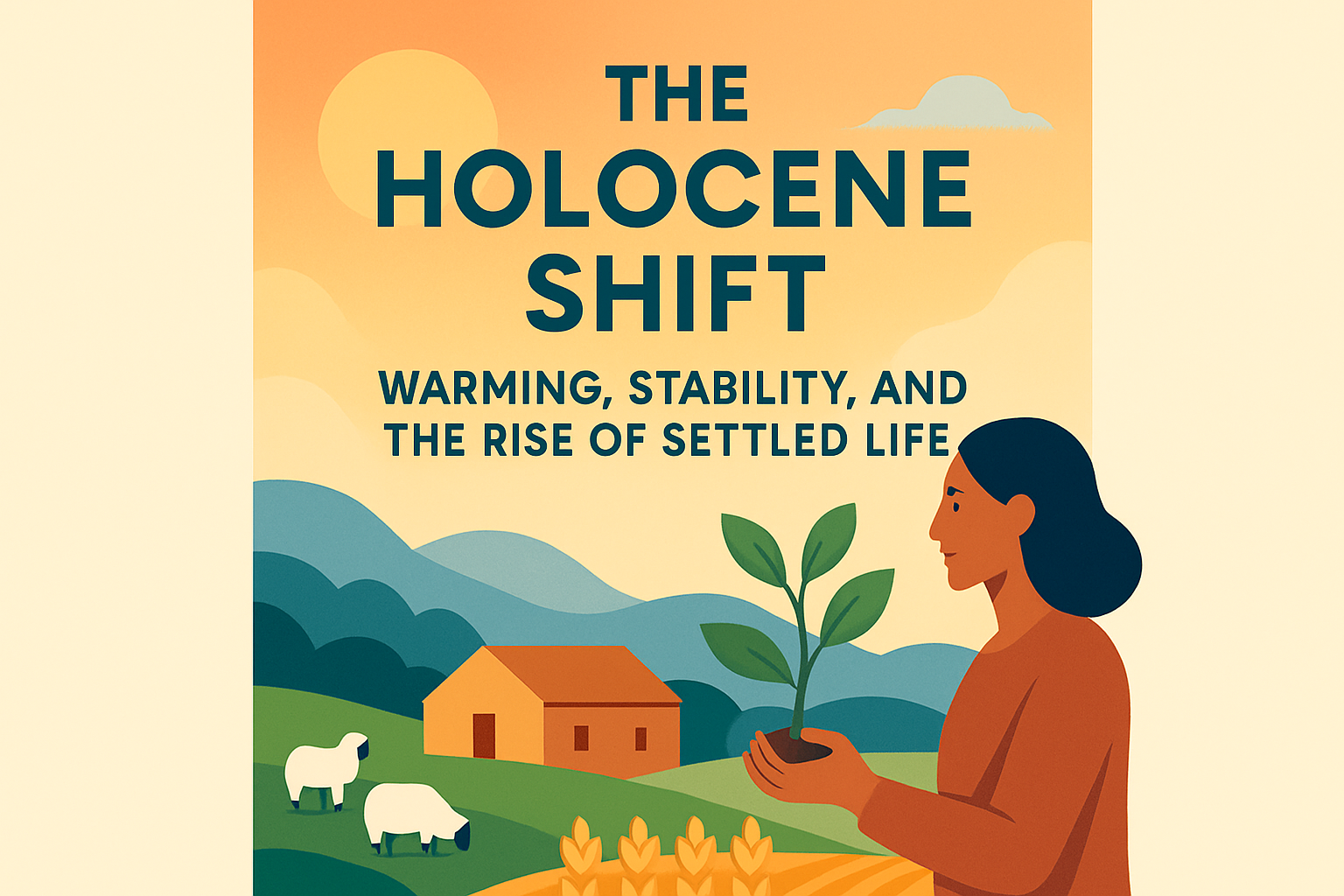
The Earth’s climate has experienced numerous changes throughout history, each playing a significant role in shaping the planet’s ecological and geographical landscape. Among these, the period known as the Holocene stands out as a particularly transformative era, marking a dramatic shift in climate stability that paved the way for the rise of settled human societies. The term “Holocene” refers to the geological epoch that began approximately 11,700 years ago, following the last major ice age, and extends to the present day. It is characterized by a relatively stable climate compared to the preceding Pleistocene epoch, which was subject to cycles of glaciations and interglacial periods. This stability brought about fundamental changes in ecosystems and human life, enabling the development of agriculture, the establishment of permanent settlements, and the rise of civilizations.
The Holocene matters immensely because it represents the backdrop against which modern human civilization developed. Unlike the erratic climate of previous epochs, the Holocene’s stable temperatures allowed for consistent agricultural production, facilitating the transition from nomadic lifestyles to settled ones. This stability fostered significant advancements in societal complexity, encompassing everything from agriculture and urbanization to technological innovation and cultural development. Understanding the environmental conditions and human adaptations during this epoch provides crucial insights into our species’ development and offers vital lessons for addressing present and future challenges, particularly in the face of ongoing climate change.
The Climatic Stability of the Holocene
The Holocene epoch marked a significant transition to a more stable and consistent climate. Prior to this period, the Earth experienced drastic temperature fluctuations during the Pleistocene—a time when ice ages were frequent and interspersed with warmer interglacial phases. However, with the onset of the Holocene, the global climate stabilized to a warmer and more predictable state. This climatic consistency meant that areas no longer swung between extreme hot and cold, allowing ecosystems to stabilize and flourish. The change was gradual, but its effects were profound.
A prime example of this climate stability is found in the Fertile Crescent, an area located in the modern-day Middle East. This region experienced relatively moderate weather and ideal conditions for the development of agriculture. The consistent climate allowed early humans to experiment with cultivating plant species such as wheat and barley, leading to one of the first known agricultural revolutions. Villages began to form around these newly domesticated plants, setting the stage for the growth of complex society. Without the stable climate of the Holocene, these advancements may never have occurred.
Development of Agriculture
The transition from a hunter-gatherer lifestyle to agricultural communities was a significant step in human history, largely enabled by the Holocene’s climatic conditions. This era’s stable temperatures and predictable rainfall patterns made it possible to cultivate crops reliably. The availability of consistent resources gradually turned human societies away from nomadic lifestyles, where they moved frequently in search of food, towards more permanent settlements where they could grow and store food.
Consider the example of Mesoamerica, where the domestication of maize played a pivotal role in societal developments. The predictable Holocene weather patterns allowed early settlers to cultivate and selectively breed maize, transforming it from a wild grass into the staple food crop we recognize today. With a stable food supply ensured by the successful cultivation of maize, societies in this region grew in complexity, developing into advanced civilizations such as the Maya and Aztecs.
Urbanization and Social Complexity
The growth of agriculture during the Holocene had far-reaching effects, accelerating the development of urban centers and complex societies. Permanent agricultural communities eventually evolved into towns and cities, as consistent food production supported larger populations. The stable climate of the Holocene meant that these settlements could develop in a relatively secure environment, fostering social cooperation and the exchange of ideas.
A notable illustration of early urbanization is the city of Jericho, one of the oldest continuously inhabited cities in the world. The favorable climate of the Holocene allowed Jericho to flourish as a settlement. Its centralized location and the abundance of surrounding resources provided the opportunity for trade and interaction with neighboring communities. As these interactions increased, so did the complexity of social structures, leading to organized governance, specialized professions, and the development of written language.
This evolution of settled communities into urbanized societies can be organized into several key developments:
- Increased food production and storage capabilities.
- Population growth and densification.
- Development of trade networks and specialization of labor.
- Emergence of governance structures and written communication.
The Role of Technological Innovation
Technological advancements were another critical component of life in the Holocene. With reliable agricultural surplus, societies could support individuals engaged in activities beyond mere survival, promoting innovations in tool-making, construction, and other technologies. Technological innovations made during this time laid the foundation for even greater advancements in later eras.
The Bronze Age, for example, marked a significant technological leap during the latter part of the Holocene. Societies in regions such as Mesopotamia learned to alloy copper with tin to produce bronze, a material far superior in durability and strength to stone and copper alone. This advancement not only improved agricultural tools and weapons but also facilitated further development in building and artistic expression. The advancements made possible by these new technologies propelled social and economic development, contributing significantly to the complexity and richness of civilizations.
Lessons and Implications for Today
Understanding the events of the Holocene is crucial today, especially in light of modern climate change challenges. The epoch demonstrates the profound impact that climate stability, or lack thereof, can have on human societies. Modern societies face increasing unpredictability in climate conditions, and examining the Holocene provides essential lessons in adaptation and resilience.
For instance, the ability to adapt agricultural practices to varying climates remains as relevant today as it was during the Holocene. Recent developments in sustainable agriculture, climate adaptation strategies, and technological innovations reflect the enduring relevance of adaptability first seen in the Holocene. Modern farmers are experimenting with drought-resistant crops and innovative irrigation techniques to meet the challenges of fluctuating climate conditions.
Furthermore, the role of technology, seen as a driver of progress during the Holocene, continues to play a critical role today. Advancements in renewable energy technologies, for example, hold the potential to mitigate some of the adverse effects of climate change.
Conclusion: Embracing Lessons from the Past
The Holocene epoch remains one of the most critical periods in human history, marking the shift from a nomadic existence to one rooted in settlements and agriculture. It provided the climate stability necessary for societies to thrive, innovate, and advance technologically. By examining the conditions and developments of the Holocene, we can draw valuable insights into the resilience and adaptability of human societies. These lessons are especially pertinent as we face modern-day climate challenges. By adopting sustainable practices, fostering technological innovations, and remaining adaptable, we can mitigate the impacts of climate instability and continue to thrive as a global civilization. The Holocene teaches us that with stability and innovation, growth and complexity are not only possible but probable. As we move forward, let us embrace these lessons of the past, ensuring that we tread a path of mindful development for future generations.
The call to action is simple: we must recognize the importance of climate stability in fostering human progress and utilize the lessons of the Holocene to guide our responses to environmental changes today. This understanding calls for a proactive approach, embracing sustainable technologies and practices that safeguard both our environment and future.
Frequently Asked Questions
1. What is the Holocene, and why is it considered a significant epoch in Earth’s history?
The Holocene marks a geological epoch that commenced around 11,700 years ago, following the conclusion of the last major Ice Age. It’s an era recognized for its climate stability, which was instrumental in shaping the planet’s current ecological state. Before the Holocene, Earth’s climate was characterized by dramatic fluctuations with temperatures swinging up and down, leading to frequent glacial and interglacial periods. These rapid changes made it challenging for ecosystems to establish any stable or permanent foothold. With the onset of the Holocene, however, a more stable and warmer climate emerged. This climate consistency was crucial because it allowed for burgeoning developments in human society. Agriculture could finally take root, providing food security and enabling human populations to settle down, rather than nomadically follow food sources. This stability is a cornerstone of our development as a species, fostering the rise of complex societal structures, technological advances, and cultural achievements over thousands of years.
2. How did the Holocene facilitate the transition from nomadic lifestyles to settled agriculture?
Before the Holocene, humanity hunted and gathered in response to the ever-shifting availability of resources dictated by the unstable climate. Life was essentially adaptable, with communities often on the move to follow animal migrations and seasonal growth cycles of plants. However, the transition into the Holocene triggered a pivotal shift. The climate, now more temperate and predictable, led to environments conducive to plant growth and animal domestication. This encouraged some human groups to experiment with cultivating crops and domesticating animals. Over time, people began to recognize the benefits of sedentary life. It allowed for a more reliable accumulation of food stores, thus reducing the constant uncertainty of whether there would be enough to eat or not. As agriculture thrived, it enabled population growth and the development of settlements. Communities expanded, leading to the construction of villages that would eventually evolve into cities. Innovations in tool-making, food preservation, and resource management followed, which further incentivized a sedentary lifestyle.
3. What were some major developments in human societies during the Holocene?
The stabilization of climate conditions during the Holocene was a catalyst for a plethora of significant societal developments. As agriculture took root and societies settled, it led to the establishment of fixed communities which evolved into more complex social structures. This period saw the birth and growth of prominent agricultural practices, tailored to the climates and geography of different regions, which allowed civilizations to flourish. Additionally, technological advancements such as the creation of pottery, advancements in metallurgy, and the development of intricate irrigation systems were observed. With more secure sources of food, humans could allocate more time towards other pursuits, spurring cultural, scientific, and technological innovations. This era also saw the rise of written communication, with emerging societies developing forms of writing to record transactions, laws, and stories. Furthermore, the stability and surplus generated by agriculture allowed for increased trade, both within and between these burgeoning civilizations, fostering exchanges of ideas and goods across vast geographical distances that linked human communities on an unprecedented scale.
4. How did the Holocene impact global biodiversity and ecosystems?
The transition into the Holocene was not only transformative for human societies but also had profound effects on global biodiversity and ecosystems. As glaciers from the Ice Age melted, rising sea levels altered coastlines and created new aquatic habitats. The newly emerged landscapes promoted a wide variety of ecological niches that were quickly colonized by both flora and fauna resulting in rich biodiversity. The more stable climate facilitated the spread of temperate forests and grasslands, supporting a flourishing of life in these environments. New plant species thrived, eventually becoming major food sources for developing human societies. Some ecosystems, such as those in the Mediterranean and parts of East Asia and the Americas, became particularly biodiverse hotspots due to the climate’s relative stability and the variety of ecological conditions they supported. However, this epoch also saw some disruptions, mainly due to human activities. As populations grew and expanded, humans dramatically altered landscapes through agriculture and settlement construction, which sometimes resulted in habitat loss for other species. Nonetheless, the overall biodiversity heightened due to the conducive conditions provided by this era’s climate.
5. What are the potential future implications of continued changes in the Holocene climate?
As we continue through the Holocene, human-induced climate change has become an urgent concern. The climate stability that has been a hallmark of the Holocene is increasingly at risk due to anthropogenic activities, particularly the excessive release of greenhouse gases. This has led to a rise in global temperatures, shifting weather patterns, and extreme events that could destabilize the climatic conditions that societies have relied upon for millennia. The ongoing alteration of the climate poses significant threats to ecosystems, biodiversity, and human ways of life. Melting polar ice, rising sea levels, and increasing desertification are examples of the potential impacts. These changes could result in displaced human populations, loss of arable land, and shifts in agricultural productivity, which in turn could lead to food insecurity, economic challenges, and geopolitical tensions as communities strive to adapt. Conversely, this contemporary era stresses the need for innovative adaptations and more sustainable practices to mitigate these challenges, ensuring that future generations can continue to thrive in the Holocene and beyond. Preserving the delicate environmental balance achieved in this epoch now requires global cooperation and concerted efforts towards sustainable development and environmental conservation.