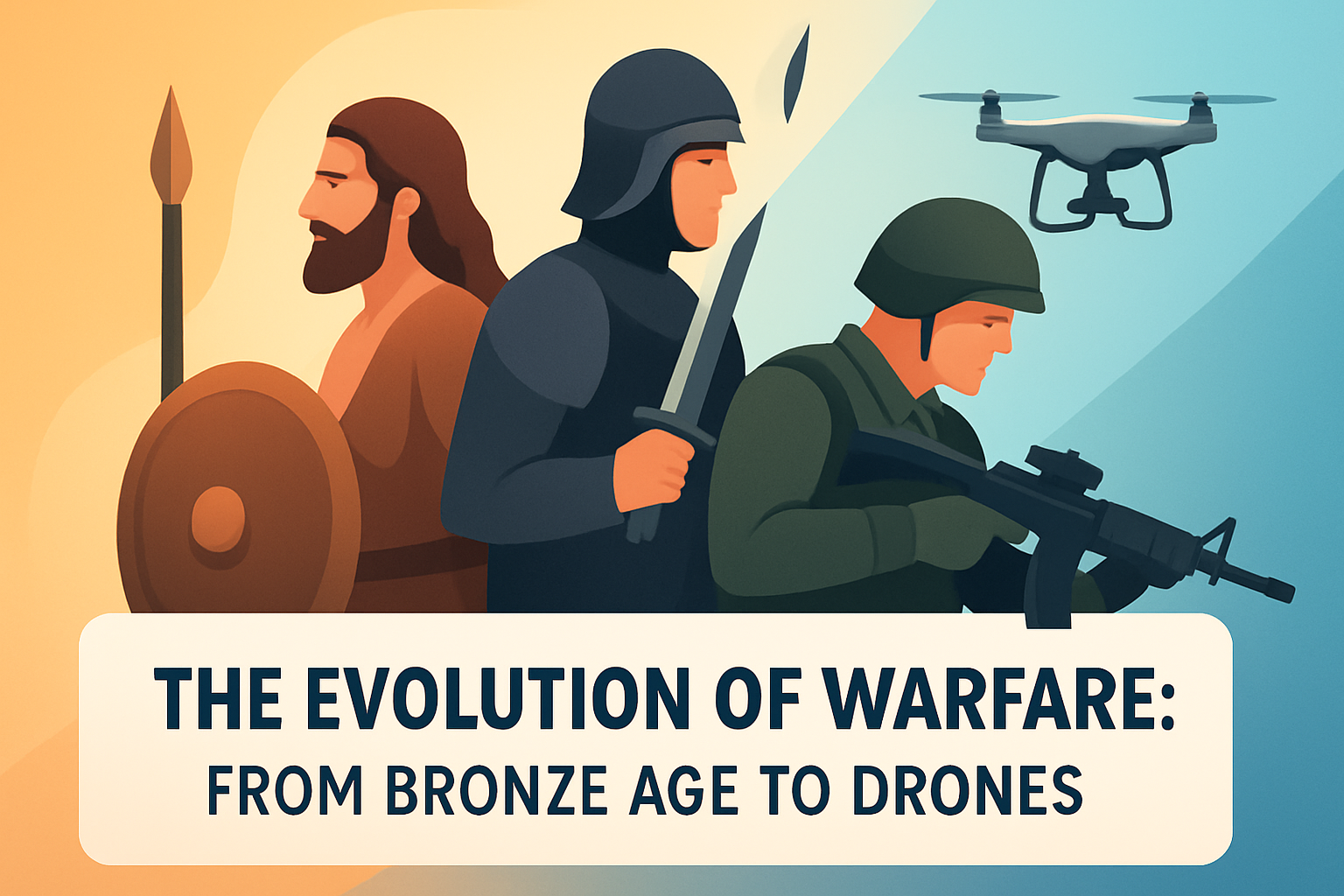
Throughout human history, warfare has continually evolved as societies have developed new technologies, tactics, and strategies. Warfare can be defined as a conflict between organized groups that aim to achieve various objectives, often involving the use of weapons and military forces. The evolution of warfare is crucial as it not only reflects societal progress but also significantly impacts geopolitical dynamics and human lives. Understanding how warfare has changed from the Bronze Age to the modern use of drone technology offers insights into human ingenuity and the relentless pursuit of power.
The advancement in technology and tactical development defines the era-specific characteristics of warfare, influencing not only military outcomes but also social and economic structures. Recognizing the historical milestones in military evolution allows for a deeper appreciation of current military capabilities and their implications. In this article, we will explore the transformative phases of warfare, centering on key historical periods and technologies that marked each transition.
The Bronze Age: The Birth of Organized Warfare
The Bronze Age, spanning approximately 3300 to 1200 BCE, marked a crucial turning point in warfare with the introduction of metal weaponry. During this era, the transition from the use of stone tools to bronze weaponry – an alloy of copper and tin – fundamentally altered military engagements. Before this period, combat was relatively simplistic, often involving small, unorganized skirmishes. The new metal technology allowed cultures such as the Ancient Egyptians, Hittites, and Mesopotamians to develop more sophisticated weapons, including swords, daggers, and axes.
One of the most notable examples of Bronze Age warfare is the Battle of Kadesh, fought between the Egyptians and the Hittites around 1274 BCE. This battle is known for its scale and complexity, involving chariotry and advanced battlefield tactics. The Battle of Kadesh demonstrated how the sophistication of metal weaponry and military strategy could tip the scales of power, shaping the geopolitical landscape of the ancient Near East.
Not only did the Bronze Age introduce new weapons, but it also prompted the establishment of formal military hierarchies and organized armies, leading to the development of empires. This structured approach to warfare laid the groundwork for future advancements and shaped societal structures that prioritized military power.
Iron Age Innovations: Enhanced Weaponry and Tactics
The transition from the Bronze Age to the Iron Age, beginning around 1200 BCE, brought another pivotal change in warfare. The discovery and utilization of iron for weapon manufacturing enabled the crafting of stronger and more durable arms and armor. Compared to bronze, iron was more readily available and cost-effective, resulting in widespread dissemination of iron weaponry across different cultures.
This period saw the rise of civilizations such as the Assyrians and Greeks, who utilized iron technology to their advantage. Assyrians, known for their effective and ruthless military campaigns, employed iron weapons and innovative siege tactics, such as battering rams and siege towers. Similarly, the Greek hoplites, armed with iron-tipped spears and wearing iron helmets, were instrumental in battles like the famous Battle of Marathon in 490 BCE, where the Greeks emerged victorious against the numerically superior Persians.
- Stronger and more durable iron weapons contributed to increased effectiveness in battles.
- Development of new military tactics like phalanx formations and siege warfare.
- Increased military organization and training, resulting in more disciplined and effective armies.
Iron Age advancements in warfare not only solidified the importance of technological innovation but also highlighted the significance of tactical evolution in achieving military success. The reliance on stronger, more adaptable weapons and techniques set the stage for subsequent developments in military strategy and engineering.
Medieval Period: The Age of Cavalry and Fortification
The medieval period, spanning roughly from the 5th to the 15th centuries, was characterized by significant developments in both warfare and defensive architecture. The refinement of cavalry tactics and the use of fortifications marked this era as one of strategic ingenuity.
Knightly cavalry became a dominant force on the battlefield, epitomized by battles such as the Battle of Hastings in 1066. Knights, clad in heavy armor and mounted on horseback, implemented the “shock and awe” strategy that could decisively break enemy lines. Additionally, the invention of the stirrup increased the effectiveness and stability of cavalry, making mounted units a formidable force.
Fortifications also saw radical improvements during this period. Castles and fortified cities became symbols of power and defensive strength. These structures incorporated multiple lines of defense, including moats, drawbridges, and high stone walls. The Siege of Constantinople in 1453, where the Ottoman Empire successfully breached the city’s formidable defenses using gunpowder artillery, marked a significant transition in siege warfare and demonstrated the decreasing efficacy of traditional fortifications against evolving technologies.
The medieval period emphasized the dual importance of cavalry and artillery in offensive operations, while the prominence of fortifications in defense highlighted the era’s strategic complexity. This balance between mobility and defense played a crucial role in shaping the ongoing evolution of warfare.
The Industrial Revolution: Gunpowder and Mechanization
The Industrial Revolution, beginning in the late 18th century, brought about groundbreaking changes in warfare with the introduction of mechanization and gunpowder weapons. The widespread use of firearms, artillery, and eventually mechanized vehicles reshaped the battlefield and redefined military strategy.
Firearms, which had previously been limited to small arms, saw tremendous advancements in both production and effectiveness. The American Civil War (1861-1865), for instance, showcased the impact of rifled muskets and artillery, which could inflict severe casualties at greater distances than previous weapons. This period also saw the introduction of ironclad warships, revolutionizing naval warfare and leading to conflicts such as the Battle of Hampton Roads.
The mechanization of warfare during the Industrial Revolution further accelerated with the development of the tank, a pivotal innovation exemplified during World War I. Tanks allowed for breakthroughs in trench warfare and redefined mobility on the battlefield. Airplanes also made their debut, ushering in a new domain of aerial combat that expanded military strategy beyond the terrestrial sphere.
| Technological Advancements | Strategic Implications |
|---|---|
| Rifled muskets and artillery | Increased range and lethality in battles |
| Ironclad warships | Transformed naval engagements |
| Tanks and mechanized vehicles | Enhanced mobility and offensive capabilities |
| Airplanes | Introduced aerial warfare tactics |
The technological strides during the Industrial Revolution not only increased the pace and scale of warfare but also underlined the relentless pursuit of innovation in achieving military superiority. This era laid the foundation for contemporary military technologies and highlighted the growing importance of industrial capabilities in warfare.
The Modern Era: Drones and Cyber Warfare
The modern era of warfare is defined by the advent of technology-driven strategies, among which drone technology and cyber warfare have emerged as prominent game changers. Unmanned aerial vehicles (UAVs), or drones, epitomize the shift towards unmanned combat systems that offer precise targeting and minimal risk to human operators.
Drones provide real-time intelligence, surveillance, and reconnaissance (ISR) capabilities, enhancing the ability to conduct targeted strikes with reduced collateral damage. An example of drone effectiveness is seen in operations against terrorist networks, where drones have been instrumental in eliminating high-value targets while minimizing civilian casualties.
In addition to drones, cyber warfare has become a critical component of modern military strategy. The ability to disrupt, degrade, or destroy digital infrastructure can have significant implications for national security. Cyber operations, as evidenced by attacks like the Stuxnet worm against Iranian nuclear facilities, illustrate the potential of cyber warfare to achieve strategic objectives without kinetically engaging the opponent.
The integration of advanced technologies in warfare has redefined the warfighting landscape, emphasizing precision, efficiency, and low-risk engagements. This evolution continues to challenge traditional concepts of warfare and necessitates a reevaluation of military doctrines and strategies.
Conclusion: Reflecting on the Past and Preparing for the Future
From the Bronze Age to the era of drones and cyber warfare, the evolution of warfare has been marked by continuous advancements in technology and strategy. Each era’s innovations have not only redefined the means of conflict but also influenced societal structures and international relations.
The key takeaway from this historical exploration is the centrality of innovation in shaping military capabilities and outcomes. Understanding the evolution of warfare underscores the importance of adapting to new technologies and strategic paradigms to maintain competitive advantages.
As we reflect on past developments, the imperative for societies is to anticipate future changes in warfare, whether they be technological, strategic, or ethical. This process not only ensures preparedness for emerging threats but also encourages a commitment to addressing the humanitarian implications of modern warfare.
For those interested in deeper exploration, consider engaging with resources on military history and technological studies. The progression from ancient conflict methods to modern tactics offers invaluable lessons in resilience, adaptability, and innovation.
In conclusion, understanding the evolution of warfare provides vital insights into the interplay between technology and strategy, thereby guiding future military and policy decisions in an increasingly complex global landscape.
Call to Action: Continue your learning by exploring the intricate connections between technology and military strategy through further reading or engaging with military historians and analysts.
Frequently Asked Questions
1. How did warfare originate and what was its nature during the Bronze Age?
The origins of warfare can be traced back to prehistoric times when early human communities engaged in conflicts over resources, territory, and power. During the Bronze Age, roughly 3300 to 1200 BCE, warfare began to take a more organized form as societies developed more complex structures and technological advancements. The Bronze Age saw the introduction of metal weaponry, predominantly bronze, which significantly altered the dynamics of battle.
Societies at this time were also organizing themselves into early city-states and empires, which led to the need for more formalized military forces. Chariots became a central part of armies, providing mobility and impact on the battlefield. In addition to chariots, bows and bronze-tipped spears and swords became common in arsenals, allowing for more effective close and ranged combat.
The nature of warfare during the Bronze Age was largely shaped by geographical factors, such as the availability of resources and the terrain, which influenced tactics and strategies. Conflicts often involved sieges of fortified cities and battles on open plains. While warfare in this era might seem primitive compared to today’s standards, it laid the foundation for military organization and technological development that would influence future generations.
2. What were some key developments in warfare during the Iron Age?
During the Iron Age, beginning around 1200 BCE, significant advancements in metallurgy led to the widespread adoption of iron for weaponry, which surpassed bronze in durability and effectiveness. This advancement allowed for the production of more robust and sharper swords, spears, and shields, influencing the tactics and outcomes of battles.
The Iron Age was marked by the rise of significant empires, such as the Assyrians and later the Romans, who revolutionized military strategies and tactics. The Assyrians were known for their use of psychological warfare, siege tactics, and a notable emphasis on discipline and organization within their armies. They employed various units, including infantry, cavalry, and war chariots, to create a versatile fighting force.
Meanwhile, the Roman Empire became renowned for its military prowess, largely due to the innovation of the Roman legion. This was a flexible and highly structured unit that could adapt to various battle scenarios. The Romans also developed sophisticated engineering skills, allowing them to build roads for rapid troop movements, construct fortifications, and carry out prolonged sieges effectively.
Overall, the Iron Age set the stage for complex warfare by integrating technological innovations with improved strategies, thereby expanding the scope and scale of military conflicts.
3. How did warfare change during the Middle Ages, with many notable evolutions occurring during this time?
The Middle Ages, stretching from roughly the 5th to the late 15th centuries, were a period of significant transformation in warfare, much of which was influenced by feudal society and evolving technologies. One of the major developments was the increased prominence of cavalry forces. Knights in armor became central to military tactics, given their mobility and combat effectiveness. The concept of chivalry also evolved during this time, with knights adhering to codes of conduct in warfare.
Additionally, the period saw the construction of increasingly sophisticated castles and fortifications, signaling the rise of siege warfare as a common tactic. Siege engines, such as trebuchets and battering rams, were designed to breach castle walls or defenses, leading to the need for more innovative defensive architecture.
The development of the longbow during the late Middle Ages, particularly in England, significantly affected military strategy, as it allowed archers to begin targeting armored knights, changing the balance of power on the battlefield. Furthermore, the late Middle Ages saw the introduction of gunpowder from Asia, which heralded the beginning of a new era in warfare as cannons and early firearms started to make their appearance in battles.
Overall, the Middle Ages were characterized by gradual shifts towards greater organization and technological development in warfare, laying the groundwork for further changes in subsequent centuries.
4. What impact did the Industrial Revolution have on the evolution of warfare in the 18th and 19th centuries?
The Industrial Revolution, which began in the late 18th century, dramatically transformed warfare by introducing advancements in technology and industry that had far-reaching implications. This period witnessed a shift from traditional forms of production to mechanized processes, which had a profound effect on military organization, logistics, and weaponry.
One of the key impacts was the mass production of weapons and supplies, enabling armies to equip larger forces with standardized equipment, which was crucial for the large-scale conflicts of the 19th century. The introduction of railways revolutionized logistics, allowing for rapid movement of troops and supplies across vast distances, vastly improving military efficiency and response times.
The development of new weapons, such as rifled firearms and artillery, increased accuracy and range, while advances in naval technology, including steam-powered ships, transformed naval warfare by providing greater speed and firepower. Ironclad warships, introduced during the American Civil War, marked a significant departure from traditional wooden naval vessels.
All these changes culminated in the mechanized and highly industrialized conflicts of the late 19th century, exemplified by wars such as the American Civil War and the Franco-Prussian War, where industrial capacity played a crucial role in determining outcomes.
The Industrial Revolution set the stage for 20th-century warfare by establishing a focus on industrial and technological supremacy as critical components of military power.
5. How have modern technologies, especially drones, affected contemporary warfare?
Modern technologies have dramatically altered the landscape of contemporary warfare, with drones being perhaps one of the most transformative developments in recent decades. Drones, or unmanned aerial vehicles (UAVs), offer significant tactical advantages by providing reconnaissance, surveillance, and precise strike capabilities without posing direct risk to human operators.
Drones have revolutionized the intelligence-gathering process, offering real-time data that can be used to make swift strategic decisions. They can operate in environments that are too dangerous for manned missions, and their ability to hover and loiter over an area for extended periods allows for detailed observation and target analysis.
In addition to reconnaissance, drones are increasingly being used for offensive operations, including targeted missile strikes. This capability has introduced new ethical and legal considerations, particularly concerning the sovereignty of airspace and the potential for collateral damage and civilian casualties.
Beyond their military applications, drones are also employed in humanitarian efforts, such as delivering supplies to inaccessible areas or assisting in search and rescue operations after natural disasters, highlighting their versatility. As technology continues to advance, the role of drones in warfare is likely to expand further, affecting operational strategies and international relations alike, exemplifying how modern warfare has become deeply intertwined with technological innovation.