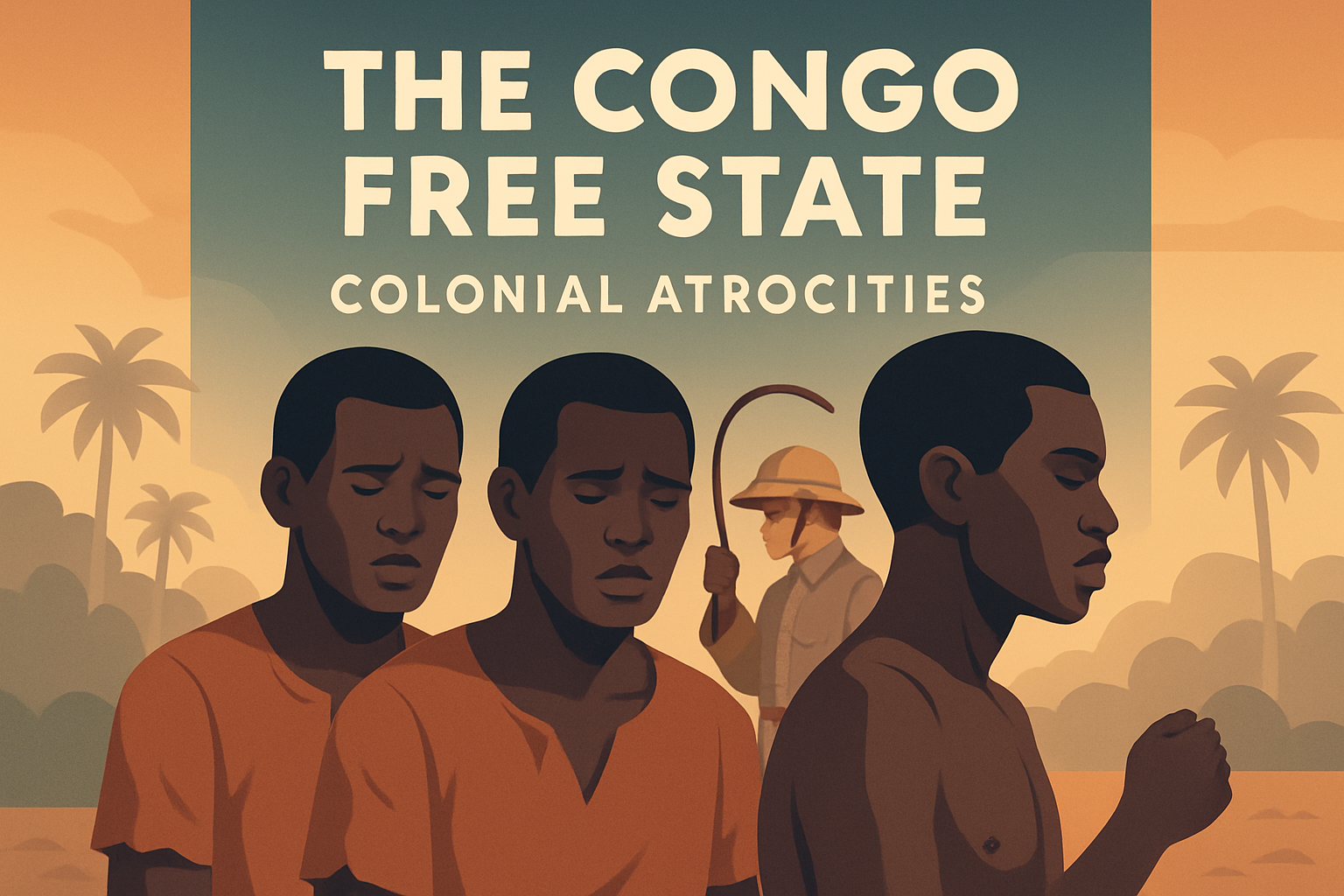
The Congo Free State, a massive colonial enterprise initiated by King Leopold II of Belgium, is a significant yet often under-discussed segment of global history. Its narrative is characterized by severe exploitation, brutalities, and profound human suffering that continue to impact the Democratic Republic of Congo and global discourse on human rights today. Understanding this dark chapter in history is crucial because it not only highlights the severe consequences of unchecked colonial ambitions but also serves as a stark reminder of the responsibilities that come with colonial legacies. Early colonial endeavors such as the Congo Free State significantly shaped the socio-political landscapes of the colonized regions, leaving indelible marks on the native populations and their cultures.
The term “Congo Free State” can be misleading as it was neither free nor a legitimate state. It was a personal monarchy where King Leopold II exercised authoritarian control over millions of people and was given international recognition as a sovereign entity. However, beneath this façade lay a brutal regime, driven by Leopold’s insatiable greed, resulting in one of the most brutal colonization episodes the world has ever witnessed. By delving into the complex layers of this tragic history, we uncover not only the injustices of the past but also discover vital insights necessary for fostering a more equitable global society.
The Establishment and Exploitation in the Congo Free State
In the late 19th century, King Leopold II of Belgium orchestrated a highly ambitious colonial project. Masking his intentions with purported humanitarian and scientific motives, Leopold managed to convince European powers at the Berlin Conference of 1884-1885 to allocate him control over a vast region in central Africa known today as the Democratic Republic of Congo. This area, rich in natural resources like rubber and ivory, presented an appealing prospect for wealth extraction and commercial gain.
Leopold’s administration of the Congo Free State involved the exploitation of the territory’s natural resources through forced labor policies, often administered by local leaders coerced into supporting foreign interests. African inhabitants were forced into labor under oppressive conditions, and inhumane regulations were enforced with an iron fist. This led to not merely economic exploitation but also a societal collapse, as indigenous communities were torn apart by the demands of foreign interests.
Atrocities Committed in the Name of Progress
The systemic abuse in the Congo Free State is remembered today largely because of the humanitarian catastrophe it precipitated. The drive for rubber—a highly valued commodity at the time due to the burgeoning industrial revolution—resulted in the establishment of a coercive rubber-collection system. Workers faced severe penalties for failing to meet quotas, a scenario which frequently resulted in mutilations, including cutting off limbs, and even death.
During this era, it is estimated that the population of the Congo was halved, with millions of people falling victim to violence, disease, and famine. The forced labor system disrupted traditional societal structures, driving numerous communities to social collapse. In addition to the physical violence, the psychological terror associated with these colonial policies left a visible scar that affects the region’s trajectory even today.
The Role of the International Community
Strikingly, the atrocities in the Congo Free State remained largely unchallenged for years. European powers, whose economic interests often superseded humanitarian concerns, were complicit merely by their apathy. It wasn’t until the publication of reports and publications by missionaries and activists like E.D. Morel and Roger Casement that the international community began to apply pressure on King Leopold II.
The following public outcry and a subsequent series of petitions and campaigns eventually led to the annexation of the Congo Free State by Belgium in 1908. Although this officially marked the end of Leopold’s personal control, many of the exploitative practices continued under Belgian colonial rule. Despite these campaigns, the response from the international community was slow and fragmented, demonstrating the challenges of overcoming entrenched colonial practices and highlighting the importance of global accountability in preventing such outrages.
Legacy and Continuity of Colonial Impact
The impact of the Congo Free State’s brutal policies reverberates through time. The institutional exploitation and the violent governance tactics taught colonial powers effective, if brutal, methods of subjugating foreign territories. Unfortunately, the colonial chapter left an indelible mark on Congo’s governance structures, infrastructure, and societal fabric.
Post-independence, the Democratic Republic of Congo has continued to grapple with challenges rooted in its colonial experience. The presence of vast natural resources has historically attracted foreign interests, often exacerbating internecine conflicts and complicating national development initiatives. Further, the lack of robust governance systems and the proliferation of corruption can be traced, at least partly, to the colonial era’s authoritarian governing style.
Efforts Towards Reconciliation and Healing
In recent years, there has been an increasing call among historians and activists to ensure true recognition and justice for the victims of the Congo Free State. Educational programs aimed at raising awareness of this period have been adopted in some regions. Furthermore, there are ongoing debates regarding the restitution of the looted resources and cultural artifacts that once adorned European museums, taken during colonization.
However, reconciliation requires clear acknowledgment of the wrongs of the past. This process involves earnest dialogue, education, and, significantly, reparative justice efforts that seek to address the imbalances brought forth by colonial rule. The Democratic Republic of Congo, like many former colonies, requires international collaboration and support in building robust governance frameworks and ensuring that its natural wealth benefits its citizens foremostly.
Table of Atrocities and Responses
| Atrocity | Impact | International Response |
|---|---|---|
| Forced Labor | Population decimation, societal breakdown | Exposé led by Morel and Casement, eventual annexation by Belgium |
| Mutilations | Physical and psychological trauma | Largely ignored initially, later condemned internationally |
| Resource Exploitation | Displacement, economic deprivation | Continued exploitation under Belgian rule |
Moving Forward: Lessons from the Congo Free State
The history of the Congo Free State serves as an important lesson in the ethical dimensions of governance, colonization, and economic development. It urges modern-day global society to critically evaluate the long-standing legacies of colonialism and the persistent inequalities these histories continue to manifest in contemporary geopolitical landscapes.
To move forward, there is a need to foster broader historical awareness and promote education on colonial histories worldwide. Creating platforms for open dialogue can encourage societies to understand and acknowledge the past, which is an essential step toward healing. This proactive approach helps underpin global movements targeting racial justice, equality, and sustainable development.
Moreover, economic policies and international agreements must be aligned with human rights and ethical considerations, ensuring that exploitation under the guise of progress is not tolerated. Through these measures, humanity can work toward a future where equity, justice, and peace govern international relations.
Conclusion
The Congo Free State remains a poignant chapter in world history, reflecting the perils of unrestrained power and the devastating impact of colonial exploitation. By examining the atrocities committed during this time, we gain important insights into past injustices and the ongoing struggle for societal reckoning and justice.
The lasting legacy of the Congo Free State is a reminder of the cost of economic gain at the expense of human dignity and rights. It calls for concerted global efforts to recognize and rectify historical wrongs while building a future rooted in fairness and human dignity.
As informed and conscientious members of the global community, it’s imperative to support educational initiatives and engage in conversations about history to prevent repeating mistakes and fostering ethical governance. Now, more than ever, there is a collective responsibility to advocate for change and work towards a world where such atrocities are not repeated.
Frequently Asked Questions
1. What was the Congo Free State, and who was responsible for its establishment?
The Congo Free State was an area in Central Africa that was privately controlled by King Leopold II of Belgium from 1885 to 1908. Unlike traditional colonies, this vast region was not considered a Belgian colony but rather the personal possession of Leopold II himself. The king’s interest in the Congo was driven by the potential wealth that could be extracted from its abundant natural resources, particularly rubber and ivory. Under the guise of philanthropy and humanitarian principles, Leopold II initially pledged to bring civilization and alleviate the suffering of native peoples by promoting trade and progress. However, in reality, his administration relied heavily on brutal exploitation, force labor, and widespread abuse, leading to a catastrophic loss of life and suffering among the Congolese population. The atrocities committed during this period highlight the severe consequences of unchecked colonial ambitions, with Leopold orchestrating one of the most notorious abuses of power in colonial history.
2. What kinds of human rights abuses were committed during the Congo Free State era?
The human rights abuses committed during the Congo Free State era were egregious and widespread. The regime was notorious for its use of forced labor, which was extracted under horrific conditions to meet the increasing demand for rubber and ivory in Europe and America. The Congolese people were subjected to brutal punishments such as flogging, and in the worst scenarios, mutilation, notably hand severing, was inflicted on those who failed to meet rubber collection quotas. The Force Publique, a mercenary army deployed by the administration, enforced these draconian measures with brutal efficiency, instilling fear and terror among the local communities. Women were often taken as hostages to compel the men to work harder. These actions resulted in a catastrophic reduction of the population, with millions of people perishing due to disease, starvation, and direct violence. Such extensive brutality and exploitation during this period have left deep psychological and social scars that still affect the ethos of the Democratic Republic of Congo today.
3. How did the rest of the world become aware of the atrocities in the Congo Free State?
The global awareness surrounding the Congo Free State atrocities grew over time, sparked significantly by the efforts of missionaries, whistleblowers, and investigative journalists. Missionaries who had gone to the Congo to preach Christianity and promote development were some of the earliest to report the brutal conditions and gross violations of human rights. Reports from missionaries like William Sheppard and the writings of individuals such as George Washington Williams, who prepared an open letter denouncing the exploitation, served as some of the first testimonies of the horrors taking place. The writings of Roger Casement and the popularization through the literatures of E.D. Morel further amplified the calls for reform. Morel was instrumental; he founded the Congo Reform Association, which played a crucial role in educating the world about the situation. His consistent publications and campaigns mobilized public opinion against Leopold’s rule. As these reports circulated and gained traction, international pressure mounted for the Belgian government to take action, ultimately leading to the annexation of the Congo Free State by Belgium, wherein it became the Belgian Congo in 1908.
4. What were the long-term impacts of the colonial atrocities committed in the Congo Free State?
The long-term impacts of the colonial atrocities in the Congo Free State continue to reverberate in the Democratic Republic of Congo today. The dramatic population decline, due to the extreme violence, forced labor, and diseases during Leopold II’s rule, has had longstanding demographic effects. Areas were depopulated, leading to disruptions in social structures and communal life that persisted for generations. Psychological scars from the systemic violence have been passed down, affecting community bonds and identities. Economically, the exploitation during the Congo Free State period set a precedent for extractive activities, contributing to ongoing economic challenges and struggles for resource control in the Congo. Furthermore, the legacy of authoritarian governance laid a foundation for years of instability and conflict after independence. The issues of governance, conflict over rich mineral resources, and humanitarian challenges are part of this colonial legacy. Internationally, the Congo Free State has become a focal point for discourse on human rights, colonial legacies, and the responsibilities of nations to address historical injustices.
5. How is the Congo Free State relevant in today’s discussion on colonialism and human rights?
The Congo Free State stands as a critical case study in today’s discussions on colonialism, human rights, and the responsibilities of nations. It exemplifies the extreme consequences of colonial exploitation driven by personal greed and devoid of any regard for indigenous populations. The policies and practices under Leopold II’s regime serve as stark reminders of the human cost of imperial ambition and the necessity for ethical considerations in geopolitical actions. The issues of reparations, historical accountability, and the need for recognition and apology are all heightened in light of the Congo Free State’s history. As modern societies continue to grapple with the legacies of colonialism, the Congo Free State offers vital lessons in understanding how past actions have shaped current global inequalities and international relationships. This reckoning with history can inform the development of fairer economic and political structures, more inclusive narratives, and more active international frameworks that advocate for human rights and equitable treatment across the globe.