Introduction to the Code of Hammurabi
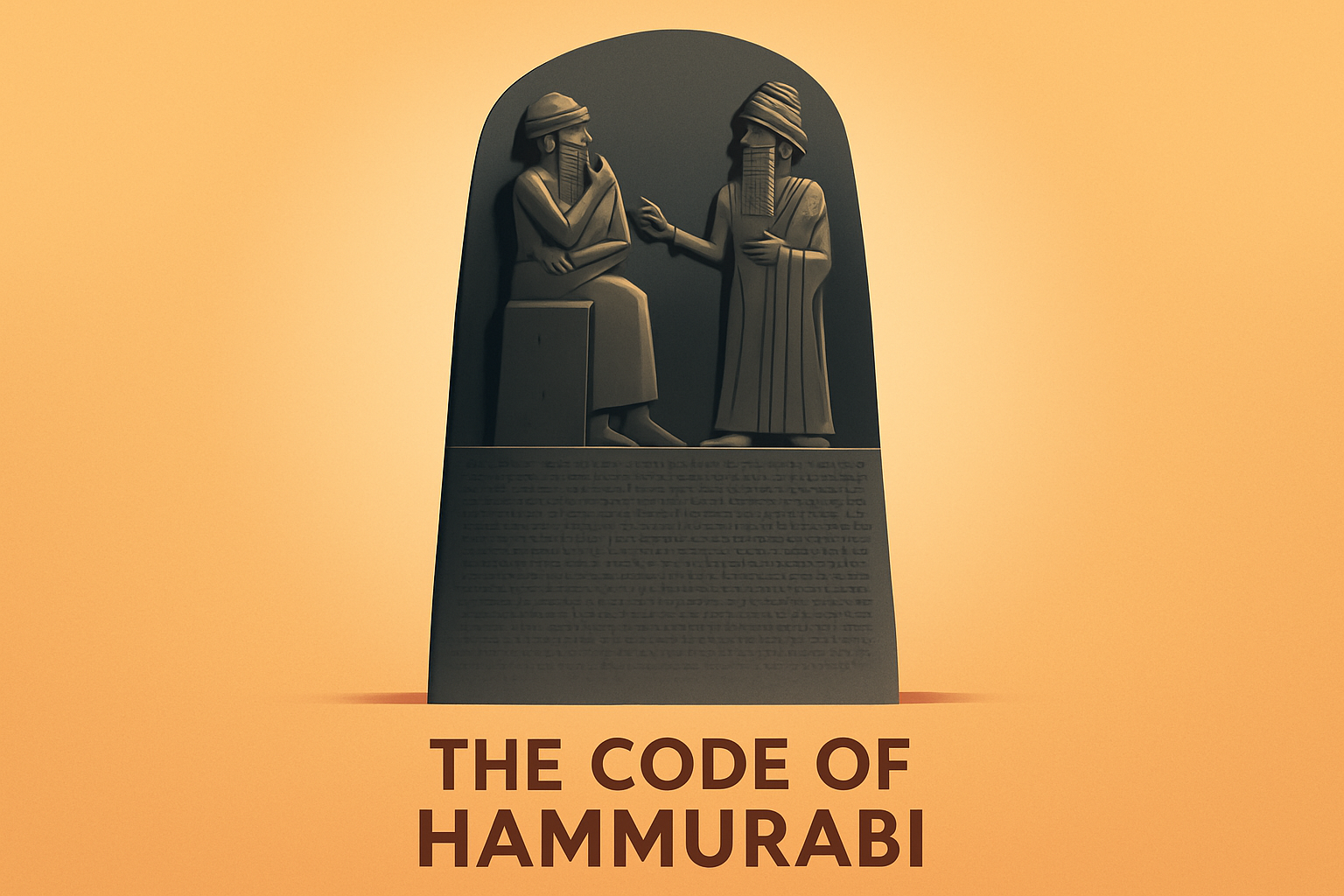
The Code of Hammurabi is one of the oldest deciphered writings of significant length in the world, serving as a crucial legal text in ancient Mesopotamia. Created during the reign of King Hammurabi of Babylon, around 1754 BCE, this monumental legal document consists of 282 laws that were meant to maintain societal order and justice. Inscribed onto a stele, these laws are presented in a ‘if-then’ structure, outlining both laws and their respective punishments. The enduring significance of the Code of Hammurabi is rooted in its role as one of the earliest and most complete written legal codes, influencing many systems of law that followed.
Understanding this ancient code is important because it sheds light on how early civilizations approached governance, justice, and societal order. It provides insight into social hierarchies, economic principles, and ethical norms that were prevalent almost four millennia ago. Recognizing the inherent value this code possessed in shaping governmental laws underscores its historical and cultural importance. Moreover, it serves as a vital reference point for historians and legal scholars when assessing the evolution of law and order. It matters as it forms a foundation to comprehend how early legal systems provided frameworks that ensured community life could be regulated effectively, promoting both justice and fairness.
The Structure and Content of the Code
The Code of Hammurabi is structured in a logical and systematic manner, aiming to cover all aspects of daily life. The laws address a wide range of subjects including trade, property rights, family law, labor relations, personal injury, and professional malpractice. This comprehensive approach reflects a desire to regulate every aspect of society systematically, thereby minimizing injustice. Most of the laws were based on a principle known as “lex talionis”, which means ‘law of retaliation’, similar to the idiom “an eye for an eye”.
A real-world example of this principle can be seen in laws concerning personal injury. For instance, the code stipulates that if a man should cause another individual to lose an eye, then he is to lose his own eye as punishment. This reflects a focus not merely on punishment, but a proportional response that underscores justice as a balancing act. Unlike modern legal systems that might offer compensatory damages, the Code’s approach reflects a system deeply rooted in physical and direct retribution.
The Role of Social Hierarchy
The Code of Hammurabi provides a window into the social stratification of Babylonian society. Laws were applied differently based on social class, with different punishments prescribed for the same offense depending on whether the perpetrator was a noble, free man, or slave. This unequal application of law highlights an intrinsic social hierarchy within the Babylonian community where nobles had more rights and fewer punishments compared to commoners and slaves.
To illustrate, if a noble harmed a free man, his penalty was less severe than if a nobleman were the victim. The code eloquently emphasizes social distinctions and ensures that societal imbalance was maintained, reflecting the early human inclination towards structured hierarchical communities. In modern terms, this could be compared to the different legal safeguards and considerations present for certain groups, though today there is a greater emphasis on equality under the law.
The Economic Implications of the Code
The economic provisions within the Code of Hammurabi highlight regulation in trade, contracts, and economic transactions. The laws established set prices, fees for services, and stipulations for trade activities, ensuring economic stability and integrity within the marketplace. This section of the code showcases an early attempt at providing legal frameworks that regulate economic interactions that are crucial for community prosperity.
For example, the code includes a law that sets specific wages for different types of laborers and artisans. This predetermined valuation aimed to assure fairness and provide a measure of certainty for both employers and workers. Such clarity can be seen as a precursor to the regulated employment agreements and wage controls found in modern economics. This legal framework laid the groundwork for balanced economic relationships and sustainable economic practice.
The Code’s Legacy and Influence
The lasting influence of the Code of Hammurabi is a testament to its forward-thinking approach to law and governance. It was not merely a collection of archaic mandates but rather a methodically structured guide for societal governance that resonated throughout time. One primary reason for its influence is that it provided a recorded, concrete set of rules, allowing for consistent dissemination and understanding of the law.
An example of its enduring legacy is how the principles espoused by the Code influenced not only consecutive Babylonian law codes but also the Judaic legal tradition and later Western legal systems. While contemporary legal codes no longer rely on its principle of retaliation, the drive to codify and provide transparently accessible justice systems remains rooted in Hammurabi’s initiatives. These principles of clarity, order, and predictability in the law can be seen in how modern governance structures insist upon clear legal systems that are accessible and just.
| Aspect | Influence on Future Systems |
|---|---|
| Legal Codification | Established clear, written laws that inspired future legal codes and documentation across civilizations. |
| Justice Principle | Inspired proportional justice systems, including retributive justice, in later legal traditions. |
| Societal Hierarchy | Reflected in future laws that acknowledge societal differences but pushed towards equality in modern systems. |
Modern Reflections of Ancient Law
In present times, the Code of Hammurabi serves not only as a historical artifact but as a reflection of how early attempts at systematizing law laid foundations for contemporary legal doctrines. Although the specifics of punishments and reparations have evolved significantly, the core intent of maintaining societal harmony through enforceable rules remains intact.
In modern judicial interpretation, elements such as the rapaciousness associated with physical punishments in ancient times have been replaced by structured, civilized measures. This can be viewed in modern legal systems’ heavy emphasis on rehabilitation rather than purely punitive measures. Contemporary frameworks focus on ensuring that the law serves as a preventive tool, underpinning societal peace and securing justice that aligns with ethical global standards.
Conclusion and Next Steps
The Code of Hammurabi stands as a remarkable example of early legislative achievement, reflecting humanity’s nascent attempt at imposing order and justice. Its significance transcends time as it paves the way for understanding how ancient societies conceptualized laws that governed both the mundane and moral aspects of a civilized life. By exploring this early system, readers can appreciate how these fundamental concepts of justice, albeit primitive by modern standards, provided essential groundwork for subsequent legal systems.
For the modern observer or scholar, recognizing the nuances of historical legal systems like the Code of Hammurabi presents an opportunity to deliberate on the development and refinement of justice and how these ancient precedents continue to influence today’s legal frameworks. It’s a call to action for continual improvement and adaptation of legal norms to cater to evolving societal needs.
Next steps for those interested in delving deeper into ancient legal systems might include exploring comparative legal codes from similar periods, such as the laws of Urukagina or the Hebrew laws, to further understand how differing cultures approached law and justice throughout ancient history.
Frequently Asked Questions
What is the Code of Hammurabi, and why is it significant?
The Code of Hammurabi is one of the earliest and most complete written legal codes in the world, created around 1754 BCE during the reign of King Hammurabi of Babylon. It is significant because it showcases one of the first instances of a government attempting to regulate society through a comprehensive set of laws. Consisting of 282 laws, the Code covers topics ranging from property rights and trade to family law and civil duties. Uniquely inscribed on a tall stone stele, these laws were presented in a conditional “if-then” format, emphasizing consequences and retribution as a means to maintain societal order. The Code not only provides insight into the Babylonian empire’s legal philosophies but also sheds light on the complexities of ancient Mesopotamian society, making it an indispensable resource for historians and legal scholars.
How were the laws of the Code of Hammurabi enforced in ancient Babylon?
The laws within the Code of Hammurabi were enforced through a structured legal system that relied heavily on retributive justice—summarized by the phrase “an eye for an eye.” This concept of justice intended to deter crime by ensuring that the punishment would accurately reflect the offense, thus maintaining social harmony. Enforcement was typically carried out by magistrates and other legal officials who were responsible for interpreting the laws and determining appropriate penalties. Hammurabi’s role in this system was crucial, as the Code cites him as the divine intermediary tasked with delivering fair and just laws directly from the gods. To facilitate enforcement, the stele bearing the Code was publicly displayed, so all citizens were aware of the laws and the consequences of breaking them. This transparency played a critical role in ensuring that justice was seen as both fair and consistent throughout Hammurabi’s realm.
What are some examples of laws included in the Code of Hammurabi?
The Code of Hammurabi encompasses a diverse array of laws addressing various aspects of daily life and governance in ancient Babylon. For instance, one notable law states that if a person accuses another of murder without providing evidence, the accuser shall be put to death. This highlights the importance placed on substantiated claims and the severity of false accusations. Property law is also well-represented; for example, a law dictates that if a person helps a slave escape, they shall be put to death, emphasizing the protection of property rights and the importance of maintaining the social hierarchy. Additionally, the Code addresses family law by outlining rules and punishments related to marriage, divorce, and inheritance, such as requiring a dowry to be returned if a marriage ends unfavorably for the wife. Overall, these examples illustrate the Code’s comprehensive approach to governing a wide array of social and legal matters with an emphasis on justice and retribution.
What can the Code of Hammurabi tell us about ancient Mesopotamian society?
The Code of Hammurabi offers a wealth of insights into the social, economic, and political intricacies of ancient Mesopotamian society. Firstly, the existence of such an extensive legal code suggests a highly organized and structured society with a sophisticated understanding of governance and justice. The laws reveal a social hierarchy, with distinct classes such as free men, commoners, and slaves, each subject to different legal standards and repercussions. This indicates a rigid societal structure where status significantly influenced one’s rights and obligations. Additionally, the Code underscores the central role of agriculture and trade in Babylonian society, as numerous laws pertain to contracts, property management, and commercial transactions, reflecting a well-developed economy. Religious influence is also evident, as the Code emphasizes the king’s divine authority to rule and administer justice, highlighting the intertwining of religious beliefs and governance. Together, these elements provide a comprehensive snapshot of the values, priorities, and daily life of an ancient civilization.
How does the Code of Hammurabi compare to modern legal systems?
While the Code of Hammurabi is vastly different from modern legal systems in terms of its enforcement mechanisms and societal context, there are certain aspects that align with contemporary legal principles. The Code’s focus on written laws and public knowledge of these laws mirrors modern practices where laws are codified and made accessible to all citizens, ensuring transparency and accountability. Additionally, the concept of justice through proportionality, seen in the “if-then” punishments of the Code, resonates with today’s legal emphasis on matching the severity of the punishment to the crime committed. However, modern legal systems typically feature more emphasis on rehabilitation and due process, which contrasts with the Code’s retributive and often severe approach to justice. Furthermore, today’s legal frameworks tend to be more egalitarian, striving for equal treatment under the law, as opposed to the stratified justice reflected in Hammurabi’s laws. Despite these differences, the Code of Hammurabi remains a foundational document that underscores the enduring human quest for order and justice.