
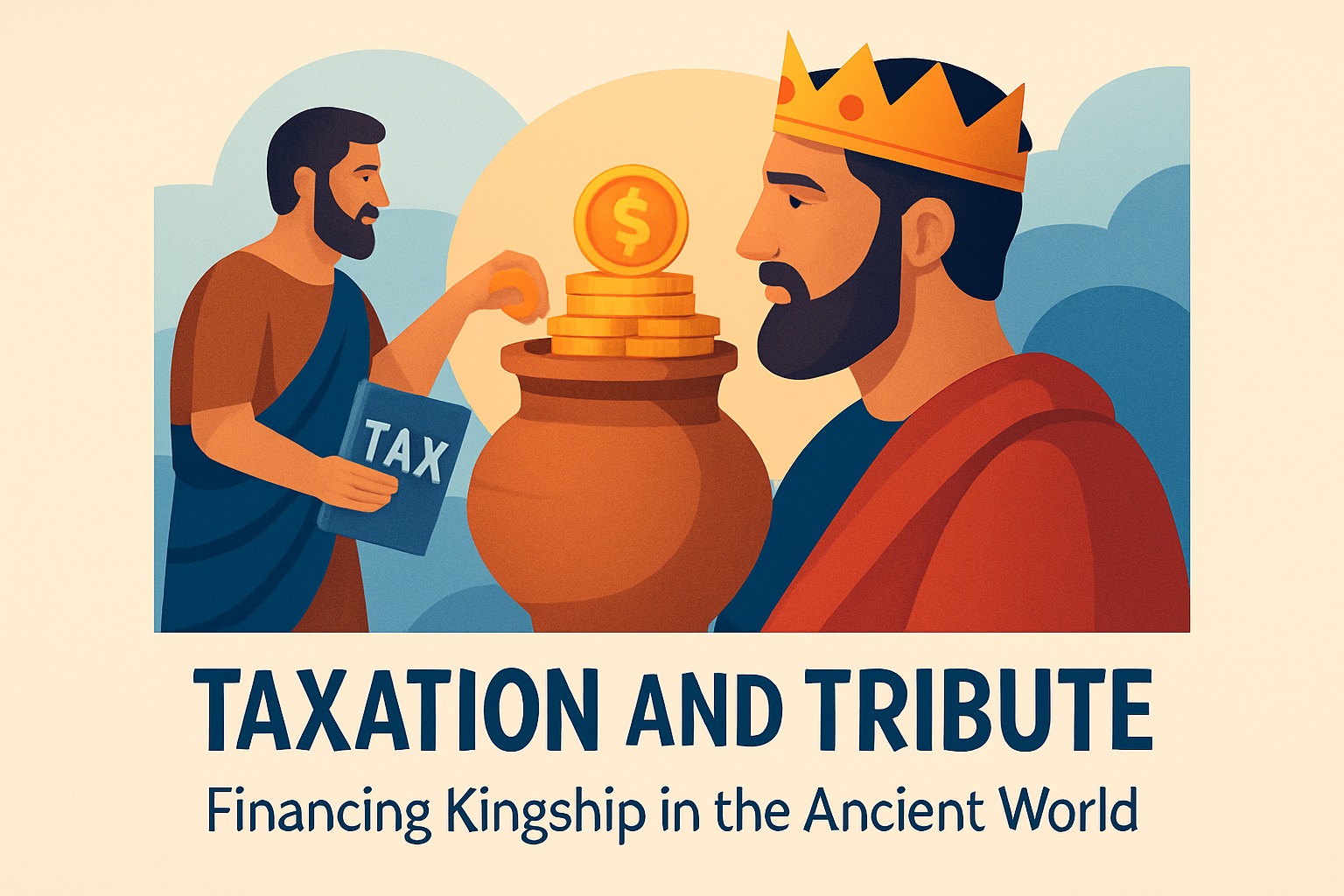
Throughout history, the power and prosperity of ancient kingdoms were intricately tied to their ability to generate revenue. The mechanisms of taxation and tribute formed the critical backbone for financing the activities of kingship, allowing rulers to maintain military forces, build monumental architecture, and exert influence both within and beyond their borders. Understanding these early systems of revenue collection not only sheds light on the evolution of economic systems but also on how ancient societies prioritized resources. Focusing on the distinction between ‘taxation’, compulsory payments within a kingdom, and ‘tribute’, payments often imposed externally, reveals the dual strategies leaders used to consolidate power and command loyalty. These systems paved the way for contemporary fiscal policies, revealing the enduring importance of fair and efficient revenue collection. Delving into these ancient practices uncovers the various ways they shaped the political, economic, and social dynamics of their time.
Taxation in Ancient Egypt: Harnessing the Nile’s Bounty
In ancient Egypt, the lifeblood of the economy was the River Nile, whose periodic flooding enriched the land, allowing for prosperous agriculture. The pharaohs imposed taxes primarily on the produce of this fertile land. This system ensured that the state was supported by the very resources it helped cultivate. Farmers were required to give a portion of their crops, such as wheat and barley, directly to the state’s granaries. This not only provided sustenance for the urban population and the numerous workers engaged in state projects but also underpinned the Egyptian concept of Ma’at, or harmony. By directing resources towards state needs, the pharaohs maintained order and balance in society.
The scribes played a crucial role in this system, meticulously recording and assessing the potential yields of agricultural land, ensuring that taxes were calculated fairly according to the size and productivity of each plot. The information was used to project state revenue and manage resources effectively. In return, the central authority provided infrastructure, such as irrigation, that enabled farmers to maximize their harvests. This reciprocity solidified the pharaoh’s position as the divine intermediary ensuring prosperity and stability within Egypt.
Tribute in the Assyrian Empire: Conquest and Control
Unlike the internal taxation systems seen in Egypt, the Assyrian Empire largely depended on tribute from conquered territories to fuel its expansionist ambitions. The Assyrians were known for their military prowess, and once a territory was subdued, it was often obligated to pay regular tribute to its conquerors. This tribute could take the form of massive quantities of silver, gold, livestock, and even human resources, such as soldiers or slaves. By securing these resources from external lands, Assyrian kings freed their internal populations from heavy taxation, which in turn reduced unrest and maintained loyalty.
This system of tribute was not static; it adjusted to political realities. For instance, the tribute demanded from vassal states varied according to the threat the Assyrians perceived from them or their strategic importance. Tribute was not just a means of economic gain; it represented dominance and subjugation, bolstering the king’s reputation as a powerful ruler under whom client states thrived or suffered at his discretion. This relationship exemplified a strategic manipulation of diplomacy and imposed loyalty, reinforcing internal stability and external control.
Comparative Analysis: Taxation vs. Tribute
- Nature: Taxation involves internal compulsory payments, while tribute requires external contributions.
- Purpose: Taxation funds domestic functions, tribute projects power and ensures external obedience.
- Examples: Egyptian grain taxes vs. Assyrian silver tribute.
- Administration: Taxation requires robust internal bureaucracy; tribute leverages military strength.
Both taxation and tribute served essential roles in enriching their respective states. Ancient regimes relied on taxation to maintain domestic welfare and ensure a stable society. Tribute, on the other hand, was a direct line of wealth transfer from periphery to center, bolstering the state’s capacity to project power beyond its borders. These systems, though different in execution and origin, often worked in tandem to create sustainable economic structures, showing the nuanced approaches ancient societies took in managing their domains.
The Mauryan Example: A Hybrid Approach
The Mauryan Empire in ancient India provides a fascinating case of employing both taxation and tribute in managing its territories. Under Emperor Ashoka, the Mauryan administration imposed taxes on land and trade within its empire. Key economic centers were rigorously taxed, with revenue supporting the construction of infrastructure such as roads and urban facilities, which in return facilitated greater trade and increased tax revenues.
Ashoka is renowned for transforming his military empire into one guided by Buddhist principles and non-violence, yet tribute remained crucial—not from subjugated lands but from neighboring allies who pledged allegiance. This payment was often in the form of elephants and horses, essentially buttressing the Mauryan’s military capability indirectly. Thus, while striving for peace within his realm, Ashoka ensured the empire’s influence remained formidable through a mix of dominion and diplomacy.
Legacy and Influence on Modern Systems
Many of today’s financial policies and economic strategies echo the ancient practices of taxation and tribute. Essential to the sustainability of a government, taxation has seen a vast evolution but retains its fundamental purpose of financing public goods and services. The reciprocal relationship between a state and its citizens, fostered by efficient tax systems, is crucial to national stability and growth. Similarly, the concept of tribute reverberates today in political allegiances and economic assistance between nations.
Governments continuously balance tax burdens with public benefits, seeking the harmony ancient rulers aimed for. In international relations, modern analogs to tribute are seen in forms of aid, alliances, and trade agreements, offering mutual benefits while cementing the precedence of powerful nations. Insights from these ancient practices guide contemporary debates on fiscal policy, highlighting the importance of adeptly managing resources within increasingly complex global interactions.
Conclusion
The art of financing through taxation and tribute was a cornerstone for ancient kingship, offering valuable insights for contemporary fiscal frameworks. These systems underlined the necessity for rulers to maintain domestic prosperity and external dominance, serving as prototypes for today’s sophisticated economic models. By understanding the successes and challenges these ancient societies encountered, we can better appreciate the intricacies of modern fiscal policy and international relations.
As we navigate an ever-evolving economic landscape, embracing lessons from the past will streamline future innovations. In our quest for comprehensive and equitable fiscal systems, reflecting on ancient practices provides a historical lens through which modern policymakers can critically evaluate current and future challenges. The achievements and failures of ancient states are reminders of our potential to sculpt a more balanced and prosperous world.
Frequently Asked Questions
1. What roles did taxation and tribute play in ancient kingdoms?
Taxation and tribute were critical components of ancient kingdoms, ensuring the sustenance and expansion of the ruler’s power. These systems of revenue collection allowed kings to finance essential governmental functions such as maintaining a standing army for defense and conquest, building monumental architectural projects that served both as infrastructure and as displays of wealth and power, and sustaining the royal court and administrative apparatus. By systematically collecting resources from their subjects, ancient rulers could not only stabilize their reigns but also project influence far beyond their immediate territories, thereby securing alliances, winning battles, and solidifying control over trade routes. These financial strategies ensured that ancient societies could flourish, expand their influence, and integrate various cultures into emerging empires.
2. How did ancient rulers decide what taxes to impose on their subjects?
Ancient rulers were strategic in developing systems of taxation that reflected the economic activities and capabilities of their realms. Taxes were often imposed on agricultural produce, trade goods, and sometimes on personal wealth, which could include animals, precious metals, and even manpower. Rulers would typically assess the available resources within their territories and consider the ease of collection, ultimately implementing taxes that did not overly burden the populace. Additionally, the specific taxes imposed could vary over time and were often adjusted based on the ruler’s immediate financial needs, whether it was for supporting a military campaign, building a new palace, or covering the costs of diplomacy and tribute to other states. These tax systems were often enforced by a network of local officials and collectors who ensured compliance, sometimes through coercive means.
3. In what ways did taxation and tribute affect the economic development of ancient civilizations?
The systems of taxation and tribute were pivotal to the economic development of ancient civilizations. By channeling resources towards the ruling government, these systems facilitated the reallocation of goods and wealth, which could then be invested in public works, trade enterprises, and cultural projects. The economic stimulation provided by taxation allowed for the development of infrastructure such as roads, bridges, and irrigation systems, thereby enhancing agricultural productivity and trade efficiencies. Furthermore, these revenues funded exploration and military campaigns, which could lead to the acquisition of new territories and resources. Although taxation could strain the population, successful management often encouraged prosperity and stability, contributing to the overall economic health of a kingdom and its ability to adapt in the face of new challenges.
4. What were some common forms of tribute in ancient societies, and how did they differ from taxation?
Tribute in ancient societies was often a demonstration of submission or alliance, typically involving the periodic sending of goods, money, or manpower from one polity to a more powerful state or ruler. This form of revenue was distinct from taxation in that it usually involved foreign relations rather than internal administration. Tribute could include luxury goods, raw materials, livestock, or specialized crafts, often reflecting the resources and economic capabilities of the tributary society. Unlike taxes imposed on subjects, tribute often came from conquered peoples or as part of diplomatic agreements—either as a sign of fealty or in exchange for protection or trading privileges. While taxation was generally institutionalized within a kingdom, tribute relations could be fluid, and their cessation often provoked military or political repercussions.
5. How did early systems of revenue collection influence the political structures of ancient kingdoms?
The systems of revenue collection in ancient kingdoms were fundamental in shaping their political structures. Effective taxation and tribute systems required an administrative bureaucracy to manage and record the flow of resources. This encouraged the development of specialized roles, such as tax collectors and scribes, which became integral to governance. As a result, a class of professional administrators emerged, deeply influencing the political landscape and contributing to the centralization of power. Reliable revenue streams allowed rulers to employ loyal officials and mercenaries, thus reinforcing their authority and facilitating more complex state functions. However, the ever-present challenge of maintaining equity and fairness in taxation often necessitated political negotiations and adjustments, thereby influencing the dynamics between the ruling class and their subjects, and often shaping the overarching political narrative of a kingdom’s history and identity.