
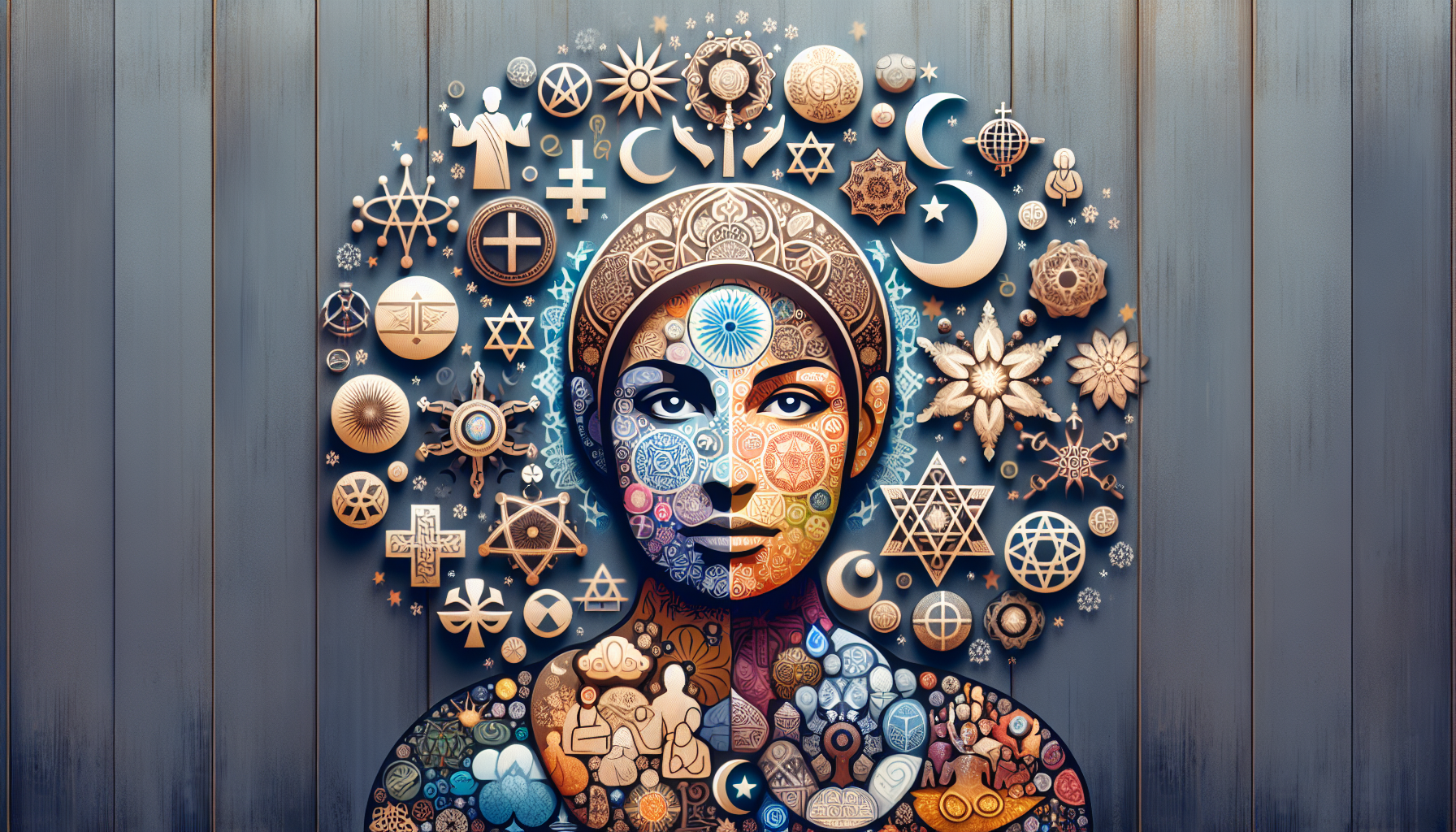
Syncretism is the process by which religions absorb, reinterpret, and combine beliefs, rituals, symbols, and institutions through sustained contact. It happens when merchants exchange stories along trade routes, when empires conquer new populations, when migrants carry devotional habits into unfamiliar cities, and when communities adapt inherited traditions to survive political pressure. In comparative religion, syncretism does not mean a careless mixing of ideas. It describes a structured historical phenomenon in which people negotiate identity, authority, memory, and power through sacred forms. Understanding syncretism matters because many traditions often presented as fixed or pure were shaped through centuries of encounter. I have seen this repeatedly when mapping religious change across regions: the most revealing patterns appear not at civilizational borders alone, but in markets, ports, military frontiers, pilgrimage centers, and colonial missions.
The term comes from early modern scholarship, but the underlying reality is far older. Ancient Mediterranean religion blended Greek, Egyptian, Roman, and Near Eastern deities. Buddhist practice absorbed local cosmologies from Sri Lanka to Japan. Christianity incorporated philosophical language from the Hellenistic world and calendrical customs from Europe. Islam encountered Persian court culture, Turkic political models, Berber saint veneration, South Asian Sufi institutions, and Southeast Asian ritual landscapes. Indigenous religions under colonial rule often preserved core cosmologies by translating them into the language of saints, shrines, feast days, or spirit possession. The result was neither simple replacement nor complete continuity. It was layered adaptation. To explain how religions blend through contact and conquest, this article examines mechanisms, historical examples, political pressures, and the debates surrounding authenticity, resistance, and cultural survival.
What Syncretism Means in Religious History
In practical terms, syncretism occurs when elements from different religious systems become integrated into a recognizable new pattern. Those elements may include theology, ritual technique, iconography, sacred geography, moral teaching, festival calendars, or institutional authority. Scholars distinguish syncretism from parallel coexistence. If two traditions merely exist side by side, that is pluralism. If one borrows from another without deeper integration, that is influence. Syncretism begins when borrowed elements are given new meaning inside an adopted framework. A local mountain spirit identified with a Buddhist protector deity, a Yoruba orisha associated with a Catholic saint, or a Roman emperor cult borrowing Egyptian symbolism all show this process.
Not every believer embraces the term. Clergy and reformers often use it critically to accuse rivals of corruption, dilution, or heresy. Historians, however, treat it as an analytical category, not an insult. From that perspective, syncretism is common because religions are lived by communities, not preserved in sealed containers. People marry across boundaries, trade across languages, settle conquered territories, and improvise rituals in response to drought, disease, and war. In those settings, practical religious life moves faster than doctrinal gatekeeping. A shrine can become shared before a council condemns it. A feast can merge before theologians classify it. This tension between local practice and official definition is central to the subject.
How Contact Creates Religious Blending
Peaceful contact produces syncretism through repetition and familiarity. Trade is one of the strongest engines. Along the Silk Roads, merchants carried amulets, cosmologies, artistic motifs, and ritual specialists along with textiles and spices. Buddhism spread through monastic networks connected to commerce, and in Central Asia it adopted visual conventions from Hellenistic art. The Buddha’s anthropomorphic image, common in Gandhara, shows drapery and realism shaped by Greek artistic influence after Alexander’s conquests. That was not decoration alone. Visual form affected how sacred presence was perceived and transmitted.
Migration also matters. Diaspora communities preserve identity by adapting worship to new social conditions. In the Caribbean and the Americas, enslaved Africans from different ethnic backgrounds were forced together, cut off from many original institutions, and pressured to convert to Christianity. Yet ritual specialists preserved lineages of drumming, possession, healing, divination, and spirit hierarchy. Over time, these systems interacted with Catholic saints, liturgical calendars, and colonial social structures. Cuban Santería, Haitian Vodou, and Brazilian Candomblé are not random mixtures; they are disciplined religious worlds that emerged from trauma, memory, and strategic concealment.
Shared sacred space is another catalyst. I have found that when two groups use the same spring, tomb, tree, mountain, or healing shrine, categories begin to overlap quickly. In the eastern Mediterranean, Muslims, Christians, and Jews have historically visited some of the same holy sites, even while explaining their power differently. Local religious life often values efficacy over exclusivity. If a shrine is believed to heal infertility or protect travelers, ritual participation can cross doctrinal lines long before institutions formally address it.
How Conquest Reshapes Belief and Practice
Conquest accelerates blending because it forces unequal communities into direct contact. Empires rarely govern by destroying every local cult. More often, they absorb, rename, regulate, or rank them. Rome offers a classic case. Roman religion was highly incorporative, and imperial administration tolerated many local cults if they did not threaten order. Deities were identified across cultures through interpretatio, the practice of equating foreign gods with Roman ones. The Celtic god Lugus could be linked with Mercury; Egyptian Isis found worshippers across the empire; local traditions persisted under imperial categories. This was political theology in action: accommodation reduced resistance while affirming imperial supremacy.
Spanish and Portuguese conquest in the Americas created different but equally important forms of syncretism. Missionaries tried to replace Indigenous religions with Christianity, yet conversion was rarely total on colonial terms. Nahua, Maya, Andean, and other peoples mapped Christian figures onto existing sacred landscapes and ritual cycles. The Virgin of Guadalupe in Mexico became meaningful partly because Marian devotion could be rooted in earlier patterns of sacred geography and maternal symbolism. In the Andes, Catholic festivals often aligned with agricultural cycles and mountain veneration. These adaptations were not signs that Indigenous people misunderstood Christianity. They were evidence that colonized communities interpreted it through their own cosmologies.
Islamic conquests also generated complex synthesis. In South Asia, Islam did not spread only through armies or courts. It expanded through merchants, Sufi lodges, artisan networks, and agrarian frontiers. Many Muslim communities incorporated local customs around saints, shrines, healing, music, and seasonal observances. Reform movements later criticized some of these practices as innovations, but historically they helped root Islam in diverse societies. Conquest opens the door; long-term social embedding determines what endures.
Major Historical Patterns Across Regions
Several recurring patterns appear across the world. First, elite and popular religion often blend differently. Rulers may adopt foreign divine titles to legitimize power, while ordinary people merge healing rites, ancestor practices, and protective devotions. Second, visual and ritual elements usually travel faster than theology. Clothing, incense, processions, icons, drums, and festival dates are easier to exchange than metaphysical systems. Third, frontier zones are especially creative. Borderlands generate bilingual priests, mixed marriages, military colonies, and portable shrines, all of which encourage religious translation.
Japan illustrates these patterns clearly. For centuries, kami worship and Buddhism developed through close integration commonly called shinbutsu shūgō. Buddhist temples and Shinto shrines shared spaces, deities were interpreted as local manifestations of Buddhas or bodhisattvas, and ritual functions were distributed rather than segregated. Only in the nineteenth century did the Meiji state push a sharper institutional separation for political reasons. What later appeared to be timeless distinction had in fact been historically produced.
West Africa and the Atlantic world provide another model. Yoruba religious concepts, including ashe, divination through Ifa, and devotion to orishas, adapted under slavery and colonialism. In Cuba, Changó became associated with Saint Barbara; in Haiti, Ezili took multiple forms resonant with Catholic imagery. These associations were not one-to-one equivalences. They functioned as mnemonic bridges, protective disguises, and theological reinterpretations. Similar complexity appears in Greco-Buddhist art, in Sikh engagement with Bhakti and Sufi currents, and in Chinese religion, where Confucian, Daoist, Buddhist, and local practices often coexist within the same household ritual system.
| Region | Traditions in Contact | Syncretic Outcome | Main Driver |
|---|---|---|---|
| Roman Empire | Roman, Egyptian, Celtic, Greek | Hybrid cults and deity identification | Imperial expansion |
| Mexico | Indigenous traditions and Catholicism | Localized Marian and festival devotion | Colonial rule |
| Caribbean | West African religions and Catholicism | Vodou, Santería, related traditions | Slavery and forced conversion |
| Japan | Kami worship and Buddhism | Shared shrines, integrated cosmology | Long-term coexistence |
| South Asia | Islam with regional customs | Shrine-centered devotional blends | Trade, conquest, settlement |
Why Religious Authorities Resist or Accept Syncretism
Religious authorities do not respond to syncretism uniformly. Some accept adaptation because it speeds conversion, localizes devotion, or stabilizes political rule. Jesuit missions in China famously debated how far Confucian rites could be treated as civil rather than religious. In late antiquity, Christian leaders reworked existing philosophical vocabulary to explain doctrine. Buddhist teachers across Asia translated key concepts into local intellectual categories. These strategies recognized a basic fact: a religion that cannot speak local cultural language rarely takes deep root.
Resistance emerges when leaders fear loss of doctrinal coherence or institutional control. Monotheistic traditions with strong scriptural norms often generate reform movements that attack shrine devotion, spirit mediation, divination, or saint intercession as unacceptable accretions. Similar purifying impulses exist elsewhere too. State builders may also oppose syncretism because mixed ritual life weakens centralized identity. The Meiji reforms in Japan, anti-superstition campaigns in modern states, and revivalist movements in Christianity, Islam, Hinduism, and Buddhism all show how governments and religious elites classify some inherited blends as legitimate culture and others as deviance.
In my experience, the dispute is usually not about whether blending occurred. Historical evidence for blending is abundant. The real dispute concerns authority: who gets to define the authentic version of the tradition, by what standard, and for what social purpose. Once that question is asked directly, arguments over purity become easier to analyze.
How to Study Syncretism Without Oversimplifying It
The biggest mistake is to describe syncretism as if two complete religions simply fused into a neat third form. Real cases are messier. Blending is often selective, unequal, and contested across class, gender, region, and time. One community may borrow ritual music but reject theology. Another may preserve an ancestral cosmology beneath an imposed public language. A colonial archive may record official conversion while household practice tells a different story. That is why serious study relies on multiple kinds of evidence: texts, art, architecture, oral tradition, festival observation, burial practice, and legal records.
Precise questions help. Which elements changed: gods, ethics, liturgy, sacred space, or social organization? Was borrowing voluntary, strategic, or coerced? Did the change happen through trade, intermarriage, schooling, enslavement, pilgrimage, or state policy? Who benefited from the new form, and who opposed it? Scholars of lived religion, postcolonial history, anthropology, and material culture have shown that these questions reveal syncretism as a process of negotiation rather than a static label. For readers exploring comparative religion more broadly, this hub connects naturally to related topics such as conversion, civil religion, esotericism, diaspora religion, ritual studies, and the politics of sacred space.
Syncretism explains why religions rarely remain untouched by contact and why conquest never produces simple replacement. Across empires, trade networks, migration corridors, and colonial frontiers, communities have preserved meaning by translating it. The most important lesson is not that all religions are the same. It is that religious traditions are historically adaptive, and their apparent boundaries are often the result of long argument rather than original purity. When you examine blended festivals, shared shrines, translated deities, or reinterpreted saints, you are seeing people solve urgent problems of identity, survival, and legitimacy under changing conditions.
As a hub for this comparative subtopic, this overview should anchor deeper reading on hybrid ritual systems, colonial religion, reform movements, and contested authenticity. Use it as a map: start with mechanisms of contact, move to conquest and power, then compare regional examples and debates over authority. The payoff is practical as well as scholarly. Once you understand syncretism, religious history becomes clearer, less mythologized, and far more human. Continue with the related articles in this series to trace specific cases, compare methods, and build a sharper framework for studying how belief changes when cultures meet.
Frequently Asked Questions
What is syncretism in religion, and how is it different from simply mixing beliefs?
Syncretism in religion is the historical process through which communities absorb, reinterpret, and combine beliefs, rituals, symbols, institutions, and sacred stories after sustained contact with other traditions. That contact may come through trade, migration, intermarriage, conquest, missionary activity, slavery, colonization, or life in shared urban spaces. What makes syncretism important in comparative religion is that it is not random or superficial. It is usually shaped by power, memory, social need, and continuity with the past.
In other words, syncretism is not just “people borrowing a little from here and there.” It often involves deliberate translation. A community may identify one deity with another, reinterpret an old festival in a new theological framework, preserve ancestral rites under the language of a dominant religion, or merge institutional forms so that older practices survive in altered but recognizable ways. The result is typically a structured adaptation rather than a careless blend. Scholars study syncretism to understand how religions change while still claiming legitimacy, how communities negotiate identity under pressure, and how sacred traditions remain alive across changing political and cultural worlds.
How does contact between cultures lead to religious syncretism?
Religious syncretism usually grows out of repeated contact, not a single encounter. When merchants move along trade routes, they carry more than goods: they bring myths, protective rituals, sacred images, healing techniques, ethical teachings, and ideas about the divine. Ports, caravan cities, border regions, and imperial capitals have historically been especially fertile places for syncretism because people there meet regularly, compare practices, and search for ways to make foreign powers and local traditions intelligible to one another.
Migration also plays a major role. Families and communities relocating to new regions often preserve inherited devotions while adapting them to a new social environment. A shrine may gain new meanings, a ritual calendar may shift to match local conditions, and familiar sacred figures may be identified with figures already honored by neighboring populations. Over time, these adjustments can become stable religious forms in their own right.
Conquest creates another major pathway. When empires absorb new populations, both rulers and subjects often reinterpret religion strategically. Dominant powers may incorporate local gods into imperial systems to make rule more acceptable, while conquered communities may preserve their traditions by presenting them through the language, symbols, or institutions of the conquerors. Even under unequal conditions, this process is rarely one-directional. The ruling culture can also be transformed by the beliefs and rituals of the people it governs. Syncretism, then, is one of the clearest signs that religious history is interactive, negotiated, and deeply shaped by human contact.
Why does syncretism often happen during conquest, colonization, or political pressure?
Syncretism frequently intensifies under conquest or colonization because communities facing domination must find ways to survive without surrendering their deepest forms of meaning. Political pressure can disrupt public worship, outlaw rituals, privilege an official religion, or force conversion. In those settings, people often respond creatively. They may continue older practices beneath the symbols of a new religion, reinterpret local spirits as saints or angels, preserve ceremonies inside accepted festivals, or maintain ancestral cosmologies through altered language. This is not simply compromise; it can be a strategy of continuity, resistance, and cultural endurance.
At the same time, colonial and imperial authorities may encourage selective blending for practical reasons. Allowing some local customs to continue can make rule easier, reduce conflict, and help universalizing religions spread more effectively. Missionaries, administrators, and local elites may all participate in translation between traditions, though not always for the same reasons. The resulting religious forms can therefore reflect both coercion and agency.
That complexity is why syncretism should not be romanticized or dismissed. In some cases, it represents genuine theological creativity and shared cultural life. In others, it bears the marks of violence, inequality, and forced adaptation. Often it is both at once. Studying syncretism in contexts of conquest helps reveal how religion functions not only as belief, but also as a field of negotiation over identity, memory, legitimacy, and survival.
Can syncretism happen without conquest or conflict?
Yes. Although conquest and colonial pressure are major engines of religious blending, syncretism also develops in peaceful or relatively ordinary settings. Trade networks, mixed neighborhoods, shared pilgrimage sites, diplomatic exchange, intermarriage, and multilingual societies can all generate gradual forms of religious adaptation. When people live together over time, they ask practical and spiritual questions: Which gods protect travelers? Which rituals heal illness? How should marriages, funerals, or seasonal festivals be observed in a diverse community? The answers often produce layered religious practices that carry elements from more than one tradition.
In these settings, syncretism may arise less from survival under coercion and more from mutual intelligibility and lived experience. Communities compare sacred figures, discover ritual parallels, and adopt practices that seem spiritually effective or socially meaningful. Philosophical traditions may also merge as thinkers seek broader frameworks that can explain multiple inherited systems at once. This kind of syncretism can be slow, subtle, and highly sophisticated, unfolding across generations until the blended tradition feels natural to its practitioners.
Importantly, even peaceful syncretism is not accidental. It still involves choices about authority, authenticity, and identity. Some leaders welcome adaptation as a sign of vitality, while others resist it to protect doctrinal boundaries. The presence or absence of open conflict does not erase the fact that religious traditions are always responding to social realities. Syncretism simply makes that process especially visible.
Why is syncretism important for understanding the history of religions today?
Syncretism matters because it helps explain why religions look the way they do in the real world rather than in simplified textbook form. Very few traditions have developed in complete isolation. Most have been shaped by centuries of encounter with neighbors, rivals, empires, migrants, and local cultures. When people study syncretism, they begin to see religious history not as a set of sealed containers but as a record of translation, adaptation, contest, and continuity. That perspective is essential for understanding everything from sacred art and ritual practice to institutions, theology, and popular devotion.
It also challenges misleading assumptions about “pure” religion. Communities often describe their traditions as ancient and unchanged, but historical study shows that continuity usually includes reinterpretation. Syncretism does not mean a religion is less serious or less authentic. It means that traditions survive by engaging the worlds around them. New circumstances require new expressions, and old symbols frequently acquire new meanings without losing all connection to the past.
For readers today, syncretism is especially useful because it illuminates pluralism, diaspora identity, nationalism, postcolonial memory, and the ongoing interaction between global and local faiths. It provides a vocabulary for discussing how religions change under pressure while remaining recognizable to believers. In that sense, syncretism is not a marginal topic. It is one of the central keys to understanding how religious communities remember, adapt, and endure across history.