
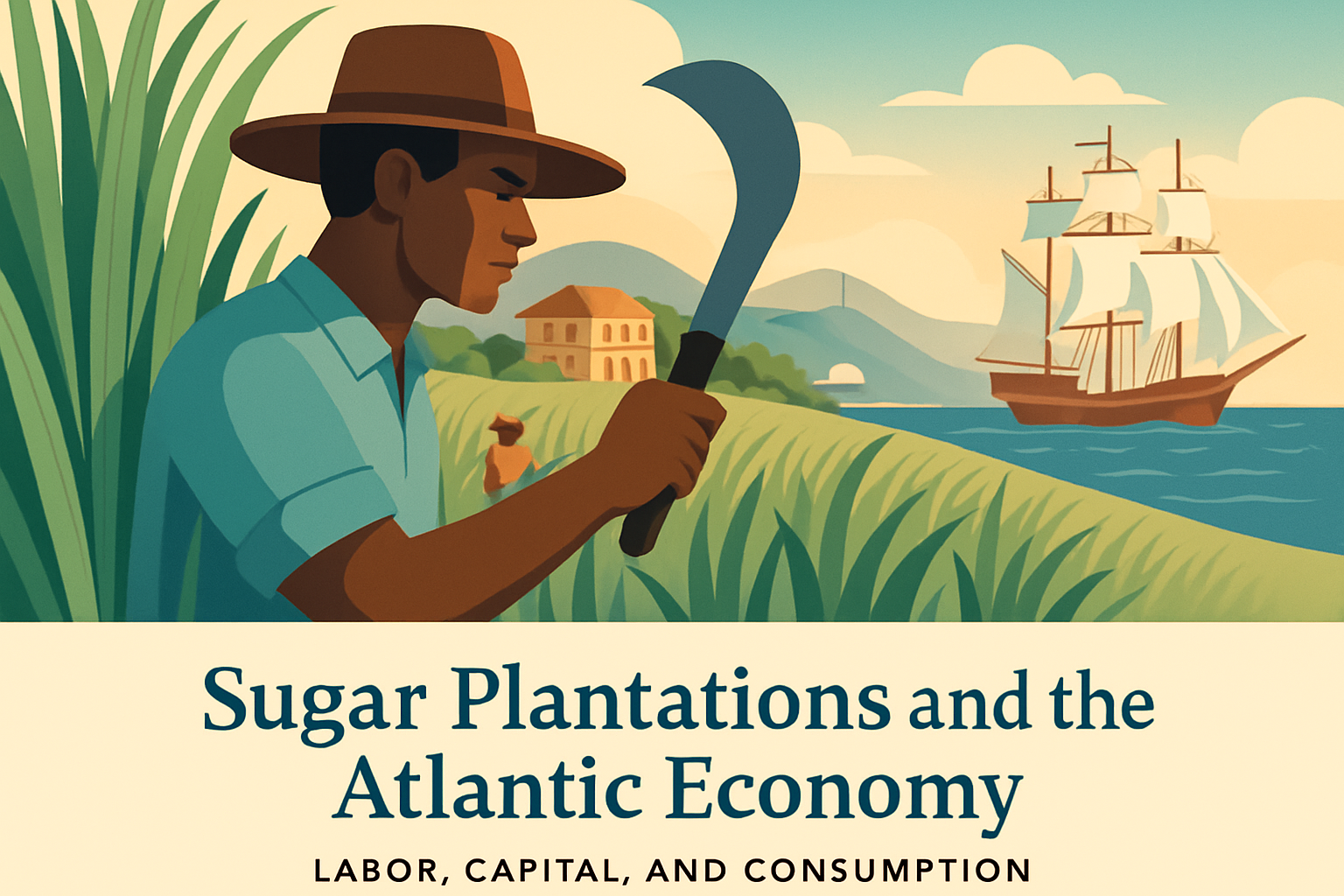
Sugar plantations stood at the center of the Atlantic economy, binding together land, labor, capital, shipping, finance, and consumer demand across Europe, Africa, and the Americas. In historical terms, the Atlantic economy refers to the interlocking commercial system that expanded from the sixteenth through the nineteenth centuries around the ocean basin, moving goods, people, credit, and ideas between imperial territories. Sugar plantations were large agricultural enterprises organized to cultivate cane, process it quickly in mills and boiling houses, and export semi-refined or refined sugar to distant markets. Their significance went far beyond diet. In practice, sugar reshaped colonial settlement, intensified the transatlantic slave trade, accelerated financial innovation, and normalized patterns of mass consumption that foreshadowed modern global capitalism.
When I have worked through plantation records, customs returns, and merchant correspondence, the same pattern appears repeatedly: sugar was never just another crop. It demanded heavy up-front investment, exact timing, brutal labor discipline, and reliable shipping connections. Cane had to be cut at peak ripeness and milled almost immediately because sucrose deteriorated rapidly after harvest. That agricultural fact explains much of the plantation system’s severity. Owners concentrated land, imported enslaved laborers in large numbers, built expensive processing works, and integrated estates into credit networks stretching from Barbados and Jamaica to London, Bristol, Nantes, Amsterdam, and beyond.
The topic matters because sugar offers one of the clearest case studies for understanding how consumption in one region can depend on coercion and extraction in another. It also clarifies how capitalism developed through colonial violence rather than apart from it. By tracing sugar plantations, we can see how labor systems, merchant finance, imperial policy, and everyday habits such as sweetened tea became mutually reinforcing. For students of economic history, the plantation is not peripheral. It is a core institution for explaining wealth accumulation, inequality, and the social costs embedded in global trade.
This article examines sugar plantations and the Atlantic economy through three linked themes: labor, capital, and consumption. It defines how plantation production worked, explains why enslaved labor became the dominant workforce in major sugar colonies, shows how credit and insurance made expansion possible, and traces how sugar moved from elite luxury to staple commodity. It also addresses the human and environmental consequences often hidden behind aggregate trade figures. Understanding those links is essential if we want a complete picture of Atlantic history and the origins of the modern consumer economy.
Why Sugar Became the Atlantic System’s Defining Plantation Commodity
Sugar became the defining plantation commodity because it combined high market value with broad and expanding demand. Europeans had known sugar in small quantities during the medieval period, often through Mediterranean production zones such as Sicily, Cyprus, and later Madeira and São Tomé. What changed in the Atlantic world was scale. Tropical and subtropical islands in the Caribbean and parts of coastal Brazil offered suitable climates, long growing seasons, and access to maritime trade routes. Once imperial powers secured territory and shipping capacity, sugar production expanded dramatically.
Technically, sugar was more complex than crops like tobacco. A viable estate needed cane fields, water or animal power for mills, boiling houses with large copper kettles, curing houses, storage space, skilled artisans, and shipping access. That complexity created high barriers to entry and favored concentrated ownership. In Barbados by the mid-seventeenth century, the “sugar revolution” displaced many smaller mixed farms as planters consolidated land and invested in mills. Jamaica later followed on a larger scale after English conquest in 1655. In French Saint-Domingue, eighteenth-century sugar output reached extraordinary levels, helping make the colony one of the richest in the world before the Haitian Revolution.
Because sugar required synchronized cultivation and processing, plantation management became intensely regimented. Estates operated as agro-industrial sites rather than simple farms. During harvest and grinding season, work often continued around the clock. The need to process cane immediately gave overseers and managers a constant rationale for extending labor time. That operational pressure shaped every other part of the system, especially the demand for a large, tightly controlled labor force.
Labor: Enslavement, Discipline, and the Human Cost of Production
The labor foundation of Atlantic sugar plantations was racialized chattel slavery. While indentured servants and other workers appeared in some colonies and periods, plantation sugar became overwhelmingly dependent on enslaved Africans and their descendants. The reason was not efficiency in any humane sense. It was the planter class’s pursuit of control, permanence, and profit under conditions of labor scarcity and high mortality. Enslaved people could be compelled to work in gangs, denied mobility, and treated in law as property, making them central to plantation accounting and collateralization.
Work on sugar estates was divided but uniformly harsh. Field gangs planted, weeded, manured, cut, and transported cane. Mill workers fed cane stalks into rollers, where injury risks were constant. Boiling-house labor demanded heat tolerance, timing, and technical skill because workers had to clarify, concentrate, and crystallize cane juice correctly. Coopers, carpenters, masons, drivers, and domestic workers performed additional tasks that kept the plantation functioning. On many estates, women labored in the fields alongside men and also bore the burden of reproduction under violent conditions. Children were integrated into work routines early.
Mortality rates in major sugar colonies were notoriously high. In places such as Barbados, Jamaica, and Saint-Domingue, disease, overwork, malnutrition, and punishment meant that many plantation populations did not reproduce naturally for long periods. Planters therefore relied on continual slave imports through the transatlantic trade. This demographic reality is essential. It shows that sugar wealth rested not only on exploitation, but on a labor regime so destructive that it required constant replenishment from Africa.
Enslaved people resisted in many ways: work slowdowns, sabotage, absconding, preservation of cultural practices, and organized revolt. Maroon communities formed in Jamaica and Suriname. The most consequential uprising emerged in Saint-Domingue in 1791, where enslaved rebels destroyed the plantation order and eventually founded Haiti. Any honest history of sugar must treat resistance as central rather than incidental.
Capital: Land, Credit, Shipping, and Risk Management in the Plantation Economy
Sugar plantations consumed capital at every stage. Land had to be purchased or seized, forests cleared, mills erected, boiling houses built, kettles imported, casks procured, livestock maintained, and laborers acquired. Few planters financed expansion from current income alone. In the records I have reviewed, even wealthy estate owners operated within webs of debt. Merchants advanced supplies against future crops. London and Bristol firms extended credit lines. Absentee owners mortgaged plantations to raise cash. Sugar was profitable, but it was also structurally leveraged.
That dependence on credit tied plantations tightly to Atlantic financial centers. Bills of exchange connected colonial producers to metropolitan merchants. Marine insurance spread risk across voyages threatened by storms, war, and piracy. Commodity prices shaped lending decisions, while imperial wars could disrupt trade or generate windfall gains. The plantation, in other words, was not a self-contained rural unit. It was embedded in a transoceanic architecture of finance.
Capital also moved through the triangular trade, though that phrase can oversimplify diverse routes. Manufactured goods from Europe were exchanged in Africa for captives; captive Africans were transported to the Americas; plantation products such as sugar, molasses, and rum moved to Europe and North America. New England distillers turned molasses into rum, linking Caribbean sugar economies to mainland commerce. Ports thrived by servicing this circulation. Liverpool, for example, rose to prominence partly through slave trading and Atlantic commodity distribution.
Below is a concise comparison of the core economic elements that made sugar plantations central to the Atlantic economy.
| Element | What it involved | Why it mattered |
|---|---|---|
| Land and mills | Large estates, cane fields, crushing and boiling infrastructure | Created high entry costs and favored concentrated ownership |
| Enslaved labor | Forced field, factory, transport, and skilled work | Supplied controllable labor under brutal conditions |
| Merchant credit | Advances on crops, mortgages, bills of exchange | Financed expansion and tied colonies to metropolitan firms |
| Shipping and insurance | Transatlantic freight, convoy systems, marine policies | Managed distance, risk, and imperial competition |
| Consumer markets | Retail sugar, tea, coffee, chocolate, confectionery | Turned plantation output into recurring mass demand |
Accounting practices further reveal the logic of plantation capitalism. Enslaved people appeared in inventories as capital assets. Crop expectations informed borrowing. Estate books tracked output per acre, cask shipments, and returns net of commission, freight, and duties. This quantification did not make the system modern in any admirable sense; it made exploitation measurable and investable. That is one reason sugar matters so much in debates about capitalism’s development.
Consumption: From Elite Luxury to Everyday Necessity
Sugar’s economic power depended on consumption as much as production. In early modern Europe, sugar began as a luxury associated with medicine, courtly display, and elite cuisine. Over time, rising imports lowered prices and broadened access. By the eighteenth century, sugar had become increasingly common in urban households, especially in Britain and parts of northern Europe. It sweetened tea, coffee, and chocolate, preserved fruits, flavored baked goods, and supplied calories to workers. The shift from occasional luxury to daily habit changed the scale of demand dramatically.
Tea and sugar formed one of the Atlantic economy’s most important consumption pairings. Sweetened tea became embedded in British social life across classes, from polite households to industrial workers. Historians have argued that sugar provided quick energy in increasingly disciplined wage labor societies. Whether consumed in tea breaks or in sweetened porridges and breads, it fit emerging rhythms of work. That does not mean consumers understood or ignored plantation violence in the same way, but it does show how distant coercion became normalized through routine purchase.
Retailing systems evolved accordingly. Grocers, wholesalers, refiners, and shipping agents handled growing volumes. Raw or muscovado sugar from the Caribbean was often refined in European ports before sale. London refineries expanded. Customs duties became important to state revenue. Governments therefore had fiscal reasons to support colonial sugar systems even while proclaiming commercial freedom or moral concern. Consumption generated both private profit and public income.
Molasses and rum extended sugar’s consumer reach. In North America and the Caribbean, rum served as a commercial staple, a naval ration, and a trading good. Confectionery industries also grew around sugar availability, creating secondary markets in sweets, jams, and preserved foods. By the nineteenth century, beet sugar and changing labor regimes altered the picture, but the cultural expectation of cheap sweetness had already been established by the Atlantic plantation complex.
Empire, Regulation, and the Wider Consequences of Sugar Wealth
Sugar plantations did not prosper in a vacuum. They were protected, taxed, and contested within imperial frameworks. Mercantilist systems, including the British Navigation Acts, sought to channel colonial trade through metropolitan shipping and ports. Tariffs and preferences shaped which producers could sell where. Wars between Britain, France, Spain, and the Netherlands often had a direct sugar dimension because islands and sea lanes were economically strategic. A small Caribbean colony could matter disproportionately because sugar exports yielded customs revenue, merchant profits, and political patronage.
The wealth generated by sugar influenced metropolitan development, though claims should be made carefully. Sugar profits alone did not industrialize Britain, but they contributed to capital accumulation, port growth, banking activity, and consumer market expansion. Families enriched by plantations bought estates, funded political careers, and endowed institutions. At the same time, plantation societies themselves were marked by extreme inequality, legal repression, and ecological stress. Monoculture exhausted soils, encouraged deforestation for fuel and clearing, and made colonies vulnerable to price fluctuations and hurricanes.
Abolition movements exposed the moral contradictions of the sugar economy. British campaigns against the slave trade and later slavery mobilized consumer boycotts, print culture, and testimony from formerly enslaved people. Yet emancipation did not end coercive labor overnight. Apprenticeship systems, indentured migration from India after slavery’s formal abolition in the British Caribbean, and debt-bound labor arrangements elsewhere show continuity as well as change. Capital sought new labor controls when old ones became politically untenable.
The clearest lesson is that sugar plantations connected pleasure and violence, household routine and imperial power, market innovation and human devastation. For anyone studying the Atlantic economy, sugar reveals how demand in consuming regions can drive durable systems of coercion across oceans. It also reminds us that prices rarely tell the full story. Behind cheap sweetness stood enslaved labor, speculative finance, military protection, and relentless environmental extraction.
Sugar plantations and the Atlantic economy cannot be understood by looking only at trade totals or only at plantation brutality; the system worked through the constant interaction of labor, capital, and consumption. Sugar fields in Brazil, Barbados, Jamaica, Cuba, and Saint-Domingue fed refineries, merchants, insurers, and shopkeepers thousands of miles away. Enslaved Africans and their descendants supplied the labor under conditions so violent that many colonies depended on continuous forced migration. Credit, shipping, and imperial regulation transformed plantations into highly connected commercial machines. Expanding consumer demand then turned sugar from luxury into necessity, making the whole structure more profitable and more entrenched.
The main benefit of studying sugar in this integrated way is clarity. It helps explain how the Atlantic world generated wealth and inequality simultaneously, why modern capitalism developed through colonial institutions, and how everyday consumption can conceal distant exploitation. If you want to deepen your understanding, compare plantation records with shipping data, abolitionist testimony, and household consumption patterns. Read the Atlantic economy as one system, and sugar becomes one of its clearest, most revealing commodities.
Frequently Asked Questions
Why were sugar plantations so important to the Atlantic economy?
Sugar plantations were crucial because they linked nearly every major part of the Atlantic world into a single commercial system. They transformed tropical land in the Caribbean and the Americas into highly profitable export zones that supplied European markets with a product that was once rare and became increasingly common. Plantation owners depended on enslaved labor, imported tools, food supplies, credit, and shipping services, which meant sugar production supported merchants, insurers, bankers, shipbuilders, and manufacturers across multiple continents. In this way, plantations were not isolated farms but central engines of economic integration.
The importance of sugar also came from its scale and regularity. Unlike luxury items traded in smaller quantities, sugar became a mass consumer good over time, used in households, shops, and food processing. That expanding demand encouraged empires and private investors to pour money into plantation colonies, ports, and trade networks. As a result, sugar plantations helped drive the movement of capital, the expansion of maritime commerce, and the growth of colonial governance. They stood at the center of the Atlantic economy because they connected production, labor exploitation, financial investment, and consumer demand in a highly organized and profitable system.
How did labor systems on sugar plantations shape the Atlantic world?
Labor systems on sugar plantations were foundational to the structure of the Atlantic world because sugar cultivation required intense, disciplined, and continuous work. Planting, cutting, milling, boiling, and refining had to be carefully coordinated, often under harsh conditions and strict schedules. To meet these demands, plantation economies relied overwhelmingly on the forced labor of enslaved Africans. The transatlantic slave trade supplied plantation colonies with workers who were treated as property and compelled to labor in brutal conditions, making labor exploitation central to sugar’s profitability.
This system shaped the Atlantic world in lasting ways. It tied African societies to Atlantic commerce through the capture, sale, and transportation of enslaved people, while European merchants and imperial states profited from financing and regulating the trade. In the Americas, enslaved Africans and their descendants became the majority population in many plantation colonies, profoundly influencing culture, language, religion, foodways, and resistance movements. At the same time, the violence of plantation labor created enormous human suffering, high mortality, and constant social instability. Rebellions, marronage, and everyday acts of resistance were persistent features of plantation life. In short, labor systems on sugar plantations did not just support production; they reshaped demography, politics, and social life across the Atlantic basin.
What role did capital and finance play in the growth of sugar plantations?
Capital and finance were essential to the growth of sugar plantations because these enterprises were expensive to establish and maintain. Planters needed money to acquire land, machinery, animals, buildings, and laborers, as well as to cover shipping costs, taxes, and imported supplies. Sugar production also required specialized processing equipment such as mills and boiling houses, making it more capital-intensive than many other colonial crops. Since few plantations could function without large upfront investments, merchants, creditors, and financial institutions became deeply involved in the industry.
Atlantic finance made plantation agriculture possible on a much larger scale. Merchants extended credit to planters in anticipation of future harvests, while insurers protected ships and cargoes against loss. Investors in European port cities financed voyages, backed trading firms, and profited from colonial exports. In many cases, plantation wealth was closely tied to debt, meaning sugar moved not only through markets but through complex systems of borrowing and repayment. This financial web connected plantation colonies to metropolitan banking centers and commercial houses. Sugar was therefore more than an agricultural commodity; it was part of a broad capitalist network in which risk, speculation, credit, and imperial power all played major roles.
How did sugar consumption influence economic and social change in Europe and the Atlantic world?
Sugar consumption had a major influence because rising demand turned sugar from a luxury for elites into a widely used staple of everyday life. As prices gradually fell and supplies increased, more consumers across Europe purchased sugar for tea, coffee, chocolate, baking, preserves, and processed foods. This shift mattered economically because mass consumption created a stable and growing market for plantation output. The more sugar people bought, the more pressure there was to expand cultivation, secure labor, improve transport, and deepen commercial links across the Atlantic.
Socially, sugar changed habits and tastes. It became part of new patterns of sociability centered on sweetened beverages and domestic consumption. It also helped stimulate related industries such as ceramics, metalware, retailing, and food processing. Yet this consumer transformation had a darker side. The affordability and availability of sugar in European markets depended heavily on coerced labor in plantation colonies. In that sense, everyday consumption in one part of the Atlantic world was directly connected to exploitation in another. Understanding sugar consumption reveals how ordinary purchasing habits were woven into global systems of empire, inequality, and economic growth.
What does the history of sugar plantations reveal about the broader Atlantic economy?
The history of sugar plantations reveals that the Atlantic economy was an interdependent system built on the movement of goods, people, money, and power across the ocean. Sugar plantations demonstrate how colonial production zones were linked to African labor supply, European finance, imperial warfare, and expanding consumer markets. They show that economic growth in the Atlantic world was not simply a story of trade and innovation, but also one of coercion, displacement, and unequal exchange. Plantation societies were deeply connected to wider networks of shipping, law, taxation, and diplomacy, making them central to the development of the modern Atlantic system.
This history also highlights the contradictions of Atlantic capitalism. Sugar generated extraordinary wealth for planters, merchants, and investors, but that wealth depended on enslavement, land seizure, and rigid racial hierarchies. The plantation model helped build fortunes and states, while also provoking resistance, abolitionist movements, and political upheaval, including major revolutions in the Caribbean. In broader perspective, sugar plantations reveal that the Atlantic economy was both highly dynamic and deeply violent. They offer a clear example of how global consumption and financial expansion were historically tied to systems of forced labor and imperial domination.