
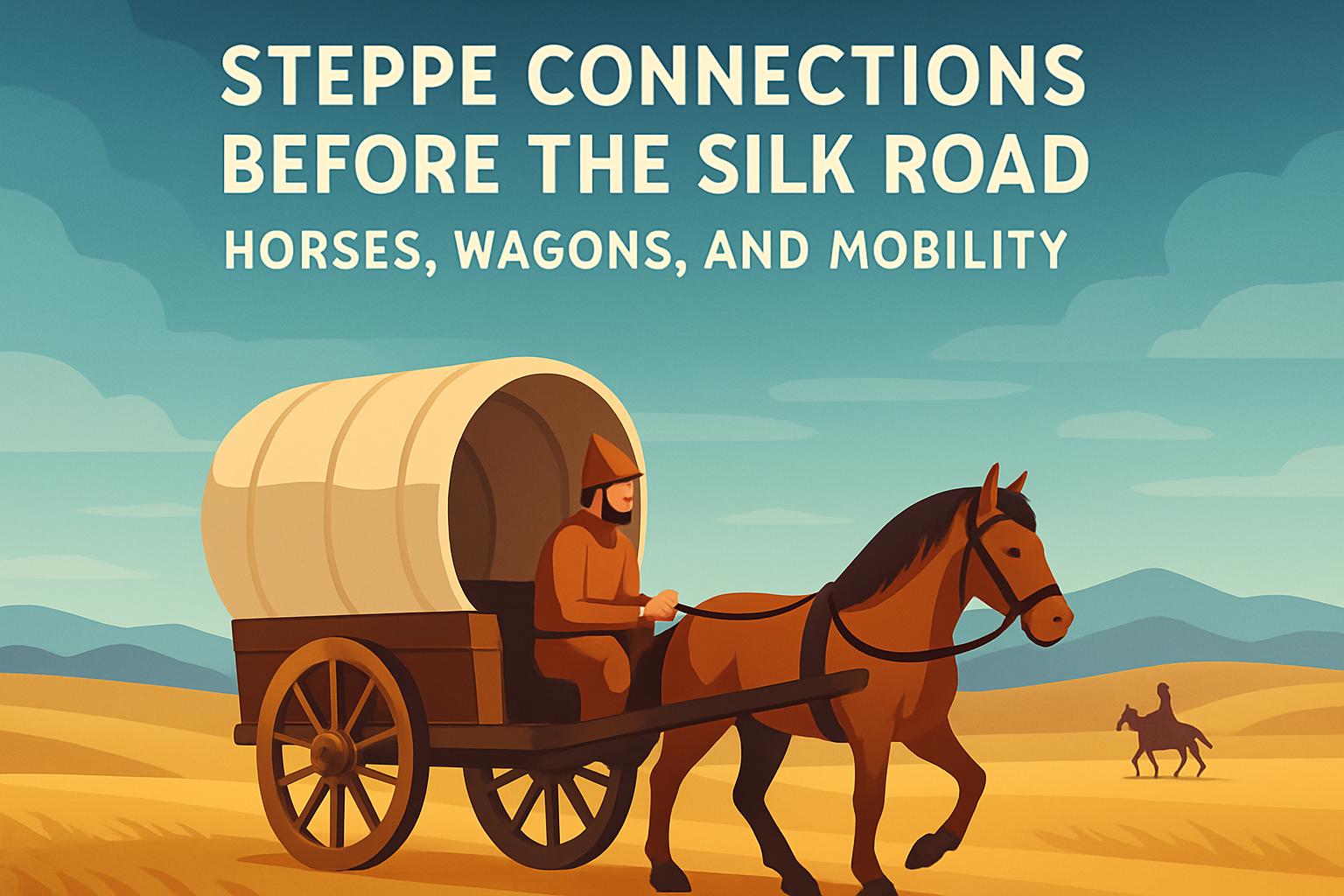
The history of human civilization is rich with remarkable events and innovations that have shaped societies across the globe. Among these, the Silk Road is often heralded as one of the most significant trade networks that connected the East and West. However, before the Silk Road’s emergence in the 2nd century BCE, there was a web of ancient trade routes and cultural exchanges across the vast Eurasian Steppe. These connections were enabled largely by the domestication of horses and the invention of early wagons, which revolutionized mobility and facilitated inter-regional communication long before silk became a coveted commodity. Understanding the steppe connections before the Silk Road sheds light on the factors that influenced the emergence of complex networks, demonstrating how mobility and trade have been crucial to human development.
By examining these early connections, we gain insight into the dynamics of ancient civilizations, which fostered cultural exchange, technological transfer, and economic growth. Horses and wagons not only provided practical transportation solutions but also symbolized power and prestige across societies. Thus, uncovering these earlier networks is essential for appreciating the continuum of human innovation and the evolutionary paths that led to broader global interactions characterized by the later Silk Road exchanges.
The Role of Horses in Steppe Mobility
The domestication of horses marked a pivotal moment in the history of human mobility, especially across the expansive grasslands of the Eurasian Steppe. Horses, first domesticated in the steppes around 3500 BCE, transformed human transportation. Their speed and endurance enabled people to traverse vast distances that were previously insurmountable. Horses provided a significant advantage in trade, military conquests, and cultural exchange, becoming integral to the life and economy of steppe societies.
One such civilization that heavily relied on horses was the Scythians, a group of nomadic peoples who thrived between the 9th and 2nd centuries BCE. For Scythians, horses were not merely a means of transport but also a central element of their way of life. Their exceptional horse-riding skills made the Scythians formidable warriors and efficient trade intermediaries. Through their interactions with Greek, Persian, and Chinese cultures, they facilitated exchanges that included not only commodities like metals and textiles but also intangible cultural ideas and practices.
As horses became a common sight on the steppe, they laid the foundation for future advances in mobility, indirectly setting the stage for more structured trade networks that would later include the Silk Road. Their impact on the cultural and economic landscapes of prehistoric societies underscores the importance of examining horse domestication to understand the evolution of early trade routes.
Wagons and Early Transportation Technology
While horses enabled swift travel, the innovation of the spoked wheel and wagons around 3000 BCE brought transformative advances in transportation technology. Wagons allowed for the movement of substantial volumes of goods over long distances, a significant development for trade and commerce in the steppe regions. These vehicles facilitated not only economic exchanges but also the migration of entire populations, leading to dynamic cultural interactions and the spread of innovations.
The Sintashta culture, which flourished in the southern Urals and Kazakhstan around 2000 BCE, is often credited with pioneering the use of wagons in warfare and trade. Their early chariots, a precursor to later military developments, illustrate how wheeled transport transformed both societal norms and interactions with neighboring cultures.
A key to the success of early wagons was the development of efficient design that accounted for the harsh terrain of the steppes. These vehicles were often sturdy yet flexible enough to withstand rugged landscapes, making them invaluable to communities spanning from Central Asia to Eastern Europe. The widespread use of wagons by these early cultures played a significant role in facilitating long-distance trade, which was essential for the growth of subsequent complex societies and networks.
Complex Interactions and Exchange Networks
The synthesis of horse and wagon technology into the daily lives of steppe societies fostered not only improved transportation but also the establishment of intricate networks of exchange. These networks supported the flow of goods, ideas, and technologies far beyond regional confines, connecting disparate cultures across Eurasia. Long before the formal Silk Road, these interactions allowed for the exchange of a wide variety of commodities, ranging from textiles and metals to artistic styles and religious beliefs.
For example, archaeological findings in sites such as the Altai Mountains reveal the circulation of goods like metalwork and textiles characteristic of distant civilizations. Artifacts such as Chinese silk found in steppe burial sites indicate an already existing demand and appreciation for luxury items, signifying a broad horizon of trade long before the official inception of the Silk Road.
| Society | Primary Trade Goods | Cultural Influence |
|---|---|---|
| Scythians | Metals, Textiles | Greek, Persian |
| Sintashta | Weapons, Chariots | Indus Valley |
| Xiongnu | Horses, Furs | Chinese, Turkic |
The Xiongnu confederation, a prominent nomadic power between the 3rd century BCE and 1st century CE, epitomizes the extent of these early connections. Engaging in both conflict and commerce with neighboring Han China, the Xiongnu played a vital intermediatory role in cross-cultural exchange, paving the way for what would become part of the Silk Road network. This period of rich multicultural exchanges demonstrates the transformative potential of trade routes that predated the more globally recognized Silk Road.
Cultural Diffusion and Technological Transfer
The dynamic interactions across the steppes facilitated not only the exchange of physical goods but also the diffusion of technologies and cultural practices, crucial for human progress. For instance, iron-smelting techniques and military innovations swiftly disseminated through the steppe, influencing societies from the Eurasian heartlands to the fringes of Europe and Asia.
This technological transfer was complemented by cultural diffusion, as seen in the spread of religious, artistic, and linguistic elements across diverse populations. Shamanistic practices, art motifs, and symbolic representations traveled alongside more tangible commodities, enriching the cultural tapestries of societies involved. This phenomenon underscores that trade networks served as conduits for human creativity and adaptation, catalyzing advancements that would shape future civilizations.
As these earlier trade networks laid the groundwork for subsequent developments, they accentuate the interconnected nature of human societies. The pre-Silk Road exchanges highlight how the cumulative impact of trade, technology, and culture engendered collaborative advancements that transcended regional boundaries, proving instrumental in the eventual rise of the interconnected Silk Road era.
Legacy and Impact on the Silk Road
The legacy of steppe connections before the Silk Road is evident in the foundations they provided for subsequent economic and cultural exchanges. Their impact extended beyond their temporal existence, influencing the structure and function of the Silk Road through established routes, technologies, and trade practices. These earlier networks exemplified the potential of cross-cultural cooperation, laying the groundwork for rich intercultural dialogues that characterized the Silk Road.
The innovations in animal husbandry, transport technology, and economic strategies developed in these networks not only survived beyond their era but also evolved, bringing about more sophisticated means of connectivity. The continuity and adaptation of these practices ensure their significance in comprehending historical connectivity, enhancing our appreciation for how early achievements paved the way for later civilizations’ prosperity.
By examining the precursors to the Silk Road, we gain a more nuanced understanding of how human ingenuity in mobility and trade has consistently been at the heart of advancing global interaction, reflecting the enduring human pursuit of knowledge, prosperity, and collaboration.
Conclusion
Unraveling the history of steppe connections before the Silk Road reveals a rich tapestry of human innovation and cultural richness that set the stage for one of the most famous trading systems in history. These early trade routes enabled by horses and wagons fostered extensive interactions long before silk threads wove the continents together. By delving into these foundations, we recognize the pivotal role they played not only in advancing transport and trade but also in facilitating cultural exchanges that enriched human societies.
The key takeaway is that understanding these early networks helps contextualize the wider historical narrative of human connectivity, demonstrating that the Silk Road did not arise in isolation but as a natural progression of earlier developments. As modern individuals who benefit from an era of globalization, the lessons from these predecessors remind us of the persistent spirit of exploration, adaptation, and cooperation that drives human progress.
Reflecting on these early linkages, we invite today’s reader to consider how embracing innovation and collaboration continues to shape our world. Engage with history, learn from it, and let these lessons inspire new pathways of communication and understanding in our interconnected world.
Frequently Asked Questions
1. What were the primary modes of transportation along the Steppe routes before the Silk Road?
Before the emergence of the Silk Road, transportation across the vast Eurasian Steppe was primarily facilitated by the domestication of horses and the use of wagons. Horses revolutionized travel and trade, allowing for quicker mobility and the ability to cover larger distances. The invention of wheeled vehicles, including wagons and carts, further enabled the movement of goods and people across these challenging terrains. Tribes and communities along the steppes utilized these technologies to establish a network of paths and trails that predated more structured trade routes like the Silk Road. The mobility offered by horses, coupled with the transportation capacity of wagons, played a critical role in the cultural and economic exchanges across Eurasian communities.
2. How did the domestication of horses impact the societies living on the Eurasian Steppe?
The domestication of horses had profound implications for the societies inhabiting the Eurasian Steppe, transforming their lifestyles, economies, and interactions with neighboring cultures. Horses provided a reliable source of transportation and enhanced the speed and efficiency of travel across expansive and often harsh steppeland. They became integral components of military strategies, as horse-mounted warriors could move rapidly and execute surprise attacks, changing the dynamics of warfare. Economically, horses facilitated trading activities, allowing goods to be transported more easily between distant tribes and settlements. Additionally, horses became symbols of wealth and status, influencing social structures and cultural practices within these societies.
3. What types of goods were exchanged along these early trade routes before the Silk Road?
Before the formal establishment of the Silk Road, a diverse array of goods was exchanged along the Steppe routes, underscoring the robust trade networks that existed prior. The goods traded were often regionally specific and catered to the needs and demands of different communities. Commonly traded items included livestock, such as cattle and sheep, which were essential for agriculture and as food sources. Furs, pelts, and leather were highly valued for clothing and other utilitarian purposes. Additionally, natural resources like timber, precious stones, and metals were exchanged alongside crafted goods, including pottery and textiles. Some unique local products, like fermented mare’s milk, served both as trade commodities and cultural symbols, further illustrating the vibrant exchange of ideas and goods.
4. In what ways did the ancient Steppe networks lay the groundwork for the later Silk Road?
The ancient Steppe networks were fundamental in laying the groundwork for the later Silk Road by establishing foundational connections and infrastructures. These early networks of paths and informal trade routes evolved naturally as nomadic tribes moved with their herds, continually opening lines of communication and commerce. The technological advancements originating from the steppe people, such as the use of horses and wheeled vehicles, provided critical lessons in transportation that enhanced future trade routes. Through consistent interaction and exchange, cultural intermingling flourished, setting a precedent for the cross-cultural exchanges that would later be characteristic of the Silk Road. Additionally, the political landscapes of the Steppe, shaped by alliances and conflicts, set the scene for larger, more organized trade networks to develop, influencing the sociopolitical climate required for the Silk Road’s success.
5. How did cultural exchanges occur along these routes, and what was their significance?
Cultural exchanges along the Steppe routes occurred organically as traders, nomads, and settlers interacted across various points of contact. These exchanges were significant as they facilitated the flow of not just goods, but also ideas, technologies, and cultural practices. The fusion of languages, artistic motifs, religious beliefs, and culinary traditions contributed to a rich tapestry of cultural diversity across Eurasia. As individuals traveled with their goods and livestock, they carried stories, songs, and knowledge that influenced societies far beyond their origins. For instance, the spread of metallurgical techniques, the adoption of new agricultural methods, and even the sharing of medicinal practices evidenced how deeply interconnected the regions became through these interactions. This laid the cultural and intellectual groundwork essential for the subsequent flourishing of the Silk Road, which would amplify the scale and scope of such exchanges significantly.