
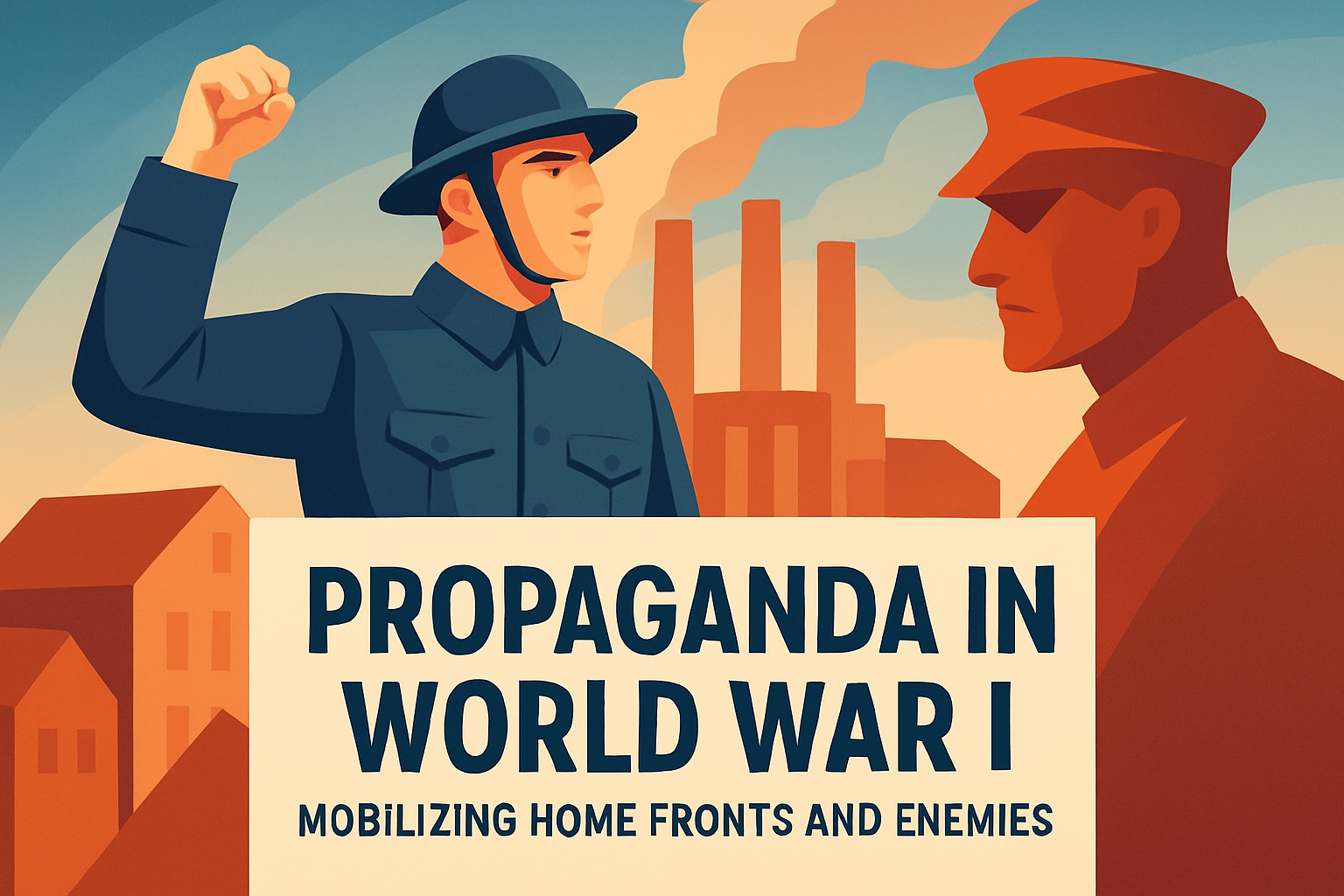
Propaganda in World War I reshaped modern warfare by turning words, images, and selective facts into weapons aimed at soldiers, civilians, and foreign governments. In the simplest terms, propaganda is organized communication designed to influence belief and behavior, often by appealing to emotion more than careful analysis. During the First World War, every major power used it to recruit troops, raise money, ration food, maintain morale, demonize enemies, and justify enormous losses. I have worked with wartime archives, poster collections, and government information records, and one pattern appears everywhere: military success depended not only on artillery and logistics, but also on controlling what people thought the war meant. That made propaganda a central instrument of state power.
The scale of the conflict explains why propaganda mattered so much. World War I was an industrial, total war involving mass conscription, national economies, censorship systems, and civilian sacrifice on an unprecedented level. Governments needed millions of men to fight and millions more to work in factories, conserve food, buy war bonds, and accept bereavement. They also had to persuade neutral nations, especially the United States before 1917, that their cause was legitimate. Because literacy rates had risen and newspapers, postcards, posters, film, and telegraph networks reached huge audiences, states could communicate faster and more broadly than in earlier wars. Propaganda in World War I therefore became a structured, bureaucratic activity rather than a series of isolated patriotic slogans.
Understanding propaganda in this period also requires distinguishing it from ordinary information. Governments did distribute factual material, but they framed facts selectively, suppressed contrary evidence, and repeated emotionally loaded narratives until they felt self-evident. Stories of enemy atrocities, heroic sacrifice, national destiny, and moral duty circulated through official ministries, newspapers, schools, churches, theaters, and voluntary associations. Some claims were true, some exaggerated, and some false. The point was not balance. The point was mobilization. This article explains how wartime propaganda functioned on the home front, how it targeted enemy populations and neutral audiences, which institutions produced it, and why its legacy shaped political communication long after the armistice.
Why World War I Created the Modern Propaganda State
World War I created conditions in which propaganda became a permanent feature of government because the conflict demanded sustained public compliance, not brief patriotic enthusiasm. In Britain, the War Propaganda Bureau at Wellington House coordinated messages for domestic and foreign audiences from 1914 onward, later followed by the Ministry of Information. Germany relied on military and civilian agencies, though often less coherently. France, Austria-Hungary, Russia, and eventually the United States all built communication systems that tied press management to military objectives. This institutionalization matters because it marked a transition from ad hoc persuasion to centralized narrative control. In practical terms, ministries commissioned posters, briefed editors, approved films, and distributed pamphlets targeted to workers, women, colonial subjects, and neutrals.
Total war changed the audience as well as the message. Earlier wars certainly used patriotic rhetoric, but World War I reached deep into daily life. Housewives were told that kitchen choices could strengthen armies. Factory workers were warned that absenteeism aided the enemy. Children absorbed patriotic lessons in schools and youth groups. Religious leaders sanctified sacrifice, while newspapers transformed distant battles into moral dramas. In archives, I have repeatedly seen the same formula: simplify the war into a struggle between civilization and barbarism, define participation as a personal duty, and portray doubt as disloyalty. That formula was effective because it converted abstract geopolitics into immediate household behavior.
Censorship and propaganda worked together. States did not simply spread favorable messages; they also restricted unfavorable ones. Military setbacks, casualty figures, mutinies, shortages, and dissent were often softened or hidden. Britain’s Defence of the Realm Act, for example, expanded state power over publication and speech. France and Germany imposed similar controls. This combination of amplification and suppression gave official narratives unusual force. People encountered patriotic appeals constantly while receiving limited verified information about the grim realities of trench warfare. The result was not complete public manipulation, since rumors and private letters circulated widely, but it was enough to shape mainstream perception for crucial years of the war.
How Governments Mobilized Home Fronts
Home front propaganda had clear goals: recruit soldiers, sustain labor output, finance the war, manage shortages, and preserve morale despite mounting casualties. Recruitment campaigns are the most familiar example. Britain’s famous Lord Kitchener poster, with the direct command “Your Country Needs You,” personalized obligation by making the state appear to address each viewer individually. The United States adapted the same visual logic with James Montgomery Flagg’s Uncle Sam poster in 1917. These images worked because they collapsed distance between individual and nation. Instead of speaking to an anonymous public, they created the feeling of a moral summons. Recruitment posters often paired masculine honor with shame, implying that failure to enlist betrayed family, comrades, and country.
Propaganda also targeted women, though usually within gendered assumptions. Posters and articles urged women to join munitions work, nursing services, and voluntary organizations, while also presenting them as guardians of thrift, morality, and household discipline. British campaigns encouraged food conservation and war savings; American materials promoted “meatless” and “wheatless” days under the U.S. Food Administration led by Herbert Hoover. The message was consistent: domestic behavior had strategic consequences. Women were not merely bystanders; they were represented as active participants in national survival, even when formal political rights remained contested. That messaging helped normalize expanded wartime labor roles while keeping them framed as patriotic service rather than permanent social transformation.
Financial mobilization relied heavily on persuasive communication. War bonds were sold through posters, newspaper advertisements, celebrity endorsements, public rallies, and emotionally charged imagery of soldiers at the front. Governments understood that borrowing from citizens did more than raise funds. It tied households psychologically to victory. A family that bought bonds had a stake in the state’s success and a visible symbol of commitment. Bond campaigns often blended fear and pride, warning that failure to subscribe would endanger troops while promising that investors were doing their part. In the United States, the Committee on Public Information, created under George Creel in 1917, coordinated Liberty Loan publicity with remarkable intensity across press, film, and local speakers.
Morale management became harder as casualties climbed. By 1916 and 1917, optimistic rhetoric had to coexist with grief and exhaustion. Governments responded by emphasizing endurance, sacrifice, and the righteousness of the cause. They highlighted battlefield heroism, care for wounded veterans, and stories of enemy cruelty to justify continued suffering. At the same time, strikes, antiwar agitation, and class tensions were often portrayed as dangerous to national survival. This was especially important in multinational empires like Austria-Hungary and Russia, where loyalty could not be taken for granted. Propaganda did not eliminate discontent, but it supplied a language through which states tried to discipline public emotion and keep societies functioning under extreme strain.
Media, Messaging, and the Techniques That Worked
The effectiveness of World War I propaganda rested on repetition, emotional simplification, authority, and cross-platform distribution. Posters remain iconic because they were visually striking, cheap, and easy to place in train stations, shop windows, schools, and factories. Yet posters were only one part of a larger media ecosystem. Newspapers carried official briefings and patriotic editorials. Illustrated magazines reproduced battlefield scenes and atrocity stories. Film newsreels brought curated images of troops, machinery, and royal visits to mass audiences. Public speakers, clergy, teachers, and local officials repeated the same core themes. In modern communication terms, the message architecture was integrated. People encountered consistent narratives through multiple trusted channels, which increased recall and reduced skepticism.
Several recurring propaganda techniques stand out across countries. Demonization portrayed the enemy as cruel, deceitful, or subhuman. Emotional transfer linked the nation to sacred values such as family, faith, and civilization. Testimonial appeals used military officers, monarchs, or respected public figures to lend legitimacy. Bandwagon messaging implied that loyal citizens were already contributing, making nonparticipation appear abnormal. Simplification turned complex alliances and strategic debates into a stark contest between good and evil. These methods were not unique to 1914–1918, but the war standardized them at scale. When I compare poster series from Britain, France, Germany, and the United States, the national symbols differ, yet the persuasive grammar is remarkably similar.
| Technique | How it worked in World War I | Example |
|---|---|---|
| Demonization | Presented the enemy as barbaric and dangerous to civilians | British depictions of German troops as threats to women and children after the invasion of Belgium |
| Personal appeal | Addressed the viewer directly to create duty and urgency | “Your Country Needs You” and Uncle Sam recruitment posters |
| Social pressure | Suggested honorable citizens were already sacrificing | War bond campaigns urging every household to subscribe |
| Moral framing | Defined war aims as defense of civilization, freedom, or national survival | U.S. messaging after 1917 about making the world safe for democracy |
| Selective truth | Used real events but framed them to maximize outrage and commitment | Atrocity reports from Belgium amplified to sustain anti-German sentiment |
One reason these techniques worked is that they matched the media habits of the time. Many audiences were newly mass literate but still responded strongly to images and short slogans. A poster could communicate in seconds, while a sermon or speech could deepen the message. Another reason was emotional congruence. Families already feared invasion, hunger, and bereavement, so propaganda did not need to invent anxiety from nothing. It needed to channel existing fear toward sanctioned behavior. The most effective campaigns therefore connected public emotion to clear actions: enlist, conserve, buy bonds, report rumors, work harder, trust the government, and hate the enemy enough to persist.
Propaganda Against Enemies and Neutral Nations
Propaganda in World War I was not confined to domestic morale. Governments also tried to weaken enemy societies and influence neutral states. One major target was international opinion about Germany’s invasion of Belgium in 1914. British propaganda skillfully used the violation of Belgian neutrality, guaranteed by treaty, to frame Germany as an aggressor against a small innocent nation. Reports of executions, destruction, and civilian suffering circulated widely. Some were accurate, others exaggerated in retelling, but together they gave Allied messaging powerful moral clarity. For audiences in the United States and other neutral countries, Belgium became a symbol through which the war could be understood as a defense of law and humanity rather than merely a European power struggle.
Leaflets and printed materials were also used directly against enemy troops and civilians, though their impact varied. Air-dropped leaflets sought to lower morale, encourage desertion, or emphasize food shortages and military setbacks. Late in the war, the Allies increasingly refined psychological operations, targeting tired German soldiers with claims that resistance was futile and their leaders had misled them. This worked best when propaganda aligned with lived reality. A hungry soldier receiving a leaflet about collapsing supply lines might find it credible; one enjoying local tactical success would dismiss it. The lesson, still valid in modern information warfare, is that propaganda gains power when it resonates with observable conditions rather than contradicting them completely.
Neutral nations were strategic information battlegrounds. Before entering the war, the United States was courted intensely by both Britain and Germany. Britain held major advantages because it could shape cable communications and had easier access to American-language media. German messages struggled against British naval control, diplomatic blunders, and incidents such as unrestricted submarine warfare and the Zimmermann Telegram. By 1917, American public opinion had shifted decisively. Propaganda alone did not cause that change, but it framed events in ways that made intervention seem morally necessary and strategically rational. Once the United States entered the war, the Creel Committee expanded these methods domestically and internationally, producing posters, films, pamphlets, and Four Minute Men speeches across the country.
Limits, Backlash, and the War’s Lasting Legacy
Although propaganda was powerful, it had limits and costs. Soldiers’ letters, casualty lists, and the visible toll on communities made sustained optimism difficult. By the later war years, many civilians recognized the gap between official language and battlefield reality. In Germany and Austria-Hungary, shortages and military decline weakened trust in state messaging. In Russia, propaganda could not prevent collapse in 1917 because institutional legitimacy had eroded too far. Even in victorious Allied countries, postwar disillusionment was intense. The discovery that some atrocity stories had been exaggerated fed a wider belief that publics had been manipulated. That skepticism mattered in the 1920s and 1930s, when many citizens and policymakers became wary of interventionist claims, partly because they remembered how wartime information had been managed.
The war’s legacy is profound because it established a template for twentieth-century mass persuasion. States learned that modern conflict required coordinated messaging across government, media, culture, and civil society. Techniques refined between 1914 and 1918 influenced later propaganda in World War II, Cold War information campaigns, and contemporary strategic communications. Scholars such as Harold Lasswell treated World War I as a defining case in the scientific study of propaganda, while democratic governments struggled with the ethical boundary between public information and manipulation. That tension remains unresolved. Effective wartime communication can save lives and sustain legitimate defense, but unchecked narrative control can also distort truth, inflame hatred, and damage public trust for decades.
The clearest takeaway is that propaganda in World War I mobilized entire societies by making war feel intimate, moral, and unavoidable. It recruited men, organized women’s labor, sold bonds, justified sacrifice, stigmatized dissent, influenced neutral opinion, and pressured enemy morale. It succeeded most when it fused real events with disciplined emotional framing and repeated those messages through trusted institutions. It failed when reality overwhelmed rhetoric. To understand modern political messaging, information warfare, or media literacy, start with this war. Study the posters, speeches, films, and censored reports, and you can see the foundations of the communication battles that still shape public life today.
Frequently Asked Questions
What was propaganda in World War I, and why did it become so important?
In World War I, propaganda was the systematic use of posters, newspapers, speeches, films, pamphlets, cartoons, and official statements to shape how people thought and acted during wartime. Governments did not treat it as a side issue; they saw it as a strategic weapon. Modern industrial war required millions of soldiers, huge financial support, strict rationing, civilian endurance, and continued belief in the national cause even as casualties mounted. Propaganda helped leaders persuade ordinary people that sacrifice was necessary, noble, and urgent.
Its importance grew because World War I was not fought only on battlefields. It was also fought across entire societies. States needed workers in factories, families to accept loss, citizens to buy war bonds, and civilians to conserve food and fuel. At the same time, governments wanted to maintain morale and suppress doubt. Propaganda offered a way to simplify complex events into emotionally powerful messages: your nation is just, the enemy is cruel, victory depends on you, and every sacrifice matters. That combination of fear, duty, pride, and moral certainty made propaganda one of the defining features of the war and a model for later twentieth-century conflicts.
How did governments use propaganda to mobilize people on the home front?
Governments used propaganda on the home front to turn civilians into active participants in the war effort. Recruitment posters appealed to patriotism, masculinity, honor, and social pressure, encouraging men to enlist by suggesting that real citizens fought for their country. Women were addressed as supporters, workers, nurses, and moral guardians, with messages urging them to keep families strong, encourage enlistment, and take on new roles in industry and agriculture. Propaganda made war service appear not limited to the trenches but shared across society.
It was also essential in raising money and managing resources. War bond campaigns used stirring imagery and emotional language to frame lending money to the state as both a financial act and a patriotic duty. Food conservation campaigns asked people to eat less, waste less, and accept rationing as a personal contribution to victory. Posters and newspaper campaigns instructed citizens on shortages, production goals, and proper wartime behavior. By repeating simple, emotionally charged slogans, governments made abstract national needs feel immediate and personal.
Just as importantly, home front propaganda tried to maintain morale in the face of death, injury, inflation, and fatigue. Official messaging often emphasized heroism, endurance, and eventual victory while downplaying military failures or the full scale of suffering. This selective presentation helped sustain public commitment, even when reality was grim. In that sense, propaganda did more than inform; it organized civilian emotion and behavior so that entire populations could be mobilized for total war.
How was the enemy portrayed in World War I propaganda?
One of the most powerful functions of World War I propaganda was to depict the enemy as dangerous, immoral, and fundamentally different from “civilized” people. Governments and media outlets often relied on dehumanizing language and shocking imagery to create fear and hatred. Enemy soldiers were portrayed not simply as military opponents but as barbarians, aggressors, and threats to women, children, religion, and national survival. These portrayals made the war feel like a struggle between good and evil rather than a conflict driven by competing political interests and alliances.
Stories of enemy atrocities played a major role in this process. Some were based on real violence, while others were exaggerated, selectively presented, or impossible to verify. Either way, such accounts were effective because they aroused outrage and justified continued sacrifice. If the enemy was savage, then fighting him seemed morally necessary. This helped governments encourage enlistment, reduce sympathy for peace efforts, and explain why the war had to continue despite terrible losses.
These portrayals also had lasting consequences. Demonizing the enemy hardened attitudes at home, made negotiation more difficult, and contributed to deep national resentments after the war. Propaganda did not just reflect wartime hostility; it amplified it. By turning opponents into symbols of evil, World War I propaganda helped sustain the emotional intensity of the conflict and shaped how whole societies understood both themselves and their enemies.
What methods and media were most commonly used to spread propaganda during World War I?
World War I propaganda spread through a wide range of media, and that broad reach was one reason it proved so effective. Posters were among the most recognizable tools because they were visual, memorable, and easy to place in public spaces such as train stations, factories, schools, and shop windows. They used bold colors, dramatic illustrations, and short slogans to convey messages quickly. Governments also relied heavily on newspapers, which remained a primary source of information for much of the public. Through official press releases, censorship, and close relationships with editors, states could shape what people read about battles, casualties, and enemy behavior.
Pamphlets, speeches, sermons, cartoons, postcards, and public ceremonies also played important roles. Schools, churches, theaters, and civic organizations became channels for repeated wartime messaging. Film grew in importance as well, offering emotionally powerful moving images that could celebrate national strength, highlight military discipline, and reinforce approved interpretations of the war. In some cases, propaganda was even directed across borders or dropped near enemy lines to weaken morale or encourage surrender.
What made these methods effective was not any single medium but repetition and coordination. The same themes appeared again and again: loyalty, duty, sacrifice, outrage, unity, and victory. When people encountered similar messages in posters, newspapers, speeches, and community events, propaganda became part of everyday life. It did not feel like one isolated campaign; it became the atmosphere of the war itself.
What was the long-term impact of World War I propaganda on modern warfare and public opinion?
The long-term impact of World War I propaganda was enormous because it demonstrated that controlling narratives could be almost as important as controlling territory. The war showed governments that mass communication could mobilize entire populations, sustain morale during prolonged crisis, and shape international opinion. After 1918, propaganda was no longer seen as a temporary wartime tool. It became a central feature of modern statecraft, political campaigning, military planning, and media strategy.
World War I also revealed the power of emotional messaging over careful analysis. Appeals to fear, pride, resentment, and moral righteousness could move millions of people more effectively than complex policy arguments. That lesson influenced not only later wars but also peacetime politics, advertising, and public relations. Governments learned to coordinate information more systematically, while critics became more alert to censorship, manipulation, and the gap between official claims and lived reality.
At the same time, the experience left behind deep skepticism. Many people later felt misled by exaggerated atrocity stories, unrealistic promises, and heavily managed wartime news. This contributed to public distrust in government messaging in the years after the conflict. Even so, the central lesson endured: in the modern age, wars are fought in minds as well as on battlefields. World War I made that unmistakably clear, and its propaganda techniques shaped the communication strategies of the twentieth century and beyond.