
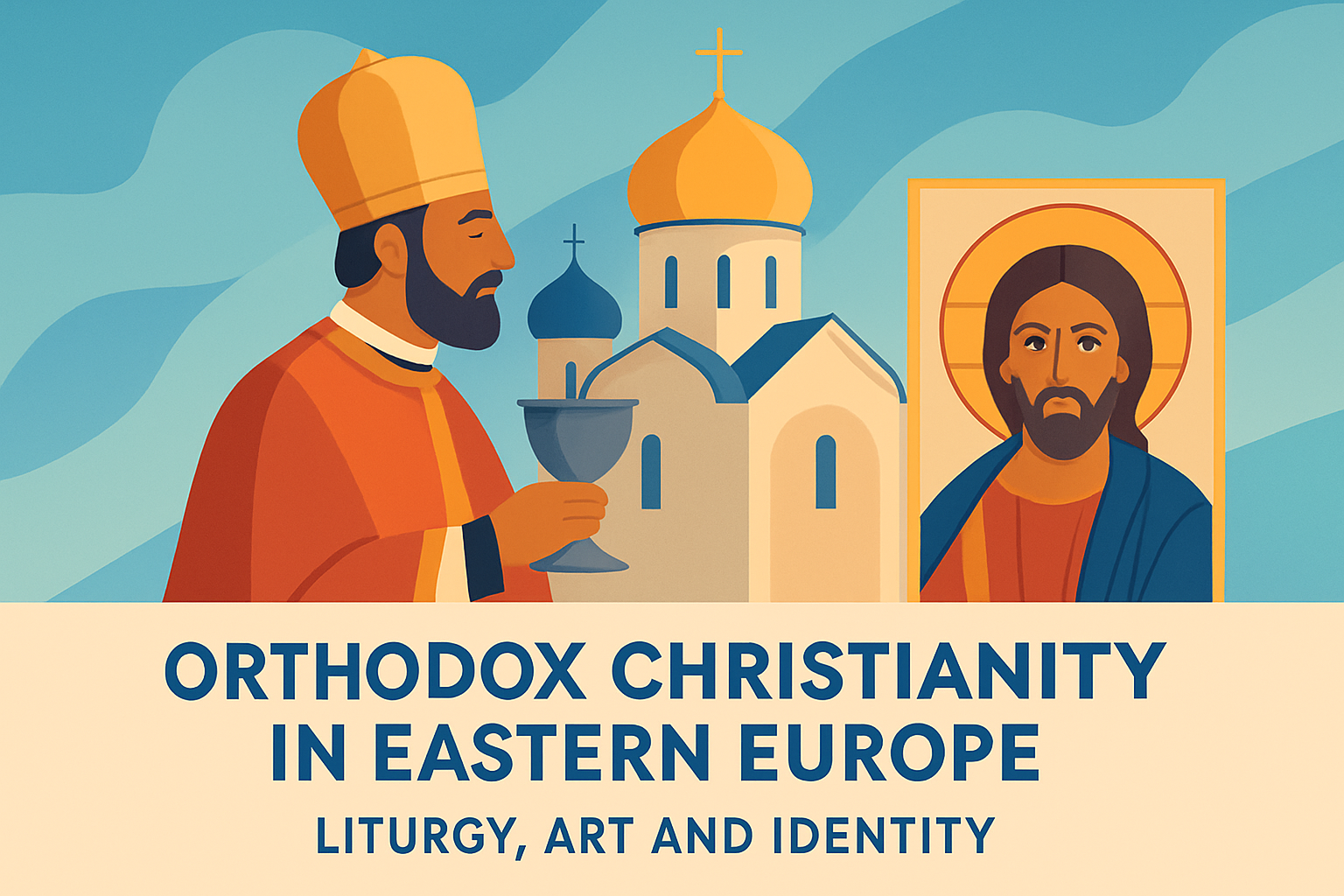
Orthodox Christianity in Eastern Europe has shaped worship, public culture, and collective memory for more than a millennium, binding liturgy, art, and identity into a single civilizational language. In this context, Orthodox Christianity refers to the tradition of the Eastern Orthodox Church, rooted in the Byzantine world, organized through self-governing churches, and centered on sacramental worship, apostolic continuity, and the authority of the ecumenical councils. Eastern Europe includes lands where Orthodoxy became a durable force in social life, especially Greece’s northern regions, Bulgaria, Serbia, Romania, Ukraine, Belarus, Moldova, North Macedonia, Montenegro, Georgia’s wider regional connections, and Russia’s western cultural sphere. When I have worked on church heritage projects and reviewed monastery collections, one fact becomes unmistakable: Orthodoxy in this region is not only a set of beliefs. It is an embodied system of prayer, architecture, music, color, ritual movement, sacred time, and historical belonging.
That is why the subject matters far beyond theology. In Eastern Europe, liturgy has preserved language, art has transmitted doctrine to nonliterate communities, and religious identity has often overlapped with national identity, especially during imperial domination, communist repression, and post-1989 cultural rebuilding. A visitor entering an Orthodox church encounters more than decoration. Icons, incense, chant, candlelight, vestments, fresco cycles, and the iconostasis form a unified environment intended to reveal what Orthodox theology calls the meeting of heaven and earth. This has practical significance. It affects how communities remember saints, narrate suffering, define moral order, and understand continuity with ancestors. To understand Eastern Europe without Orthodoxy is to miss one of the region’s strongest frameworks for meaning, beauty, and resilience.
The three terms in this discussion are tightly connected. Liturgy is the formal communal worship of the church, above all the Divine Liturgy of Saint John Chrysostom and, on some occasions, Saint Basil the Great. Art includes icons, murals, mosaics, metalwork, textiles, manuscript decoration, wood carving, and church architecture, all governed by theological and liturgical purpose rather than personal expression alone. Identity refers to the way people and communities understand who they are, where they belong, and what sacred history they inhabit. Across Eastern Europe, these elements reinforce one another. Worship teaches doctrine; art makes worship visible; identity grows through repeated participation in both. That relationship explains why Orthodox Christianity remains central to debates about heritage, nationalism, European belonging, and postsecular public life.
Liturgy as the core of Orthodox life
The best short answer to the question “What defines Orthodox Christianity in Eastern Europe?” is this: liturgy does. Orthodox doctrine is certainly important, but in practice communities learn the faith through worship before they learn it through systematic explanation. The Divine Liturgy structures sacred time through fixed prayers, scriptural readings, processions, blessings, and the Eucharist. It is not treated as a sermon-centered service. Instead, it unfolds as a participatory offering in which clergy, choir, readers, servers, and congregation each have a role. In churches from Bucharest to Belgrade, from Sofia to Lviv, the rhythm is recognizably shared even when language, local chant traditions, and political history differ.
Several liturgical features are especially important in Eastern Europe. First is continuity. The Byzantine rite, developed in the Eastern Roman Empire and adapted locally, created a transregional framework that survived the fall of Constantinople in 1453. Second is sensory theology. Incense symbolizes prayer rising to God; icons are venerated, not worshiped, as witnesses to the Incarnation; chant carries texts without instrumental accompaniment in most traditions; fasting seasons prepare the body as well as the mind. Third is calendrical intensity. Great Lent, Holy Week, Pascha, the Nativity cycle, Theophany, and local saints’ feasts organize communal memory. In villages and capitals alike, feast days long served as anchors of time, labor, food customs, and pilgrimage.
I have repeatedly seen how liturgy preserves identity even when political institutions are unstable. Under Ottoman rule in the Balkans, church feasts and parish worship kept local Christian communities coherent. Under communist governments in Romania, Bulgaria, Yugoslavia, and the Soviet sphere, official atheism weakened religious practice but rarely erased liturgical memory. Older women kept fasting rules, families baptized children quietly, and monasteries remained reservoirs of continuity. After 1989, many Eastern European societies did not rebuild Orthodoxy from nothing; they reactivated habits stored in liturgical culture. That pattern explains why church attendance statistics alone can mislead analysts. In Orthodox settings, identity may remain strong even where weekly attendance is inconsistent, because feasts, baptisms, funerals, icons in the home, and seasonal rituals still carry enormous weight.
Sacred art as theology in color and form
Orthodox art in Eastern Europe is often misunderstood as merely conservative or decorative. In reality, it is doctrinal, liturgical, and pedagogical. The icon is the clearest example. Orthodox theology defends icons through the logic of the Incarnation: because Christ truly took human form, he can be depicted. The Seventh Ecumenical Council, held at Nicaea in 787, affirmed the veneration of icons and distinguished it from the worship due to God alone. This distinction remains essential. When believers kiss an icon of Christ, the Theotokos, or a saint, they honor the person represented, not wood and paint. That theological framework shaped artistic production across Eastern Europe for centuries.
Icons follow conventions because they are meant to transmit truth faithfully. Halos signify sanctity, inverse perspective invites the viewer into sacred space, gold backgrounds suggest divine light, and inscriptions identify holy figures. Regional schools developed distinct styles. Russian iconography, especially associated with Andrei Rublev, refined spiritual stillness and luminous balance. Romanian churches combined Byzantine inheritance with local mural programs, including the famous exterior-painted monasteries of Bucovina such as Voroneț and Sucevița. Serbian medieval monasteries like Studenica, Dečani, and Sopoćani display major fresco cycles that join imperial Byzantine forms to local dynastic memory. Bulgarian churches preserve layers from the medieval Tsardoms through the National Revival, while Ukrainian icon traditions reveal complex interaction between Byzantine, Slavic, and later Baroque influences.
Church architecture works with iconography rather than separately from it. The dome typically presents Christ Pantocrator, the all-ruling Lord, visually governing the assembly below. The apse often features the Virgin Mary in prayer, linking the sanctuary with the Incarnation. The iconostasis, the screen of icons separating nave and altar, is not simply a barrier. It is a theological threshold marking mystery while presenting the communion of saints to the congregation. In practical terms, Orthodox sacred space teaches doctrine spatially. Even a person unable to read can grasp a hierarchy of meaning through placement, sequence, gesture, and repeated visual motifs.
These artistic systems also helped Eastern Europeans resist assimilation. Where empires imposed administrative control or foreign elites dominated education, churches remained places where local styles, languages, and saints survived. During the Bulgarian National Revival, church building and icon painting were tied to cultural reawakening. In Romanian principalities, visual programs linked rulers, monasteries, and sacred history. In Serbian lands under Ottoman pressure, monasteries preserved manuscripts, portraits of saints, and dynastic burial traditions. Art was therefore not a luxury added after identity formed. It was one of the mechanisms through which identity endured.
How Orthodox Christianity shaped national and regional identity
Orthodox Christianity in Eastern Europe shaped identity by giving communities a sacred past, a ritual calendar, moral vocabulary, and visible symbols of belonging. This influence took different forms depending on political context. In some places, church and nation grew together. In others, they were separated by empire and reunited later through national revival. The relationship is never simple, but the pattern is consistent: Orthodoxy became a carrier of memory. People learned who they were through patron saints, monastery foundations, pilgrimage routes, funerary customs, baptismal names, and stories of suffering under foreign powers.
Russia developed perhaps the most expansive civilizational narrative, especially after the fall of Constantinople, when Moscow increasingly imagined itself as the heir of Byzantine Orthodoxy. Serbia tied church memory to the Nemanjić dynasty and to Kosovo as both historical event and sacred symbol. Romania linked Orthodoxy to continuity, language, and the defense of local autonomy between larger empires. Bulgaria saw Orthodoxy as inseparable from medieval statehood and cultural awakening under Ottoman rule. Ukraine presents a more contested case, where Orthodoxy has been claimed by competing ecclesiastical and political centers, making liturgy and church jurisdiction part of modern identity struggles as well as religious life.
One reason this subject matters for current readers is that religion in Eastern Europe is not merely private. Census data, public holidays, school curricula, military commemorations, and heritage funding all reflect Orthodox influence. Yet there are tradeoffs. Strong religious identity can preserve continuity and social solidarity, but it can also be mobilized for exclusionary nationalism. The historical record shows both possibilities. Churches have protected language, charity, and historical memory, but political actors have also used sacred symbols to legitimize ethnic rivalry. A balanced interpretation must acknowledge both realities.
| Country or region | Orthodox identity marker | Representative artistic or liturgical example | Historical impact |
|---|---|---|---|
| Serbia | Saint Sava and medieval church tradition | Monastery frescoes at Studenica and Dečani | Linked dynastic memory to national endurance |
| Romania | Village piety and monastic continuity | Painted monasteries of Bucovina | Preserved local religious culture through political change |
| Bulgaria | National Revival church culture | Icon schools and restored parish churches | Strengthened language and communal self-awareness |
| Ukraine | Competing ecclesiastical loyalties | Kyivan liturgical heritage and icon traditions | Made church affiliation central to sovereignty debates |
| Russia | Imperial and civilizational Orthodoxy | Choral liturgy and major iconographic schools | Expanded Orthodoxy as a state-backed identity framework |
Music, ritual, and the experience of belonging
To understand why Orthodox Christianity remains emotionally powerful in Eastern Europe, it is necessary to hear it as well as see it. Orthodox liturgical music is usually vocal, not instrumental, because the human voice is treated as the primary offering of praise. Byzantine chant in Greek and Balkan usage, znamenny and later choral traditions in Slavic lands, and numerous local melodic systems all serve the text first. This is not performance in the concert sense, though Eastern European sacred music has influenced concert culture profoundly. It is prayer shaped by mode, repetition, and acoustics. In a stone church, chant does not simply accompany ritual; it creates the environment in which ritual is perceived.
Ritual repetition forms belonging through the body. People cross themselves at familiar moments, light candles for the living and the departed, kiss festal icons, process around the church at Pascha, and bring baskets, bread, wine, or water for blessing according to local custom. These actions matter because identity is rarely sustained by ideas alone. It is sustained by practices repeated over years until they become second nature. I have watched young adults who consider themselves secular still know exactly how to move during Holy Week services because these gestures were learned in childhood. That is a strong indicator of cultural depth.
Orthodox funeral and memorial practices are especially important. In many Eastern European societies, remembrance of the dead is one of the strongest links between church life and family identity. Memorial services, koliva or blessed grain, cemetery visits, and annual commemorations connect households to parish structures and to ancestral continuity. Likewise, baptism and marriage are not just individual milestones. They reaffirm entry into a sacred community with recognized forms, sponsors, obligations, and blessings. Through such rites, Orthodoxy becomes woven into biography from birth to death.
Major feasts intensify this process. Pascha, the Orthodox celebration of Christ’s resurrection, remains the liturgical and emotional center of the year. Midnight processions, the proclamation “Christ is risen,” shared food after the fast, and the renewal of social ties make it both theological and communal. Christmas, Theophany, Dormition, and patronal feasts also knit together home and church. In urban settings today, these rituals often function as bridges between modern lifestyles and inherited identity. They allow people who are not monastic or highly observant to remain connected to a tradition larger than themselves.
Orthodoxy after communism and in the digital age
The collapse of communist regimes transformed Orthodox Christianity across Eastern Europe, but not in a uniform way. Some churches regained property, reopened seminaries, restored monasteries, and returned visibly to public life. Others faced internal disputes, political entanglement, or declining trust among younger generations. In the 1990s and 2000s, church construction surged in parts of Romania, روسيا, Serbia, and elsewhere, signaling both genuine renewal and the symbolic use of religion in nation-building. Restoration campaigns saved frescoes, rebuilt domes, and revived pilgrimage sites. At the same time, rapid consumerism, migration, and secular media changed how people related to inherited faith.
Today, Orthodoxy operates in both physical and digital space. Monasteries livestream services, bishops issue pastoral statements online, icon workshops sell through global platforms, and debates over church jurisdiction play out on social media as much as in synods. This visibility creates opportunity and risk. On one hand, younger Eastern Europeans can access patristic texts, liturgical calendars, virtual tours, and chant recordings more easily than any earlier generation. On the other hand, online religion can flatten tradition into aesthetics, polemics, or identity branding detached from sacramental life. The difference between appreciating an icon on a screen and venerating one in liturgy is not trivial; it goes to the heart of Orthodox practice.
Current geopolitical conflicts have made Orthodox identity even more consequential. The war involving Ukraine has highlighted how church allegiance, historical memory, and national sovereignty intersect. Questions that may appear technical from the outside, such as autocephaly, canonical territory, or recognition by other churches, carry deep implications for legitimacy and belonging. Similar dynamics appear, though with different intensity, in the Balkans, where ecclesiastical heritage is often tied to contested landscapes and historical grievances. Anyone analyzing religion in Eastern Europe must therefore treat Orthodoxy as a living force, not a museum remnant.
For cultural institutions, educators, and travelers, the practical lesson is clear. Orthodox churches and monasteries should be approached as active sacred systems. A fresco cycle is not just heritage art; it is part of a worshiping environment. A procession is not folklore alone; it is theology embodied in public space. A monastery library is not simply an archive; it is evidence of how communities carried knowledge through crisis. When this integrated perspective is ignored, Eastern Europe is reduced to politics without depth. When it is understood, the region’s religious art and liturgy reveal how identity survives through beauty, discipline, and memory.
Orthodox Christianity in Eastern Europe endures because it joins worship, art, and identity in a coherent whole that people can see, hear, touch, and inherit. Liturgy is the center: it teaches doctrine through prayer, orders time through feasts and fasts, and holds communities together across generations. Art gives that liturgical world visible form through icons, frescoes, architecture, vestments, and sacred objects designed to communicate theological truth. Identity grows from repeated participation in these realities, which is why Orthodoxy has remained resilient through empire, occupation, communism, migration, and modern secular pressure.
The main benefit of understanding this tradition is interpretive clarity. It helps explain why monasteries matter politically, why icons carry emotional force, why calendar feasts remain socially powerful, and why church affiliation still shapes public debates in countries across the region. It also guards against shallow readings. Orthodox art is not decorative nostalgia, and Eastern European religion is not simply private sentiment. Together, liturgy and visual culture form a durable language of belonging.
If you want to understand Eastern Europe more accurately, start with an Orthodox church during a major feast, study the iconography in context, and pay attention to how worship creates memory. That is where the region’s deepest stories are still being told.
Frequently Asked Questions
What makes Orthodox Christianity so central to the historical identity of Eastern Europe?
Orthodox Christianity became central to Eastern European identity because it did far more than shape private belief; it provided a shared framework for worship, political imagination, education, art, law, memory, and public ritual. From the medieval era onward, the Orthodox Church helped organize how communities understood sacred time through feast days and fasting seasons, sacred space through churches and monasteries, and sacred history through saints, martyrs, and dynastic patronage. In many Eastern European lands, conversion to Christianity was not simply a spiritual milestone but a civilizational turning point that linked rulers and peoples to the prestige of the Byzantine world. Through liturgy, language, and visual culture, Orthodox Christianity offered a durable sense of continuity that survived imperial change, foreign domination, and social upheaval.
This centrality also comes from the way Orthodoxy binds theology to everyday life. The faith is experienced not only through doctrine but through chant, incense, icons, processions, blessings, and the recurring rhythms of the liturgical year. These practices created a recognizable cultural grammar across diverse regions, even where local customs, vernacular languages, and political histories differed. In Eastern Europe, Orthodoxy often became intertwined with national awakening and collective memory, especially in periods when churches preserved language, manuscripts, and artistic traditions under external pressure. As a result, Orthodox Christianity has often functioned as both a religious tradition and a marker of belonging, connecting individuals to family, locality, nation, and a wider transnational Orthodox world.
How does Orthodox liturgy shape culture and collective memory in Eastern Europe?
Orthodox liturgy shapes culture and collective memory because it is not merely a weekly service but a living system of remembrance. The Divine Liturgy, along with Vespers, Matins, feast-day services, and commemorations for the departed, continually places worshippers inside a sacred story that stretches from the Bible to the early councils, from Byzantium to local saints and modern communities. In Eastern Europe, this liturgical life has taught generations how to remember the past: not as a distant archive, but as something made present through prayer, chant, gesture, and sacrament. When communities celebrate Pascha, honor a patron saint, or observe major fasts, they are participating in a ritual memory that links personal experience with centuries of inherited faith.
Liturgy also shapes public culture by marking time and space in visible ways. Church bells, blessing of waters, Easter processions, icons carried through town, memorial services for war dead, and the public observance of feast days all reinforce the connection between communal life and sacred tradition. Even in secularizing societies, these patterns often remain embedded in national calendars, family customs, and cultural expectations. In periods of oppression, whether under hostile empires or atheist regimes, liturgy often became one of the strongest carriers of continuity, preserving not only religious devotion but also language, song, and historical consciousness. That is why in Eastern Europe collective memory is often inseparable from liturgical memory: communities remember who they are through what they pray, sing, and celebrate together.
Why is art, especially icons and church architecture, so important in Orthodox Christianity?
Art is vital in Orthodox Christianity because beauty is understood as a witness to divine truth, not as decoration added to religion from the outside. Icons, frescoes, mosaics, vestments, carved screens, liturgical vessels, and church architecture all serve theological and devotional purposes. In Orthodox thought, the icon is not just a religious illustration; it is a visual confession of the Incarnation, affirming that because God became human in Christ, the material world can bear sacred meaning. This gives visual art a central place in worship and identity. In Eastern Europe, icons became one of the most recognizable expressions of Orthodox civilization, appearing not only in churches and monasteries but also in homes, public shrines, and community rituals.
Church architecture is equally significant because Orthodox worship is deeply spatial and symbolic. The dome, altar, iconostasis, candles, and painted walls create an environment that presents the church as a meeting place of heaven and earth. Across Eastern Europe, local styles developed within this larger Byzantine inheritance, producing remarkable regional forms while preserving a common liturgical logic. Art therefore became a language of unity and distinction at the same time: Serbs, Romanians, Bulgarians, Ukrainians, Georgians, Russians, and others could recognize a shared Orthodox visual world, yet each also developed particular artistic schools and national memories. In times of political struggle, sacred art often carried exceptional importance because it embodied continuity, legitimacy, and resistance. To preserve an icon tradition or restore a monastery was often to reclaim more than aesthetics; it was to defend a historical identity.
How has Orthodox Christianity influenced national identity without being exactly the same as nationalism?
Orthodox Christianity has influenced national identity by providing symbols, narratives, saints, moral vocabulary, and institutional continuity that many Eastern European peoples drew upon when defining themselves. Churches often preserved liturgical languages, written traditions, chronicles, and sacred sites during periods of foreign rule or political fragmentation. Monasteries served as centers of learning and memory, while feast days and local saints gave communities a way to connect their land and history to a larger sacred order. Because of this, Orthodoxy frequently became intertwined with national consciousness, especially in the modern era when movements for independence or cultural revival looked to the church as a guardian of authenticity and continuity.
At the same time, Orthodoxy is not identical to nationalism because its theological vision is broader than the nation-state. The Orthodox Church sees itself as part of the one holy catholic and apostolic Church, bound together by shared faith and sacramental life across ethnic and political boundaries. This can create a productive tension. On one hand, local churches have often supported national cultures and languages; on the other, the deeper Orthodox ideal points toward communion that transcends ethnicity. In Eastern Europe, this tension has sometimes enriched cultural life and sometimes generated conflict, particularly where national borders, ecclesiastical jurisdictions, and historical memories do not align neatly. Understanding Orthodoxy in the region requires holding both truths together: it has undeniably shaped national identities, but it also carries a universal ecclesial vision that resists being reduced to ethnic politics alone.
What challenges and changes is Orthodox Christianity facing in Eastern Europe today?
Orthodox Christianity in Eastern Europe today faces a complex mix of continuity and change. One major challenge is secularization, especially in urban and younger populations, where formal religious affiliation may remain high but regular liturgical participation is often uneven. Another is the long aftermath of communist rule, which damaged institutions, disrupted religious education, and in some places left deep patterns of distrust or accommodation. At the same time, the post-communist revival of church life has brought rebuilt monasteries, renewed pilgrimage, restored sacred art, and stronger public visibility. This means the Orthodox world in Eastern Europe cannot be described simply as declining or flourishing; it is doing both in different ways, depending on region, generation, and social context.
There are also important geopolitical and cultural pressures. Questions of autocephaly, jurisdiction, war, migration, European integration, and church-state relations have made Orthodox identity more publicly contested in some countries. Many churches are also working through how to communicate ancient liturgical traditions in digital, mobile, and pluralistic societies without losing theological depth. Younger believers often seek a form of Orthodoxy that is faithful, intellectually serious, visually rich, and socially credible. In that setting, liturgy and art remain powerful resources rather than relics. They continue to offer a sense of rootedness, transcendence, and communal memory that many people still find compelling. The future of Orthodox Christianity in Eastern Europe will likely depend on how well its churches preserve the depth of their tradition while speaking clearly to contemporary questions about identity, culture, and public life.