
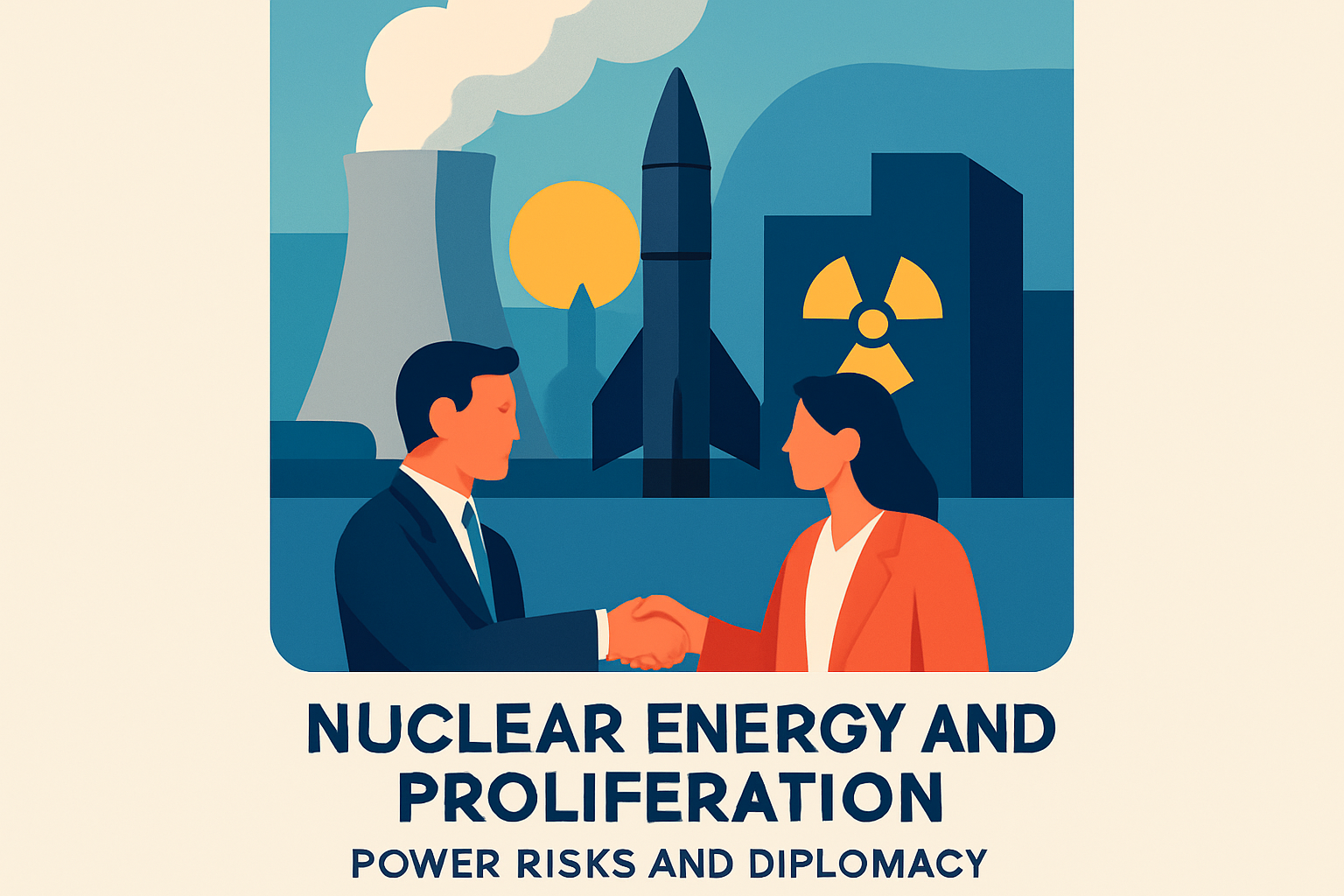
Nuclear energy sits at the intersection of climate policy, public health, industrial technology, and national security, which is why debates about nuclear energy and proliferation never stay confined to electricity generation alone. In practical terms, nuclear energy refers to power produced from controlled fission reactions, usually in reactors fueled by uranium, while proliferation describes the spread of materials, technologies, and expertise that can support nuclear weapons programs. The same fuel cycle that can light cities, desalinate water, and stabilize low-carbon grids can also create pathways to highly enriched uranium or separated plutonium if institutions, safeguards, and diplomacy fail. That dual-use reality makes this subject central to any serious discussion of environment, health, and technology.
I have worked with energy and security reporting long enough to see that public arguments often flatten the issue into slogans: either nuclear power is presented as a clean-energy savior, or it is dismissed as an unacceptable weapons risk. Neither framing is adequate. Commercial nuclear power today supplies roughly a tenth of global electricity and about a quarter of low-carbon electricity, according to the International Energy Agency and the World Nuclear Association. At the same time, the International Atomic Energy Agency, or IAEA, was created precisely because civilian nuclear expansion and military nuclear ambition can share infrastructure, scientists, and fuel-cycle capabilities. Understanding where those systems overlap is the starting point for sound policy.
The stakes are unusually high. On the environmental side, nuclear plants produce very low operational greenhouse gas emissions compared with coal and gas, and they provide firm power that can complement wind and solar when weather conditions shift. On the health side, replacing fossil combustion with low-carbon generation reduces air pollution linked to cardiovascular disease, asthma, and premature death. On the technology side, advanced reactor developers are promising safer designs, flexible output, and industrial heat. Yet every expansion of uranium mining, fuel fabrication, enrichment, spent fuel storage, or reprocessing raises questions about safety, waste, security, and the possibility that civilian programs could be diverted for strategic purposes.
This article serves as a hub for the wider environment, health, and technology conversation by explaining the full landscape in plain terms. It covers how nuclear power works, why proliferation risk exists, which parts of the fuel cycle are most sensitive, how accidents and radiation affect health, where diplomacy has succeeded or failed, and what policymakers can do to reduce danger without abandoning useful clean-energy capacity. For readers comparing future energy pathways, the essential point is clear: nuclear power is neither inherently reckless nor automatically safe. Its value depends on engineering quality, regulatory competence, transparent governance, strong international verification, and diplomacy robust enough to prevent civilian capability from becoming military leverage.
How Nuclear Power Delivers Energy and Why It Matters for Climate
A nuclear reactor generates heat by splitting heavy atomic nuclei, most commonly uranium-235, inside a controlled core. That heat produces steam, the steam spins turbines, and the turbines generate electricity much like a fossil plant, but without burning fuel in air. The climate relevance is straightforward: life-cycle emissions from nuclear are comparable to wind and lower than gas or coal, especially when methane leakage is counted. In electricity systems that need constant output for hospitals, transit, data centers, and heavy industry, nuclear provides dispatchable, weather-independent power that can reduce dependence on imported fossil fuels and stabilize grids with high renewable penetration.
France is the classic example of what large-scale nuclear deployment can achieve. By building a standardized reactor fleet, it sharply lowered the carbon intensity of its power system and gained a high degree of energy independence from fossil imports. Ontario offers another useful case: the phaseout of coal was enabled in part by nuclear refurbishment and output, producing measurable air-quality benefits. In both places, the lesson was not that nuclear solves every energy problem, but that it can materially cut emissions and harmful particulate pollution when operated under strong regulation. Those environmental and health gains are real, and they help explain why many decarbonization models still include nuclear alongside renewables, storage, and transmission expansion.
The Fuel Cycle: Where Civilian Power and Proliferation Intersect
The proliferation challenge becomes clearer when you break nuclear power into stages. Uranium is mined and milled into yellowcake, converted into uranium hexafluoride, enriched to raise the concentration of uranium-235, fabricated into reactor fuel, irradiated in a reactor, and then stored or reprocessed after use. Most civilian reactors use low-enriched uranium, typically below 5 percent uranium-235. Weapons-grade uranium is usually around 90 percent enrichment. The scientific principles are continuous, not separate, which means enrichment technology developed for civilian purposes can shorten the path to a bomb if a state decides to break out of safeguards or conceal parallel activity.
Plutonium presents a second route. When uranium fuel is used in reactors, some uranium-238 absorbs neutrons and becomes plutonium. Spent fuel stored underwater remains highly radioactive, but if it is chemically reprocessed, plutonium can be separated from other materials. Reactor-grade plutonium is not ideal for weapons compared with dedicated weapons-grade material, yet it remains a major safeguards concern. That is why enrichment plants and reprocessing facilities are treated as especially sensitive under nonproliferation policy. In my experience reviewing fuel-cycle proposals, these upstream and downstream facilities always deserve more scrutiny than the reactor vessel itself because they determine how quickly a peaceful program could be reoriented toward military capability.
Key Proliferation Risks Across the Nuclear System
Not every nuclear project carries the same proliferation risk. Light-water reactors under intrusive safeguards are less concerning than national plans for domestic enrichment, plutonium separation, or opaque military-civilian integration. The practical question is not whether a country has nuclear engineers; it is whether it is accumulating capabilities that reduce warning time for weaponization.
| Stage or Asset | Main Benefit | Primary Proliferation Risk | Typical Risk Reduction Measure |
|---|---|---|---|
| Uranium mining and milling | Supplies raw fuel input | Limited direct risk without later processing | Material accounting and export controls |
| Conversion and enrichment | Produces reactor fuel | Can be repurposed to make highly enriched uranium | IAEA safeguards, caps on enrichment level, multinational supply |
| Power reactor operation | Generates electricity and heat | Creates plutonium in spent fuel | Inspections, surveillance, sealed fuel management |
| Spent fuel storage | Allows cooling and radiation shielding | Theft or later separation concerns | Physical protection and monitored storage |
| Reprocessing facility | Recovers usable nuclear material | Separates plutonium that can support weapons work | Strict safeguards or policy restraint against separation |
History shows that intention matters as much as technology. Japan possesses advanced civilian capabilities and large plutonium stocks but remains inside a strong alliance system, extensive safeguards, and a declared non-nuclear-weapons posture. North Korea pursued reactors, fuel-cycle infrastructure, and eventually weapons in defiance of international commitments. Iran developed enrichment under a civilian rationale, yet concerns centered on stockpile size, centrifuge sophistication, breakout time, and undeclared activities. The same technical assets can therefore appear low risk or highly destabilizing depending on transparency, doctrine, regional security dynamics, and verification access. That is why proliferation analysis cannot stop at engineering diagrams; it must include strategy, institutions, and diplomatic context.
Health, Safety, and Environmental Tradeoffs Beyond Carbon
For the public, proliferation is only one part of the nuclear risk equation. Accidents, chronic radiation exposure, waste storage, thermal pollution, and mining impacts all matter. The record is mixed but not ambiguous. Severe accidents at Chernobyl in 1986 and Fukushima Daiichi in 2011 exposed the consequences of design flaws, poor safety culture, natural hazard underestimation, and crisis-management failures. Chernobyl caused acute radiation deaths among plant staff and responders, long-term thyroid cancer increases linked to iodine-131 exposure, and enduring land contamination. Fukushima produced no comparable radiation death toll, but it triggered mass evacuation, severe psychological stress, social disruption, and huge cleanup costs. The health lesson is that nuclear harm is not measured only in immediate fatalities.
At the same time, comparisons with fossil energy must be honest. Coal combustion releases particulates, sulfur dioxide, nitrogen oxides, mercury, and carbon dioxide at scales that damage health every day, not only during rare disasters. Studies published in The Lancet and by the World Health Organization consistently show that air pollution causes millions of premature deaths annually. In countries with aging coal fleets, replacing fossil generation with nuclear can bring significant public-health gains. Still, those gains do not erase nuclear-specific obligations: rigorous reactor siting, independent regulators, redundant cooling systems, hardened backup power, transparent emergency planning, and credible long-term waste management. A balanced assessment recognizes both truths at once.
Diplomacy, Treaties, and the Institutions That Restrain Spread
The modern nonproliferation system rests on layered institutions rather than trust alone. The Nuclear Non-Proliferation Treaty, or NPT, created the basic bargain: most states agree not to pursue nuclear weapons, recognized nuclear-weapon states commit to eventual disarmament, and all parties retain access to peaceful nuclear technology under safeguards. The IAEA verifies declared civilian nuclear materials and facilities through inspections, seals, cameras, environmental sampling, and accountancy systems. Export-control regimes such as the Nuclear Suppliers Group add another layer by conditioning sensitive technology transfers on safeguards and responsible behavior. United Nations Security Council measures can impose penalties when states violate obligations.
These mechanisms work best when paired with diplomacy detailed enough to address technical realities. The Joint Comprehensive Plan of Action with Iran demonstrated this principle. Whatever one thinks of its politics, the deal was technically significant because it reduced enriched uranium stockpiles, capped enrichment levels, limited centrifuge deployment, redesigned the Arak reactor pathway, and expanded monitoring. In practical nonproliferation terms, it lengthened breakout time and improved visibility. By contrast, agreements that leave ambiguities around undeclared sites, military dimensions, or rapid reconstitution capacity rarely hold. Effective diplomacy is measurable: fewer centrifuges, less fissile material, stronger access, faster detection, and clearer consequences for noncompliance.
New Technologies: Advanced Reactors, SMRs, and Emerging Security Questions
Advanced reactors and small modular reactors are often marketed as a way to preserve nuclear’s climate benefits while reducing cost and safety risks. Some concepts use passive safety systems that rely on natural circulation, gravity, or negative temperature coefficients rather than active pumps. Others aim to produce high-temperature heat for hydrogen, chemicals, or steelmaking. These innovations matter, but they do not erase proliferation concerns. High-assay low-enriched uranium, or HALEU, used in some advanced designs is enriched to levels higher than conventional reactor fuel, usually up to 19.75 percent uranium-235. That is still below weapons-grade, yet it sits much closer to it on the enrichment ladder and therefore demands tight accounting and secure supply chains.
Fuel take-back arrangements, sealed-core concepts, and multinational fuel services can reduce risk by limiting the spread of sensitive facilities. However, novel fuel types and distributed reactor deployment may also create new regulatory burdens. A reactor exported to a politically unstable region is not made safe by branding alone. In project reviews, I have found that the strongest proposals are the ones that discuss safeguardability from the start: how inspectors will verify fuel, how remote monitoring will work, what happens to spent material, and who controls enrichment and fabrication. Technology can improve safety margins, but governance remains the decisive variable. There is no reactor design that can substitute for competent institutions and durable political restraint.
What Sensible Nuclear Policy Looks Like Now
A credible nuclear strategy begins by separating valuable civilian uses from avoidable fuel-cycle risks. Countries that want nuclear power do not necessarily need domestic enrichment or reprocessing. In many cases, assured international fuel supply, robust fuel-leasing models, and spent-fuel return arrangements are more secure and more economical than building national sensitive facilities. Governments should also fund independent regulators, not subordinate them to ministries charged with promoting reactor deployment. That distinction matters because safety oversight fails when agencies become project advocates. The best-performing nuclear systems, including those in countries such as Finland and Canada, pair technical competence with regulatory transparency and public communication that does not minimize uncertainty.
Policy should also connect energy planning with security planning. If nuclear plants are added to support decarbonization, planners must budget for cybersecurity, insider-threat protection, emergency drills, geological waste solutions, and long-term decommissioning funds from the outset. Internationally, states should universalize the IAEA Additional Protocol, strengthen export controls on centrifuge components and dual-use materials, and support diplomatic frameworks that trade peaceful cooperation for verifiable restraint. The central benefit is worth preserving: nuclear power can help cut emissions and improve air quality while supporting reliable electricity. But that benefit lasts only if governments treat proliferation prevention, health protection, and engineering discipline as core operating requirements. Readers building out their understanding of contemporary environment, health, and technology issues should use this hub as the foundation, then explore the connected topics of climate policy, grid resilience, radiation safety, and arms control in greater depth.
Frequently Asked Questions
What is the connection between nuclear energy and nuclear proliferation?
The connection lies in the fact that civilian nuclear power and military nuclear capability can overlap in materials, infrastructure, and technical knowledge. Nuclear energy is generated through controlled fission, most commonly using uranium fuel in power reactors. Nuclear proliferation, by contrast, refers to the spread of technologies, materials, and expertise that could be used to develop nuclear weapons. The concern is not that every nuclear power program is secretly a weapons program, but that some parts of the civilian fuel cycle can create pathways that, if misused, make weapons development easier.
For example, uranium enrichment is used to produce fuel for many civilian reactors, but the same basic process can be pushed further to create highly enriched uranium suitable for weapons. Reprocessing spent fuel can separate plutonium that may be used in certain reactor systems, yet that separated plutonium can also be weaponized under the wrong political and security conditions. This is why debates about nuclear energy quickly expand beyond electricity prices or carbon emissions and into safeguards, inspections, export controls, intelligence monitoring, and diplomacy.
In practice, the issue is about intent, transparency, and oversight. Countries with civilian nuclear programs operating under international safeguards can and do produce electricity without pursuing weapons. The major risk emerges when a state limits inspections, builds sensitive fuel-cycle facilities without clear civilian justification, or uses peaceful nuclear research as a cover for strategic military ambitions. That dual-use nature is what makes nuclear energy both valuable and politically sensitive on the world stage.
Does expanding nuclear power increase the risk that more countries will develop nuclear weapons?
Expanding nuclear power can increase proliferation risk in some circumstances, but it does not automatically lead to weapons programs. The outcome depends heavily on the type of nuclear infrastructure being built, the strength of domestic governance, the level of international oversight, and the broader security environment. A country importing reactor technology and fuel under strict safeguards poses a very different risk profile from a country investing in enrichment or reprocessing facilities while resisting transparency.
The most sensitive issue is the spread of fuel-cycle capabilities. Reactors themselves are not the main proliferation concern; enrichment plants and reprocessing facilities are. These technologies can support legitimate civilian use, but they also shorten the technical distance to weapons-usable materials. That is why many nonproliferation experts support models in which countries gain access to nuclear energy without necessarily developing all parts of the fuel cycle domestically. Fuel leasing arrangements, multinational fuel banks, and take-back agreements for spent fuel are all designed to reduce incentives for national stockpiles of sensitive materials.
It is also important to recognize that proliferation decisions are usually political before they are technical. States tend to pursue nuclear weapons because of perceived threats, regional rivalries, regime survival concerns, or prestige calculations. Civilian nuclear energy can provide knowledge and infrastructure that make such a decision easier to execute, but it is rarely the sole cause. In that sense, nuclear power expansion is best understood as a risk factor that must be managed through institutions, safeguards, and diplomacy, not as a direct trigger that inevitably produces weapons states.
How do international safeguards and diplomacy help prevent proliferation in civilian nuclear programs?
International safeguards and diplomacy are the main tools used to ensure that civilian nuclear activities remain peaceful. The International Atomic Energy Agency, or IAEA, plays a central role by inspecting facilities, verifying nuclear material inventories, monitoring declared activities, and investigating inconsistencies. These safeguards are meant to detect diversion of nuclear material from civilian use to military purposes and to provide confidence that countries are honoring their obligations under international agreements.
Diplomacy adds the political framework that makes those inspections meaningful. The Treaty on the Non-Proliferation of Nuclear Weapons, or NPT, is the foundation of the global nonproliferation system. Under it, non-nuclear-weapon states agree not to pursue nuclear arms, and in return they retain the right to peaceful nuclear technology under safeguards. Additional protocols, bilateral agreements, export-control regimes, sanctions, security assurances, and regional nuclear-weapon-free-zone treaties all strengthen that framework. When tensions rise over a country’s nuclear activities, diplomacy can create off-ramps through negotiated limits, enhanced inspections, or phased confidence-building measures.
These systems are not perfect, but they matter enormously. Safeguards increase the chances of detecting illicit activity early. Diplomatic agreements can lengthen the time required for any potential breakout attempt, reduce misunderstandings, and create international consequences for violations. Perhaps most importantly, they help separate legitimate civilian nuclear development from suspicious or destabilizing behavior. In a field where mistrust can quickly escalate into crisis, verification and diplomacy are what keep technical disputes from becoming military confrontations.
Can modern reactor designs reduce proliferation risks compared with older nuclear technologies?
Some modern reactor designs may reduce certain proliferation risks, but no technology eliminates the issue entirely. Reactor design can influence how easily nuclear materials might be diverted, what kind of fuel is required, how often fuel is handled, and whether the system depends on sensitive fuel-cycle infrastructure. Designs that use sealed fuel, require less frequent refueling, or rely on internationally supplied fuel can lower opportunities for misuse. Small modular reactors and some advanced designs are often discussed in this context because they may offer more standardized deployment and tighter control over fuel services.
That said, claims about “proliferation-proof” reactors should be treated with caution. Many advanced systems still involve materials or processes that require careful safeguards. Some proposals rely on fuels with higher enrichment levels than traditional reactor fuel, which may raise new security and monitoring questions. Others involve fuel cycles that could eventually include reprocessing or handling of plutonium-bearing materials. In other words, one risk can be reduced while another is introduced or shifted elsewhere in the system.
The most effective way to reduce proliferation danger is usually not technology alone, but technology combined with institutional design. Strong material accounting, remote monitoring, limited access to spent fuel, multinational fuel arrangements, physical security standards, and transparent licensing all matter as much as reactor engineering. Advanced reactors may become part of a safer nuclear future, but their real-world proliferation profile will depend on how they are deployed, who controls the fuel cycle, and what verification measures are built around them from the start.
Why is diplomacy so important in balancing nuclear energy’s climate benefits with security risks?
Diplomacy is essential because nuclear energy raises legitimate goals that can conflict if they are handled poorly. On one side, many governments see nuclear power as a low-carbon electricity source that can support climate targets, grid reliability, industrial growth, and energy security. On the other, the spread of nuclear technology can create anxiety about regional arms races, covert weapons programs, and long-term strategic instability. Diplomacy is what allows the international community to pursue the benefits of civilian nuclear power without ignoring the dangers associated with dual-use technologies.
This balancing act requires more than technical regulation. Countries need agreements on fuel supply, waste handling, safety standards, physical protection, emergency response, and verification. They also need channels for trust-building, crisis management, and dispute resolution. Without diplomacy, even peaceful nuclear projects can be interpreted through a military lens, especially in regions marked by conflict or strategic rivalry. That can lead to sanctions, arms buildups, or preemptive threats that undermine both energy planning and international security.
Effective diplomacy also recognizes that nonproliferation cannot rely only on restrictions. States are more likely to cooperate when they believe the rules are fair, when access to peaceful nuclear technology is credible, and when security concerns are taken seriously. That is why successful nuclear diplomacy often combines monitoring and enforcement with incentives, technical cooperation, and broader political negotiations. In the end, the question is not simply whether nuclear energy is good or bad, but whether governments can build frameworks strong enough to capture its climate and economic value while minimizing the risks that come with one of the world’s most strategically sensitive technologies.