
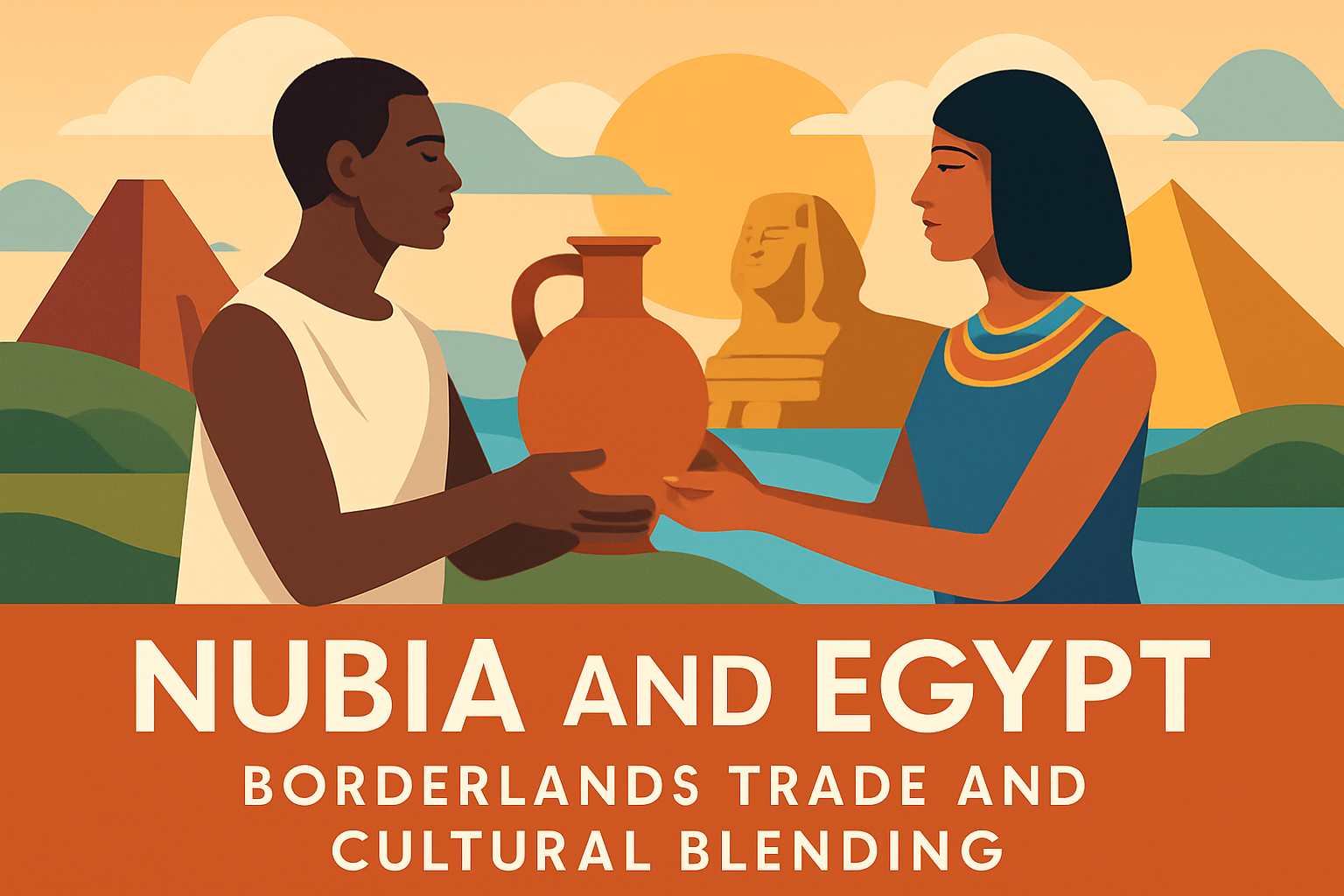
When we speak of ancient civilizations, two prominent names make their way to the forefront: Egypt and Nubia. These regions, rich in history and resources, played pivotal roles in shaping the course of human history. Located along the Nile River, both Egypt, and Nubia were vital regions that facilitated not only trade but also a significant cultural exchange over millennia. Understanding the dynamic relationship between these two regions helps shed light on the historical significance of borderland interactions and their lasting impact on global civilization.
The term “borderlands” refers to areas adjacent to or straddling crucial geographical boundaries that foster interaction between distinct groups. In the case of Nubia and Egypt, the borderlands were an essential conduit for commerce, diplomacy, and cultural interchange. Trade allowed these civilizations to access luxurious and essential goods, while cultural blending led to advancements in art, religion, and governance. The interplay between these two regions is a classic example of how connected human societies can influence and enrich each other.
This topic matters because it explores the foundational interactions between civilizations that have dramatically shaped our modern world. By examining how trade and cultural blending occurred between Nubia and Egypt, we gain insights into the broader themes of globalization, cultural integration, and the mutual benefits of interregional exchanges. The lessons we learn from these ancient civilizations are just as relevant today as nations navigate complex international relationships.
The Geography of Nubia and Egypt
Fundamentally, geography played a crucial role in establishing the connectivity between Nubia and Egypt. Nubia extended from the southern borders of Egypt to present-day Sudan. The Nile River, which flows through both regions, was the lifeblood of these civilizations, providing sustenance and a natural route for trade. This common waterway facilitated the movement of goods, people, and ideas, serving as a natural bridge that connected the two lands.
Real-world example: The Nile, with its seasonal flooding, deposited rich silt that allowed agriculture to flourish in both regions. Egypt relied heavily on Nubian minerals, especially gold, to sustain its powerful kingdom. Meanwhile, Nubia depended on Egyptian grain during times of famine. This mutual dependence on natural resources highlights the geographical factors influencing the robust trade networks between the two.
In plain terms, without the Nile’s unifying force, trade and cultural interchange between Nubia and Egypt might not have reached the remarkable heights it did. Their geographical proximity necessitated collaboration, thus laying the groundwork for a centuries-long partnership.
Cultural and Religious Exchange
Religion and culture were two of the most profound areas where Nubia and Egypt intermingled. Both civilizations had rich spiritual traditions that influenced each other over centuries. This mingling of beliefs manifested in various forms, such as architecture, language, and religious practices, demonstrating an enduring cultural symbiosis.
Real-world example: The Nubians adopted many elements of Egyptian religion, including the worship of Egyptian deities like Amun, Ra, and Isis. However, they added their unique interpretations and practices. The construction of Nubian pyramids and temples in Egyptian style, like those found in Meroë and Gebel Barkal, is a testament to this cultural borrowing and adaptation.
In simple terms, the exchange of religious ideologies and practices fortified a shared cultural identity, enhancing diplomatic ties and engendering respect and cohesion between the two regions. This mixing of cultures exemplifies the unforeseen advantages that arise from embracing diverse societal influences.
Trade Networks and Economic Interactions
Trade was the backbone of Nubia and Egypt’s relationship, sparking development and prosperity on both sides. These interactions were not limited to mere bartering but involved complex trade networks that spanned vast distances and offered access to otherwise inaccessible goods.
Real-world example: Significant trade items included gold from Nubia, papyrus, linen, and grain from Egypt. Egyptian expeditions into Nubia, seeking luxury items such as ivory, incense, and exotic animals, were frequent. Moreover, the establishment of forts and settlements by Egyptian rulers in Nubia underscored the importance of maintaining stable trade routes.
- Gold: Essential for Egyptian wealth and luxury.
- Ivory and Ebony: Sourced from Nubia, highly prized in Egypt.
- Grain: An Egyptian staple, traded during droughts.
- Exotic Animals: Reflecting trade connections beyond Nubia.
This sophisticated trading system promoted economic growth and drove technological innovations in transportation and logistics. Thus, it stands as a prime example of how trade relations can stimulate advancements in infrastructure and promote societal welfare.
Political Alliances and Military Campaigns
Political and military dynamics were another defining aspect of the Nubian-Egyptian relationship. The political landscape was fluid, shifting between times of peace and periods of conquest and domination. Nonetheless, these interactions further entrenched the connections between the two regions.
Real-world example: During the New Kingdom period, Egypt’s political influence reached into Nubia, resulting in Nubia’s temporary annexation. Egyptian pharaohs installed administrative centers and integrated Nubian elites into their bureaucracy to maintain control. Conversely, the Kingdom of Kush in Nubia eventually rose to power and ruled Egypt as its 25th Dynasty, an era frequently referred to as the “Kushite dynasty.”
Explained plainly, this seesaw of political power illustrates a mutual dependency and the selective borrowing of governance practices. It exemplifies how political and military interactions can lead to the blending of statecraft techniques that enrich both entities involved.
Artistic Influences and Developments
Art, a universal language, flourished between Nubia and Egypt, each civilization influencing the other’s artistic expressions. The interchange of artistic styles and techniques represents an equally important aspect of cultural blending, capturing the shared sensibilities and aesthetic appreciations of both regions.
Real-world example: Egyptian art, characterized by its intricate detail and symbolic representation, profoundly influenced Nubian creations. Nubian artifacts from the Napatan and Meroitic periods showcase Egyptian pharaonic clothing, headdresses, and iconography. Meanwhile, Nubian art uniquely interpreted Egyptian norms, incorporating indigenous styles and motifs.
In simple terms, artistic collaboration fostered a visual dialogue that expressed shared stories and values. The blending of Nubian and Egyptian art demonstrates the power of cross-cultural interactions in producing lasting artistic legacies.
Key Takeaways and Conclusion
Throughout history, the borderlands of Nubia and Egypt have exemplified the transformative power of trade and cultural blending. Their interaction showcases the potential that arises when civilizations engage with one another, as seen in the prosperity brought about by economic exchanges, political alliances, and shared spiritual and artistic endeavors.
The main benefit to modern readers is understanding how historical precedent can inform current international relationships. Recognizing the advantages of cultural integration and economic interdependence provides valuable lessons for fostering global cooperation and harmony today.
As we conclude, let us embrace these historical insights and apply them to today’s world. Whether by studying ancient civilizations or fostering dialogue among nations, the lessons from Nubia and Egypt remind us that collaboration often leads to innovation and prosperity. Let this understanding encourage us to support and promote cross-cultural exchanges in our global society.
For further exploration, consider delving into archaeological studies or visiting museums with artifacts from these ancient civilizations to gain a deeper appreciation of Nubia and Egypt’s intertwining histories.
Frequently Asked Questions
1. What was the relationship between ancient Nubia and Egypt?
Nubia and Egypt had a long and complex relationship that spanned thousands of years. These neighboring regions were intricately connected through trade, conquest, and cultural exchange. Initially, the relationship was primarily based on trade. Nubia was rich in resources such as gold, ivory, and ebony, which made it an appealing trade partner for Egypt. Egyptian craftsmen greatly valued these resources, and Nubia, in turn, acquired Egyptian goods like grain, papyrus, and linen. Over time, the relationship evolved as each state sought more control over the other. Egypt often attempted to exert political control over Nubia, at times through military conquest. Despite these conflicts, both regions maintained a mutually influential cultural exchange, with Nubian and Egyptian symbols, religious practices, and art influencing one another.
2. How did trade between Nubia and Egypt impact both civilizations?
Trade between Nubia and Egypt was not merely an exchange of goods; it was a conduit for cultural blending. The trade routes along the Nile River facilitated the transfer of ideas, technologies, and practices. Egyptian architectural styles, language, and religion significantly influenced Nubian societies. This is evidenced in the Nubian adoption of pyramid building and the worship of Egyptian deities. Conversely, Nubian art and music found their way into Egyptian culture. The economic prosperity that trade brought ensured that both regions could sustain complex societies with advanced social structures and infrastructures. Trade also encouraged mutual dependency, which created periods of peace and collaboration despite the occasional military conflict.
3. What were some key cultural exchanges between Nubia and Egypt?
One of the most visible aspects of cultural exchange was in religion and architecture. The Nubians embraced many Egyptian gods such as Amun and Osiris, blending them with their own deities. This synthesis of religious practices reflected in Nubian temples, such as the temple at Jebel Barkal. In terms of architecture, the building of pyramids by the Nubians was a direct result of Egyptian influence. Even the use of hieroglyphics in various forms of writing, including stone inscriptions, highlights this cultural blending. Moreover, the exchange bore significant impact on both region’s artistic expressions. Nubian artists adopted Egyptian styles, while providing their distinct flair, reflected in pottery and statuary.
4. What role did geography play in the relationship between Nubia and Egypt?
The geography of the Nile River was pivotal in connecting Nubia and Egypt. The river served as both a natural border and a means of transport, allowing easier movement of goods and people. The cataracts of the Nile—shallow and rocky stretches—served as natural barriers, making military conquest challenging and limiting confrontations to key strategic locations. The fertile lands along the river supported agriculture, crucial for sustaining both populations. The river facilitated travel and trade, making it a vital artery for the exchange economy. Geography also compelled cooperative utilization of resources, which was fundamental for the prosperity and resilience of both societies through periods of drought or external threat.
5. How did political dynamics influence the relationship between Nubia and Egypt?
The political dynamics between Nubia and Egypt were characterized by phases of dominance and subordination. Egypt’s power over the Nile allowed it to initially exert influence over Nubian territories. During the Middle and New Kingdoms, Egypt established forts throughout Nubia, signifying military occupation and control over trade routes and resources. Conversely, there were periods when Nubia asserted dominance over Egypt. For instance, the 25th Dynasty, also known as the Kushite Dynasty, saw Nubian Pharaohs ruling over Egypt, proving the dynamic shift in power relations. Such political oscillations deeply affected their interactions, often fostering periods of cultural and economic amalgamation, as political entities sought to legitimize their rule through adopting and respecting shared cultural traits.