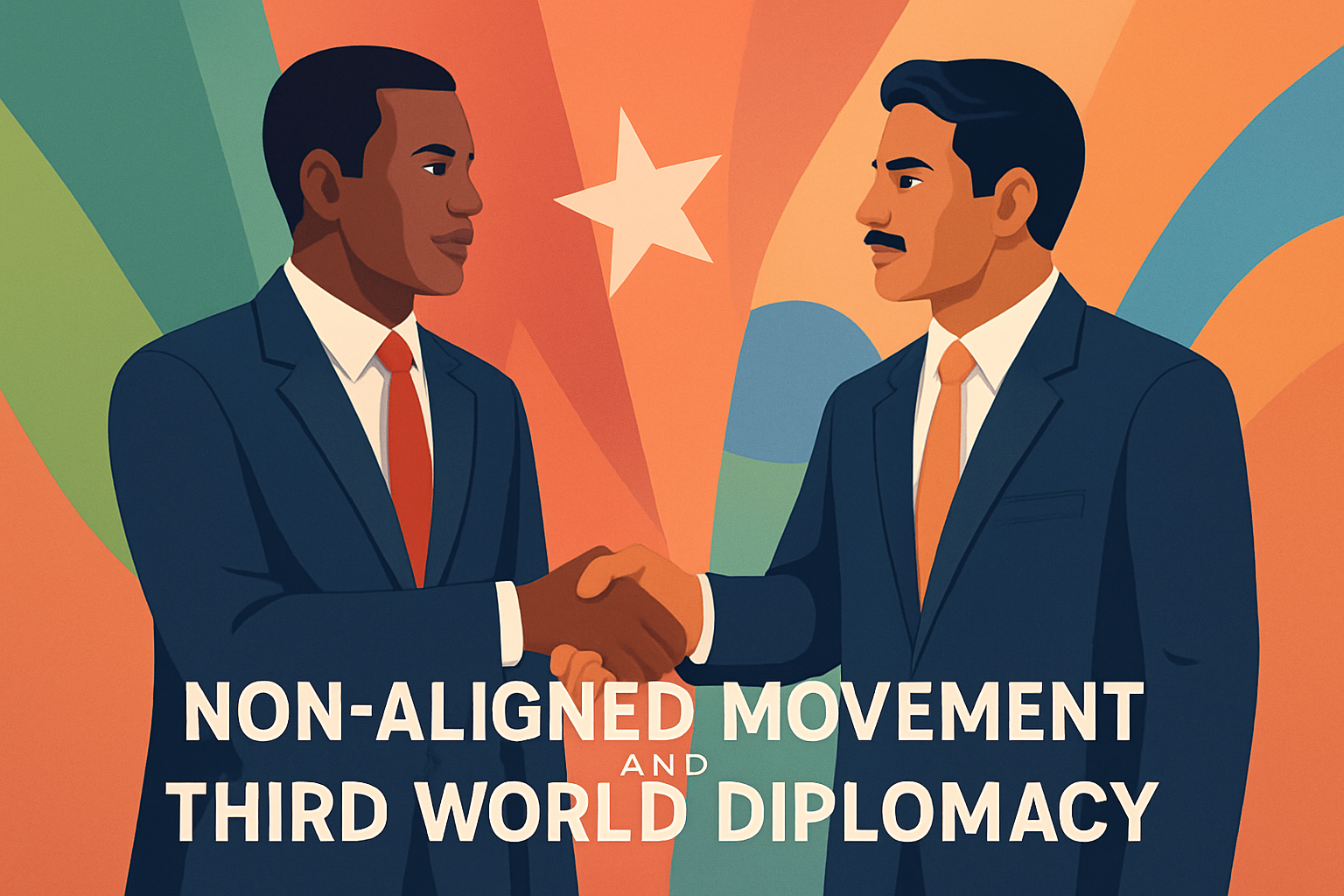
The Non-Aligned Movement (NAM) is a significant force in the field of international diplomacy, especially for developing countries traditionally referred to as the Third World. Formed during the height of the Cold War in 1961, NAM consists of states which see themselves as not formally aligned with any major power bloc — either NATO or the Soviet Union. Consequently, the Non-Aligned Movement aims to maintain a neutral stance and promote unity among countries that seek to preserve their independence from major global powers. While the concept of ‘Third World’ requires contextual understanding, it typically refers to countries in Africa, Latin America, and Asia that were neither aligned with NATO nor the Communist bloc during the Cold War. With more than 120 member states today, NAM plays a pivotal role in advocating for developing nations’ interests on the global stage.
Understanding the functionalities and objectives of NAM is crucial, as it reflects on the broader themes of equality and fair representation in international politics. As the world becomes more interconnected, NAM’s enduring legacy challenges the perpetuation of West-centric hegemony, offering a counterbalance that champions multilateralism, sovereignty, and peaceful coexistence. The pertinence of NAM reveals itself in its ability to inspire collective action and foster dialogue on pressing global challenges like poverty, climate change, and international security. By exploring the Non-Aligned Movement in depth, readers gain insight into a unique diplomatic effort that strives to amplify the voices of the global majority, fostering a more balanced global order.
The Origins and Goals of the Non-Aligned Movement
The roots of the Non-Aligned Movement are deeply embedded in the decolonization process following World War II. As new states emerged from the shackles of colonialism, there was a pressing need to unify and establish a collective voice in the international community. Amid the global tensions of the Cold War, leaders from India, Egypt, Yugoslavia, Ghana, and Indonesia established NAM during the 1961 Belgrade Conference. These architects were distinct in their commitment to independence, neutrality, and peaceful coexistence.
NAM’s original goals centered around promoting mutual respect for territorial integrity, non-interference in domestic affairs, and fostering economic equality. The Bandung Conference of 1955, held in Indonesia, was pivotal, laying the groundwork for NAM. It brought together Asian and African nations to discuss peace and development, leading to momentum that resulted in the formation of NAM. A real-world example of NAM’s influence is the pivotal role it played during the United Nations debates on the apartheid regime in South Africa, where it advocated against racial discrimination and international sanctions against the regime.
The Influence of NAM in Third World Diplomacy
The Non-Aligned Movement’s influence extends significantly across Third World diplomacy. Over the decades, NAM has served as a crucial forum for addressing the concerns of developing nations, enabling them to collectively negotiate with greater influence. This was seen vividly during the 1973 UN Conference on Trade and Development, where NAM countries successfully pushed for the establishment of the “New International Economic Order” to advocate for more equitable trade terms and sovereignty over natural resources.
An illustrative example can be seen in the case of the G-77 group, an initiative by NAM states aiming to promote their collective economic interests. The G-77, with its roots in NAM’s ideals, significantly impacts global dialogue on economic development, continually pressing developed nations for fairer practices. It serves as concrete evidence of NAM’s sustained impact on Third World diplomacy, providing a platform for these nations to counteract economic domination by powerful states.
| Key Objectives | Examples |
|---|---|
| Promote Sovereignty | Opposition to colonial rule in Africa and Asia |
| Economic Equality | New International Economic Order initiative |
| Non-interference | Advocacy against external intervention in conflicts |
Challenges and Criticisms of the Non-Aligned Movement
Despite its considerable accomplishments, the Non-Aligned Movement has faced numerous challenges and criticisms over time. One noticeable criticism is the difficulty in maintaining unity among its diverse member states, as regional conflicts and national interests occasionally impede collective action. Additionally, as the Cold War ended, NAM grappled with maintaining relevance in a world increasingly driven by economic globalization and Western-dominated institutions.
A case in point is NAM’s position on the Iraq War. While NAM officially opposed the 2003 invasion, individual member countries displayed a wide array of responses, reflecting differing national interests and alliances. Furthermore, some critics argue that NAM’s stature has diminished as countries like India and Egypt have developed closer ties with major powers like the United States. Despite these challenges, NAM remains an active forum for dialogue and cooperation, continually aspiring to address imbalances in global governance.
The Relevance of NAM in Contemporary International Relations
In today’s rapidly changing geopolitical landscape, the relevance of the Non-Aligned Movement is being continually reassessed. As global challenges evolve, so too does NAM’s role in addressing pressing issues like climate change, international terrorism, and sustainable development. While the absence of a bipolar world has shifted diplomatic dynamics, NAM’s principles remain pertinent in representing the interests of nations striving for autonomy and non-alignment.
One compelling example of NAM’s contemporary relevance is its advocacy for climate justice. The 2015 Paris Agreement witnessed distinct efforts by NAM member states to assert the importance of equitable climate solutions, emphasizing that developed nations bear a disproportionate responsibility for historical emissions. By forging a coalition, NAM countries effectively voiced their demands for financial support and technology transfer to assist in climate adaptation and mitigation efforts.
The Path Forward for the Non-Aligned Movement
Looking ahead, the future trajectory of the Non-Aligned Movement will likely hinge on its ability to adapt to changing global realities. As emerging challenges present new opportunities for collaboration, NAM’s enduring legacy has the potential to evolve, thereby meeting the aspirations of its members. Strengthening alliances within NAM, fostering intra-group trade, and prioritizing technological and infrastructural advancements are critical to realizing the group’s enduring vision.
The commitment to inclusivity and diversity, central tenets of NAM, can serve as a blueprint for forthcoming diplomatic endeavors. In a time where multilateralism faces significant trials, NAM’s focus on fostering dialogue and respecting sovereignty remains a guiding principle for shaping a more equitable world order. By embracing innovation and engaging with emerging economies, NAM can champion a new global paradigm centered around shared prosperity and peaceful coexistence.
Conclusion
In summary, the Non-Aligned Movement serves as an enduring testament to the success of collective diplomacy among nations seeking to assert their independence. As an advocate for equality, justice, and development, NAM’s foundational principles have facilitated a cohesive platform for addressing imbalances in global power dynamics. Its history and achievements underscore the capacity for unity among diverse players, illustrating how collaborative efforts can advance peace and prosperity.
The enduring relevance of NAM in contemporary international relations cannot be overstated. By consistently advocating for the interests of developing nations, NAM contributes significantly to tangible improvements in global governance. As new challenges continue to arise, NAM’s dedication to peaceful coexistence and mutual cooperation serves as a beacon of hope for the countless individuals within its sphere.
Reflecting on the rich legacy and contributions of the Non-Aligned Movement has clear benefits for readers interested in global diplomatic transformations. Engaging with NAM’s ideals invites readers to explore proactive involvement in advocacy efforts and international cooperation, expanding opportunities for a balanced and inclusive world order. To continue building on this perspective, readers may wish to delve further into NAM’s agendas, member country initiatives, and its influence on contemporary political discourse for a more profound understanding of international diplomacy’s evolving paradigms.
Frequently Asked Questions
What is the Non-Aligned Movement, and why was it established?
The Non-Aligned Movement (NAM) is an organization of countries that do not consider themselves aligned with or against any major power bloc. It was officially founded in 1961 in Belgrade, Yugoslavia, during the height of the Cold War era, a period marked by severe geopolitical tension between the Soviet Union and the United States, along with their respective allies. The essence of NAM is to enable countries, particularly those categorized as developing or part of the Third World, to make independent decisions on international issues without being forced to align with either the capitalist West or the communist East. This movement is rooted in the belief that developing nations should neither be seen as pawns in global superpower rivalries nor be used to further the agendas of wealthier, more powerful nations. By advocating a path of neutrality and unity among its members, NAM promotes peace, independence, and co-operation, paving the way for an equitable world order where all nations retain sovereignty and autonomy in their international affairs.
How does the Non-Aligned Movement influence Third World diplomacy today?
The Non-Aligned Movement continues to play a vital role in Third World diplomacy by acting as a united front for developing countries, allowing them to express their collective interests and concerns in global arenas such as the United Nations. Even today, NAM represents over half of the world’s population as it comprises 120 member states, mostly from Africa, Latin America, and Asia. This collective strength enables the movement to advocate for pressing issues affecting Third World countries, such as poverty eradication, economic development, climate change, and combatting neo-colonialism. Furthermore, NAM provides a platform for member countries to share strategies, resources, and support each other in resisting undue influence from powerful nations, helping to enhance their negotiating power. By standing together, NAM countries can work towards creating and maintaining a fair world order while ensuring their voices are heard on the international stage in a manner that prioritizes their unique needs and developmental goals.
Can you elaborate on some core principles and objectives of the Non-Aligned Movement?
The core principles and objectives of the Non-Aligned Movement were initially inspired by the Bandung Conference of 1955 and enshrined in its founding document during the first NAM Summit in Belgrade in 1961. They include mutual respect for each nation’s sovereignty and territorial integrity, the promotion of peaceful coexistence, and the commitment to non-aggression and non-interference in domestic affairs. NAM advocates for disarmament and opposes all forms of imperialism or colonial domination. Among its key objectives is the promotion of economic cooperation and development among member states, striving for self-reliance and reducing dependency on foreign aid from superpowers. Cultural diversity and mutual respect are also pivotal, encouraging nations to learn from each other and work towards a harmonious international environment. Overall, the movement seeks to maintain and strengthen the independence, territorial integrity, and security of non-aligned countries in the face of global power struggles.
How does the Non-Aligned Movement engage with global challenges such as climate change?
Recognizing that developing countries are often disproportionately affected by climate change due to limited resources and vulnerabilities, the Non-Aligned Movement actively engages with global climate challenges by emphasizing the importance of sustainable development and environmental justice. NAM advocatess for equitable and common but differentiated responsibilities and capabilities during international negotiations, insisting that developed countries acknowledge their historical contributions to global pollution and provide necessary technology transfer and financial assistance to developing nations. The movement also promotes intra-member exchanges of knowledge, technology, and best practices in sustainable agriculture, renewable energy, and disaster resilience. This collective approach helps to empower member nations to tackle climate change effectively, ensuring that their unique circumstances and development goals are not compromised by global environmental policies.
What challenges does the Non-Aligned Movement face in the current international landscape?
In the contemporary international landscape, the Non-Aligned Movement faces several challenges. As the Cold War ended and the bipolar world order shifted, NAM found itself having to redefine its purpose in a multipolar world where the dichotomy between East and West is less clear. Internal differences among member states in terms of political systems, levels of development, and priorities often make consensus difficult to achieve, weakening the movement’s collective bargaining power and credibility. Additionally, the rise of new global powers and regional blocks creates further complications, with some member states finding themselves drawn towards these emergent alliances. Despite these challenges, NAM continues to strive toward fostering unity, addressing the shared concerns of developing countries, and ensuring that the principles of independence and self-determination remain central in the international order. The movement seeks to adapt and evolve in an ever-changing global environment by reinforcing its commitment to its foundational values and rallying its members around new common causes.