
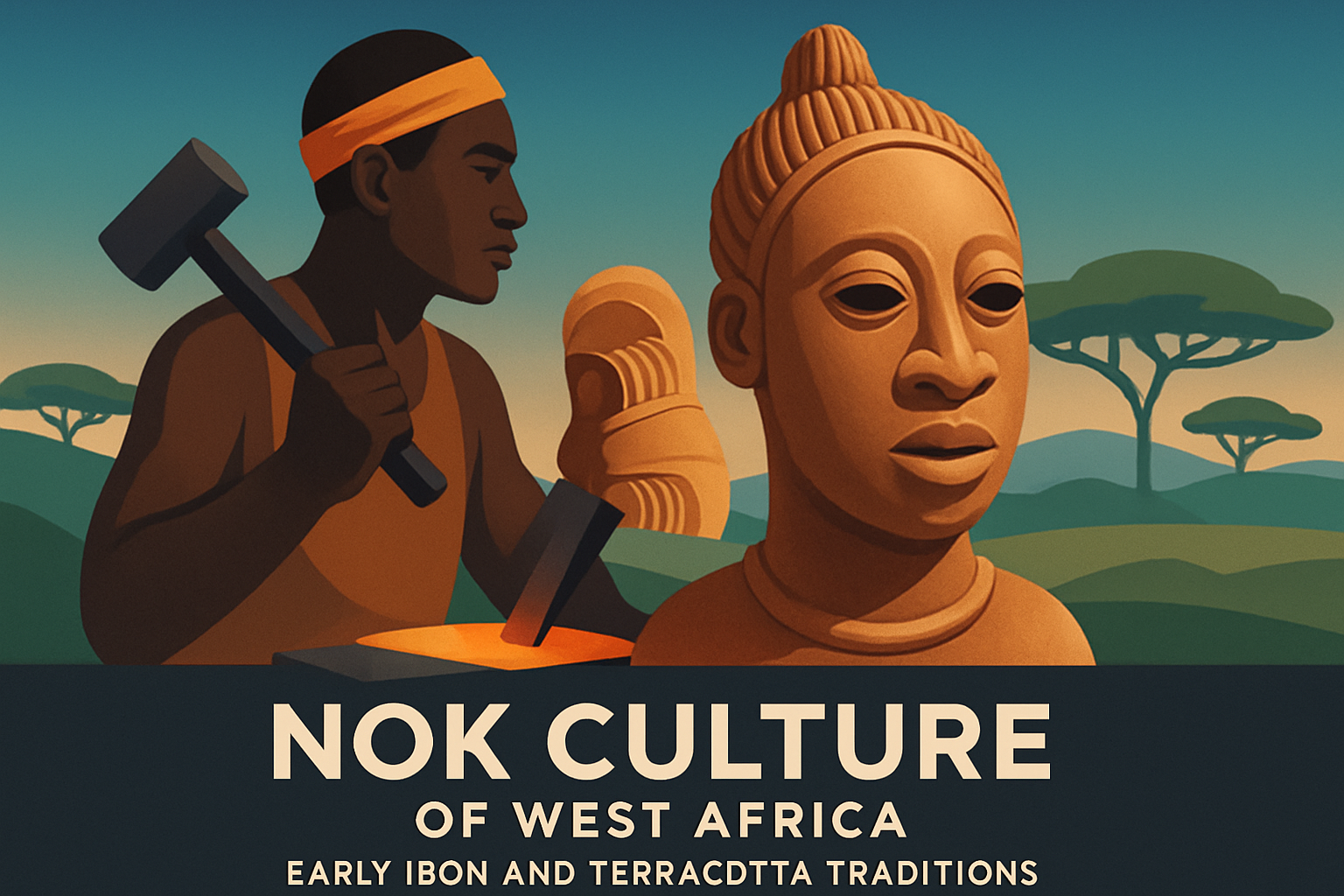
The Nok Culture, emerging in Northern Nigeria around 1000 BCE, represents one of the earliest advanced civilizations in Sub-Saharan Africa. Notably known for its advanced ironworking technology and distinctive terracotta sculptures, the Nok Culture offers an intriguing glimpse into early human ingenuity and artistic expression. Despite its profound impact on the development of West African history and technology, the Nok Culture remains shrouded in mystery due to the dearth of written records. Understanding the origins and achievements of the Nok people is essential as it underscores the ingenuity and resourcefulness of Africa’s early human societies, while also providing critical insights into how ancient communities shaped technological and artistic advancements that resonate in present-day cultures.
To comprehend the significance of the Nok Culture, it’s vital to recognize two key elements: iron metallurgy and terracotta artistry. Iron metallurgy involves the extraction of iron from ore and crafting tools or objects, a process the Nok people mastered much earlier than many of their contemporaries worldwide. Terracotta artistry refers to the creation of sculptural forms using clay, often left unglazed and fired at lower temperatures, a technique notably perfected by the Nok artisans. This dual mastery not only highlights the Nok Culture’s technological advancements but also reflects a sophisticated societal structure capable of fostering such innovation. Delving into the Nok Culture’s achievements provides valuable lessons on the evolution of human societies and the progression of technological and artistic practices.
The Origins and Mastery of Iron Metallurgy
The Nok Culture is heralded for its pioneering use of iron long before similar advancements appeared in neighboring regions. The implications of early iron use are profound, influencing agriculture, societal organization, and warfare. Iron tools allowed the Nok civilization to enhance agricultural outputs and clear land for settlements, offering a tangible leap in societal development over the older stone and bronze technologies.
A significant example of Nok iron mastery is found near the village of Taruga, where numerous iron-smelting furnaces have been discovered. These furnaces, dating back to 600 BCE, demonstrate sophisticated metallurgical techniques. The practice of smelting iron from ore and crafting it into tools highlights the Nok peoples’ advanced understanding of ironworking—a technological milestone that enabled their communities to thrive. This early application of iron significantly impacted the socio-economic stability and growth of the region by accelerating agricultural productivity.
Terracotta Sculptures: A Unique Artistic Legacy
The Nok Culture is equally renowned for its terracotta sculptures, celebrated for their intricate detail and stylistic consistency. These sculptures, depicting human figures, animals, and mythical creatures, reflect not only artistic sophistication but also societal, religious, and political nuances of the Nok people.
Remarkably, the terracotta figures are characterized by elaborate hairstyles, intricate jewelry, and a distinct portrayal of facial features, suggesting a rich cultural symbolism and possibly indicating social status or spiritual beliefs. Among the most notable finds is a terracotta head discovered in Jemaa, displaying a refined artistry that transcends mere aesthetic appeal, possibly serving a ceremonial or ritualistic purpose.
| Cultural Aspect | Significance | Example |
|---|---|---|
| Iron Metallurgy | Revolutionized agriculture and tools production, aiding societal development | Iron-smelting furnaces found in Taruga |
| Terracotta Artistry | Illustrated religious, social, and political ideologies through unique artistry | Terracotta head found in Jemaa |
The Societal Impacts of Technological Advances
The integration of iron and terracotta practices into everyday life had profound implications for Nok society. Iron tools simplified agriculture while expanding possibilities for craft and trade, elevating the standard of living. It supported a more settled lifestyle, enabling larger communities and the development of complex social hierarchies.
Terracotta sculptures, on the other hand, served as cultural repositories, echoing the beliefs and social structures of the Nok people. The artistic endeavor required not only individual talent but also community resources for extracting and processing clay, indicating a collaborative societal effort. It’s plausible that these sculptures served as conduits for storytelling or religious practices, promoting community cohesion and shared cultural identity.
Challenges in Gathering Historical Context
Despite the remarkable artifacts left behind, understanding the full narrative of the Nok Culture is fraught with challenges. The absence of written records necessitates reliance on archaeological and anthropological methodologies, often limited to interpretative reconstruction of Nok life solely from material remains.
The rich yet enigmatic nature of Nok artifacts stimulates ongoing research and debate. The lack of definitive historical records poses significant hurdles in discerning the precise functions and cultural implications of Nok artifacts, be it their sculptures or metal tools. Consequently, while we’ve identified glimpses of the Nok Culture’s advanced iron and terracotta practices, many aspects of this civilization remain an intriguing enigma.
Lessons from Nok Culture for Modern Understanding
The study of the Nok Culture offers valuable insights into human innovation and adaptation. Their advancements in ironworking underscore the importance of technological progress in societal development, echoing modern reliance on technological advancement. Furthermore, the rich artistic expressions found in the Nok terracotta sculptures emphasize the role of cultural expression in uniting and defining communities.
- Innovation drives societal progression: Nok’s early adoption of ironworking had widespread effects on their societal evolution.
- Art reflects societal values: Terracotta figures convey rich information about Nok hierarchy and beliefs.
- Interpreting without written records: Archaeological methods offer insights but also highlight challenges in historical reconstruction.
Conclusion: Reflecting on the Nok Legacy
In conclusion, the Nok Culture of West Africa provides a profound testament to early human ingenuity and cultural expression. Through mastery of iron metallurgy and sophisticated terracotta artistry, the Nok people shaped a society of notable complexity and capability. Their innovations in technology and art not only propelled their own society forward but also laid a foundational heritage that influenced successive West African cultures. Learning from the Nok Culture encourages appreciation for the diverse historical narratives that constitute human history, urging us to sustain investigative efforts despite interpretative challenges. Readers are invited to explore further into this fascinating epoch and support archaeological endeavors that continue to uncover more about the enigmatic and illustrious Nok civilization, thus shedding further light on Africa’s vibrant past.
Frequently Asked Questions
1. What is the Nok Culture, and why is it significant?
The Nok Culture, which emerged around 1000 BCE in what is today Northern Nigeria, represents a groundbreaking civilization in Sub-Saharan Africa. It’s significant for several reasons. Firstly, it is one of the earliest known societies in this region to develop advanced ironworking techniques. This capability placed the Nok culture at the forefront of technological advancement in iron age Africa, fundamentally transforming the way humans interacted with their environment. The production of iron tools would have enabled more efficient farming, hunting, and warfare, contributing to the strength and organization of Nok society.
Additionally, the Nok Culture is renowned for its distinctive terracotta sculptures, which are considered among the oldest of their kind found in Africa. These sculptures, characterized by intricate designs and often representing human figures adorned in detailed attire, offer a window into the socio-cultural dynamics of the time. Through these artworks, scholars get glimpses of the spiritual beliefs, social structures, and everyday practices of the Nok people. Furthermore, the terracottas suggest an evolving artistic sophistication that highlights early human creativity and its role in cultural expression.
Despite its achievements, much about the Nok Culture remains mysterious due to the lack of written records and the region’s challenging archaeological conditions. This mystery only adds to the fascination, inviting scholars and enthusiasts alike to piece together the history and legacy of this remarkable civilization.
2. What are the key features of Nok terracotta sculptures?
Nok terracotta sculptures are truly unique, standing out for their artistic flair, technical execution, and expressive power. These sculptures typically consist of heads, full figures, and animals, all rendered in intricate detail. Remarkably, these pieces often measure anywhere from a few inches to over three feet tall, showcasing the impressive skill of Nok artisans in handling and sculpting clay.
One of the striking features of Nok terracotta sculptures is their elaborate facial characteristics. Figures often display D-shaped eyes, flared nostrils, and parted lips, which together convey a sense of life and personality. Furthermore, these features can express an array of emotions, from calm serenity to what seems like expressions of authority or even spirituality. This suggests the sculptures were not mere decorative items but likely held deeper symbolic, religious, or ceremonial importance.
Moreover, the intricate hairstyles and adornments depicted on many figures indicate a society attentive to personal appearance and possibly rank or status. The presence of headgear, bracelets, and necklaces suggests a rich tradition of personal adornment, which may have communicated social hierarchies or kinship roles within the Nok community.
Through these detailed works, scholars continue to explore the cultural values and societal norms of the Nok people, offering insights into an ancient world where art intersected profoundly with human experience and expression.
3. How did ironworking technology impact the Nok Culture?
The advent of ironworking technology was pivotal for the Nok Culture, heralding a new era of technological innovation and societal transformation. This skill enabled the Nok people to craft tools and weapons that were both stronger and more advanced than those made of stone or bronze. Iron tools such as hoes, axes, and sickles would have significantly improved agricultural efficiency, allowing the Nok people to cultivate larger areas, diversify their crops, and increase food production to support a growing population.
In the realm of warfare, iron weapons offered a distinct advantage in terms of durability and effectiveness, potentially enhancing social cohesion around defense and territorial expansion. This technology might have also facilitated trade, as iron products became valuable commodities that could be bartered with neighboring regions. Access to iron further indicated a level of social cooperation and complexity, as mining, smelting, and crafting required coordinated efforts and specialized knowledge.
Additionally, the mastery of ironworking positioned the Nok Culture as innovators in West African history, influencing subsequent civilizations that would adopt and adapt these techniques. The echoes of Nok’s technological prowess can be observed in the broader developmental trajectories of later African societies.
Overall, ironworking didn’t just enhance daily life; it redefined it, leading scholars to appreciate the Nok Culture’s contributions as foundational to the technological legacies of the region.
4. Why do we know so little about the Nok Culture despite its influence?
The challenge of understanding the Nok Culture lies in a confluence of factors, primarily stemming from the absence of written records. Unlike some other ancient societies that documented their histories, the Nok left behind no such inscriptions, making it difficult for modern historians to piece together a comprehensive narrative of their daily lives, governance, or interactions with neighboring cultures.
Archaeological evidence, while rich in certain respects, remains limited and scattered. Much of what has been uncovered—terracotta sculptures and iron artifacts—reveals significant insights into social and artistic practices but leaves gaps concerning broader cultural structures. Moreover, the Nok region’s environment can be challenging for excavation; seasonal floods and tropical weather conditions complicate the preservation and retrieval of materials.
Furthermore, many early Nok sites were discovered through chance rather than planned archaeological efforts, resulting in a somewhat sporadic understanding of the culture’s full scope and chronology. The art of Nok, while enlightening, also presents interpretative challenges, as symbolism and purpose are speculated based on cross-cultural studies rather than direct evidence from the Nok themselves.
As a result, much of what is known today has been pieced together through careful study of available artifacts and remains a vibrant area of ongoing research. Each new discovery has the potential to shift perspectives and fill in blanks about this once-flourishing civilization.
5. What are the ongoing challenges and opportunities in studying the Nok Culture?
Studying the Nok Culture presents both exciting opportunities and formidable challenges within the realm of archaeology and African history. One of the major challenges is site preservation. Many Nok sites are located in areas that are prone to erosion, development, or illegal looting, which can result in the loss of invaluable cultural heritage before it is even cataloged or studied. Protecting these sites requires international cooperation and local engagement to ensure these artifacts are preserved for future generations.
Additionally, funding and resources often pose significant challenges. Archaeological expeditions and excavations require substantial investment in terms of both time and money. Many regions in Africa, including those home to Nok sites, may not prioritize archaeological preservation or exploration due to pressing economic and social issues. This can limit the scope and frequency of research initiatives, slowing progress in fully understanding the cultural and historical relevance of the Nok culture.
However, these challenges also create opportunities for innovation and collaboration. Advances in technology, such as radiocarbon dating and 3D scanning, enhance the ability to accurately date artifacts and analyze them in greater detail without physical intervention. This allows for the preservation of original artifacts while generating detailed digital records for study.
Educational initiatives and local community involvement are pivotal in nurturing a broader appreciation and understanding of the Nok culture’s significance. As awareness grows, so too might the efforts to preserve and explore this important cultural heritage. Collaborative projects that bring together local experts and international scholars can also create new narratives about African ancient history that challenges outdated colonial perspectives and highlights the richness and complexity of indigenous African innovation and artistry.
The study of the Nok Culture is not just an academic endeavor but a continuously evolving dialogue with history. Each artifact discovered has the potential to reshape our understanding of early African civilizations, affirming the Nok’s place as a cornerstone of technological and artistic development in human history.