
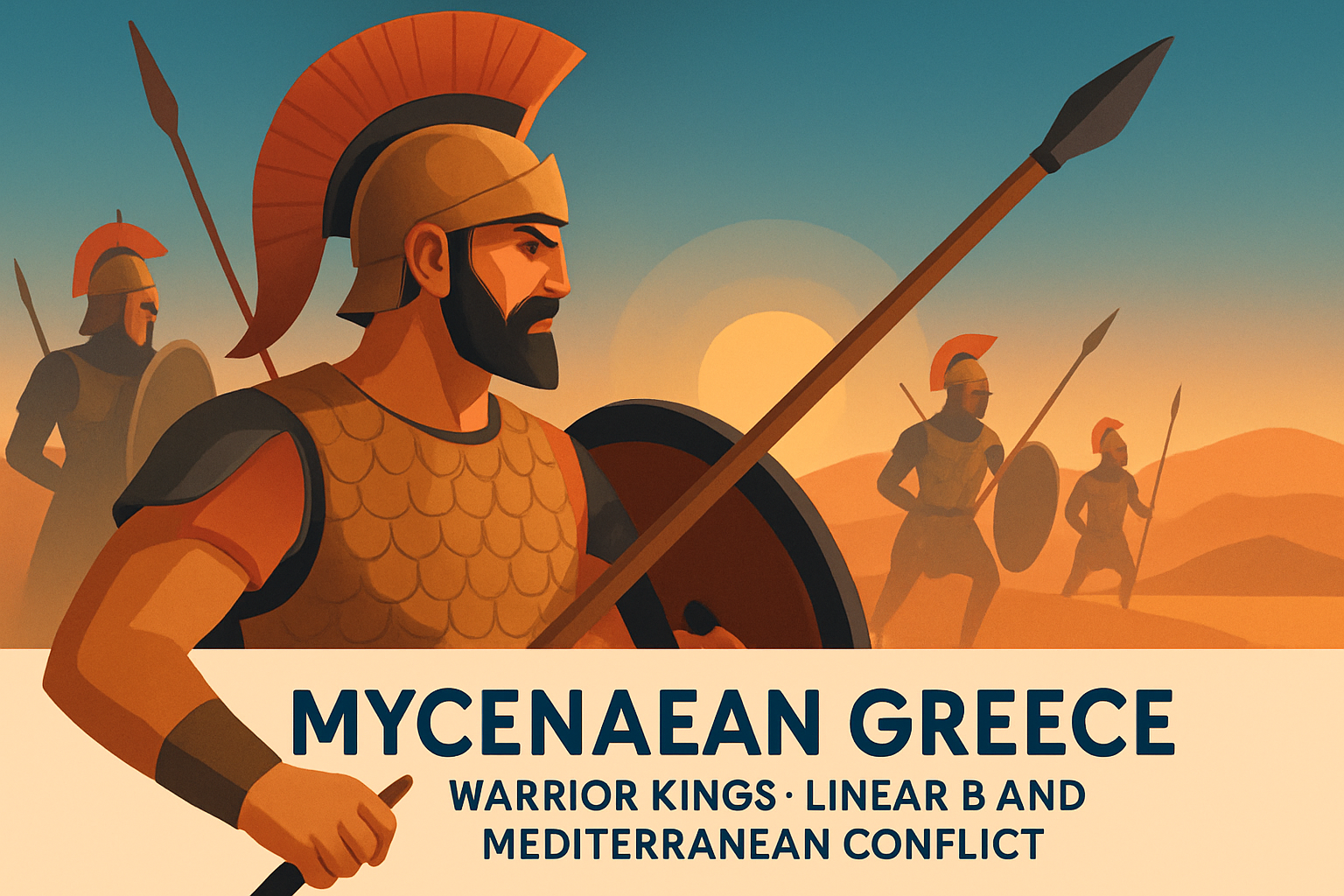
The history of ancient Greece is a tapestry wound with the threads of mighty empires, fascinating cultures, and monumental historical events. Among the earliest chapters of this history is the era of Mycenaean Greece, which thrived from approximately 1600 to 1100 BCE. Mycenaean Greece was known for its warrior kings, innovations in script like Linear B, and significant roles in Mediterranean conflict. This period was crucial as it laid the groundwork for what would morph into the classical era of Greece, profoundly influencing Western civilization. Understanding Mycenaean Greece’s significance requires delving into its political structures, cultural innovations, and interactions with neighboring civilizations. The study of this era doesn’t just illuminate a bygone age but enhances our comprehension of themes like power, influence, and legacy, pivotal to grasping the full spectrum of human history.
The Rise of the Mycenaean Warrior Kings
Mycenaean Greece comprised several city-states spread across the Greek mainland, each ruled by powerful warrior kings. These kings were not just political leaders but also religious and military figures. Centralized in fortified palaces, they maintained control over their domains by wielding both military prowess and religious influence. The most famous of these palatial centers were Mycenae, Tiryns, and Pylos.
One of the key aspects of Mycenaean rule was their military organization. The Mycenaeans were skilled warriors and naval planners, often engaging in both terrestrial and maritime campaigns. Their effectiveness in warfare is exemplified by the tales of the Trojan War, a conflict immortalized in Homer’s epics. While the historical accuracy of these tales is debatable, they nonetheless underscore the martial reputation the Mycenaean rulers cultivated. These kings leveraged their military capabilities to exert dominance and defend against external threats, ensuring their cities remained powerful throughout the region.
Linear B: The Innovation of Mycenaean Greece
One of the most enduring legacies of Mycenaean civilization is their script known as Linear B. Discovered initially at Knossos on Crete by Sir Arthur Evans and later at Pylos and Mycenae, Linear B was a massive leap forward in record-keeping from its predecessor, Linear A. Unlike Linear A, which remains undeciphered, Linear B was decoded by Michael Ventris in the 1950s, revealing that it was an early form of Greek.
Linear B tablets primarily contain administrative and economic records. Over 4,000 of these tablets offer invaluable insights into Mycenaean life, recording details ranging from agricultural inventories to religious offerings. This script illustrates the sophisticated bureaucracy that underpinned the Mycenaean world—a necessity for managing resources over expansive domains. The advent of Linear B demonstrates the Mycenaeans’ emphasis on administration and the critical role it played in sustaining their societal complexity.
Mediterranean Conflict: The Mycenaeans as Players on a Larger Stage
The strategic location of Mycenaean Greece on the crossroads of major sea routes placed it in direct contact with notable contemporary civilizations. As such, Mycenaean Greece found itself embroiled in numerous conflicts that shaped its destiny and that of the broader Mediterranean region.
These interactions were often driven by both conflict and cooperation. The Mycenaeans engaged in trade and cultural exchange that were occasionally interspersed with warfare. For example, they traded with the Hittites, Egyptians, and various Anatolian and Near Eastern entities. Conversely, their aggressive expansionary strategies and raids into foreign territories led to clashes, exemplified by their involvement in the possible historical foundations of the Trojan War.
Below is a summary of key interactions between the Mycenaeans and their contemporaries:
| Civilization | Nature of Interaction | Outcome |
|---|---|---|
| Hittites | Both trade and conflict | Increased wealth and sporadic warfare |
| Egyptians | Primarily trade | Diplomatic relations and economic enrichment |
| Troy | Conflict (Trojan War) | Destruction of Troy (debated historical accuracy) |
The Mycenaean Greeks thereby played an essential role in the geopolitical dynamics of the Late Bronze Age. Their ability to navigate these complex relationships highlights not only their adaptability but also their influence in ancient diplomatic history.
Conclusion
Mycenaean Greece was a significant period in the history of the ancient world. The era’s emphasis on the warrior kings, sophisticated administrative innovations like Linear B, and active participation in Mediterranean conflicts underscore their multifaceted influence. Learning about Mycenaean Greece provides modern readers with a deeper understanding of ancient societal structures and the birth of Greek culture.
This knowledge is essential for history enthusiasts and those curious about the formation of complex political and cultural paradigms. Engaging further with resources on Mycenaean advancements and sharing this knowledge with others will enrich the collective appreciation of history’s rich tapestry. To venture deeper into the world of the Mycenaeans, consider visiting archaeological sites or exploring academic texts that explore these fascinating remains of antiquity.
Frequently Asked Questions
1. What is Mycenaean Greece, and why is it significant?
Mycenaean Greece refers to the period in Ancient Greek history from roughly 1600 to 1100 BCE. This era is named after the city of Mycenae, one of the foremost sites of this civilization. Mycenaean Greece is highly significant for several reasons. Firstly, it’s seen as the backdrop to many Greek myths and epic tales, providing historical context to stories like the Trojan War as sung in Homer’s Iliad. It was a time when the Greeks were establishing their identity, forming what could be considered one of the earliest complex societies in Europe.
Secondly, Mycenaean Greeks are noted for their unique contributions to architecture, engineering, and art, with imposing structures like the Lion Gate and tholos tombs exemplifying their skill. Additionally, the development of Linear B script, the earliest form of Greek writing, marks a crucial moment in the recording of history and administration, pointing to a complex bureaucracy in their society. This period serves as a critical foundation that would eventually influence the blooming of the classical era with its flourishing arts, philosophy, and democracy.
2. Who were the warrior kings of the Mycenaean era, and what was their role?
The Mycenaean era was notably characterized by a feudal system where power was concentrated in the hands of monarchs often referred to as ‘wanax’ or warrior kings. These kings were not only rulers but also pivotal military leaders, commanding armies to protect their territories or launch invasions. The archetype of the Mycenaean warrior king is often depicted in art and records donning impressive armor and wielding formidable weapons, which underscores their military prowess.
Aside from military roles, these kings also played a crucial role in trade and diplomacy. They controlled vital trade routes in the Mediterranean and had interactions with other powerful contemporaries like the Hittites and Egyptians, bringing a significant level of economic prosperity to their city-states. The kings were also custodians of the region’s cultural and religious activities, reflected in the construction of grandiose palaces and temples. In essence, the Mycenaean warrior kings were the linchpins of their society, governing, defending, and expanding their influence across the region.
3. What was Linear B, and how did it contribute to Mycenaean society?
Linear B is an ancient script used primarily for writing Mycenaean Greek, and it is considered the earliest form of the Greek language that we have in written records. This script was used primarily for administrative purposes and was derived from the earlier Linear A script used by the Minoans. The decipherment of Linear B by Michael Ventris in the 1950s opened a window into Mycenaean society, allowing historians and archaeologists to better understand their administrative practices, economy, and bureaucracy.
Documents written in Linear B have been found inscribed on clay tablets across major sites such as Pylos, Knossos, and Mycenae, detailing inventories, ration distributions, and records of tribute and taxes. This demonstrates a highly organized state structure where record-keeping and resource management were paramount. Linear B essentially allowed the Mycenaeans to efficiently run their wide-reaching palace economies, maintaining control and ensuring the prosperity of their civilization through meticulous documentation of goods and services.
4. How did Mycenaean Greece engage in Mediterranean conflict?
Mycenaean Greeks were extensively involved in the Mediterranean’s dynamic and often tumultuous political landscape. As a formidable military power with a fleet capable of challenging other sea-bound civilizations, they engaged in conflicts that are often veiled in myth but have substantial historical foundations. The most famous of these conflicts would probably be the Trojan War, which is said to involve Mycenaean kings like Agamemnon.
Aside from engaging in legendary battles, the Mycenaeans were aggressive in securing trade routes and resources, leading to skirmishes and battles with neighboring powers. During their time, they faced formidable civilizations such as the Hittites and the Egyptians, requiring diplomatic and sometimes military action to maintain advantageous positions, ensure resource access, and sustain their booming economic interests. These conflicts shaped the power dynamics in the region and set precedents for both alliances and enmities chief among Mediterranean civilizations.
5. What ultimately led to the decline of Mycenaean Greece?
The decline of Mycenaean Greece, commonly referred to as part of the Late Bronze Age collapse, is attributed to a confluence of factors rather than a singular cause. Around 1200 BCE, the region experienced a series of catastrophic events, hinting at both internal strife and external pressures. Evidence from archaeological records points to widespread destruction of major sites – likely due to invasions, such as the oft-speculated Sea Peoples, or internal rebellions.
Moreover, natural disasters like earthquakes, along with climate changes leading to agricultural hardship, likely worsened the societal conditions. The Mycenaean society also appeared to be suffering from overextension; their complex palatial structures, heavily reliant on centralized administrations, may have become unsustainable amidst economic and environmental upheaval. These compounded stresses likely led to a breakdown in their trade networks and administrative systems, causing societal collapse and paving the way for the so-called Greek Dark Ages.