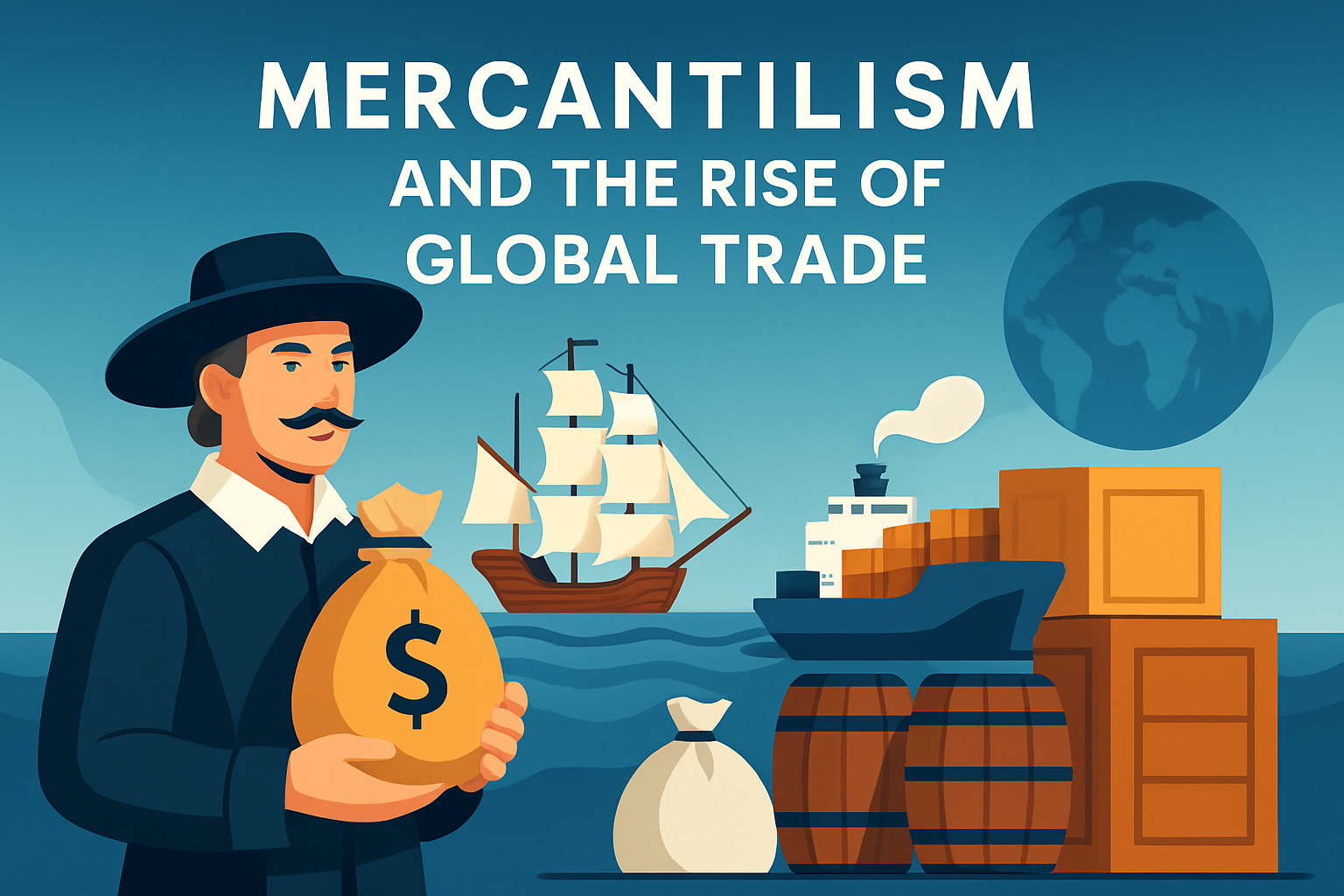
Mercantilism has been a significant catalyst for the rise of global trade, actively shaping the economic, political, and cultural landscapes of nations across the continents. This economic theory and practice, which prevailed from the 16th to the 18th century, placed heavy emphasis on state-controlled economic policies designed to amass wealth through trade surpluses. At its core, mercantilism is the belief that a country’s economic strength is directly tied to its stockpile of precious metals, primarily gold and silver. The accumulation of wealth through favorable trade balances was believed to enhance national power. This mattered significantly because it laid the groundwork for the development of modern-day trade practices, influencing the global economic structures that we see today. In this article, we will explore the essence of mercantilism, how it catalyzed the development of global trade, and its lasting implications on contemporary international commerce.
The Principles of Mercantilism
Mercantilism is rooted in several core principles that dictated how nations approached economic policies. These principles include building a strong national economy by maintaining a trade surplus, regulating trade strictly through tariffs and subsidies, and encouraging the accumulation of wealth in the form of precious metals. The emphasis was on selling more goods abroad than buying from foreign markets. This was achieved through a combination of government intervention and economic policies that favored exports over imports. During this period, countries such as England and France enacted policies that supported domestic industries, which subsequently led to increased national revenues.
For instance, England’s Navigation Acts, established in the mid-17th century, provided a classic example of mercantilist policy in action. These acts required that goods imported into England or its colonies be transported on English ships, effectively limiting foreign competition and promoting English maritime commerce. This stimulation of domestic economic growth was advantageous in creating national wealth. The policy was essential in propelling England forward as a powerful trading nation, directly driving expansion and sustained economic growth.
The Role of Colonial Expansion
Colonial expansion played an indispensable role in the rise of mercantilism and global trade. European powers ventured into Asia, Africa, and the Americas, establishing colonies that were seen as both outlets for excess population and sources of wealth in the form of raw materials and precious metals. The European nations’ mercantilist policies included the establishment of strong trade networks and partnerships through their colonies. The colonies served as vital sources of raw materials, such as cotton, tobacco, and sugar, and as markets for the finished goods produced by the colonial powers.
A pertinent example of this colonial expansion is the establishment of the British East India Company, which became a powerful entity in India. By securing exclusive trade rights and imposing favorable tariffs to the British Crown, the company not only brought enormous wealth to England but also solidified British influence over the Indian subcontinent. This strategic move was instrumental in facilitating the flow of goods and resources, thus enhancing global trade networks.
The Influence of Mercantilist Policies on Global Trade Networks
Mercantilist policies did not only affect the countries that implemented them; they also significantly influenced global trade networks. By imposing high tariffs on foreign goods and offering subsidies for domestic goods, mercantilist states were able to protect local industries while fostering international trade routes that would meet their economic objectives. This resulted in an interconnected world economy that intertwined the fortunes of various nations.
The Netherlands, during the 17th century, showcased the dynamic impacts of mercantilist policy on trade networks. Known as the Dutch Golden Age, this period was marked by the Dutch Republic’s dominance in global maritime trade, thanks in part to their mercantilist-oriented policies. Through the establishment of the Dutch East India Company, the Dutch expanded their trade reach to the East Indies, reshaping global trade patterns. This company became a dominant force, monopolizing the spice trade and establishing enduring trade routes that sharpened the 17th-century world’s interconnectedness.
Mercantilism’s Cultural and Societal Impact
Beyond its economic implications, mercantilism had profound cultural and societal impacts. The emphasis on trade and wealth accumulation reshaped societies profoundly. The rise of mercantilism led to urbanization as cities became centers of trade, industry, and commerce. This economic growth fostered a burgeoning middle class and spurred innovation and productivity through industrialization. The era bore witness to a shift in power dynamics where the merchant class gained influence in society, which contributed significantly to the evolving cultural fabric of nations.
In Spain, the influx of wealth generated by mercantilist activities, such as the extraction of silver from Latin America, led to monumental cultural transformations. Wealth flowed into the country, fostering the growth of the arts and science during the Spanish Golden Age. This period produced iconic contributions to literature, visual arts, and architecture, shaped by the mercantile wealth, which empowered patronage and artistic experimentation that defined Spanish heritage.
Criticism and Decline of Mercantilism
Despite its roles in advancing global trade and wealth accumulation, mercantilism was not without criticism. Critics argued that mercantilist policies led to economic inefficiencies, as the heavy regulation of trade often stifled competition and growth. The focus on amassing precious metals was mistakenly equated with true economic strength, neglecting the benefits of mutual trade and open markets. Furthermore, colonies often faced exploitive practices that undercut their economies and growth potential, leading to long-term ramifications.
The publication of Adam Smith’s “The Wealth of Nations” in 1776 marked a critical turning point, offering a new way of thinking about economics. Smith argued for free-market principles and the idea of economic specialization for mutual benefit, effectively challenging the core tenets of mercantilism. This shift in economic thought signified the dawn of the classical economics era and laid the foundation for modern theories of trade and economic management.
Legacy of Mercantilism in Today’s Global Trade
While mercantilism as a formal economic system may have declined, its legacy remains embedded in today’s global trade practices. Protectionist policies, such as tariffs and subsidies to protect domestic industries, find their roots in mercantilist ideology. Governments today still utilize these measures to safeguard national economic interests in various industries, ranging from agriculture to technology.
To illustrate this, we can look to the contemporary trade policies enacted by various countries, notably the implementation of tariffs in the United States under the “America First” trade agenda. This modern political strategy has echoes of mercantilist thought, focusing on reducing trade deficits and promoting domestic production. Comparable measures can be seen globally as nations strive to balance open trade with domestic economic protection.
| Country | Mercantilist Policy Example |
|---|---|
| United States | Tariffs on steel and aluminum imports |
| China | Subsidies for technology sectors |
| European Union | Agricultural subsidies under the Common Agricultural Policy |
Conclusion: The Modern Implications of Mercantilism
Reflecting on the trajectory of mercantilism and its influence on global commerce offers valuable insights into contemporary trade dynamics. The historic framework of mercantilist practices highlighted the intricate balance between national economic policy and international trade collaboration. Understanding these dynamics empowers modern policymakers and businesses to navigate the complexities of today’s global markets responsibly. As we continue to experience economic fluctuations, it remains vital to learn from previous trade theories, ensuring equitable and mutually beneficial trade relationships.
Mercantilism’s tale is a testament to the transformative power of economic policy and its ability to mold not only economies but entire societies. To tap into these learnings, individuals can begin by deepening their understanding of economic history and considering how shifts in policy can impact broader economic trends. Embracing this knowledge invites reflection on current practices and encourages proactive engagement in shaping future trade policies. Awareness, adaptive learning, and strategic foresight are the keys to riding the waves of global trade proficiently and ethically in a way that benefits all participants across this interconnected world.
Frequently Asked Questions
What is Mercantilism and how did it impact the rise of global trade?
Mercantilism is an economic theory that dominated European thought from the 16th to the 18th century. It emphasized the role of state power in the economy, with the goal of increasing a nation’s wealth by amassing precious metals like gold and silver. This was mainly achieved through trade surpluses, where countries would export more than they import. A key aspect of mercantilism was the belief that wealth was finite, meaning one country’s gain was inherently another’s loss.
The impact of mercantilism on the rise of global trade was profound. Nations sought to establish and control colonies to access raw materials and markets for finished goods, fueling voyages of exploration that expanded trade routes across the globe. This led to a network of trade between Europe, the Americas, Africa, and Asia, often referred to as the “triangular trade.” Through implementing protectionist policies, placing high tariffs on imports, and creating state monopolies, countries strove to make their economies self-sufficient and robust. This global exchange laid the foundation for modern capitalism and greatly influenced international trade practices, many of which are still in use today.
Why was the accumulation of precious metals central to the mercantilist theory?
In mercantilism, the accumulation of precious metals, particularly gold and silver, was seen as the primary indicator of a nation’s wealth and power. The reason behind this emphasis was twofold. First, these metals were universally accepted as a medium of exchange, allowing nations to settle debts and trade with foreign powers. Second, by amassing large amounts of gold and silver, countries believed they could enhance their finances and thus increase their political and military strength.
This approach led to fierce competition among nations for control over resources and trade routes, resulting in colonial expansion and frequent conflicts. The desire to acquire metals also pushed mercantilist governments to promote manufacturing and export industries while limiting imports through high tariffs and strict regulations. Although this focus on precious metals seems archaic by modern economic standards, it was a logical approach at the time when paper currency was either non-existent or inadequately developed, making bullion the cornerstone of international trade.
How did mercantilism encourage colonial expansion?
Mercantilism encouraged colonial expansion as it placed emphasis on acquiring colonies as a means to accumulate wealth and increase national power. Colonies provided the parent country with access to raw materials and natural resources, which could be shipped back home to be manufactured and subsequently exported. This cycle was crucial to achieving a favorable balance of trade, an objective of mercantilism that focused on exporting more than importing.
In pursuing this strategy, European powers colonized vast territories in the Americas, Africa, and Asia. The extraction of resources such as sugar, tobacco, cotton, and precious metals like gold and silver, fueled European economies and helped them attain significant trade surpluses. Furthermore, colonies opened new markets for European manufactured goods, ensuring that the mother country’s industries thrived. As a result, traditionally localized economies were integrated into a global trading network, which laid the groundwork for the global economy we know today.
How did mercantilist policies influence international relations during its era?
Mercantilist policies significantly influenced international relations during its heyday by fostering intense economic competition and conflict between nations. The finite view of wealth underlying mercantilism meant that countries often saw each other as rivals vying for the same limited resources, leading to a zero-sum game mentality. As nations raced to increase their wealth through trade surpluses, they adopted protective measures such as high tariffs, trade embargoes, and navigation acts to control and dominate commerce.
This competitive landscape often resulted in hostile encounters, wars, and alliances formed to protect and expand economic interests. The Anglo-Dutch Wars and European colonial conquests are prime examples of this competitive mercantilist atmosphere. Moreover, the desire to secure lucrative trade routes and resources fueled events like the exploration of new lands, and the Treaty of Tordesillas that divided the New World between Spain and Portugal. Despite this, mercantilism also spurred diplomatic relations focusing on trade agreements and treaties, which were vital in navigating the global trade networks and political alliances. Consequently, the policies and practices birthed under mercantilism laid a complex groundwork for modern international trade relations.
What were some of the criticisms or limitations of mercantilism?
Despite its influential role in the rise of global trade, mercantilism faced several criticisms and limitations. One major criticism was its view of wealth as static and finite, which led to unending competition and conflict among nations. Critics argued that wealth could be created and expanded, not just seized, which was a concept that later became foundational in classical economics and the development of capitalism.
Another limitation was its heavy reliance on state intervention and control, which often stifled economic innovation and entrepreneurship. Mercantilist policies favored monopolies and protectionist measures, which could lead to inefficiencies and stifle economic growth. Moreover, the focus on accumulating gold and silver meant other vital economic factors like human capital and industrial development were often overlooked.
The social implications of mercantilism also drew criticism, particularly its role in promoting colonialism and the exploitation of colonized peoples and the environment. The triangular trade, part of the mercantilist structure, included the transatlantic slave trade, which forcibly moved and exploited millions of African people. In the long term, mercantilism’s restrictive and aggressive approach paved the way for economic thought that recognized market forces, economic freedom, and cooperation over the constant drive for surplus at the expense of societal and global equity.