
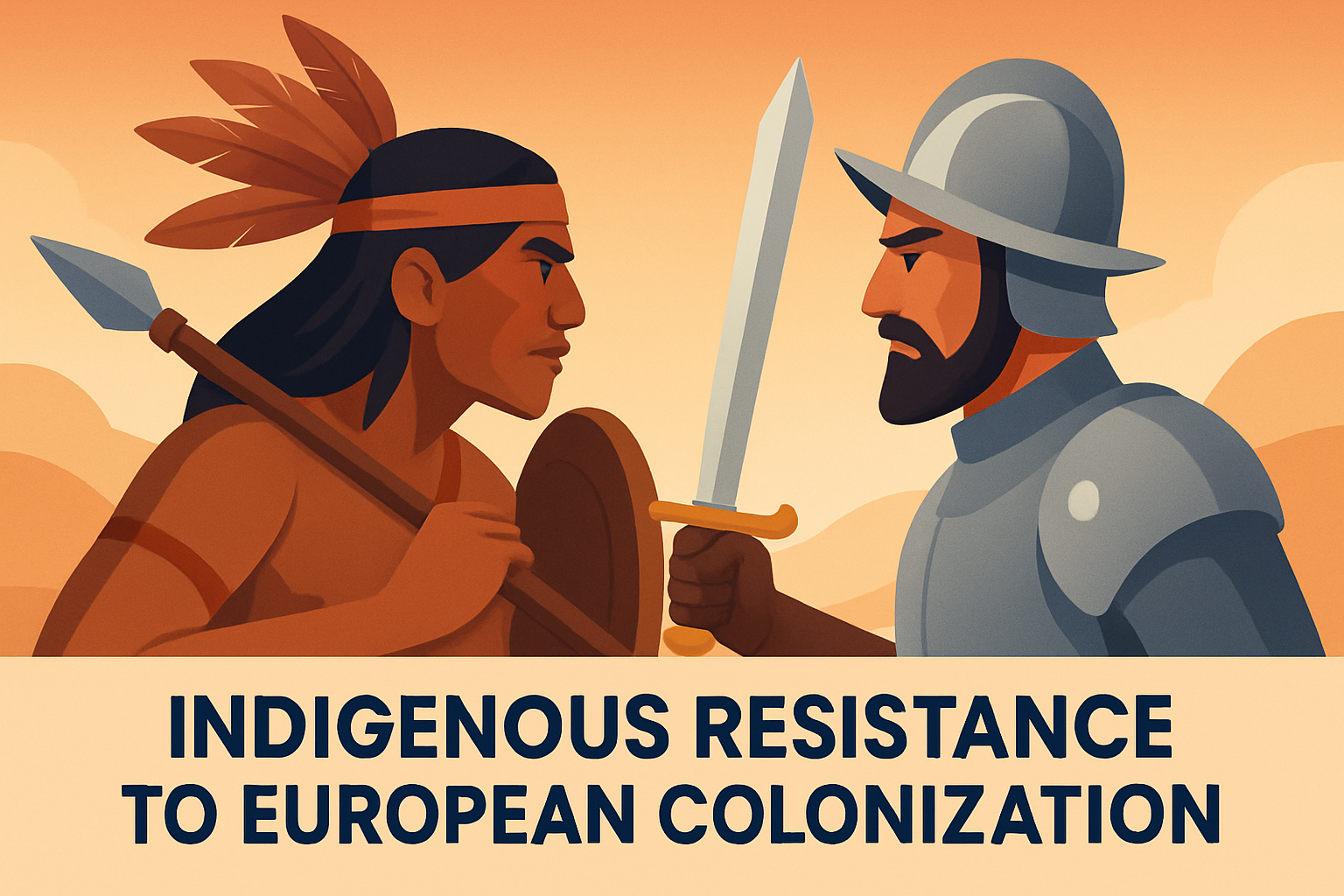
The history of European colonization is woven with tales of conquest, expansion, and control. Yet running parallel to these narratives is the resilient story of indigenous resistance. This piece delves into the endurance and courage displayed by indigenous populations worldwide in the face of European colonization. Indigenous peoples—defined as the first inhabitants of a land—possess unique cultural, social, and economic systems that were often disrupted by foreign intruders. Colonization is the process through which a nation establishes control over another region, exploiting resources and imposing foreign rule. The narratives around indigenous resistance are crucial as they offer insights into the tenacity of communities defending their rights, lands, and cultures. These stories remind us of the consequences of imperialistic exploits and continue to inspire present-day movements for indigenous rights and sovereignty.
Recognizing and understanding the fight against colonization allows us to honor the indigenous communities’ struggles and achievements. This matters because it promotes awareness of historical injustices and encourages modern societies to strive for equality, respect, and justice. The retrospective acknowledgment of resistance fuels ongoing global discussions about indigenous rights, self-determination, and land restitution. Now, journey into the historical context of this resistance to learn from these powerful episodes that defined the survival of native cultures and communities.
Early Resistance in the Americas
European colonization of the Americas began in the late 15th century and was met with immediate resistance from indigenous tribes. Native American communities, from the Cherokee to the Inca, conducted diplomatic and military strategies to fend off settlers and preserve their independence. The Taino people of the Caribbean fiercely opposed Christopher Columbus’s arrival. They initially tried to live harmoniously with the newcomers, but as European intentions of domination became evident, the Taino and their leaders rebelled. Chief Enriquillo led a significant uprising against the Spanish colonizers on the island of Hispaniola. His resistance and tactical guerrilla warfare tactics disrupted Spanish operations and drew attention to the indigenous plight.
| Region | Indigenous Group | Resisted Colonizer |
|---|---|---|
| Caribbean | Taino | Spanish |
| South America | Inca | Spanish |
| North America | Powhatan | English |
These early resistances set the precedence for the indomitable spirit of Native Americans. The use of guerrilla tactics—swift, strategic movements and surprise attacks—formed a substantial part of indigenous defense. However, it was also a battle of diplomacy. The diplomatic engagement—negotiations and temporary treaties—also played a vital role in fostering brief periods of peace or temporary withdrawal of colonial powers. Despite suffering massive losses, indigenous resolve never waned, illuminating a path of resistance that would be emulated throughout the centuries.
African Resilience Against European Rule
In Africa, indigenous resistance took on various shapes as European powers carved the continent into colonies. From Algeria to Zimbabwe, African communities invoked cultural unity, local knowledge, and military prowess to combat foreign rule. The Zulu people, led by rulers like Shaka Zulu, crafted sophisticated military formations to fight British invasions in South Africa. Famous encounters such as the Battle of Isandlwana in 1879 highlighted the Zulu army’s tactical brilliance as they decimated British forces using strategic encirclement maneuvers. Similarly, Samori Ture, a West African leader in modern-day Guinea, constructed a resilient empire that resisted French colonial forces for over a decade.
These resistances were characterized by adaptability—an ability to employ indigenous military strategies alongside adopting useful European weaponry when available. The Maji Maji Rebellion (1905-1907) in German East Africa exemplifies the fusion of traditional warfare with symbolic unity. Armed with spiritual beliefs and a determination to reclaim independence, a coalition of indigenous tribes fought to expel German colonizers, although they were eventually subdued due to superior European arms.
African resistance movements often assimilated aspects of European tactics while holding strong to indigenous military traditions. However, it was the resilience grounded in cultural and spiritual unity that offered a formidable front against colonizers. Despite the eventual subjugation and colonization, these acts of defiance showcased the unwavering resolve of indigenous African societies to protect their sovereignty and way of life.
Pacific Islanders’ Defense of Ancestral Lands
The Pacific Islands presented yet another chapter in the saga of indigenous resistance. Polynesian and Micronesian cultures exhibited fierce opposition to European intrusion. The Hawaiian Kingdom, particularly under King Kamehameha I, unified the Hawaiian Islands and persistently warded off foreign powers. King Kamehameha’s legacy of unification and sovereignty underscored the importance of strategic alliances and internal solidarity amongst native populations.
New Zealand’s Maori harnessed cultural heritage and military expertise to resist British colonization beginning in the 19th century. The Maori Wars—a series of conflicts—from 1845-1872 saw Maori groups utilize knowledge of the local terrain, fortified defenses known as pā, and a willingness to engage in protracted battles to maintain their autonomy. Over time, while many Maori lands were appropriated and their political systems altered, their cultural identity and traditions remained resilient markers of their enduring resistance.
In this oceanic array of resistance, cultural unity and the defense of spiritual beliefs held paramount importance. Pacific Islanders demonstrated that resistance was not only about armed conflict but also about preserving cultural narratives and traditional practices. Protecting spiritual sites and cultural autonomy became focal points around which resistance revolved, even when faced with enormous challenges from technologically advanced colonizers.
Colonialism and Indigenous Persistence in Asia
Asia’s indigenous resistance stories are embedded within vast landscapes of cultural diversity and historical legacies. In regions like India, colonial powers faced dogged opposition from indigenous societies and native rulers. The Indian Rebellion of 1857, led partly by indigenous warriors, highlighted the discontent with British colonial rule. Tarabai, a Maratha queen, showcased commendable leadership in spearheading rebellions against European dominance in India. Her political acumen and military foresight offered momentum to indigenous resistance movements striving to oust European colonizers.
Meanwhile, the Vietnamese under the direction of leaders like Trưng Trắc and Trưng Nhị, sisters who led a rebellion against the oppressive Chinese Han dynasty, sowed the seeds of resistance against colonizers, inspiring future generations. Their bravery and commitment illustrated the potential for indigenous movements to emerge against centuries of foreign domination.
The Asian narrative of resistance underscores the critical role played by localized strategies and enduring cultural pride. By integrating traditional knowledge with ingenuity, Asian communities laid down rich legacies of defiance against European imperial expansion. This chapter in resistance history motivates contemporary efforts to reclaim cultural identities in the face of globalization and modernization pressures.
Rekindling Resistance: Lessons for Today
The chronicles of indigenous resistance against European colonization provide timeless lessons relevant to modern-day struggles for autonomy and justice. Understanding these historical episodes enables us to recognize the importance of preserving cultural heritage and pursuing equitable societies. Today, numerous indigenous communities employ these lessons as they continue to challenge exploitative practices, assert land rights, and demand recognition of their cultural sovereignty.
- Recognizing and supporting indigenous rights movements worldwide
- Promoting cultural education and preservation efforts
- Backing legal frameworks that enforce indigenous land and resource rights
Many indigenous rights movements draw inspiration from their ancestors’ determination, channeling their perseverance into modern platforms for advocacy and empowerment. Initiatives like the United Nations Declaration on the Rights of Indigenous Peoples emphasize a collective call to action in promoting indigenous autonomy and sustainable development. Additionally, grassroots campaigns, legal interventions, and community-led projects continue to propel indigenous solutions that foster a balanced relationship with natural environments and cultural practices.
Conclusion
Throughout history, indigenous resistance to European colonization epitomized the fervent commitment to safeguarding cultural heritage, sovereignty, and identity. These stories of defiance are testament to the fortitude and ingenuity of indigenous communities against formidable odds. Although colonization imposed profound alterations on native societies, the resilience showcased in these resistances serves as an enduring beacon of hope and empowerment.
The key takeaways from these narratives underscore the necessity of acknowledging past injustices and reform collaboratively to ensure social justice, equality, and cultural preservation. Recognizing the legacies of indigenous resistance broadens our understanding and respect for native traditions and rights. As we move forward, it is imperative to foster inclusive narratives where indigenous voices lead in carving sustainable and equitable pathways for all communities.
The call-to-action for readers is to engage actively in supporting indigenous movements and educating others about these critical narratives. By amplifying indigenous voices and promoting cultural exchange, we contribute to a future that honors diversity and promotes justice for contemporary indigenous struggles.
Let us remember that the stories of indigenous resistance remind us of our shared responsibility to defend human rights and sustainable societies for future generations.
Frequently Asked Questions
1. What forms of resistance did indigenous peoples use against European colonization?
Indigenous peoples employed a multitude of strategies to resist European colonization, ranging from armed conflict to cultural resilience. Militarily, many groups engaged in battles to protect their land, such as the Zulu Kingdom’s resistance to British control in Africa, or the Mapuche’s defense against Spanish forces in South America. Beyond warfare, indigenous communities utilized diplomacy, forming alliances either with rival European powers or other native tribes to bolster their defensive capabilities.
Resistance also manifested in the realm of culture. Many indigenous peoples sought to preserve their customs, languages, and traditions despite the colonial imposition of foreign values and practices. This cultural resistance included practices like storytelling and educating younger generations about indigenous identities, which strengthened communal bonds and reinforced a shared sense of identity to withstand assimilation pressures.
Moreover, psychological and spiritual resistance played a role, as indigenous communities relied on their spiritual beliefs to find strength and justify their struggle. These acts of defiance were integral not only in immediate survival but also in maintaining sovereignty and identity over generations.
2. How did European colonization impact the social and economic systems of indigenous populations?
European colonization brought significant disruptions to the social and economic systems of indigenous populations. Socially, colonization often led to erosion of indigenous hierarchies and governance structures. Traditional leaders were frequently undermined or replaced with colonial administrators, and social cohesion suffered as communities were displaced or fragmented. Many indigenous societies were forced to navigate new colonial legal systems that did not align with their traditional laws and ways of life, causing further disruption to their societal frameworks.
Economically, colonization introduced a market-based economy that was alien to many indigenous societies, which traditionally operated on systems of bartering or communal sharing of resources. Colonizers frequently exploited indigenous lands and resources for profit, often employing coercive or violent means. This led to the introduction of cash crops, forced labor, and extractive practices that prioritized colonial economic interests over the well-being of indigenous peoples. Moreover, the introduction of foreign goods disrupted traditional artisanal and agricultural practices, leading to a loss of indigenous knowledge and economic autonomy.
The collapse of these systems led to enduring socio-economic challenges and contributed to the ongoing marginalization of indigenous communities globally.
3. Can the effects of indigenous resistance still be seen today?
Absolutely. The effects of indigenous resistance to European colonization have lasting impacts that can be observed in contemporary society. The survival of indigenous languages, cultures, and traditions is a potent testament to the resilience and resistance of indigenous peoples. For instance, in places like New Zealand, the revitalization of the Māori language and customs is a direct result of historical resilience efforts.
Furthermore, the continued existence and activism of indigenous movements highlight the enduring legacy of historical resistance. Modern indigenous activism often draws upon historical resistance methods and ideologies to advocate for rights, land restitution, and cultural preservation. Legal battles, protests, and international advocacy efforts have been critical in securing indigenous rights and addressing historical injustices.
The contemporary landscape is also shaped by treaties and agreements made during colonization, influencing negotiations over land rights, resource management, and governance today. These historical agreements are frequently cited in legal contexts when indigenous communities seek to reclaim autonomy or challenge unjust governmental policies.
4. How did indigenous resistance differ across various regions during European colonization?
Indigenous resistance differed considerably across regions, reflecting diverse cultural contexts, geographic conditions, and the varying objectives and strategies of European colonizers. In North America, many native tribes practiced various forms of resistance, from the organized military campaigns of leaders like Tecumseh and Sitting Bull to negotiation-led tactics as seen in the Apache tribe led by Geronimo.
In South America, resistance varied from the Incan and Mayan communities’ military responses in the early colonial periods to the sustained cultural defiance by groups such as the Mapuche. In Africa, resistance also took numerous forms, including armed conflict, exemplified by the Ashanti Empire’s wars against British forces, as well as diplomatic negotiations employed by kingdoms like Ethiopia’s during Italy’s colonial ambitions.
In Asia-Pacific, indigenous resistance was evident through armed resistance like that of the Filipinos against Spanish and later American colonization, as well as through Maori formal declarations and military resistance against British encroachment in New Zealand. Each region’s indigenous resistance shaped unique adaptive strategies tailored to their specific historical, cultural, and ecological landscapes.
5. What role did indigenous resilience play in the broader struggle against European imperialism?
Indigenous resilience played a crucial role in the broader struggle against European imperialism by challenging the narrative of European superiority and highlighting the inherent value and rights of non-European cultures. The endurance of indigenous cultures and societies serves as a testament to the failure of imperial powers to entirely suppress distinct civilizations.
Indigenous resistance showcased the capacities of non-European peoples to maintain sovereignty and cultural identity despite efforts to erase them. This resilience inspired other colonized or marginalized groups to pursue independence and autonomy, fueling anti-imperial sentiments globally and contributing to decolonization movements throughout the 20th century.
Furthermore, indigenous resistance has educated and informed global discourses on human rights, environmental conservation, and cultural diversity. Indigenous activists have played a pivotal role in advocating for sustainable development, drawing upon traditional ecological knowledge that predates colonization, presenting alternatives to exploitative practices brought by European imperial endeavors.