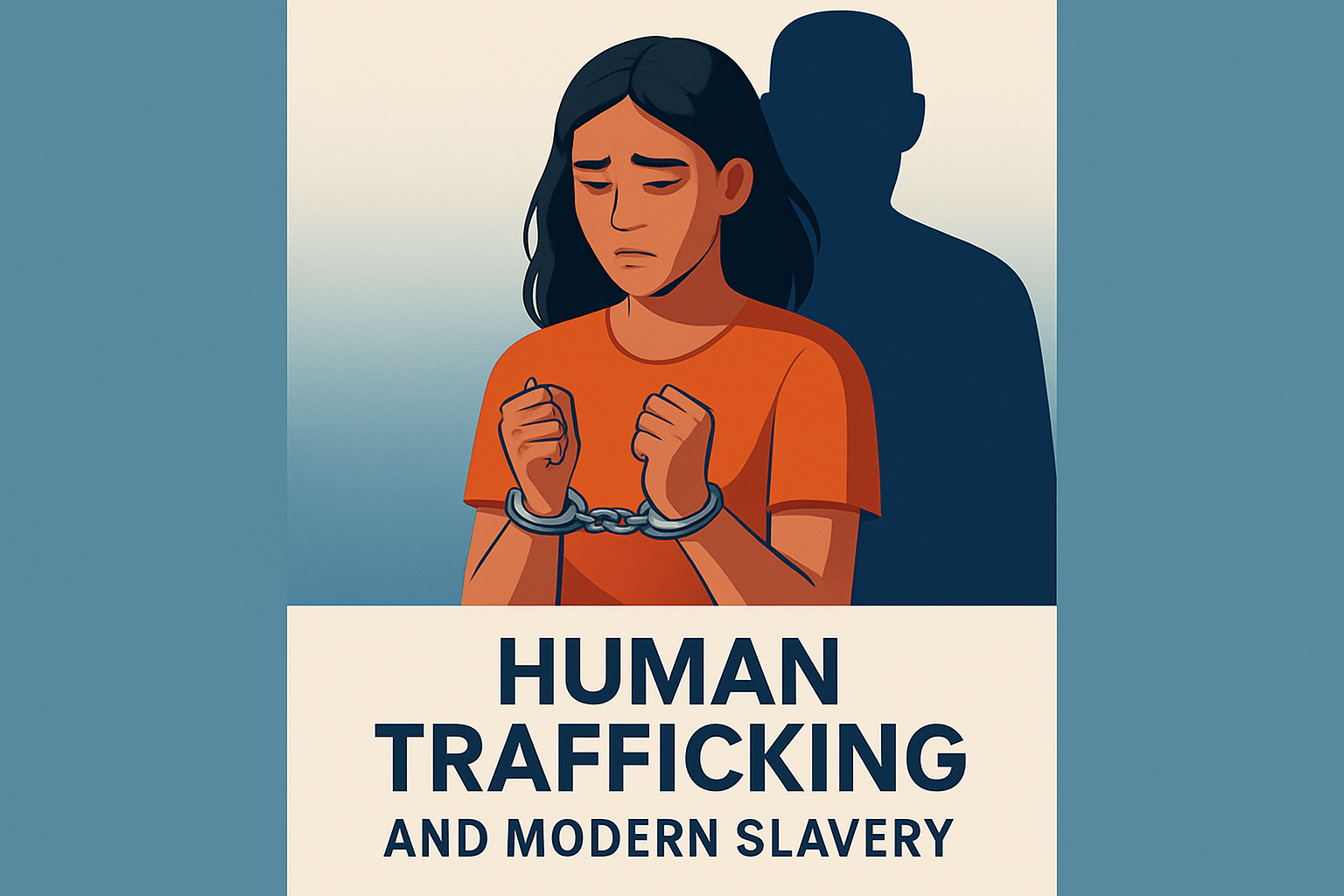
Human trafficking and modern slavery are heinous crimes that involve the exploitation of individuals for various purposes, including forced labor, sexual exploitation, and involuntary servitude. These terms often get intertwined, but each carries unique connotations and implications. Human trafficking refers to the recruitment, transportation, transfer, harboring, or receipt of persons through threats, coercion, or deception for the purpose of exploitation. On the other hand, modern slavery is a broader term that includes forced labor, debt bondage, forced marriage, and other forms of exploitation. These practices concern everyone, transcending borders and socio-economic barriers.
Understanding the gravity of these crimes is crucial as they represent a flagrant violation of human rights. The individuals trapped in these situations are stripped of their dignity, subjected to inhumane conditions, and deprived of freedom and autonomy. Moreover, human trafficking and modern slavery contribute to a broader societal problem, perpetuating cycles of poverty, inequality, and abuse. It matters because fighting these crimes is integral to protecting the most vulnerable, ensuring justice, and promoting a fair and equitable society.
The Scope of Human Trafficking
The scope of human trafficking is vast, impacting millions worldwide. According to estimates by the International Labour Organization, around 25 million people are trapped in human trafficking situations as of recent years. Various factors contribute to this alarming statistic, including economic instability, political conflict, and lack of awareness among potential victims. Traffickers often prey on vulnerable individuals, offering false promises of employment or a better future.
An example is the case of the “Balkan Route” in Europe, where many refugees and migrants fleeing war-torn regions become easy targets for traffickers. These individuals, driven by desperation, are coerced into dangerous situations, and traffickers exploit their vulnerability, forcing them into labor or prostitution.
This crime persists due to the demand for cheap labor and the sexual exploitation market. Traffickers operate across borders, making it a complex issue requiring international cooperation. Understanding its scale is critical to devising effective global strategies to combat the menace.
Forced Labor: An Invisible Crime
Forced labor is one of the most pervasive forms of modern slavery, often hidden from public view. It occurs when individuals are compelled to work against their will under the threat of violence or other penalties. Such exploitation frequently happens in industries with less regulation, including agriculture, construction, and domestic work.
A notorious example is the exploitation of migrant workers in the Gulf Cooperation Council (GCC) countries, where many are subjected to exhausting hours and dangerous conditions without just compensation. Under the “Kafala” system, workers’ legal residency is tied to their employer, effectively entrapping them and making it difficult to escape abuse. Despite international calls for reform, forced labor remains an issue due to systemic regulatory inadequacies and a lack of enforcement.
| Industry | Prevalence of Forced Labor |
|---|---|
| Agriculture | High |
| Construction | Moderate |
| Domestic Work | High |
This societal issue highlights the necessity for stringent labor laws and proactive enforcement mechanisms to safeguard workers’ rights and dignity across all sectors.
Sex Trafficking: A Global Issue
Sex trafficking is a horrendous form of human trafficking, where victims are coerced into sexual exploitation. It is a global issue affecting countries regardless of their development status. Victims of sex trafficking are manipulated through psychological or physical means and subjected to sexual abuse and degradation.
The tragic case of Nigeria’s “Baby Factories” reveals the horrifying realities of sex trafficking. In these illicit facilities, women are held captive and forced to become pregnant. After giving birth, their babies are sold off, primarily for illegal adoption or ritualistic purposes. Despite international attention and police raids, these operations persist due to deeply ingrained corrupt practices and ineffective legal systems.
Victims of sex trafficking often face numerous challenges, including social stigma, mental health issues, and difficulty reintegrating into society. Addressing these issues is vital, with steps including victim support programs, legal reforms, and public awareness campaigns to dismantle the supply chain of traffickers.
The Role of Technology in Trafficking
Technology has a dual role in the world of human trafficking—as a tool for both traffickers and law enforcement. Traffickers use the internet and digital platforms to recruit, exploit, and control victims. They leverage social media and online job boards to lure individuals with fraudulent job offers and manipulate them into trafficking situations.
Meanwhile, law enforcement and NGOs are utilizing advanced technologies like data analytics, artificial intelligence, and facial recognition to combat trafficking more efficiently. For example, the use of AI algorithms can help identify and track suspicious online activities, providing valuable leads for investigations. In collaboration with tech companies, law enforcement agencies can dismantle trafficking networks more effectively, offering hope for more victims worldwide.
The challenge remains in ensuring that technological advances do not outpace legal and ethical standards, emphasizing the need for policies that protect privacy while enabling effective crime prevention and victim support.
Legislative and Grassroots Efforts
To combat this menace, legislative progress and grassroots activism are essential. Governments across the globe have implemented laws aligned with the Protocol to Prevent, Suppress and Punish Trafficking in Persons, especially Women and Children, known as the Palermo Protocol. These laws establish criminal penalties for traffickers and set the groundwork for victim protection and assistance.
Grassroots organizations play a pivotal role in combating human trafficking and modern slavery. They engage in community-based initiatives, advocacy, and education to raise awareness and prevent trafficking. An inspiring example is India’s “Praajak,” a non-profit organization working tirelessly in West Bengal to help at-risk youth avoid becoming victims of trafficking. They conduct training sessions, provide shelter, and offer vocational skills to survivors to help them rebuild their lives.
The concerted efforts of policy-makers and grassroots organizations are crucial in rooting out this crime from society, but continuous collaboration and commitment are needed to make significant progress.
Conclusion
Human trafficking and modern slavery are pervasive crimes that violate fundamental human rights and undermine societal integrity. The vast scale of these crimes underscores the pressing need for international cooperation and robust legislative frameworks. By understanding the scope and recognizing the signs, society can take proactive steps to confront these issues.
There is a compelling need for concerted efforts from governments, international organizations, NGOs, and individuals. The primary benefit to the reader is an enhanced awareness of this pressing issue and the realization of the power that comes with informed action.
As community members, we can all contribute by supporting anti-trafficking organizations, advocating for stronger policies, and raising awareness about trafficking and modern slavery. Each action, no matter how small, contributes to the larger cause of eliminating these crimes and championing human dignity and freedom for all. Let us take these steps together toward a world free from the shackles of human trafficking and modern slavery.
Frequently Asked Questions
1. What is the difference between human trafficking and modern slavery?
Human trafficking and modern slavery are two terms that are often used interchangeably, but they have distinct definitions and characteristics. Human trafficking is recognized as the process of recruiting, transporting, transferring, harboring, or receiving individuals through means such as threats, coercion, or deception with the goal of exploiting them. This can encompass a variety of operations, including forced labor, sexual exploitation, and involuntary servitude. Trafficking may happen across countries or within the same country.
Modern slavery, on the other hand, is a broader concept that includes human trafficking but also encompasses other forms of exploitation where a person cannot refuse or leave because of threats, violence, coercion, deception, or abuse of power. It refers to situations where individuals are forced into work or services without the ability to escape, often involving physical, emotional, or financial abuse. Modern slavery can include forced labor, bonded labor, child slavery, and domestic servitude.
In essence, while every instance of human trafficking could be considered modern slavery, not all forms of modern slavery necessarily involve the process of trafficking.
2. What are the common indicators of someone being trafficked or in modern slavery?
Identifying victims of human trafficking and modern slavery can be challenging, as signs may overlap with other forms of abuse and exploitation. However, there are several common indicators to watch for. A person might not have control over identification documents like a passport or driver’s license and may appear as if they are held under someone else’s authority. They might seem unable to move freely, or they might constantly be accompanied by someone else who appears to be controlling them or is overly possessive.
Their living and working conditions might be substandard, overcrowded, or closely monitored. Physically, they may show signs of abuse, such as bruises, burns, or scars. Often, victims are fearful, anxious, or submissive and might not speak the local language fluently. They could have few personal possessions or often wear the same clothing. In some cases, the individual could have long and unusual work hours, receive little or no payment, and display fear or anxiety over debts.
Psychologically, victims might display signs of trauma or depression and could avoid eye contact, be isolated, or have limited social interactions. Observing these indicators, especially when they appear in conjunction, might suggest someone is a victim of human trafficking or modern slavery.
3. How big of a problem is human trafficking and modern slavery globally?
The issue of human trafficking and modern slavery is a significant and pervasive problem worldwide, affecting millions of people across all continents. According to recent estimates, there are tens of millions of people trapped in modern slavery across the globe, with an untold number of victims trafficked annually. Human trafficking is recognized as one of the fastest-growing criminal industries in the world, a multibillion-dollar business that operates in both developing and developed nations.
The problem is not confined to any single demographic or region; it affects individuals regardless of age, gender, nationality, socio-economic status, or environment. More than half of modern slavery victims are exploited in labor sectors, and one in five victims of modern-day slavery is thought to be a child, often lured or forced into criminal activities or labor environments unsuitable for their age.
Efforts have been made globally to address and mitigate these practices, with various international protocols, such as the United Nations’ Palermo Protocol, aiming to offer a framework for preventing trafficking, protecting victims, and prosecuting perpetrators. Despite these efforts, the clandestine nature of these crimes makes their eradication complex and challenging.
4. What are the root causes of human trafficking and modern slavery?
Multiple factors contribute to the susceptibility of individuals to human trafficking and modern slavery. At the societal level, poverty and lack of job opportunities create economic desperation, making people vulnerable to traffickers who exploit their need for a better life. Inadequate education and illiteracy also limit awareness of rights and increase the likelihood of exploitation.
Political factors play a crucial role, as regions with weak governance, corruption, and poor law enforcement are breeding grounds for trafficking. Armed conflicts and political instability compound these factors, displacing populations and creating chaos that traffickers can exploit. Natural disasters and their aftermath can similarly increase vulnerability, as people are left without shelter, resources, or protection, and may resort to accepting dubious job offers.
Social and cultural norms can perpetuate inequalities, such as gender discrimination, which can increase the exploitation of women and girls. Discrimination against certain ethnic groups, migrant populations, or minorities creates environments where these individuals might experience limited access to legal protections, leaving them vulnerable to trafficking.
Addressing these root causes requires targeted interventions, such as improving economic opportunities, strengthening education, enforcing anti-trafficking legislation, and promoting social inclusivity and equality.
5. How can individuals help combat human trafficking and modern slavery?
Individuals can play a vital role in the fight against human trafficking and modern slavery by taking informed and proactive steps. Firstly, increasing awareness and education is crucial. Understanding the signs of trafficking and being knowledgeable about modern slavery’s various forms can prepare you to recognize and report potential cases. Engaging with resources provided by reputable organizations dedicated to combating these crimes can increase understanding and spark broader community awareness.
Supporting ethical consumerism by researching companies’ labor policies ensures products and services are free of forced labor. Similarly, individuals can advocate for businesses to adopt transparent supply chains and ensure that workers’ rights are upheld globally. Engaging with and supporting local organizations and advocacy groups that work to provide assistance and rehabilitation for victims can also have a tangible impact.
Engaging in local and global advocacy efforts, writing to your local representatives to support stronger anti-trafficking legislation, and contributing to or volunteering with organizations combating trafficking are effective strategies. Additionally, staying informed about ongoing policy developments and raising awareness on social media platforms can amplify the issue and contribute to wider societal change.
Ultimately, fostering a vigilant and informed society can pressure governments and businesses to create and enforce stronger safeguards against human trafficking and slavery, and bring perpetrators to justice.