
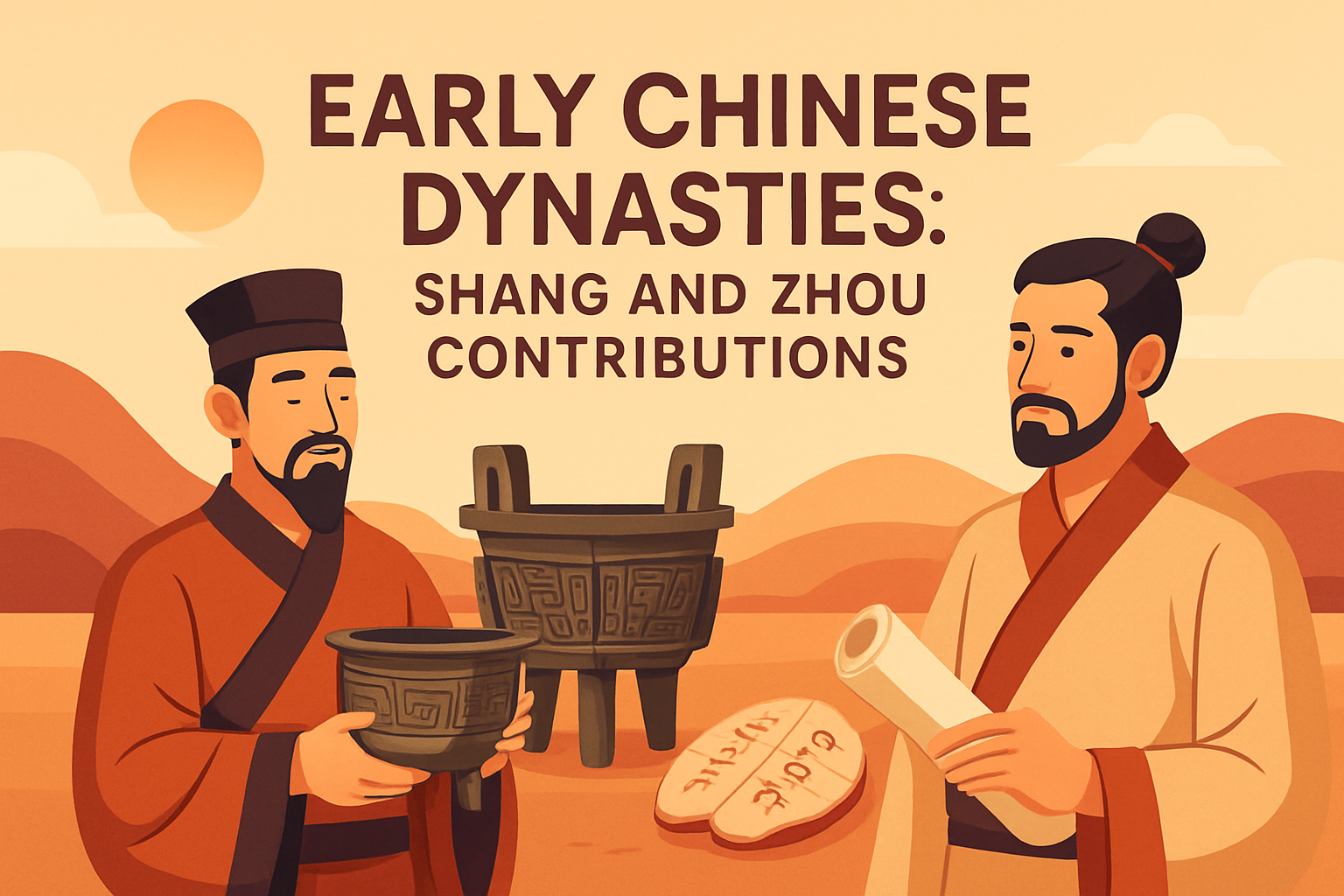
Introduction to the Shang and Zhou Dynasties
The study of early Chinese dynasties is essential in understanding the cultural, social, and technological fabrics of one of the world’s oldest civilizations. Among these influential periods, the Shang and Zhou dynasties stand out prominently for their contributions. The Shang dynasty, which ruled from around 1600 to 1046 BCE, is often credited with laying the foundational aspects of Chinese civilization, such as the development of writing and bronze casting. The subsequent Zhou dynasty, lasting from 1046 to 256 BCE, built upon these achievements and introduced new innovations, including iron usage and philosophical ideologies.
The importance of studying these ancient dynasties stems from the profound impacts they had on Chinese culture and society, which are echoed even today. These periods not only shaped the Chinese political landscape but also influenced neighboring regions, playing a crucial role in setting the stage for China’s rich historical narrative. Understanding these contributions offers insights into how these ancient practices and innovations continue to influence modern societies. This article will delve into various key aspects of the Shang and Zhou dynasties, exploring their governmental structures, technological advancements, religious practices, and cultural developments.
Shang Dynasty: The Birth of Chinese Civilization
The Shang dynasty is often recognized as the cradle of Chinese civilization, marked by significant developments in writing, art, and metallurgy. One of the most notable contributions of the Shang was the creation of China’s earliest written records. The Shang script, known as oracle bone script, was used for divination and communicating with ancestors. This form of writing was incised on turtle shells and animal bones and provides invaluable insights into the political and religious beliefs of the era.
Beyond writing, the Shang dynasty was known for its sophisticated bronze work. The production of bronze vessels and weapons showcased advanced skills in metallurgy, dramatically influencing Chinese art and technology. These artifacts, such as ritual wine vessels called “zun” and cooking pots known as “ding,” played essential roles in religious ceremonies and have been found in numerous archaeological sites across China, shedding light on the spiritual and social structure of the time.
Real-world Example: Consider the discovery of the tomb of Fu Hao, a consort of King Wu Ding, which unearthed a wealth of bronze artifacts, jade carvings, and remains of sacrificial victims. This tomb provided critical insights into the wealth and ritual practices of the Shang elite. By analyzing these objects, researchers have gleaned a better understanding of the cultural and religious priorities during this period.
Zhou Dynasty: Expansion and Innovation
Following the fall of the Shang dynasty, the Zhou emerged as one of China’s longest-lasting dynasties. The Zhou introduced the “Mandate of Heaven,” a philosophical and political concept that justified the rule of the king, known as the Son of Heaven. This mandate provided a divine approval for the ruler’s authority and became a pivotal part of Chinese political ideology, impacting governance for centuries to come.
In terms of technological advancements, the Zhou dynasty marked significant progress in agriculture and toolmaking, with the introduction of iron tools revolutionizing farming practices. This shift led to increased agricultural output and supported population growth, fueling the expansion of territories. Moreover, the Zhou era witnessed the flourishing of trade and economic activities, which laid the groundwork for urbanization.
Real-world Example: An example of the Zhou’s influence can be seen in the development of the city of Chengzhou, which became a cultural and economic hub under Zhou administration. The use of iron tools enabled the massive construction projects and fortifications that characterized the city’s development. The enhanced agricultural productivity supported by these tools helped sustain a growing urban population.
Cultural and Philosophical Developments
Both the Shang and Zhou dynasties were instrumental in shaping the cultural and philosophical landscape of ancient China. During the Zhou period, the emergence of Confucianism and Daoism laid the groundwork for Chinese philosophical thought, influencing both the social structure and individual behavior.
Confucius, who lived during the late Zhou dynasty, emphasized the importance of personal ethics and morality. His teachings advocated respect for elders, filial piety, and the significance of harmonious relationships in society. Daoism, founded by Laozi, encouraged a life in harmony with nature and the universe, advocating for simplicity and humility.
Real-world Example: The impact of Zhou philosophy is evident in traditional Chinese education and governance, where Confucian principles were integrated into the civil service examinations. This system allowed social mobility based on merit rather than birthright, influencing Chinese administration and culture profoundly.
- Introduction of written language in Shang
- Shang bronze art and metallurgical advancements
- Zhou’s Mandate of Heaven concept
- Iron usage and agricultural improvements in Zhou
- Philosophical development: Confucianism and Daoism
Government and Society: Shang and Zhou Political Structures
The political structures of the Shang and Zhou dynasties were complex and hierarchically organized. The Shang dynasty employed a monarchical system where the king held absolute power, guided by rituals and the belief in a supernatural realm. The king was seen as the intermediary between the gods and humans, a role underscored by the practice of divination.
In contrast, the Zhou dynasty implemented a feudal system that distributed power among regional lords, known as ‘zhuhou’. While these lords had significant autonomy, they were expected to maintain loyalty to the Zhou king. This system encouraged the decentralization of power, which, although initially successful, eventually led to the fragmentation and decline in central authority towards the end of the Zhou period.
Real-world Example: The Zhou feudal system can be likened to that of medieval Europe, where vast territories were managed by lords under the nominal authority of a king. As seen with the eventual rise of competing states during the Zhou’s Warring States period, the strengths and weaknesses of such a decentralized system were made manifest. This period of fragmentation and internal conflict prompted the need for unifying philosophical ideologies like Confucianism and Legalism.
Technology and Innovation
The technological advancements during the Shang and Zhou eras were instrumental in shaping early Chinese society. The Shang dynasty’s proficiency in bronze metallurgy was unparalleled, creating intricate ritualistic vessels that played crucial roles in both ceremonial and everyday life. The ubiquity of bronzeware highlights the importance of metallurgy to ancient Chinese society, a tradition that continued under the Zhou with further innovations.
With the Zhou dynasty, the introduction and refinement of iron tools significantly improved agricultural productivity. The use of iron plows, for example, allowed for more effective cultivation of lands, which in turn supported larger populations and urban expansion. The spread of iron-casting technology also facilitated advancements in weaponry, contributing to military prowess and defense capabilities.
Real-world Example: The capital city of Chengzhou under the Zhou dynasty offers a compelling case of these technologies in action. The efficient use of iron tools contributed to the construction and maintenance of city infrastructures, while improved agricultural practices ensured a steady food supply for its inhabitants.
Summary and Conclusion
In summarizing the profound contributions of the Shang and Zhou dynasties, it is evident that these periods laid foundational elements critical to the development of Chinese civilization. From the initial use of writing and bronze technology in the Shang era to the philosophical and agricultural advancements of the Zhou, these dynasties were integral in molding the cultural and technological landscape of ancient China. Their influence extends beyond mere historical curiosity, offering valuable lessons on governance, societal organization, and cultural evolution.
The key takeaways from studying these early Chinese dynasties emphasize the importance of innovation, cultural integration, and philosophical thought in shaping a civilization. By examining these past influences, modern societies can gain insights into successful governance models and the benefits of embracing technological advancement and cultural diversity.
For readers looking to delve deeper into early Chinese history, consider exploring archaeological findings, reading historical texts, and visiting Chinese historical sites to gain a fuller appreciation of these dynasties’ lasting legacies. These actions will help expand understanding and appreciation for how early Chinese innovations continue to affect our modern world.
Frequently Asked Questions
1. What are the most notable contributions of the Shang Dynasty?
The Shang Dynasty, which thrived from around 1600 to 1046 BCE, is often celebrated for its significant contributions that laid the bedrock for Chinese civilization. One of the most critical achievements of the Shang was the development of a writing system. This early form of Chinese writing involved the use of logographs, which are characters that represent words or phrases. These characters were initially inscribed on oracle bones and tortoise shells used for divination purposes, providing the earliest examples of Chinese writing that have been discovered so far. This development of writing was crucial not only for governance and communication but also for preserving religious practices and cultural stories.
Another cornerstone of Shang society was its advanced bronze technology. The Shang people are renowned for their skill in metalwork, particularly their creation of sophisticated bronze artifacts used for both practical and ceremonial purposes. They produced intricately designed vessels, weapons, and tools, which were not only functional but also held ritualistic and symbolic significance. The production of bronze required a high level of skill and knowledge of metallurgy, underscoring the technological prowess of the Shang era.
Apart from these, the Shang Dynasty also witnessed the emergence of a centralized state structure, with a king who ruled over a network of walled cities. This political organization laid the foundation for the administrative systems that would follow in Chinese history. Additionally, the Shang period is characterized by advancements in agriculture, the use of domesticated animals, and the construction of large, urban settlements that helped shape early Chinese urban culture.
2. In what ways did the Zhou Dynasty build on the achievements of the Shang Dynasty?
The Zhou Dynasty, which followed the Shang and lasted from around 1046 to 256 BCE, is renowned for furthering and expanding upon the cultural and political structures first introduced by the Shang. One of the most transformative contributions of the Zhou was the establishment of the “Mandate of Heaven” concept, which justified the ruler’s authority as derived from a divine source. This concept became a key doctrine in Chinese political philosophy and legitimized the Zhou’s takeover of the Shang, setting a precedent for future dynastic changes in China.
The Zhou Dynasty also made significant advances in terms of governance and social structure. Feudalism became the predominant form of political organization during the Zhou period. This system involved the allocation of land to nobles and local lords, who in return owed allegiance and military service to the king. This decentralized system allowed the Zhou to effectively manage and control vast territories, although it eventually led to internal strife and weakened central authority over time.
Moreover, the Zhou Dynasty contributed to the flourishing of Chinese philosophy and culture. This period witnessed the emergence of significant philosophical schools, including Confucianism and Daoism, which have deeply influenced Chinese thought and values throughout the centuries. Furthermore, the Zhou continued and enhanced the bronze age traditions of the Shang with innovations in agriculture and technology, such as better iron tools and improvements in infrastructure, leading to increased agricultural output and trade.
In essence, the Zhou Dynasty built upon the Shang’s advancements by formalizing the ideological tenets of governance and expanding on technological and cultural advancements, all of which set enduring foundations for later Chinese societies.
3. How did the Shang and Zhou Dynasties influence the development of Chinese writing?
The development of Chinese writing is one of the most pivotal achievements during the Shang and Zhou dynasties, and it played a fundamental role in shaping the Chinese cultural landscape. The Shang Dynasty is credited with the earliest form of Chinese writing, as evidenced by the inscriptions found on oracle bones and tortoise shells. These were used in divination rituals, but they also marked the inception of a formal writing system aimed at recording Chinese language and transactions.
This proto-writing consisted primarily of pictographs and ideographs, which evolved over time to encompass a more extensive set of characters that represented sounds and ideas. This helped foster literacy among the elite and improved record-keeping and communication within the society. Writing became an instrument of statecraft, documenting the king’s decrees, lineage, religious practices, and military events.
Building on the Shang innovations, the Zhou Dynasty continued to develop and standardize the writing system. The Zhou utilized writing not only for recording governmental activities but also for the proliferation of literature and philosophical texts. Key philosophical works, including those by Confucius and Laozi, were written during the Zhou period and have been preserved for centuries, illustrating the importance of writing in cultural transmission.
The amalgamation of writing advancements during the Shang and Zhou periods laid the groundwork for the sophisticated and rich Chinese literary tradition, influencing everything from historical documentation to poetry and philosophical treatises, elevating Chinese civilization to new levels of cultural expression.
4. How did religion and rituals shape the societies of the Shang and Zhou Dynasties?
Religion and rituals were central elements in shaping the societies of both the Shang and Zhou dynasties. In the Shang Dynasty, religious practices were intricately tied to governance, with the king playing a priestly role as the chief intermediary between the human and spirit worlds. The Shang’s religious life was characterized by ancestor worship, reflecting a belief in the spiritual continuity and influence of ancestors over the living. This belief underscored social hierarchies and reinforced loyalties within families and communities.
The rituals performed during religious ceremonies often involved elaborate offerings and sacrifices to appease spirits and to gain their favor for prosperity and success. Oracle bones used in divination allowed the Shang to seek guidance and predictions from ancestral spirits. These practices not only reinforced the authority of the ruling class but also established a centralized religious tradition that provided cohesion in society.
The Zhou Dynasty inherited and expanded upon these religious traditions by introducing new philosophical underpinnings. The introduction of the “Mandate of Heaven” was a significant development that linked religious concepts to political legitimacy. It proposed that the ruling dynasty’s authority came directly from a divine mandate, contingent on their ability to govern justly and effectively. This belief system not only justified the Zhou’s rule but also served the broader purpose of maintaining moral and social order.
Moreover, the Zhou Dynasty laid the foundation for religious philosophies that profoundly influenced Chinese thought, such as Confucianism, which emphasized harmony, moral duty, and respect for tradition and hierarchy. Daoism also emerged during this period, promoting a spiritual philosophy focused on natural harmony and simplicity. These beliefs and their associated rituals enriched the cultural and spiritual life of China, nurturing a connection between statecraft and spirituality that persisted well beyond the Zhou era.
5. What technological advancements did the Shang and Zhou Dynasties bring, particularly in terms of infrastructure and agriculture?
The technological advancements during the Shang and Zhou Dynasties were pivotal in furthering Chinese civilization’s complexity, particularly in terms of infrastructure and agriculture. The Shang Dynasty is frequently recognized for its expertise in bronze metallurgy, which not only produced high-quality weapons and ceremonial vessels but also laid the foundation for technological accomplishments in other sectors. Shang artisans created sophisticated bronze tools that enhanced agricultural productivity and enabled more sustainable large-scale farming.
Under the Shang, irrigation systems were developed to support agriculture, allowing fields to be cultivated more effectively. This enabled the stable production of staple crops such as millet and rice, contributing to population growth and urban development.
The Zhou Dynasty, continuing on the Shang’s technological foundation, saw further advancements, such as the introduction of the iron plow and other iron tools. The transition from bronze to iron represented a significant leap in terms of durability and efficiency, allowing farmers to cultivate larger areas of land and increase agricultural output significantly. The Zhou implemented crop rotation and developed sophisticated irrigation techniques, which further enhanced agricultural production.
In terms of infrastructure, the Zhou Dynasty also saw the expansion of road networks and the development of walled cities, which facilitated trade and provided protection. These advancements contributed to economic growth by improving the movement of goods and people across different regions, promoting trade and cultural exchange.
These technological advancements had far-reaching impacts, not only boosting the agrarian economy but also influencing social structures and enabling the rise of more sophisticated urban centers. This laid the groundwork for subsequent periods where China would continue to innovate and prosper, setting a precedent that technological progress underpins societal advancement.