
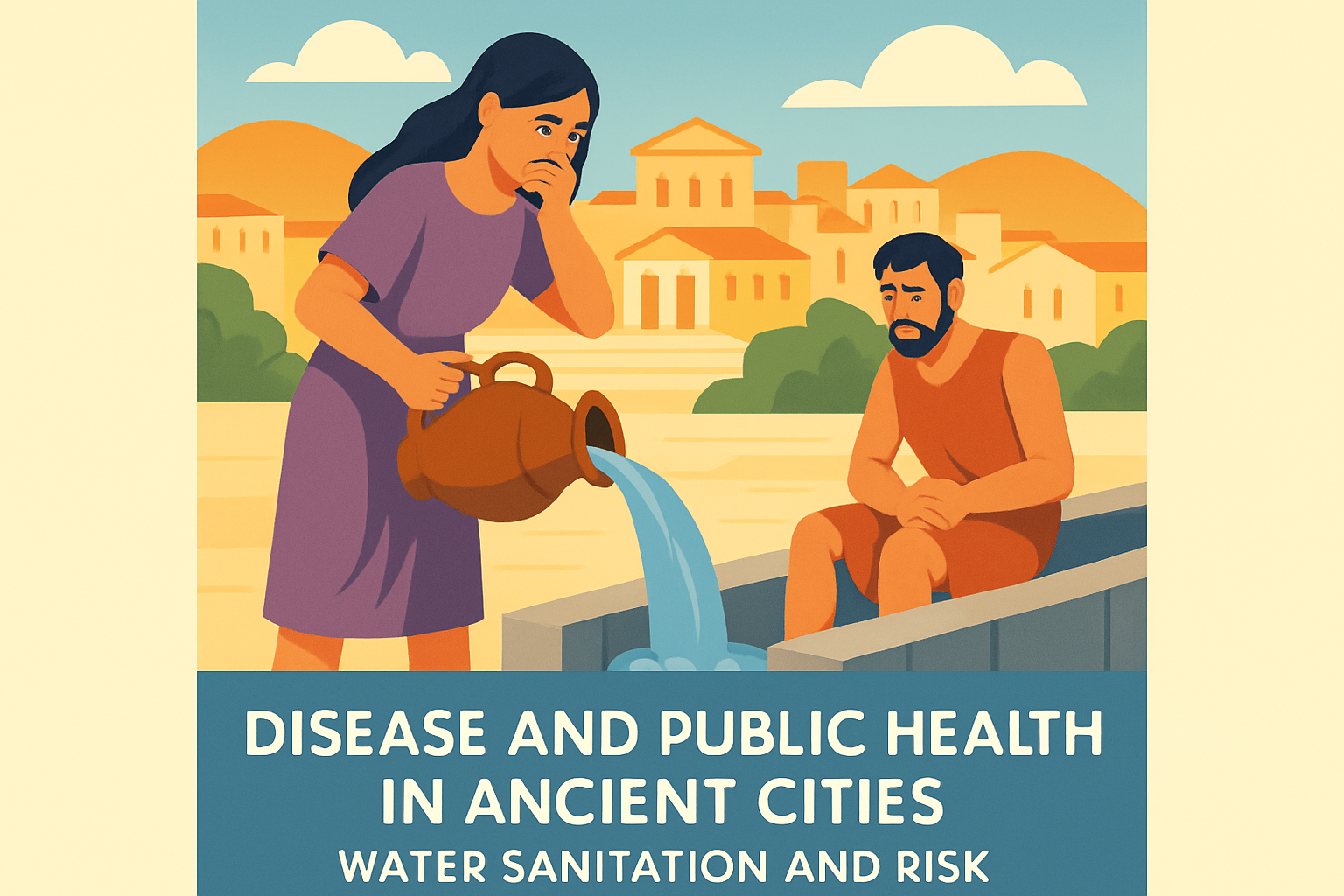
Throughout history, the rise and fall of ancient cities have often hinged on their ability to manage public health effectively. The concept of disease, though it wasn’t understood scientifically as we know it today, was a reality people had to contend with frequently. Public health in ancient times largely revolved around the availability and quality of water, given its essential role in daily life and urban sanitation. As cities grew, so did the challenges associated with maintaining sanitary conditions and minimizing health risks. In ancient cities, where knowledge of germs and infection prevention was absent, practices concerning water sanitation became critical to health outcomes. Understanding how these cities dealt with sanitation and risk provides insight into the evolution of urban planning and public health and illustrates their enduring lessons for modern times.
The Role of Water in Ancient Urban Centers
Water was the lifeblood of ancient cities, serving not only as a resource for hydration and agriculture but also as the medium through which public health was orchestrated. Access to clean water influenced where cities were established, supported the needs of growing populations, and determined their economic prosperity. For example, the location of Rome—a city famed for its early engineering marvels—was strategically chosen for its access to the Tiber River. The Romans recognized the necessity of maintaining a steady supply of clean water and developed elaborate aqueduct systems to transport water from rural springs to urban centers.
These innovations not only allowed for the growth of the city but also improved the hygiene standards of its public baths and latrines. This approach was not without flaw; unlined channels and stagnant water often led to contamination. Nonetheless, Roman efforts highlight an early understanding of water management’s impact on public health. Effective water management was synonymous with power, sustainability, and the mitigation of disease.
Sanitation Practices: From Waste Management to Public Baths
The handling of wastewater and human waste was a crucial public health issue in ancient settlements. Cities like Mohenjo-Daro in the Indus Valley civilization showcased some of the earliest examples of organized waste management systems. By incorporating drainage systems and public latrines into city planning, these urban centers sought to remove waste efficiently and mitigate health hazards. Nevertheless, the understanding of disease transmission was rudimentary, often relying on trial and error to find what worked.
Public baths served as both social hubs and hygiene centers in many cultures. In ancient Greece, for instance, communal baths helped lower infection risks by promoting cleanliness among citizens. However, without a proper understanding of microbial transmission, these facilities could also become breeding grounds for bacteria. The continued use of such spaces indicates a basic, albeit unscientific, awareness of the link between cleanliness and health.
Challenges of Urban Health: Epidemics and Response
Ancient cities were not strangers to epidemics, though their understanding of disease was rooted in mythology and superstition. This is epitomized by the bubonic plague that struck Athens in 430 BC during the Peloponnesian War. Thucydides notes that public health infrastructure was overwhelmed, further fueling the spread as panic gripped the city. With a lack of antibiotics or effective medical interventions, the Athenian experience underscores the precarious nature of ancient urban health systems.
Rather than solutions, the typical responses were often reactive or spiritual, involving appeasing gods or adopting quarantine-like practices. Such responses, though scientifically ineffective, did illustrate seedling concepts of isolation to prevent contagion. These trial-and-error solutions birthed rudimentary public health strategies that slowly contributed to the broader understanding of disease control.
Lessons in Public Health: Insights and Innovations
From the aqueducts of Rome to the drainage systems of Harappa, the civil engineering feats of ancient times offer valuable lessons in public health management. These early societies teach us that infrastructure is paramount to preventing disease and that accessibility to clean water is a fundamental right. Ancient cities also remind us of the importance of cultural and civic engagement in health promotion. The incorporation of public baths and routing of water through monumental fountains were civic projects that engaged populations in health improvement efforts, even if the motivations were cultural and aesthetic.
| Ancient City | Sanitation Practice | Impact |
|---|---|---|
| Rome | Aqueducts | Improved access to clean water; reduced waterborne diseases |
| Mohenjo-Daro | Drainage System | Efficient waste removal; reduced local waste-related health issues |
| Athens | Public Baths | Encouraged hygiene but also facilitated disease spread |
Water Sanitation and Disease Prevention
The evolution of water sanitation practices was pivotal in reducing the prevalence of diseases in ancient cities. Histories of cholera or typhoid epidemics in burgeoning urban centers stand as testament to this. Yet, each city’s unique geography and culture dictated how these challenges were met. For instance, Egypt relied heavily on the Nile for sustenance and transportation. The seasonal flooding of this river was both a curse and a blessing, as it replenished soils but also demanded the construction of elevated structures and drainage systems. Egyptian ingenuity in maximizing agricultural yield while battling waterborne diseases illustrates the duality faced by ancient engineers.
Understanding these factors illuminates the interconnectedness of geography, infrastructure, and health. While many techniques fell short by modern scientific standards, they laid the groundwork for current public health practices, demonstrating the symbiotic relationship between people and their environments and the continuous struggle to harness resources to promote well-being.
Conclusion: Ancient Foundations, Modern Understanding
The scrutiny of past civilizations reveals the ingenuity and imperfections in ancient approaches to public health. The employment of water sanitation measures and infrastructure to combat disease remains as relevant today as it was in the past. By examining these ancient practices, we can appreciate the foundational steps taken toward urban health and learn valuable lessons on resilience and adaptability. Although many solutions were primitive by contemporary standards, they underscored the importance of sanitation and public health in human societies.
For modern readers and urban planners, revisiting these historical precedents encourages reevaluation of current systems and emphasizes the critical role of infrastructure in solving public health problems. Reflecting on these time-tested strategies can spark innovation and inspire sustainable solutions that ensure future urban centers flourish without succumbing to the challenges of disease. Understanding our history becomes more than an intellectual exercise; it becomes a call to action. Let us build on these lessons to develop resilient, healthy cities for generations to come.
As a next step, consider how today’s cities might benefit from the ingenuity and lessons of ancient water management and public health approaches when solving contemporary health challenges. By drawing connections across time, we create avenues for innovation rooted in the successes and failures of our ancestors.
Frequently Asked Questions
1. How did ancient cities manage disease without modern medicine?
In ancient cities, the understanding of disease was vastly different from today’s scientific viewpoints. They didn’t have access to the germ theory of disease, which wasn’t developed until much later. Instead, their strategies for managing disease heavily relied on observation, common sense practices, and some elements of trial and error. Often, the explanations for diseases were rooted in spiritual or supernatural beliefs. People believed that illnesses were a result of divine punishment or the presence of malevolent spirits. Despite this lack of scientific understanding, there were practical measures in place for disease control, primarily focused on water sanitation. Clean water was essential, and ancient civilizations like the Romans and Greeks invested heavily in aqueducts and sewage systems to ensure a supply of fresh water. Additionally, waste management became a crucial aspect of maintaining public health. Not all cities were successful in these endeavors, and the cities that couldn’t provide clean water or effective waste disposal systems often faced higher rates of disease and mortality.
2. Was water sanitation effective in preventing disease in ancient cities?
Water sanitation was one of the most vital components in ancient cities’ public health strategies and it played a crucial role in mitigating the spread of disease. The quality and availability of water directly influenced health outcomes. Ancient Romans were pioneers in this field; their engineering feats in aqueduct construction allowed them to transport fresh water from distant sources into the city. They were also meticulous about maintaining these systems to prevent contamination. Likewise, the Greeks developed early forms of sewer systems to manage waste. Though these systems weren’t foolproof, resulting occasionally in contamination and outbreaks, they were a significant improvement over previous methods. Having such structures in place added layers of defense against diseases, which often thrived in areas with stagnant, contaminated water. These ancient practices demonstrated an understanding, however rudimentary, of the importance of sanitation in public health. However, not all cities managed water sanitation equally; disparities often led to stark differences in public health outcomes.
3. What kinds of sanitation systems existed in ancient cities to combat public health risks?
Sanitation systems in ancient cities varied widely in complexity and effectiveness, with some early forms of urban planning paving the way for modern sanitation practices. The ancient Romans, for instance, built expansive aqueducts, which carried fresh water into the city and supplied public baths, fountains, and private households. They also had a comprehensive sewer system, known as the Cloaca Maxima, which was one of the world’s earliest sewage systems, designed to channel waste out of the city. Similarly, ancient Greeks also had intricate water systems and some forms of public latrines. Conversely, other civilizations, like those in ancient Egypt, relied more heavily on the geography of the Nile River but still developed simple canals for water distribution. In the Indus Valley civilization, archaeological findings have revealed advanced urban planning, with evidence of bathrooms and drains in every house. While these systems didn’t completely eliminate health risks, they managed to significantly reduce the frequency and severity of disease outbreaks, highlighting the critical role of sanitation in urban environments.
4. What were the risks associated with poor water sanitation in ancient cities?
Poor water sanitation posed significant risks to ancient cities, often exacerbating the spread of infectious diseases and contributing to high mortality rates. Stagnant and contaminated water environments were breeding grounds for pathogens that caused diarrheal diseases, cholera, dysentery, and typhoid fever. Without adequate systems to dispose of waste, human and animal excrement often found its way into drinking water sources, escalating these risks exponentially. The lack of separation between sewage disposal and water supply systems meant that polluted water was a constant threat to the city’s inhabitants. Moreover, the frequent congregating of people in densely populated urban centers also heightened the rapid spread of illnesses. Epidemics could decimate large parts of the population and even lead to societal decline or collapse, as seen in several historical instances. Hence, the inability to properly manage water resources and sanitation was not just a public health issue but a critical factor affecting the sustainability and longevity of ancient cities.
5. Did ancient concepts of public health influence modern practices?
Absolutely. While ancient and modern practices in public health greatly differ in the scope of their understanding, many foundational ideas stem from ancient times. The ancients’ emphasis on clean water and waste disposal links directly to contemporary public health practices. The Roman aqueducts and Greek baths laid groundwork that has influenced modern plumbing and water management systems. The importance they placed on sanitation and infrastructure underscored the pivotal role these elements play in disease prevention. Through archaeological studies and historical analyses, insights gleaned from ancient public health practices have contributed to modern advancements. Such studies underscore the continuous need for effective urban planning and sanitation systems, mirrored today in our regulations and public health policies aiming to control diseases. Moreover, modern public health continues to evolve with a background recognition of the critical balance between environment, infrastructure, and health, an approach that ancient publics health methodologies pioneered.