
Introduction to the Cuban Missile Crisis
The Cuban Missile Crisis remains one of the most significant events of the Cold War era. Occurring in October 1962, this 13-day confrontation between the United States and the Soviet Union was precipitated by the discovery of Soviet ballistic missiles in Cuba. This event is not just a historical anecdote; it symbolizes the closest the world has ever come to a full-scale nuclear war. Understanding this crisis is crucial as it highlights the delicate balance of power during the Cold War, the concept of Mutually Assured Destruction (MAD), and the diplomatic maneuvers that can avert catastrophic outcomes.
The Cuban Missile Crisis was set against the broader context of the Cold War, a period of sustained geopolitical tension between the Western bloc, led by the United States, and the Eastern bloc, led by the Soviet Union. Key terms associated with the crisis include “nuclear deterrence,” which refers to the strategies countries use to persuade others against aggression by threatening credible retaliation, and “brinkmanship,” which involves pushing dangerous events to the brink of active conflict to achieve favorable negotiation terms.
The crisis mattered then and continues to matter now because it exemplifies the impact of nuclear proliferation and the need for effective communication and negotiation in international relations. Acknowledging and learning from this dramatic episode helps prevent similar escalations in the future, ensuring a safer global environment.
Origins of the Crisis: The Build-up
Tensions in the lead-up to the Cuban Missile Crisis were a product of several factors. First, the ideological rivalry between the United States and the Soviet Union was characterized by a fierce competition for global influence. The USSR’s strategic positioning of missiles in Cuba was a direct response to the presence of American nuclear missiles in Turkey and Italy, close to Soviet borders. Cuba, under Fidel Castro’s leadership, was also seeking protection against the possibility of American invasion after the failed Bay of Pigs invasion in 1961.
The Soviets and Castro saw missile placement as a defensive measure, crucial for maintaining their sovereignty. However, this move was undoubtedly provocative from the American perspective, as it placed significant offensive weapons merely 90 miles off the coast of Florida, fundamentally altering the strategic calculus of nuclear deterrence. Hence, the seeds of the crisis were sown by a complex interplay of defense strategies, ideological opposition, and the realpolitik of the Cold War.
Confrontation and Decision-Making: Key Players and Decisions
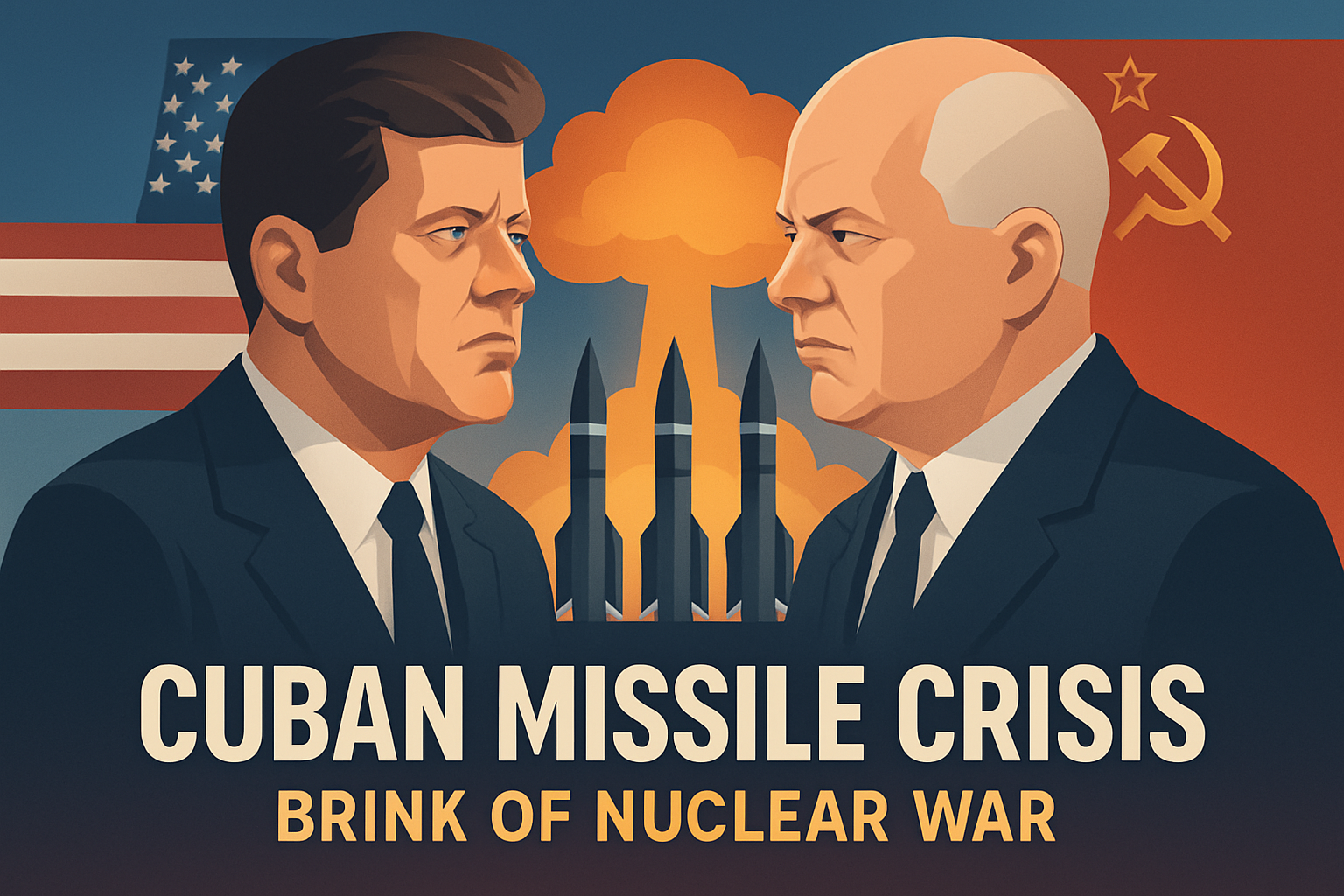
During the Cuban Missile Crisis, several key figures played critical roles. U.S. President John F. Kennedy and Soviet Premier Nikita Khrushchev were the principal leaders, each navigating their countries through potentially calamitous waters. Kennedy’s inner circle, known as the Executive Committee of the National Security Council (ExComm), was integral in shaping America’s response, emphasizing the importance of clear, united, and measured decision-making under pressure.
In the USSR, Khrushchev faced internal pressures from military leaders who advocated for a hardline stance. Nevertheless, both leaders recognized the catastrophic potential of nuclear war. Their decisions were rooted in maintaining global stability while safeguarding national security interests. Notably, Robert F. Kennedy’s secret negotiations with Soviet ambassador Anatoly Dobrynin were pivotal in finding a peaceful resolution. These backchannel discussions revealed the importance of discretion and diplomacy, highlighting how strong personal relationships and open communication channels could de-escalate severe international tensions.
Crisis in Action: Escalation and De-escalation
The peak of the Cuban Missile Crisis illustrated how swiftly international tension could escalate. On October 14, 1962, American U-2 spy planes captured photographic evidence of Soviet missile installations in Cuba. Upon this discovery, President Kennedy promptly convened ExComm to deliberate options ranging from diplomatic action to military intervention.
Following intense debate, Kennedy chose to impose a naval blockade, or “quarantine,” of Cuba to prevent further Soviet shipments of military equipment. This was a strategic middle ground, avoiding immediate military engagement while pressuring the Soviets to negotiate. This decision reflected a careful consideration of available intelligence, weighing the risks of various interventions severely.
As the world watched, Soviet ships approached the blockade line, and tension skyrocketed. Nevertheless, the Soviets stopped short of breaching the blockade, signaling a willingness to communicate. The resolution involved the U.S. agreeing not to invade Cuba and the secret removal of U.S. missiles from Turkey, while the USSR dismantled its Cuban installations. This compromise demonstrated the value of diplomacy over warfare, ultimately preventing a nuclear showdown.
| Key Event | Date | Outcome |
|---|---|---|
| Discovery of Missiles | October 14, 1962 | U.S. spy planes identify missile bases in Cuba |
| Establishment of ExComm | October 16, 1962 | Kennedy forms ExComm for strategic response |
| Naval Quarantine | October 22, 1962 | JFK announces blockade; tensions peak |
| Khrushchev’s Letters | October 26-28, 1962 | Diplomatic communications avert conflict |
| Peaceful Resolution | October 28, 1962 | Soviet missiles withdrawn from Cuba |
Lessons Learned: Implications for Future Diplomacy
The Cuban Missile Crisis imparted several critical lessons that continue to inform the conduct of international affairs. First, it highlighted the importance of communication and the need for statesmen to engage in open dialogues, especially during crises. The establishment of the Moscow-Washington hotline in June 1963 was a direct consequence of the crisis, facilitating rapid communication to manage potential future confrontations.
Secondly, the crisis underscored the importance of strategic restraint and the dangers of military escalation. It showed that absolute military supremacy does not guarantee a favorable political outcome and that diplomacy often provides more sustainable solutions. The successful resolution without an outbreak of war showcased the efficacy of indirect tactics, such as economic sanctions and diplomatic negotiations, over direct military action.
Finally, the crisis remains a poignant reminder of the devastating potential of nuclear weapons. It fostered a greater international commitment to arms control and the non-proliferation of nuclear weapons, leading to significant accords such as the Nuclear Test Ban Treaty in 1963 and the Non-Proliferation Treaty in 1968. These treaties illustrate the enduring impact of the Cuban Missile Crisis on global security policy.
Conclusion: Reflecting on a Narrow Escape
In conclusion, the Cuban Missile Crisis serves as an enduring case study in crisis management and the paramount importance of diplomacy over military might. The clarity and decisiveness with which leaders like Kennedy and Khrushchev addressed the crisis are a testament to their understanding of the consequences of nuclear conflict. The strategic restraint exhibited during this period underscores the need for prudence and open communication in international relations.
The lessons from the crisis are highly relevant today as global tensions persist in various forms, and the specter of nuclear conflict lingers. By studying the Cuban Missile Crisis, policymakers and citizens alike can gain valuable insights into managing contemporary challenges through diplomacy and strategic negotiation. As we forge ahead in a complex geopolitical landscape, the crisis reminds us of the fragile line between peace and devastation, urging all to prioritize dialogue and collaboration.
In light of these historical reflections, it is vital for individuals and policymakers to remain informed about international policies, advocate for diplomatic solutions, and support arms control agreements. By doing so, we can work collectively to build a peaceful world, free from the threat of nuclear warfare.
Frequently Asked Questions
1. What events led up to the Cuban Missile Crisis?
The Cuban Missile Crisis, one of the most intense moments of the Cold War, didn’t just happen overnight—it was the result of a series of geopolitical events and decisions. Leading up to October 1962, a major contributing factor was the relationship between Cuba and the United States. After Fidel Castro’s revolution brought him to power in 1959, Cuba’s alignment shifted drastically towards the Soviet Union. This was especially due to the U.S.’s opposition to Castro’s policies and attempts to destabilize his government, such as the failed Bay of Pigs invasion. In response, Cuba sought the Soviet Union’s military and political support. The Soviet leader, Nikita Khrushchev, saw an opportunity in Cuba to counteract the U.S.’s strategic advantage in nuclear weapons capability following the U.S. deployment of missiles in Turkey. Thus, Khrushchev and Castro agreed to place nuclear ballistic missiles in Cuba, leading to the discovery by American U-2 spy planes and eventually to the crisis that brought the world to the brink of nuclear war.
2. How was the Cuban Missile Crisis resolved?
The resolution of the Cuban Missile Crisis was a complex diplomatic ballet that involved intense negotiations and a careful balancing of public and private communications between the United States and the Soviet Union. After the discovery of the missiles in Cuba, President John F. Kennedy decided to enact a naval blockade around the island, effectively preventing further Soviet shipments of military hardware. This move put enormous pressure on Khrushchev, who had to weigh the prospect of escalation against the benefits of having missiles stationed so close to the U.S. shoreline. Behind the scenes, several channels were operational, including a back-channel communication facilitated by ABC journalist John Scali and Soviet agent Aleksandr Fomin. The crisis ultimately culminated with two crucial agreements. Publicly, the Soviets agreed to dismantle their offensive weapons in Cuba in exchange for a U.S. promise not to invade Cuba. Privately, the U.S. agreed to dismantle its Jupiter missiles in Turkey, a concession that was not immediately disclosed to the public. These negotiations were pivotal in diffusing the crisis and setting the stage for future arms control agreements.
3. What were the global implications of the Cuban Missile Crisis?
The Cuban Missile Crisis had far-reaching implications on both a global scale and within the context of superpower dynamics. Most notably, it served as a pivotal moment in the Cold War, marking a peak in the nuclear arms race and demonstrating the potentially catastrophic consequences of escalated military tensions. The realization of how close the world came to nuclear warfare ushered in a new era of communication and diplomacy between the United States and the Soviet Union. This crisis directly led to the establishment of the Moscow-Washington hotline, a direct communication link intended to prevent future misunderstandings that could lead to conflict. Additionally, the crisis spurred the initiation of arms control agreements, including the signing of the Nuclear Test Ban Treaty in 1963, which prohibited atmospheric nuclear tests. It illustrated the importance of measured responses and communication in international relations, shaping U.S. and Soviet foreign policy strategies in the ensuing decades. The episode also underscored the precariousness of nuclear brinkmanship and the need for both superpowers to pursue détente and reduce their nuclear arsenals to ensure global stability.
4. What role did intelligence and reconnaissance play during the crisis?
Intelligence and reconnaissance were crucial components in both the buildup and resolution of the Cuban Missile Crisis. The United States’ ability to detect Soviet missile installations in Cuba came largely from aerial reconnaissance efforts. In particular, high-altitude U-2 spy planes photographed missile sites under construction, providing indisputable evidence of the Soviet Union’s clandestine operations in Cuba. These photographs gave President Kennedy and his administration a clearer picture of the threat, enabling informed and strategic decision-making. The intelligence community faced significant pressure to rapidly analyze the information to determine the severity of the threat and potential countermeasures. Moreover, securing reliable intelligence was pivotal for the Kennedy administration when communicating their findings to both domestic audiences and international allies, highlighting the nuclear threat posed by the Cuban installations. The importance of intelligence during the crisis improved future reconnaissance procedures and led to changes in U.S. intelligence operations, ensuring more thorough and accurate assessments in future geopolitical situations.
5. How did the Cuban Missile Crisis influence U.S.-Cuba relations?
The aftermath of the Cuban Missile Crisis left a lasting impact on U.S.-Cuba relations, cementing hostilities that persisted for decades. Before and during the crisis, tensions were already heightened due to ideological conflicts and failed U.S. interventions in Cuba. The resolution of the crisis did little to mend the fractured relationship. The agreement between the U.S. and the Soviet Union, which included a U.S. pledge not to invade Cuba, was a relief to Castro but left him feeling sidelined, as he had been excluded from the key negotiations. Cuba remained wary of U.S. intentions, which were further exacerbated by subsequent U.S. economic sanctions and diplomatic isolation policies aimed at weakening Castro’s government. The pervasive mistrust between the two nations contributed to Cuba’s deepening alliance with the Soviet Union throughout the remainder of the Cold War. It was not until the late 20th and early 21st century that efforts were made to thaw relations. However, the legacy of the Cuban Missile Crisis loomed large over the diplomatic impasse between the two countries for many years.