
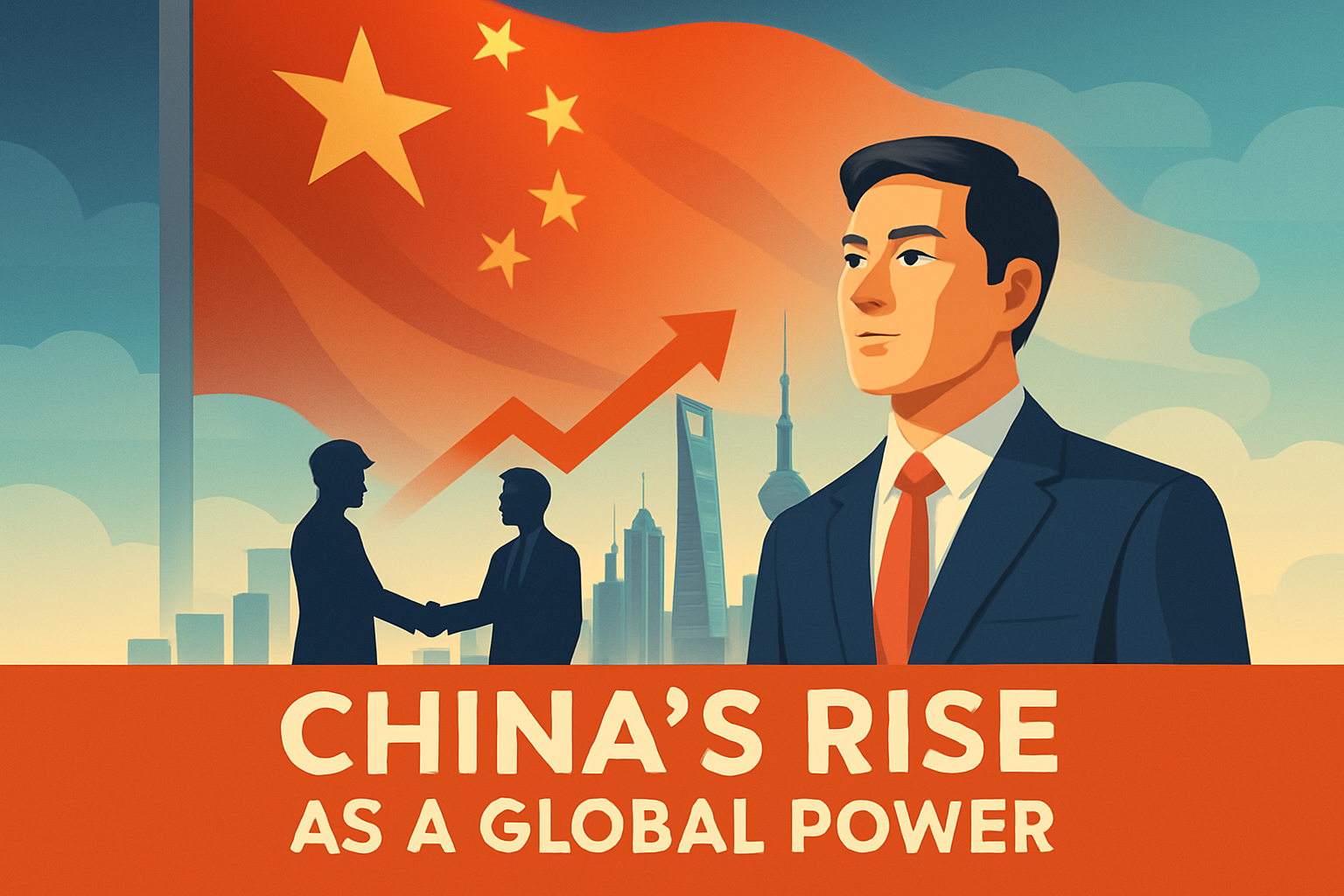
China’s ascent as a formidable global power is a topic of vast significance in contemporary geopolitics. Over the last few decades, China has traversed an extraordinary journey from a largely agrarian society to the second-largest economy in the world. The aspects of economic growth, technological advancement, military modernization, and diplomatic influence are critical in understanding how China has emerged as a key player on the world stage. Recognizing China’s rise and its implications is vital for policymakers, businesses, and citizens worldwide, as it influences global markets, regional security dynamics, and international relations.
Key terms such as “economic growth,” “geopolitics,” “military modernization,” and “diplomatic influence” are crucial for comprehending China’s rise. Economic growth refers to the increase in a country’s output of goods and services, typically measured by Gross Domestic Product (GDP). Geopolitics involves the influence of geographical factors on politics and international relations. Military modernization entails the upgrading of military capabilities, while diplomatic influence pertains to a country’s ability to affect decisions in the international arena. This exploration of China’s rise as a global power delves into these facets, providing a comprehensive understanding of the broader picture.
Economic Growth and Development
China’s economic growth over the past few decades is nothing short of remarkable. Since initiating market reforms in 1978 under the leadership of Deng Xiaoping, China has experienced an average GDP growth rate of nearly 10% per year. This rapid expansion has lifted hundreds of millions of people out of poverty, turning China into a middle-income country and a manufacturing superpower. Key factors contributing to China’s economic growth include the decentralization of control over industry, the opening up of markets to foreign investment, and the cultivation of an entrepreneurial class.
A real-world example of China’s economic development is the transformation of Shenzhen. Once a modest fishing village, Shenzhen was designated as a Special Economic Zone (SEZ) in the late 1970s. Since then, it has transformed into a bustling metropolis renowned for high-tech industries and innovation. Companies like Huawei and Tencent, headquartered in Shenzhen, are now global leaders in technology and have contributed significantly to the city’s GDP, which is comparable to entire countries such as Portugal or Ireland.
Technological Advancement
China’s technological advancement has played a critical role in establishing its position as a global power. With substantial investments in research and development, China has become a global leader in various high-tech sectors, including telecommunications, artificial intelligence, and quantum computing. The Made in China 2025 initiative exemplifies the country’s commitment to technological dominance. This strategic plan aims to transform China from a manufacturing giant to a world innovation powerhouse by promoting advanced industries such as robotics, aerospace, and clean energy vehicles.
Huawei Technologies Company, a prime example, demonstrates China’s technological prowess. Not only is it a leading provider of telecommunications equipment, but its innovations in 5G technology are also setting global standards. China’s technological advancement is particularly evident in the widespread adoption and development of digital payment systems, exemplified by tech giants like Alibaba’s Alipay and Tencent’s WeChat Pay. These platforms have revolutionized commerce in China, showcasing the seamless integration of technology into everyday life.
Military Modernization
China’s military modernization has significantly altered the balance of power in the Asia-Pacific region. Under President Xi Jinping, the People’s Liberation Army (PLA) has undergone extensive reforms to enhance its combat readiness, capabilities, and technological sophistication. This modernization effort includes the development of advanced weaponry, increased defense spending, and improved training and professional standards within the military ranks.
A tangible illustration of China’s military advancement is the construction and commissioning of modern naval vessels, such as the aircraft carrier Shandong. Commissioned in 2019, the Shandong is China’s second aircraft carrier and the first to be domestically built. It symbolizes the country’s commitment to enhancing its maritime capabilities and asserts China’s influence in regional maritime security issues, particularly in the contested South China Sea.
Diplomatic Influence
China’s rise as a global power extends beyond economic and military domains, significantly impacting its diplomatic influence. China’s strategy in the international arena is characterized by initiatives such as the Belt and Road Initiative (BRI), a colossal infrastructure and economic development project aimed at enhancing connectivity and cooperation across Asia, Africa, and Europe. Through the BRI, China aims to construct a vast network of railways, highways, and ports, strengthening its geopolitical influence by deepening economic ties and dependency.
The Shanghai Cooperation Organization (SCO) serves as another example of China’s expanding diplomatic clout. As a founding member, China has used the SCO platform to foster regional cooperation on security, trade, and cultural exchanges. The expansion of the SCO to include key countries such as India and Pakistan illustrates China’s growing diplomatic leverage and its ambition to reshape regional stability and cooperation paradigms.
Implications for Global Markets and International Relations
The implications of China’s rise as a global power are far-reaching and multifaceted. Economically, China’s growth has created both opportunities and challenges for global markets. On the one hand, China’s consumer market, with its burgeoning middle class, offers enormous potential for foreign businesses. On the other hand, trade imbalances and protectionist policies have posed challenges, as evidenced by the recent trade tensions with the United States. The negotiations and tariff disputes underscore the complexities of managing economic relations with China.
| Area | Impact |
|---|---|
| Economy | Opportunities in emerging consumer market; challenges in trade imbalances |
| Technology | Global leadership in telecommunications and AI; competition in tech innovation |
| Military | Shift in regional power dynamics; increased maritime capabilities |
| Diplomacy | Expanded influence through BRI and SCO; new alignments and partnerships |
In international relations, China’s strategic initiatives and alliances reflect its pursuit of a multipolar world order where it plays a decisive role. This pursuit is evident in its involvement in forums like the G20 and BRICS (Brazil, Russia, India, China, and South Africa), which allow China to influence global governance and economic policies actively. China’s rise also tests existing alliances and prompts nations to reevaluate their foreign policy priorities.
The Role of Soft Power
While economic and military prowess are core components of China’s rise, soft power — the ability to attract and co-opt rather than coerce — is increasingly vital. China is investing heavily in cultural diplomacy, using instruments like Confucius Institutes to promote its language and culture globally. Moreover, its hosting of significant international events, such as the 2008 Beijing Olympics, serves to bolster its image as a welcoming and culturally rich society.
These soft power strategies aim to enhance China’s global image, making other countries more amicable to Chinese interests. For instance, in Africa, China has notably combined its economic investments with cultural outreach, fostering a positive perception that supports its broader geopolitical objectives. While the effectiveness of these efforts varies, they are a testament to China’s comprehensive approach to solidifying its role on the international stage.
Potential Challenges and the Future Path
Despite its impressive rise, China faces several challenges that could affect its trajectory as a global power. Economic challenges such as an aging population, increasing labor costs, and the need for sustainable growth models are pressing concerns. The Chinese government is acutely aware of these issues and is taking steps to transition towards a consumption-driven economy more reliant on innovation and services.
Geopolitically, China’s assertive policies have sometimes led to tensions, notably with neighboring countries in the South China Sea and its trade partners globally. Navigating these complexities while maintaining growth and stability is crucial for China’s continued ascent. The question of human rights and press freedom also poses a challenge, especially in an interconnected world where civil liberties are increasingly scrutinized.
As these dynamics evolve, the global community will keenly observe China’s policy shifts and strategic intentions. The way China addresses these internal and external challenges will significantly influence its role as a global power.
Conclusion: Understanding China’s Comprehensive Growth
In summary, China’s rise as a global power manifests through its extraordinary economic growth, technological advancements, military modernization, and diplomatic influence. These elements are interwoven with both regional and international repercussions. For policymakers, business leaders, and informed citizens, understanding China’s multifaceted growth and the resulting implications offers better preparedness for future interactions and decisions.
The key takeaway from understanding China’s ascent is its potential to reshape global norms, with every sector from technology to international relations being influenced. Individuals and institutions must pay close attention to how China navigates its internal challenges and external relations. Engaging with China and fostering mutual understanding and cooperation will be essential in this new era of global dynamics. As readers, the next step is to stay informed about China’s developments, reflect on their global impact, and consider how they affect individual and collective interests globally.
Frequently Asked Questions
1. What are the key factors that have contributed to China’s rise as a global power?
China’s transformation into a global powerhouse is rooted in a blend of several factors. Firstly, the shift from a planned economy to a more market-oriented one, beginning with the economic reforms in 1978, enabled rapid industrialization and economic growth. This pivot embraced a hybrid model where state control coexists with market mechanisms, fostering both efficiency and state capacity to intervene when necessary.
Secondly, China’s strategic investments in education and human capital have created a knowledgeable workforce adept in diverse fields, enhancing productivity and innovation. The emphasis on STEM fields—science, technology, engineering, and mathematics—has equipped China with a strong base for technological advancement.
Thirdly, the country’s ambitious infrastructure projects, both domestically and internationally through the Belt and Road Initiative (BRI), have not only improved internal connectivity but have also expanded China’s influence globally. The BRI, in particular, extends China’s economic reach across Asia, Africa, and Europe, creating a sprawling network of trade links and strategic partnerships.
Moreover, military modernization has been a focus, with substantial increases in defense spending enabling the development of advanced technology in areas such as artificial intelligence, cyber capabilities, and space exploration. This bolstering of military strength complements China’s rise as a robust geopolitical entity.
Lastly, at the diplomatic level, China has been actively involved in multilateral organizations, progressively shaping global norms and rules, and strengthening its soft power through initiatives like cultural exchanges, confucius institutes, and foreign aid, establishing a narrative of China as a leader in global governance.
2. How has China’s economic growth impacted its position on the world stage?
The remarkable pace of economic growth in China has fundamentally altered its standing in the international community. As the second-largest economy in the world, China’s economic clout has become an integral part of global trade and investment flows. It serves as a major trade partner for numerous countries, a cornerstone of the global manufacturing supply chain, and a key player in international finance.
China’s economic strategy has been multifaceted. It involves an export-led growth model that capitalized on its comparative advantage in labor-intensive manufacturing, coupled with massive state investments in high-tech industries. The scope of its economic transformation is seen in urbanization, rising incomes, and the emergence of a burgeoning middle class, thereby driving domestic consumption.
Internationally, China’s economic expansion is further manifest in increased foreign direct investments (FDI), particularly through high-profile acquisitions and partnerships, as well as significant financial contributions to international institutions like the Asia Infrastructure Investment Bank (AIIB) and the New Development Bank (BRICS Bank).
This economic prowess provides China with strategic leverage in international negotiations and trade agreements, allowing it to engage with both developed and developing nations effectively. Consequently, China’s role is pivotal in addressing global issues such as climate change, trade imbalances, and economic integration, rendering its ascent not merely an economic success story but a critical dimension of its enhanced geopolitical significance.
3. In what ways has technological advancement contributed to China’s global influence?
Technological advancement is a cornerstone of China’s strategy to elevate its global influence. Through intensive investments in research and development, China has made remarkable strides in sectors like telecommunications, space exploration, quantum computing, and artificial intelligence. Chinese tech giants such as Huawei, Tencent, and Alibaba are not only symbols of the country’s innovation prowess but also play significant roles in global markets.
China’s commitment to becoming a leader in technology is epitomized in policies such as “Made in China 2025,” which aims to transform China into a leading global high-tech manufacturer. It prioritizes competitive sectors including robotics, new energy vehicles, and biotechnology, positioning China at the forefront of leading technological advancements.
Such advances have expanded China’s ability to influence global tech standards and norms, enhancing its capacity to set international agendas in technology governance. Additionally, China’s export of high-tech products and services—the technology infrastructure of countries via telecommunications hardware, for instance—builds dependency and aligns economic interests globally.
The integration of technology advances into military capabilities has also been crucial—a key aspect of China’s comprehensive approach to reform and modernize its military forces. Technological superiority underpins China’s strategy to maintain its territorial sovereignty, secure its economic interests, and project power beyond its immediate region.
Through digital diplomacy and tech-driven partnerships with other countries, China further extends its influence, advancing its vision of a technologically interconnected world that adheres more closely to its economic and political ideals.
4. How has military modernization played a role in China’s rise as a global power?
Military modernization is a central pillar of China’s overall strategy to assert itself as a preeminent global power. Over recent decades, the People’s Liberation Army (PLA) has transformed from a large, land-based force to a lean, modern, and technologically advanced military.
This transformation is characterized by significant investments in defense spending, supporting advancements in nuclear deterrence, missiles, aircraft, aircraft carriers, and cyber capabilities. With a focus on military technology such as artificial intelligence, cyber warfare, space capabilities, and drones, China is building a military designed to secure its interests across all domains: land, sea, air, space, and cyberspace.
The PLA also emphasizes joint operations across its various branches, enhancing its ability to conduct complex missions. This is aligned with China’s strategic aim to defend its territorial integrity, particularly in contentious areas like the South China Sea, while also expanding its influence in regions further afield.
Through high-profile military exercises and increasing participation in global peacekeeping missions, China projects an image of military competence and readiness. Additionally, its focus on domestic capabilities in defense production aims to reduce dependency on foreign military technologies.
China’s military enhancements reflect not just a desire for national defense but also a broader vision of safeguarding its economic lifelines, protecting its citizens abroad, and supporting its geopolitical ambitions. The comprehensive modernization of China’s military fortifies its position, providing it with the leverage necessary to influence international military norms and shape global security frameworks.
5. What are the potential implications of China’s rise for global geopolitics?
The implications of China’s rise for global geopolitics are manifold and profound. The increased prominence of China reshapes power dynamics, challenging the existing Western-led world order. As China exerts its influence, it advocates for a multipolar world that reflects the diverse interests of multiple global actors.
Economically, China’s rise has prompted shifts in alliances and strategies, with countries balancing relations between China and traditional powers like the United States. As China becomes a vital player in trade, development, and climate policies, its economic engagements often come with strategic partnerships that can sway political alliances.
The Belt and Road Initiative exemplifies how China extends its geopolitical reach—by investing in infrastructure and building alliances across continents, creating new corridors of influence. This initiative not only boosts China’s global connectivity but also emphasizes its role as a central node in global economic networks.
China’s rise also affects regional security dynamics, especially in the Asia-Pacific region, where its growing assertiveness in territorial disputes has fueled tensions and led to an arms buildup among neighboring states.
Diplomatically, China promotes alternative governance models, challenging the liberal-democratic values associated with western powers. By engaging actively in multilateral organizations and establishing new platforms like the New Development Bank, China seeks to influence international agendas and norms.
Ultimately, China’s ascent as a global power requires nations across the world to adapt strategically. While it presents opportunities for cooperation in areas such as trade, infrastructure development, and global governance, it also poses challenges, particularly where interests diverge. The geopolitical landscape that emerges will be shaped by how power balances evolve, how global norms are set, and how international alliances are formed in response to China’s rise.