
Introduction to Sahara Caravan Trade
The Sahara Desert, often called the ocean of sand, holds a fascinating history of ancient trade that transcends miles of inhospitable terrain. The caravan trade routes that spanned this vast desert were instrumental in forging economic and cultural connections between the Mediterranean in the north and sub-Saharan Africa in the south. These routes were more than mere pathways; they were lifelines that carried goods, ideas, and innovations across continents.
By definition, a caravan is a group of travelers, often merchants, journeying together for mutual security in hostile environments. This concept was critical in the Sahara, where individuals had to band together to face the unforgoing challenges presented by the desert. The term “trans-Saharan trade” refers to the exchange of goods such as gold, salt, textiles, and other commodities between the North African and sub-Saharan regions.
The significance of these trade routes extends beyond commerce. They facilitated cultural exchanges, spread technological innovations, and contributed to a rich history that shaped civilizations. Understanding these routes helps us appreciate how ancient societies overcame geographical barriers through innovation and adaptation. It also sheds light on the resilience of human societies and their capacity to adapt and thrive in one of the world’s harshest environments.
The Early Trade Routes: Mapping the Desert’s Arteries
Early caravan routes across the Sahara were meticulously mapped pathways. These routes consisted of three primary arteries: the Western, Central, and Eastern routes, each with its significance, challenges, and trade items.
The Western Route
The Western Route was one of the most traveled pathways and played a pivotal role in connecting the ancient Ghana Empire to northern Africa. Goods such as gold from the Wangara goldfields were traded along this route, making ancient Ghana one of the wealthiest regions. In exchange, North African traders brought salt, which was a precious commodity used both for preserving food and economic transactions.
One renowned city along this route was Timbuktu, once a thriving center of trade, education, and a reflection of wealth amassed through trade. Caravans traveled this route not only for wealth but also for the pursuit of knowledge, which further enhanced cultural exchanges.
The Central Route
This route connected the regions of Tripoli and Fezzan in modern-day Libya with Kanem-Bornu near Lake Chad. The Fulani tribes controlled it, and it was famous for the trade in slaves, ostrich feathers, and leather goods. The challenges of traversing this route were considerable, including severe weather conditions and scarce resources.
A significant hub along this route was the oasis of Bilma, a critical stopover point for caravans. Here, traders could find rest, nourishment, and opportunities to exchange goods and information. Bilma acted as a vital node for trade flow and cultural diffusion across central Sahara.
The Eastern Route
This lesser-known route ran from the Nile Valley, through the desert to the region of Darfur, and further south into the heart of the African continent. Goods traded along this route included gold, ivory, and slaves. This route’s development enabled Egypt to extend its influence deep into Africa, reflecting the interconnectedness of these ancient trade networks.
The presence of caravanserais—rest stops and inns providing shelter and supplies—along this route underscored the ingenuity of early traders in overcoming the desert’s challenges. Caravans benefited from these rest stations, which offered vital resources and services to support their journeys.
Adapting to the Desert’s Challenges
Traders traversing the Sahara had to adapt to a highly challenging environment. The desert’s extreme weather conditions, scarce water sources, and vast distances necessitated sophisticated solutions and strategies aligned with the harsh terrain. Understanding these adaptations highlights human resilience and ingenuity in overcoming adversity.
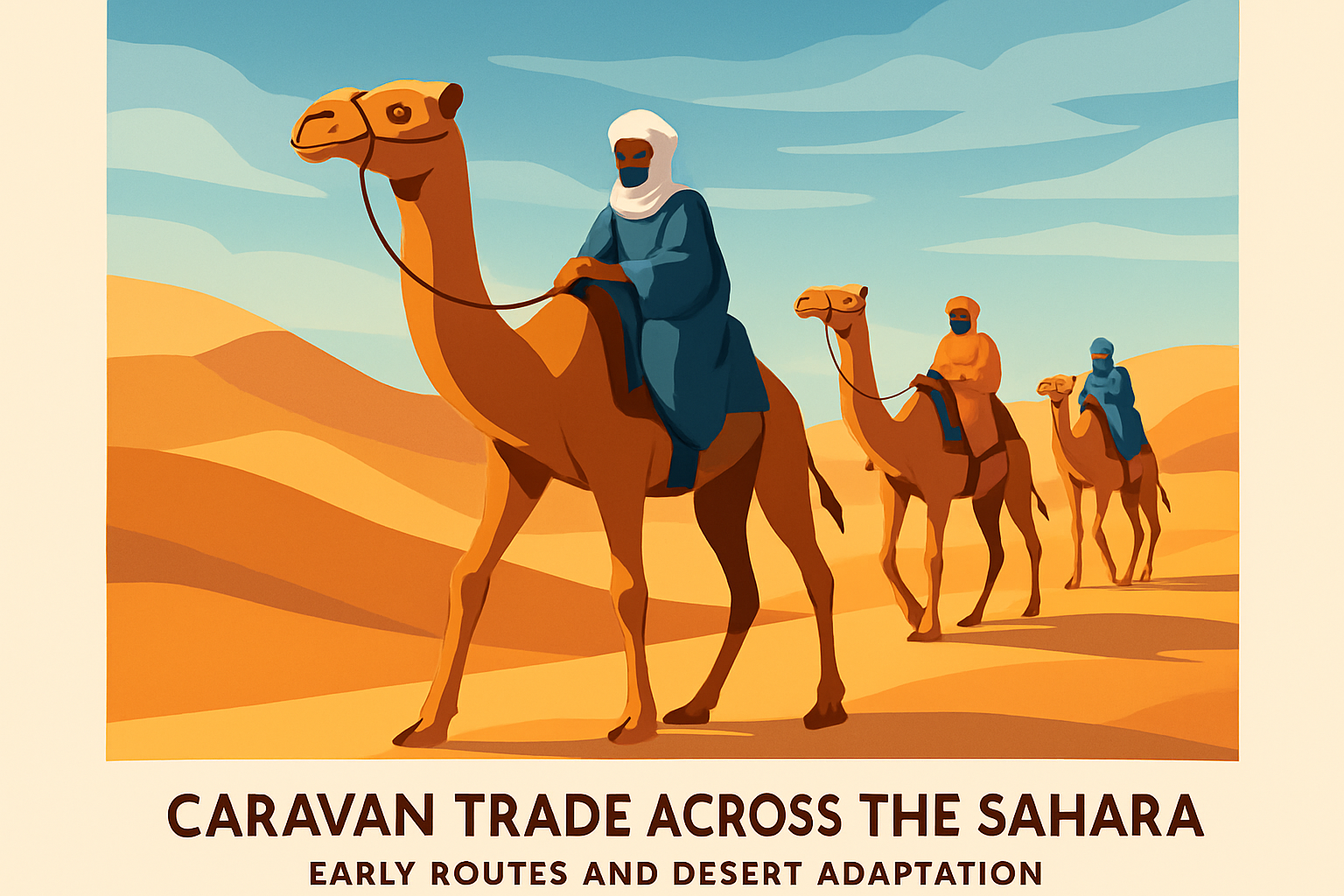
One of the most significant adaptations was the domestication and use of camels, often referred to as the “ships of the desert.” Camels can endure long periods without water, carry heavy loads, and traverse vast distances. This adaptation revolutionized Sahara commerce by enabling traders to build caravans capable of crossing the inhospitable desert.
Moreover, the knowledge and expertise of local guides known as “Azalai” were invaluable. These guides possessed intimate understanding of the desert’s features, such as knowing the locations of oases and weather patterns. Their guidance ensured the survival of caravan travelers, making their role indispensable.
Notable Trade Goods and Economic Impact
The trans-Saharan trade was marked by a diverse array of goods that influenced societies on both sides of the desert. This wide range of traded items underscored the economic interdependence of disparate regions in the early trade network.
- Salt: Described as “white gold,” salt was critical for preserving food and maintaining health. The salt mines of Taghaza became one of the most valuable assets along the trade routes.
- Gold: The immense wealth of West African kingdoms, like Mali and Ghana, was primarily based on their gold reserves, making this precious metal a cornerstone of trade.
- Textiles: Luxurious fabrics from the Mediterranean were exchanged for African goods, reflecting a blend of cultural influences.
- Ivory and Slaves: Items that were highly sought after in North African and Mediterranean markets, further fueling trade dynamics and routes development.
One notable example of the economic impact of this trade was the Mali Empire under Mansa Musa, renowned for its prosperity and vast influx of wealth generated through the gold and salt trade. Musa’s pilgrimage to Mecca in 1324, accompanied by a caravan of camels laden with gold, remains a testament to the economic power wielded through trans-Saharan trade.
Cultural Exchange and Influence
The trans-Saharan routes were more than commercial highways; they were conduits of cultural and intellectual exchange. As traders moved across the desert, they carried with them ideas, language, and beliefs, contributing to a shared cultural tapestry spanning continents.
For instance, the influence of Islam spread significantly through these trade routes. Muslim traders played a crucial role in the dissemination of Islamic culture and teachings. As a result, many towns and cities along the routes, such as Gao and Timbuktu, became centers of Islamic learning.
The legacy of this cultural exchange is also evident in the spread of language. Arabic, the lingua franca of trade, facilitated communication across diverse cultural and linguistic groups. The exchange of ideas further stimulated advancements in sciences, architecture, and arts throughout the region.
Conclusion: The Lasting Impact of Sahara Caravan Trade
The historical significance of the trans-Saharan caravan trade is profound. This intricate network of routes fostered economic prosperity and cultural cohesion across African and Mediterranean regions. By connecting distant civilizations, these trade routes facilitated the interchange of goods, ideas, and beliefs that contributed to the development of thriving societies.
The story of these ancient trade routes illustrates human resilience, innovation, and the perpetual quest for connection and growth. Through desert adaptation and strategic trade networks, early societies overcame substantial challenges and created pathways that enriched humanity’s history.
As modern-day exploration and study of these historical trade routes continue, we gain further insights into early human ingenuity. To delve deeper, consider visiting museums, reading historical accounts, or engaging with organizations dedicated to preserving this legacy.
Frequently Asked Questions
1. What were the main goods traded on the caravan routes across the Sahara?
The Sahara’s caravan trade was a bustling network of goods that traveled vast distances across the desert’s challenging landscape. Among the most significant and highly sought-after goods was salt, mined from rich deposits in the central Sahara. Salt was critical, not only as a food preservative but also as a currency in some regions. Gold from the mines of West Africa was another precious commodity, with kingdoms such as Ghana and Mali playing pivotal roles in its trade. Textiles, especially luxurious fabrics and clothing from the north and the eastern Mediterranean, were also frequently traded. These precious goods were complemented by ivory, slaves, and kola nuts, each contributing to the complex web of commerce that bound these cultures together. Merchants also transported metals and various agricultural products, depending on the region and season, completing a vibrant exchange that went beyond basic trade and included cultural and technological exchanges.
2. How did traders adapt to the harsh conditions of the Sahara Desert?
Navigating the Sahara Desert, renowned for its extreme conditions, required keen adaptation strategies from traders. Camels, aptly named the ‘ships of the desert,’ were central to this adaptation, given their ability to withstand long journeys with minimal water intake. These animals were critical in transporting both goods and people. Caravans, often comprising hundreds or even thousands of camels, were organized to maximize efficiency and safety. Experienced guides, familiar with the desert’s shifting sands and scarce water sources, were indispensable in ensuring successful traversal. Knowledge transfer was vital, with seasoned traders passing down navigation skills and survival wisdom through generations. Oases dotted across the desert served as critical rest stops where traders could replenish their water reserves and rest. Additionally, the timing of travel was strategic; most caravans aimed to traverse the desert during cooler months to avoid the punishing summer heat. Innovations in navigation, such as using stars for guiding, and practical tools like compasses once they were available, contributed to the efficiency of these enterprises. Overall, the adaptability and ingenuity of these traders underscored their remarkable endurance in such an unforgiving environment.
3. What was the historical significance of the Trans-Saharan trade network?
The Trans-Saharan trade network wasn’t just a series of trade routes but a linchpin in the ancient world that facilitated immense cultural and economic exchanges between vastly different regions. Historically, these routes were crucial in fostering connections between the Mediterranean world and sub-Saharan Africa, creating a melting pot of cultures and knowledge. This cross-cultural interaction led to the diffusion of ideas, technology, and religion. Islam, for instance, spread significantly through this network, influencing societies and establishing vibrant Islamic trading towns and cities along the trade routes. Moreover, the wealth generated from trade enabled the rise of powerful empires like Mali and Songhai, with trading centers such as Timbuktu and Gao emerging as intellectual hubs. Economically, the routes facilitated the flow of an extensive range of goods, directly impacting the livelihoods of countless individuals and fostering regional interdependence. The legacy of these routes is still evident today, reflected in the cultural and genetic tapestries of North and West Africa. Through the complex web of exchanges and interactions, the Trans-Saharan trade network significantly shaped the historical trajectory of the African continent and beyond.
4. What challenges did traders face on the Trans-Saharan routes, apart from the desert’s climate?
In addition to the Sahara’s notorious climate, traders faced a multitude of other challenges that tested their resilience and ingenuity. One of the constant perils was dealing with raids and attacks by bandits. These threats were frequent, as the valuable goods transported made caravans prime targets. Traders often had to employ armed guards or negotiate protection money to secure safe passage through certain regions. Navigational difficulties posed another serious challenge; the desert’s shifting dunes could alter paths and landscapes overnight, leading to the risk of getting lost or veering off course. Furthermore, the sheer scale of human endurance was often tested by the physical toll of prolonged travel over hundreds, sometimes thousands, of miles of monotonous terrain. Scarcity of water and essential supplies was an omnipresent risk, making survival heavily dependent on successfully locating watering holes or strategically planning rest stops. Upon reaching trading destinations, cultural and linguistic barriers required adept negotiation skills to conclude favorable trade deals. Despite these numerous obstacles, the persistence and resourcefulness of these traders allowed them to continuously traverse this daunting landscape, sustaining a thriving trade network over centuries.
5. How did the development of the Trans-Saharan trade routes impact local communities and societies?
The establishment and flourishing of Trans-Saharan trade routes brought profound changes to local communities and societies. Economically, the trade routes generated wealth and employment opportunities, fostering the growth of markets and trade towns. Communities along these routes often witnessed increased prosperity as they became pivotal in facilitating trade logistics and catering services. Socially, the influx of traders and goods fostered a cosmopolitan environment, leading to richer cultural exchanges and a blending of traditions and practices. This melting pot of cultures contributed to the tolerance and adoption of new customs, languages, and ideas, significantly enriching local communities. Politically, some regions saw shifts in power dynamics, as the control and taxation of trade routes afforded political leverage and funding to certain kingdoms, helping them consolidate power and influence. Additionally, the spread of religions, particularly Islam, was deeply tied to these trade routes, bringing new spiritual and educational dimensions to these societies. The intellectual exchange fomented by these routes spurred advancements in areas like mathematics, astronomy, and medicine, which had lasting impacts on local communities and beyond. Overall, the intricate interplay of economics, culture, and politics catalyzed by the Trans-Saharan trade left an indelible mark, permanently shaping the identities and trajectories of these communities.