
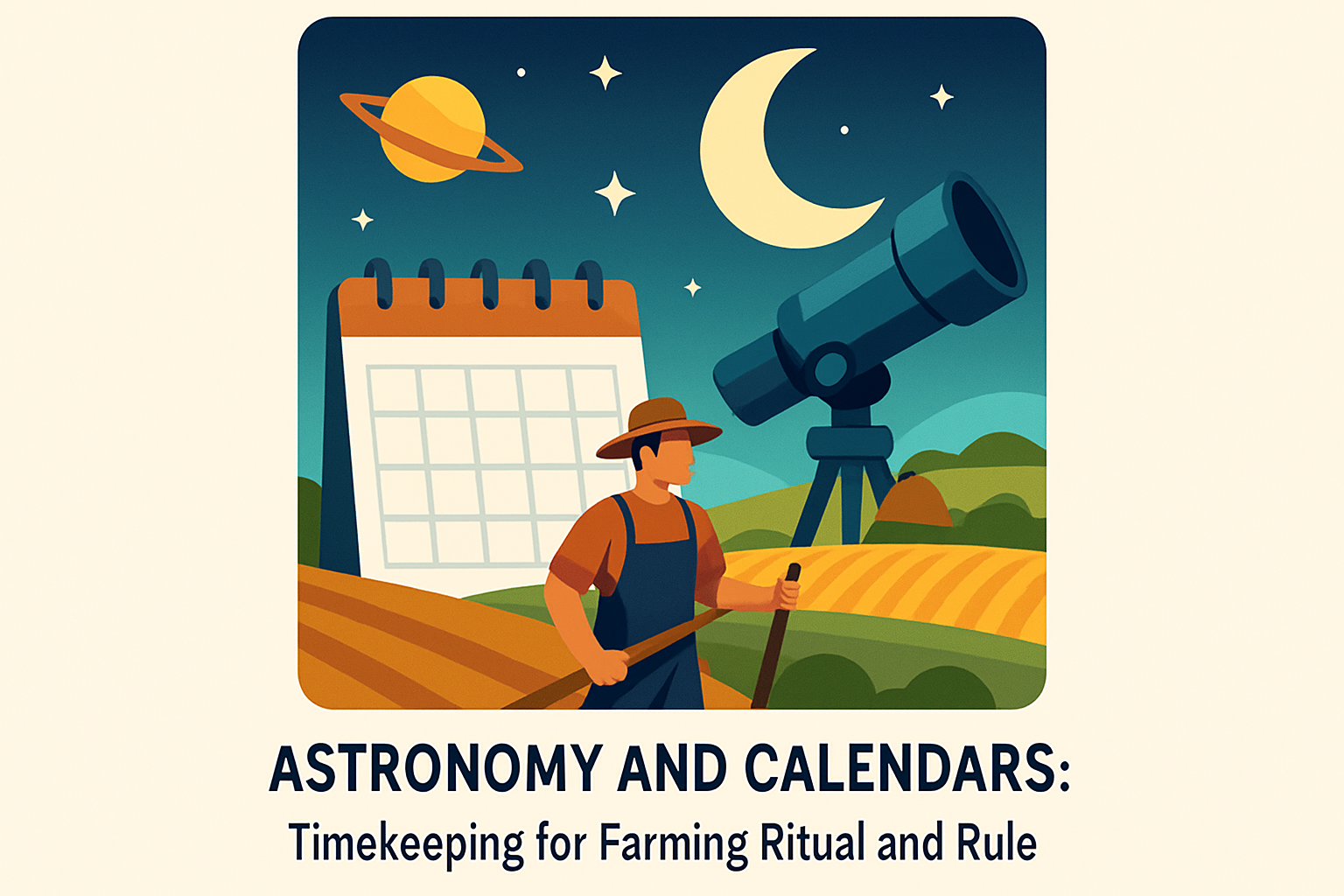
Astronomy has been a cornerstone of human culture for millennia, guiding civilizations in their understanding of the cosmos, time, and the rhythms of nature. The profound relationship between astronomy and calendars is an essential part of human history, playing a significant role in the development of agriculture, religious practices, and governance. At its core, astronomy represents the study of celestial objects and phenomena, while calendars are systems created to organize days, months, and years based on astronomical observations. Understanding this connection allows us to appreciate how ancient societies harnessed the knowledge of stars and planetary movements to cultivate crops, conduct rituals, and establish societal norms.
The development of calendars informed by astronomy has been vital for human survival and societal development. As agrarian societies emerged, the ability to predict seasonal changes through astronomical observations became crucial for successful crop planting and harvesting. Religious and cultural rituals often coincided with significant celestial events, aligning human customs with the cosmic order. Additionally, rulers integrated astronomical references into calendars for administration and control. This article explores the interplay between astronomy and calendars in these pivotal areas: agriculture, religious practices, and governance.
Astronomy in Agriculture: Guiding the Seasons
Agriculture is deeply intertwined with astronomy as farmers historically relied on celestial cues to make critical planting and harvesting decisions. Understanding seasonal changes was paramount, with solstices and equinoxes serving as natural markers. These astronomical events guide farmers when to sow seeds and reap the harvest.
The ancient Egyptians were among the first societies to integrate astronomy into agriculture. The heliacal rising of Sirius, the brightest star, was a particularly significant event. This annual phenomenon, occurring just before the inundation of the Nile, alerted Egyptians to the imminent flooding, which was crucial for irrigation and agriculture. By using stars as a calendar, they could align their agricultural activities with natural cycles, ensuring sustenance and societal stability.
In contrast, Mesoamerican cultures like the Maya independently developed intricate calendar systems embedded with astronomical observations that guided agricultural activities. The Haab’, a 365-day solar calendar, was used to track the solar year, signaling important agricultural and ceremonial dates. By observing the sun’s movements, ancient civilizations maximized their agricultural yields without modern technology, showcasing the enduring importance of celestial knowledge.
Religious Rituals Tied to Celestial Events
Religion and astronomy have historically been closely connected, with celestial events often regarded as divine phenomena. The alignment of religious rituals with astronomical occurrences reinforces a sense of harmony between humans and the cosmos, elevating seasonal changes to sacred events.
Among the many examples, the Druids celebrated the winter solstice with great reverence, marking the “rebirth” of the sun. Stonehenge, a prehistoric monument in England, is believed by many to have been used as an ancient observatory. Its alignment with the solstice sun suggests its purpose extended beyond ritual to include timekeeping and agricultural forecasting.
Similarly, the Islamic calendar, which is lunar-based, illustrates the alignment of religion with celestial cycles. The sighting of the crescent moon signals the start of the Islamic months, such as Ramadan, the holy month of fasting. This adherence to lunar phases exemplifies how astronomy governs religious timing and practice, creating a spiritual framework that aligns with the natural world.
Governance and Calendars: Control from the Skies
Beyond agriculture and religion, astronomy has also played a pivotal role in political structures and governance. Early rulers recognized the importance of harnessing celestial knowledge to maintain societal order and legitimize their authority.
The Roman Julian calendar, introduced by Julius Caesar in 45 BCE, reformed the Roman system by aligning it more closely with the solar year, as explained by Egyptian astronomers. This reform aimed to stabilize state functions and public festivals, preventing discrepancies that could disrupt governance. The common saying, “the calendar is mightier than the sword,” highlights how the control of time can centralize power and facilitate imperial administration.
| Culture | Astronomy’s Application | Example |
|---|---|---|
| Egyptians | Flood Preparation | Rising of Sirius |
| Maya | Agriculture | Haab’ Calendar |
| Romans | Governance | Julian Calendar |
China provides a further example of astronomy’s role in governance, with the state maintaining observatories to collect astronomical data used in the Chinese lunisolar calendar. Emperors, regarded as the “Sons of Heaven,” claimed the mandate to rule based on their perceived divine synchronization with celestial patterns. As such, astronomy was an essential tool for asserting divine right, maintaining order, and situating earthly rule within a cosmic framework.
The Synchronization of Time and Society
The synchronization of calendars with celestial events provided ancient civilizations a means of harmonizing their earthly activities with the cosmos. This alignment remains influential, reflecting humanity’s enduring quest to understand time’s nature and mastery over environment and society. Through documenting seasonal changes via astronomical events, societies not only ensured survival and stability but also created a shared understanding of time that became instrumental in social coherence.
The Gregorian calendar, now the international standard, reflects this lineage of astronomical timekeeping. Introduced in 1582 to correct the Julian calendar’s drift against the solar year, it exemplifies human efforts to perfect the measurement of time, facilitating global synchronization of activities like farming, trade, and cultural exchange.
Conclusion: The Legacy of Astronomical Timekeeping
Astronomy’s pivotal role in developing calendar systems has left an indelible impact on human progress. By linking celestial phenomena with daily life, ancient civilizations cultivated a profound awareness of their environment, enabling them to thrive and build sophisticated societies. The knowledge of timekeeping through astronomy, once a matter of survival, continues to be a cornerstone of humanity’s achievements.
The integration of astronomy with calendars demonstrates the essential need to observe and interpret the natural world for societal development. As we reflect on these ancient practices, we recognize the power of celestial knowledge to unite agrarian, religious, and political domains, confirming astronomy’s timeless relevance.
To further engage with this fascinating subject, consider exploring modern applications of astronomy in precision agriculture or investigating the cultural significance of astronomical festivals around the world. Such endeavors reinforce the ongoing importance of celestial patterns in shaping human experience.
Astronomy and calendars, timeless partners, have helped shape history. As you look to the skies, remember their role not only in ancient societies but also in driving the innovations and connections of our current world, inviting you to explore how these celestial patterns continue to influence our lives today.
Frequently Asked Questions
1. How did ancient civilizations use astronomy to create calendars?
Ancient civilizations ingeniously used celestial observations to create calendars, and this process was intricately tied to their understanding of astronomy. By observing the cyclical patterns of the Sun, Moon, and stars, societies could mark time and anticipate seasonal changes crucial for agriculture. For instance, the ancient Egyptians relied heavily on the heliacal rising of the star Sirius to predict the annual flooding of the Nile River. This event was crucial for farming, as it deposited nutrient-rich silt on the fields. Moreover, the timing of solstices and equinoxes was pivotal to many civilizations; these astronomical events signaled seasonal shifts and were aligned with festivals and agrarian activities. The Mayans, for example, developed a sophisticated calendar system to synchronize their agricultural and religious events. Through vantage points like Stonehenge or the pyramids, they could meticulously track the movement of celestial bodies and use them as reliable time markers. Thus, astronomy was not merely an observational science but a practical tool deeply embedded in the daily lives and survival strategies of ancient peoples.
2. Why were calendars so important for agricultural societies?
Calendars became invaluable tools for agricultural societies because they provided a structured way to anticipate and manage the cyclical changes in the environment. Accurate timekeeping allowed these societies to predict weather patterns and prepare for planting and harvesting. Without such systems, farmers would struggle to synchronize their activities with beneficial seasonal conditions, risking crop failures. The calendar ensured that all farming tasks were harmoniously timed with nature’s rhythms, fostering a balance between human activity and natural cycles. Beyond agriculture, calendars also facilitated communal coherence. They synchronized communal labor and coordinated festivals and religious ceremonies, ensuring social cohesion. Societies could allocate resources wisely, plan for communal work during peak agricultural periods, and organize celebrations to strengthen cultural identity and social bonds. Calendars were more than chronological tools; they became vital components of societal organization, linking celestial patterns to human endeavors.
3. How did astronomy influence religious practices in ancient times?
Astronomy profoundly influenced religious practices in ancient times by shaping spiritual beliefs and rituals. Celestial events like solar and lunar eclipses, solstices, and equinoxes were seen as divine phenomena, often associated with deities or spiritual practices. Many ancient temples and monuments were strategically aligned with celestial events, serving as sacred sites where communities gathered to honor their gods. For instance, the construction of pyramids and ziggurats was often aligned with cardinal directions, reflecting cosmic order. The ancient Egyptians revered Ra, the Sun god, associating the daily solar cycle with the cycle of life and death, further embedding astronomical observations into religious ceremonies. Similarly, the Mayans regarded astronomical events as manifestations of divine will, with priests functioning as astronomers and intermediaries between the gods and people. By integrating celestial occurrences into religious narratives, societies could explain natural phenomena within a spiritual context, instilling a sense of order and purpose.
4. In what ways did calendars impact governance in ancient civilizations?
Calendars were crucial to governance in ancient civilizations because they enabled rulers to impose order and predictability across their domains. Governments used calendars to schedule work periods, tax collections, and military campaigns. By regulating agricultural activities through calendars, rulers could ensure a stable food supply, directly influencing the economy and social stability. Calendars also played a role in codifying laws and decrees, establishing timelines that lasted for generations. Bureaucratic administration relied heavily on calendrical systems to maintain records, commemorate administrative and religious events, and orchestrate complex projects. For example, some empires strategically timed construction projects or initiated conquests to coincide with certain astronomical events, believing that aligning human activities with the cosmos would invite divine favor. Thus, calendars not only structured daily life but also reinforced the political power and authority of leaders, who claimed knowledge of celestial cycles derived from divine insight or wisdom.
5. Why is the study of ancient calendars relevant today?
The study of ancient calendars is highly relevant today because it bridges the past with the present, offering insights into how historical societies perceived and interacted with their natural environments. By understanding these calendars, we can gain perspectives on human adaptation, survival strategies, and cultural evolution. Modern societies benefit from these studies as they reveal foundational pillars of timekeeping that inform current scientific, agricultural, and religious practices. Ancient calendars also exemplify how societies integrated science and culture, fostering innovation and creativity through observation and interpretation of celestial patterns. Preserving knowledge about early calendars is essential for maintaining cultural heritage, allowing modern humans to appreciate the interconnectedness of civilizations across time. These studies also remind us of the significance of sustainable living and respecting natural cycles, values increasingly relevant in today’s discussions on environmental stewardship and climate change.