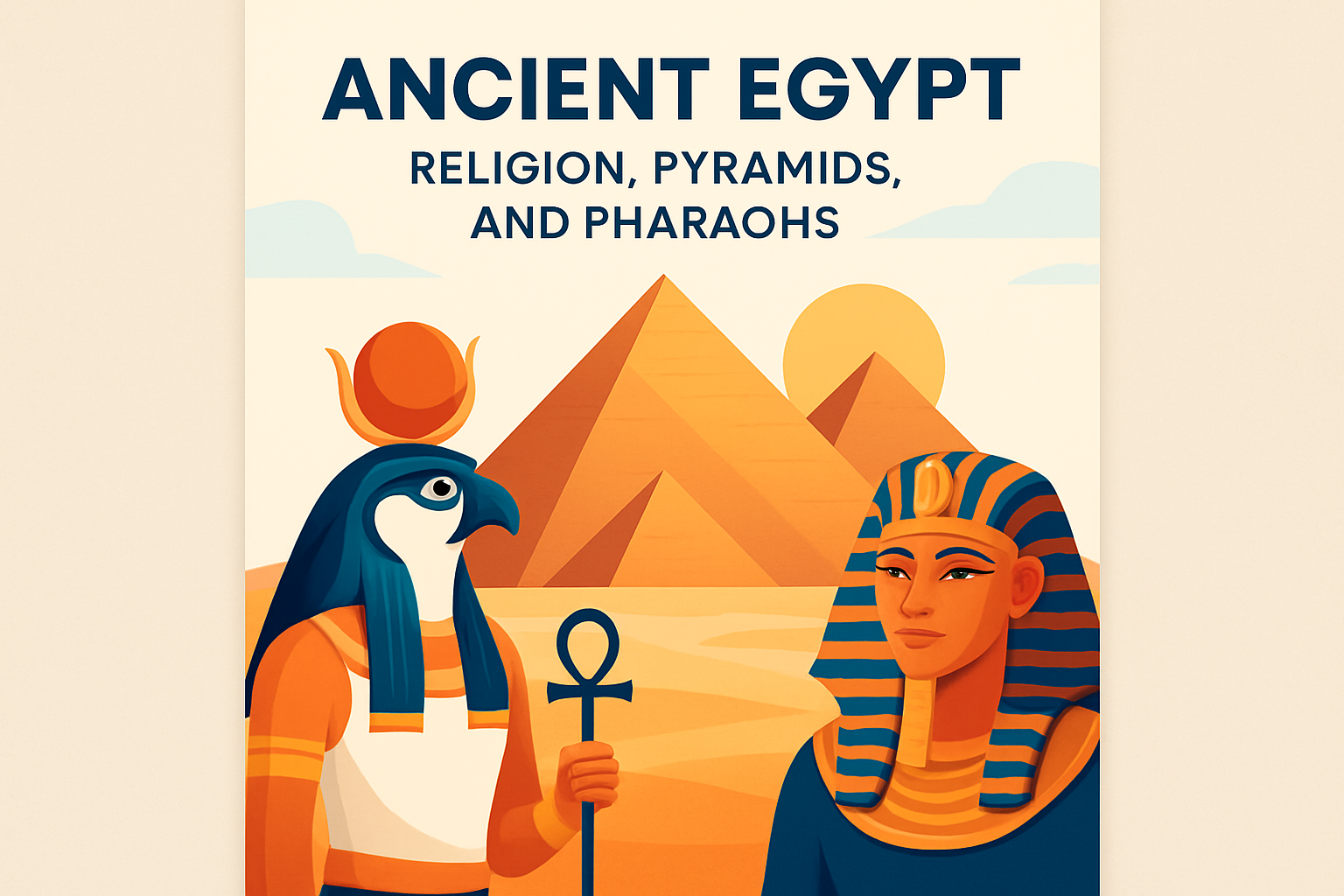
Ancient Egypt, enveloped in the mystique of millennia past, continues to captivate the world with its enduring legacy of religious beliefs, architectural marvels, and powerful rulers known as pharaohs. Spanning over 3,000 years of history, the civilization thrived along the fertile banks of the River Nile. The Ancient Egyptians’ complex pantheon of gods, affinity for monumental architecture, and centralized governance left profound marks on human history. Understanding these elements—the religion, the pyramidal structures, and the authority of the pharaohs—not only sheds light on Egypt’s own evolution but also significantly enhances our appreciation of cultural, architectural, and political developments around the globe.
Moreover, these aspects of ancient Egyptian society help scholars and enthusiasts draw connections to similar practices and ideologies across different cultures and eras. By analyzing the religious practices, the symbolism embedded in their grand structures, and the divine-like status of their rulers, one can better comprehend how the ancient society structured itself and interacted with the divine and natural world. This understanding, in turn, informs our present and future interpretation of leadership, spirituality, and the art of construction.
The Religion of Ancient Egypt
Religion in Ancient Egypt was deeply ingrained in every facet of society, influencing everything from rituals and customs to daily decisions. The Egyptians believed in a multitude of deities, each embodying different aspects of their world. Gods like Ra, the sun god, and Osiris, god of the afterlife, played critical roles in Egyptian spirituality. These gods were often depicted in human or animal forms, illustrating attributes or symbols representing their powers.
The religious structures were an essential part of the Egyptian landscape, with temples serving as homes for the gods. Priests conducted intricate ceremonies to appease the deities and ensure the smooth functioning of the universe. For instance, the Karnak Temple Complex was not just a place of worship but also a reflection of cosmic order and royal power.
- Ra: Considered the king of gods, represented by the sun.
- Osiris: Associated with fertility and the afterlife.
- Anubis: Linked with mummification and protection of the dead.
In practical terms, religion regulated social relationships and reinforced the hierarchical structure of Egyptian society. For example, the concept of Ma’at, personified by the goddess of truth, encouraged balance, order, and justice. This belief system thus played a vital role in maintaining social cohesion and influenced perceptions of law and morality.
Pyramids: Architectural Marvels
The pyramids of Egypt stand as testaments to the ancient civilization’s architectural ingenuity and meticulous planning. Primarily built during the Old Kingdom period, these structures served as royal tombs, reflecting the intertwined nature of religion, culture, and engineering prowess. The most famous pyramids are located at Giza, where the Great Pyramid—constructed for Pharaoh Khufu—looms majestically, marking a pinnacle of ancient engineering.
Constructing a pyramid required vast resources and labor, often involving tens of thousands of workers over decades. While the exact methodologies remain subjects of scholarly debate, innovations in construction techniques, such as the usage of sleds and ramps, facilitated the transportation and placement of massive stone blocks. These architectural feats were not purely material endeavors but were underscored by spiritual intentionality. Pyramids were perceived as gateways to the afterlife, designed to ensure the eternal life of pharaohs among the gods.
| Pyramid | Pharaoh | Location | Approx. Year |
|---|---|---|---|
| Great Pyramid of Giza | Khufu | Giza | 2580–2560 BC |
| Pyramid of Khafre | Khafre | Giza | 2570 BC |
| Pyramid of Menkaure | Menkaure | Giza | 2510 BC |
The conceptual and practical challenges tackled in pyramid construction demonstrate the Egyptians’ advanced understanding of mathematics and astronomy. Aligning pyramids with celestial entities like the North Star underscored their religious significance. Consequently, these monumental structures offer insights into Egyptian civilization’s sophistication, artistry, and spiritual discipline, capturing the imagination and curiosity of generations worldwide.
The Pharaohs: Divine Rulers
Pharaohs were more than mere monarchs; they embodied divine authority and served as intermediaries between the gods and the Egyptian people. Considered earthly incarnations of gods, particularly Horus and later Amun, pharaohs wielded immense power and influence over both the spiritual and temporal realms. Their rule was characterized by their dual roles as political leaders and religious figures upholding Ma’at.
Pharaohs engaged in various activities to sustain and legitimize their rule. They led military campaigns, constructed monumental projects, and presided over religious ceremonies. An exemplary figure is Ramses II, whose lengthy reign witnessed extensive building works and military achievements that reinforced his divine kingship. Pharaohs also commissioned artistic representations, notably the iconic statues and carvings, to impress notions of their divine right to rule.
Significantly, the concept of divine kingship reinforced the societal hierarchy and united the populace under a centralized government structure. By intertwining their political duties with religious obligations, pharaohs provided stability and continuity, key elements that maintained Egypt’s enduring legacy and impact upon future civilizations. This divine kingship model echoes through time, influencing the governance styles and religious practices of many succeeding cultures.
Conclusion: Embracing the Legacy of Ancient Egypt
Reverberating through the annals of time, the religious beliefs, architectural triumphs, and leadership paradigms of Ancient Egypt form a cornerstone of human history. The civilization’s adept integration of religion, monument construction, and centralized authority fostered societal cohesion and artistic flourishing. Furthermore, the multifaceted legacy of the pyramids and the pharaohs continues to inspire wonder and scholarly inquiry.
Understanding Ancient Egypt gives us a deeper appreciation of the innovations and cultural developments that have laid the groundwork for modern civilizations. This awareness prompts us to consider how religion, architecture, and leadership might continue to shape the dynamics of our present and future societies. To explore these themes further, readers are encouraged to delve into the rich tapestry of ancient texts, archaeological findings, and scholarly analyses. By doing so, one not only uncovers the secrets of the ancient world but also gains insights that may guide contemporary endeavors toward achieving lasting societal harmony and accomplishment.
Frequently Asked Questions
1. What was the role of religion in Ancient Egyptian society?
Religion permeated every aspect of Ancient Egyptian life. It was more than just a belief system; it was the backbone of civilization, influencing laws, governmental structure, and daily routines. The Ancient Egyptians believed in a pantheon of gods and goddesses, each associated with different aspects of life and the natural world. The gods were believed to control the universe, and maintaining their favor was essential to ensuring stability and prosperity. Egyptians practiced elaborate rituals and ceremonies, often led by priests, to honor the gods and avert natural disasters. Temples were built as homes for these deities and were central to both religious practice and community life.
2. What was the purpose of the pyramids in Ancient Egypt?
The pyramids of Ancient Egypt served as magnificent tombs for pharaohs and high-ranking officials. These monumental structures were designed to ensure a safe journey to the afterlife for the deceased, who were often buried with a wealth of treasures they might need in the next world. The most famous of the pyramids, the Great Pyramid of Giza, was constructed for Pharaoh Khufu and remains one of the Seven Wonders of the Ancient World. The precise alignment and complexity of the pyramids are a testament to the Egyptians’ advanced understanding of mathematics and engineering. Additionally, the pyramids played a symbolic role, representing the pharaoh’s divine power and their connection to the gods.
3. Who were the pharaohs, and what was their significance in Ancient Egypt?
Pharaohs were the supreme rulers of Ancient Egypt, considered both gods and kings. They wielded absolute power and were central to both the spiritual and political realms. As living embodiments of the gods, particularly Horus and later Osiris, pharaohs were responsible for maintaining Ma’at, the cosmic order, through their governance. They played crucial roles in religious rituals and were celebrated as mediators between the gods and the people. Their reigns were marked by monumental building projects, military campaigns, and diplomatic engagements that expanded Egypt’s influence. Famous pharaohs like Ramses II, Akhenaten, and Cleopatra VII left indelible marks on Egyptian history through their distinctive reigns.
4. How did the Ancient Egyptians view the afterlife?
The concept of the afterlife was a significant aspect of Ancient Egyptian religious belief. Egyptians perceived the afterlife as a continuation of one’s earthly existence, a place known as the Field of Reeds, where one could enjoy eternal peace and prosperity. The journey to the afterlife involved several challenges, including the perilous voyage through the underworld, culminating in the Weighing of the Heart ceremony. In this process, the heart of the deceased was weighed against the feather of Ma’at, the goddess of truth and order. A balanced scale meant a worthy soul, who could then proceed to enjoy the afterlife. Hence, funerary practices, such as mummification and the inclusion of grave goods, were meticulously performed to ensure success in this posthumous journey.
5. What are some of the most notable architectural achievements of Ancient Egypt besides the pyramids?
Besides the pyramids, Ancient Egyptian architecture boasts numerous remarkable structures that highlight their engineering prowess and artistic capabilities. Temples, such as Karnak and Luxor, stand as monumental testaments to the civilization’s devout religiosity. The temples, dedicated to major gods like Amun-Ra, were designed with massive halls and towering columns adorned with intricate carvings and hieroglyphs, reflecting key events and royal achievements. The tombs of the Valley of the Kings, where pharaohs of the New Kingdom were laid to rest, are famous for their elaborate wall paintings and treasures. Additionally, the Great Sphinx of Giza, with its lion’s body and human head, remains a symbol of ancient Egyptian ingenuity and mystery, guarding the secrets of the past.