
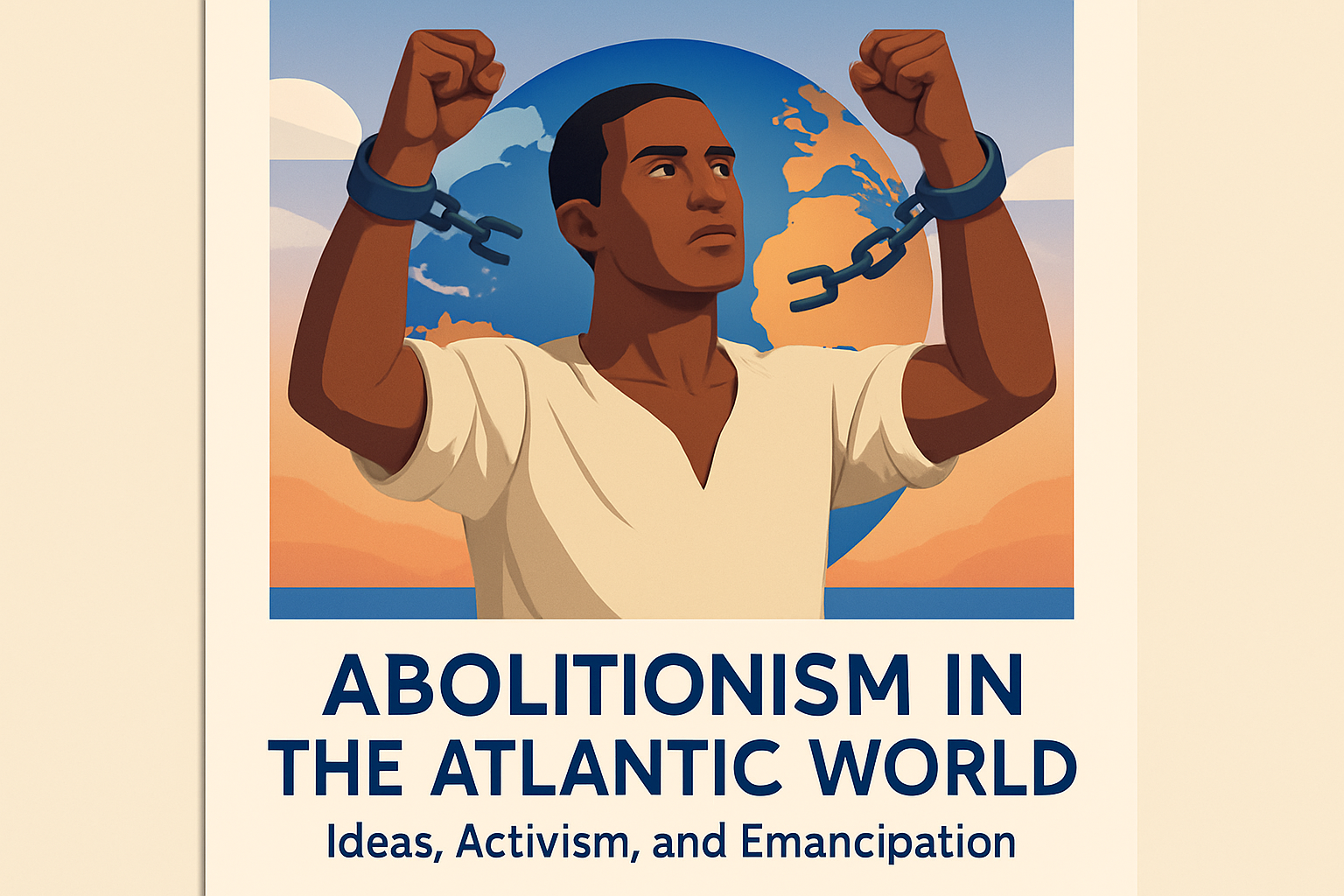
Abolitionism in the Atlantic World emerged as a transnational movement to end the slave trade, dismantle racial slavery, and redefine political freedom across Europe, Africa, the Caribbean, and the Americas. In practical terms, abolitionism joined moral argument, religious conviction, legal strategy, print culture, and mass activism into a sustained campaign against one of the most profitable systems in modern history. Historians use the phrase Atlantic World to describe the interconnected zone shaped by imperial expansion, oceanic trade, forced migration, and colonial labor from roughly the fifteenth through nineteenth centuries. Within that world, slavery was not peripheral. It financed plantations, shipping, banking, insurance, and state power, while also structuring everyday hierarchies of race, labor, and citizenship. Understanding abolitionism therefore means understanding a struggle over economics, empire, and human dignity at the same time.
From my experience reading abolitionist pamphlets, legislative records, and slave narratives side by side, the most important point is that abolition was never a single event or a single national story. It unfolded unevenly. Some campaigners attacked the Atlantic slave trade first, believing that ending importation would weaken slavery gradually. Others demanded immediate emancipation, arguing that gradualism merely prolonged injustice. Enslaved people themselves constantly resisted through rebellion, flight, work slowdowns, court petitions, religious organizing, and military service. Their actions forced lawmakers and reformers to confront slavery as a political crisis rather than an abstract moral issue. This is why the history matters today: modern debates about human rights, reparations, racial inequality, and citizenship still draw on concepts shaped in the age of abolition. To study abolitionism in the Atlantic World is to see how ideas became activism and how activism, under pressure from the enslaved, became emancipation.
What abolitionism meant in the Atlantic World
Abolitionism was the organized effort to end slavery and the slave trade, but its meaning changed by time and place. In Britain, early campaigns focused on ending the transatlantic slave trade, culminating in the Slave Trade Act of 1807. In the French world, abolition was bound to revolutionary debates over universal rights, colonial authority, and citizenship for free people of color and the formerly enslaved. In the United States, abolitionism grew from Quaker antislavery, Black activism, evangelical reform, and radical immediatism, eventually colliding with federal politics and civil war. In Spanish and Portuguese territories, abolition unfolded later and more unevenly, often through gradual legal reforms, wartime disruption, and pressure from enslaved communities.
The key distinction historians emphasize is between antislavery sentiment and abolitionism. Many people disliked slavery in theory while tolerating it in practice. Abolitionists demanded legal change. They built committees, circulated petitions, raised funds, published testimony, lobbied legislators, and organized consumer boycotts of slave-produced goods. They also argued over methods. Gradual abolition promised compensation to owners and apprenticeship systems for the enslaved, while immediate abolition insisted that no person could be property for another day. These were not minor tactical differences. They shaped legislation, public opinion, and the lives of millions.
The Atlantic framework matters because abolitionist ideas traveled through shipping routes, newspapers, churches, diplomatic correspondence, and migrant communities. Olaudah Equiano’s autobiography circulated in Britain and beyond. Thomas Clarkson gathered evidence from sailors and surgeons on slave ships. Haitian revolutionaries transformed antislavery debates everywhere by proving that enslaved people could destroy slavery by force. Frederick Douglass toured the British Isles, making American slavery an international issue. When we place these figures together, abolitionism appears not as isolated reform but as a connected political language of rights, testimony, and resistance.
Ideas that turned moral criticism into political action
The intellectual foundations of abolitionism came from several sources, and the strongest campaigns combined them. Religious arguments were central. Quakers insisted that every person possessed an inner light and that slaveholding violated Christian conscience. Evangelicals such as William Wilberforce framed the slave trade as a national sin that corrupted Britain itself. Enlightenment thought added the language of natural rights and universal liberty, though many Enlightenment thinkers remained compromised by racial hierarchy. Revolutionary politics in America, France, and Haiti exposed that contradiction sharply: if liberty was universal, how could empires defend bondage?
Black intellectuals and formerly enslaved writers gave abolitionism its most compelling authority because they spoke from direct experience. Ottobah Cugoano, Equiano, Douglass, Mary Prince, and others described kidnapping, sale, punishment, family separation, and the daily violence that polite political theory often concealed. Their testimony mattered not only emotionally but evidentially. It challenged proslavery claims that bondage was paternal, civilizing, or economically necessary. In modern terms, these narratives functioned as both moral witness and data. They documented routes, prices, punishments, labor systems, and legal exclusions with remarkable precision.
Abolitionist argument also relied on political economy. Critics increasingly contended that slave systems were inefficient, unstable, and incompatible with modern commerce. Adam Smith did not become an abolitionist organizer, yet his critique of coerced labor influenced later reformers who claimed free labor was more productive than slave labor. That argument had limits because antislavery grounded only in efficiency could ignore justice. Still, it helped persuade legislators, merchants, and readers who might not move on humanitarian grounds alone. Effective abolitionist persuasion usually layered principles: slavery was sinful, unjust, violent, politically dangerous, and economically backward.
Activism, networks, and the power of public persuasion
Abolitionism succeeded when it moved beyond elite debate and built durable public campaigns. The British movement offers a clear example. The Society for Effecting the Abolition of the Slave Trade, founded in 1787, coordinated research, print distribution, witness testimony, and parliamentary lobbying with unusual discipline. Clarkson traveled extensively to gather ship equipment, chains, and shackles as physical evidence. Josiah Wedgwood produced the medallion “Am I Not a Man and a Brother?” which became one of the first globally recognized activist images. Women organized sugar boycotts, demonstrating how consumer politics could convert household choices into moral pressure.
Print culture was decisive across the Atlantic World. Newspapers reprinted speeches, legislative summaries, poetry, engravings, and letters. Pamphlets condensed complex arguments into portable form. Petition drives created measurable public pressure. In Britain, hundreds of thousands signed petitions against the slave trade in the late eighteenth century. In the United States, abolitionist newspapers such as The Liberator, founded by William Lloyd Garrison in 1831, sustained a constant critique of slavery while amplifying Black voices and antislavery organizing. Churches, lecture halls, mutual aid societies, and reading rooms turned information into community and community into action.
The movement was also deeply interracial but never equal. Black activists repeatedly pushed white reformers to move faster and speak more clearly. Free Black communities in Philadelphia, Boston, London, and elsewhere built schools, churches, vigilance committees, and publishing networks that defended fugitives and shaped political strategy. David Walker’s 1829 Appeal rejected gradualism and called slavery a system maintained by terror. Douglass broke with Garrison over tactics and constitutional interpretation, illustrating that abolitionism contained serious internal debate. Far from weakening the movement, those disagreements showed its maturity. Effective reform coalitions often include shared goals but contested methods.
| Region | Key development | Why it mattered |
|---|---|---|
| Britain | Slave Trade Act, 1807 | Ended British participation in the transatlantic trade and expanded naval suppression efforts |
| Haiti/Saint-Domingue | Revolution, 1791–1804 | Destroyed plantation slavery through mass revolt and created the first Black republic |
| British Empire | Slavery Abolition Act, 1833 | Legally ended slavery for most enslaved people in the empire, though apprenticeship delayed freedom |
| United States | Emancipation Proclamation, 1863 | Recast the Civil War around slavery and opened the way for Black military service |
| United States | Thirteenth Amendment, 1865 | Abolished slavery nationally, except as punishment for crime |
| Brazil | Lei Áurea, 1888 | Ended slavery in the last major slave society in the Americas |
Enslaved resistance and the road to emancipation
No serious history of abolitionism can treat enslaved people as passive beneficiaries of reform. Emancipation came because the enslaved made slavery difficult to govern, expensive to defend, and morally impossible to excuse. Resistance took many forms. Some revolted openly, as in the Haitian Revolution, the largest and most consequential slave uprising in Atlantic history. Others escaped to maroon communities, sabotaged production, preserved kinship networks, negotiated with officials, or enlisted in wartime armies that promised freedom. These actions were not separate from abolitionism; they were among its driving engines.
The Haitian Revolution transformed the Atlantic debate more than any pamphlet ever could. Beginning in 1791 in the French colony of Saint-Domingue, enslaved insurgents shattered the most lucrative plantation complex in the world. Leaders such as Toussaint Louverture, Jean-Jacques Dessalines, and many lesser-known commanders maneuvered through civil war, foreign invasion, and imperial betrayal. France abolished slavery in 1794 under revolutionary pressure, though Napoleon later attempted to restore it. Haitian independence in 1804 proved that slavery could be overthrown from below. It terrified slaveholders, inspired the oppressed, and forced abolitionists and governments alike to confront the political capacity of the enslaved.
In the United States, self-emancipation became a decisive force during the Civil War. As Union armies advanced, enslaved people fled plantations, claimed protection, provided labor and intelligence, and pushed federal policy toward emancipation. Abraham Lincoln’s Emancipation Proclamation was a wartime measure, but it also reflected changes already made on the ground by people who refused continued bondage. Nearly 180,000 Black men served in the United States Colored Troops, strengthening the Union cause and making emancipation a military fact. Similar patterns appeared elsewhere in the Atlantic World: war repeatedly disrupted slave regimes and created openings abolitionists alone could not have produced.
Law, gradualism, and the unfinished meaning of freedom
Legal abolition did not automatically create equal freedom. This is one of the most important lessons in Atlantic history. Legislatures often ended slavery through compromise, compensation, and staged implementation. The British Slavery Abolition Act of 1833 freed most enslaved people in the empire, yet it also compensated slave owners with a massive public payment and imposed an apprenticeship system that prolonged coerced labor until 1838. In French colonies, slavery was abolished, restored by Napoleon in 1802, and abolished again in 1848. In Spanish Cuba and Puerto Rico, and especially in Brazil, abolition arrived late and under intense pressure, with former slaveholders seeking to preserve labor control afterward.
The law also encoded exclusions. In the United States, the Thirteenth Amendment abolished slavery in 1865, but its exception for punishment after criminal conviction enabled forced labor through convict leasing. Reconstruction briefly expanded citizenship and voting rights, then white supremacist violence and segregation narrowed those gains. Across the Caribbean, apprenticeship, debt peonage, labor contracts, and land inequality constrained post-emancipation life. Freedom without land, wages, education, legal protection, or political representation was fragile. Abolition, then, should be understood as a process rather than a finish line.
This does not lessen the achievement. It clarifies it. Ending legal ownership of human beings was revolutionary, but emancipation required institutions that many states resisted building. Schools, churches, cooperative associations, and family reunification efforts mattered as much as statutes. So did struggles over compensation and memory. Slave owners were often paid; the formerly enslaved almost never were. That fact shapes current debates over reparative justice. When people ask what abolitionism achieved, the best answer is twofold: it destroyed slavery as a legitimate legal order in the Atlantic World, and it launched a longer fight over what substantive freedom should mean in everyday life.
Why abolitionism still matters
Abolitionism in the Atlantic World matters because it shows how entrenched systems fall: through ideas, organizing, pressure from below, and sustained political conflict. The movement joined moral clarity with practical strategy. It used testimony, data, religion, economics, law, imagery, and international networks to expose slavery’s violence and make inaction costly. It also demonstrates that reform is rarely linear. Victories were partial, reversible, and uneven. Haiti won independence but faced diplomatic isolation and indemnity demands. Britain ended slavery but compensated owners. The United States abolished slavery but tolerated racial terror after Reconstruction. Those contradictions are not reasons to dismiss abolition; they are reasons to study it seriously.
For readers today, the central lesson is that emancipation was made, not granted. Enslaved people, free Black communities, writers, clergy, workers, and legislators all shaped the outcome, but the pressure of the oppressed remained indispensable. If you want to understand the modern language of human rights, racial justice, citizenship, and reparations, start with Atlantic abolitionism. It is where many of those arguments were tested in their hardest form. Explore a primary source, read a slave narrative, or compare emancipation laws across empires. The history is not distant. It still explains the world we have and the freedom many people are still trying to complete.
Frequently Asked Questions
What does “abolitionism in the Atlantic World” actually mean?
Abolitionism in the Atlantic World refers to the broad, interconnected movement that sought first to end the transatlantic slave trade and ultimately to abolish slavery itself across the regions linked by the Atlantic Ocean. Historians use the term “Atlantic World” to describe a shared historical space shaped by trade, empire, warfare, migration, religion, and political exchange among Europe, Africa, the Caribbean, and the Americas. Within that world, slavery was not a local institution confined to one colony or nation. It was a transnational system supported by shipping networks, plantation economies, legal codes, financial markets, and imperial governments.
Because slavery operated across borders, opposition to it also developed across borders. Abolitionism was therefore not a single campaign led by one country or one group of reformers. It was a collection of related movements involving enslaved people resisting bondage, free Black activists demanding rights, religious reformers condemning human enslavement, writers and printers circulating testimony, politicians pursuing legislation, and ordinary men and women joining petitions, boycotts, and public meetings. Ideas traveled through sermons, pamphlets, newspapers, court cases, speeches, autobiographies, and personal correspondence, helping turn slavery from an accepted economic institution into a major moral and political crisis.
Just as important, abolitionism did not stop at condemning cruelty. It raised fundamental questions about liberty, citizenship, empire, race, labor, and human equality. In that sense, abolitionism in the Atlantic World was not only a campaign against the slave trade and slavery; it was also a struggle over what freedom should mean in modern societies built on exploitation and colonial power.
What ideas and arguments were most important to the abolitionist movement?
Abolitionism drew strength from several overlapping forms of argument, which is one reason it became such a powerful and adaptable movement. One major strand was moral and religious criticism. Christian abolitionists, especially Quakers and evangelical reformers, argued that slavery violated divine law by treating human beings as property and denying their spiritual equality before God. Sermons and religious tracts framed slaveholding as a profound sin, making abolition a matter of conscience rather than merely policy.
Another crucial strand was the language of natural rights and political liberty. In an age shaped by the American, French, and Haitian Revolutions, abolitionists increasingly argued that slavery contradicted the ideals of freedom, equality, and universal human rights. If political leaders claimed to defend liberty, abolitionists asked, how could they justify a system that rested on coercion, racial hierarchy, family separation, and violent labor discipline? This rights-based argument gave abolitionism a strong place within wider debates about modern citizenship and democracy.
Abolitionists also relied on legal and empirical arguments. They challenged the legitimacy of slavery in courts, exposed the brutality of slave ships and plantation punishment, and published evidence about mortality rates, sexual violence, and the destruction of kinship networks. First-person narratives by formerly enslaved people were especially influential because they made the realities of bondage impossible to dismiss as abstraction. These testimonies carried moral force, but they also served as evidence.
Economic criticism mattered too, though it was often secondary to moral outrage in public campaigns. Some abolitionists argued that slavery was inefficient, corrupting, and incompatible with modern commercial society. Others claimed that free labor was more productive and more stable in the long run. Taken together, these arguments helped abolitionism appeal to religious believers, legal reformers, political radicals, and readers moved by the stark human reality of enslavement.
How did activism help turn abolition from an idea into a mass movement?
Activism was the mechanism that transformed antislavery sentiment into sustained political pressure. Abolitionism succeeded not simply because people developed new ideas, but because activists learned how to organize, persuade, publish, and mobilize at scale. Print culture was central. Pamphlets, newspapers, books, medallions, broadsides, and engraved images spread abolitionist arguments widely and repeatedly. Visual and written depictions of the slave ship, plantation punishment, and family separation gave the public concrete images of a system many had never directly seen.
Petitioning became one of the most important tools of the movement. In Britain and the United States especially, activists gathered signatures in huge numbers to demonstrate public opposition to the slave trade and slavery. These petitions helped convert personal conviction into measurable political demand. Public meetings, lecture tours, fundraising drives, and local antislavery societies created durable networks that linked cities, churches, reform organizations, and households. Women played an especially important role in these networks, often organizing boycotts of slave-produced goods such as sugar and helping sustain the movement’s everyday activism even when they were excluded from formal political power.
Black abolitionists were indispensable to this activism. Free African-descended speakers, writers, ministers, and organizers brought firsthand knowledge, strategic clarity, and moral authority to the movement. Their speeches and autobiographies challenged white audiences, while their political work made clear that abolition was inseparable from the struggle against racism and exclusion. Enslaved people themselves were also active historical agents. Rebellion, flight, work slowdowns, legal suits, and everyday resistance destabilized slavery from within and forced governments and reformers to confront the system’s violence and fragility.
In practical terms, abolitionism became a mass movement when it learned to connect emotional persuasion, political organization, and transatlantic communication. That combination allowed local activism to influence national legislation and imperial policy.
What role did enslaved and formerly enslaved people play in emancipation?
Enslaved and formerly enslaved people were not peripheral to emancipation; they were central to it. One of the most important corrections historians have made is to reject the old idea that freedom was simply granted from above by benevolent legislators. In reality, enslaved people continuously challenged slavery through revolt, escape, sabotage, negotiation, self-emancipation, military service, and the preservation of family and community under impossible conditions. Their actions exposed slavery’s instability and forced the issue of emancipation onto political agendas across the Atlantic.
The Haitian Revolution is perhaps the clearest example. Beginning in 1791, enslaved people in Saint-Domingue launched a revolutionary struggle that destroyed slavery in the most profitable plantation colony in the Atlantic world and ultimately created Haiti as an independent Black republic. The revolution shook slaveholding societies everywhere, inspired antislavery thought, terrified colonial elites, and demonstrated that enslaved people could become the primary agents of liberation. It remains one of the defining events in the history of abolition and emancipation.
Formerly enslaved writers and speakers also played a decisive role. Through autobiographies, lectures, petitions, and journalism, they documented the lived experience of bondage and challenged sanitized justifications of slavery. Their testimony gave abolitionism authenticity and urgency, while their political arguments pushed the movement beyond ending the slave trade toward demanding full human recognition. They often insisted that emancipation without civil rights, land, education, legal protection, or economic security was incomplete.
In wars and revolutions, enslaved people repeatedly seized moments of imperial crisis to claim freedom. During the American Revolution, the Age of Revolutions more broadly, and the U.S. Civil War, many pursued emancipation through military alignment, strategic flight, or direct pressure on armies and governments. In this sense, emancipation was not a single event authored by lawmakers. It was a contested process shaped from below by people who refused slavery and forced states to respond.
Did abolition end slavery completely, or did new forms of inequality continue after emancipation?
Abolition ended legal slave trading and, eventually, legal slavery in much of the Atlantic World, but it did not erase the structures of racial inequality, coercive labor, and imperial domination that slavery had created. Emancipation was a turning point, not a finished victory. In many places, formerly enslaved people entered societies still controlled by plantation owners, colonial officials, merchants, and lawmakers determined to preserve cheap labor and racial hierarchy. As a result, freedom was often narrowed by apprenticeship systems, debt dependence, labor contracts, vagrancy laws, land exclusion, and political disenfranchisement.
One of the central tensions after abolition was the gap between legal freedom and substantive freedom. Being no longer legally owned did not automatically mean access to land, wages, education, family security, voting rights, or equal protection under the law. In the Caribbean and the Americas, planters frequently tried to maintain plantation production through systems designed to limit mobility and bargaining power. Across the Atlantic World, racial ideologies that had justified slavery often survived its formal abolition, shaping segregation, citizenship restrictions, policing, and social exclusion long afterward.
This is why historians often treat abolition and emancipation as part of a much longer history rather than a neat endpoint. The movement succeeded in delegitimizing one of the most powerful institutions in modern history, but the struggle over what freedom would actually look like continued well beyond abolition statutes. Formerly enslaved communities, Black intellectuals, labor organizers, and civil rights movements kept pressing the question: what does emancipation require in practice? Their answers included legal equality, political participation, economic independence, education, family autonomy, and protection from racial violence.
So while abolition fundamentally changed the Atlantic World, it did not close the story. It opened a new phase of conflict over the meaning of freedom, the legacy of slavery, and the unfinished work of justice.