
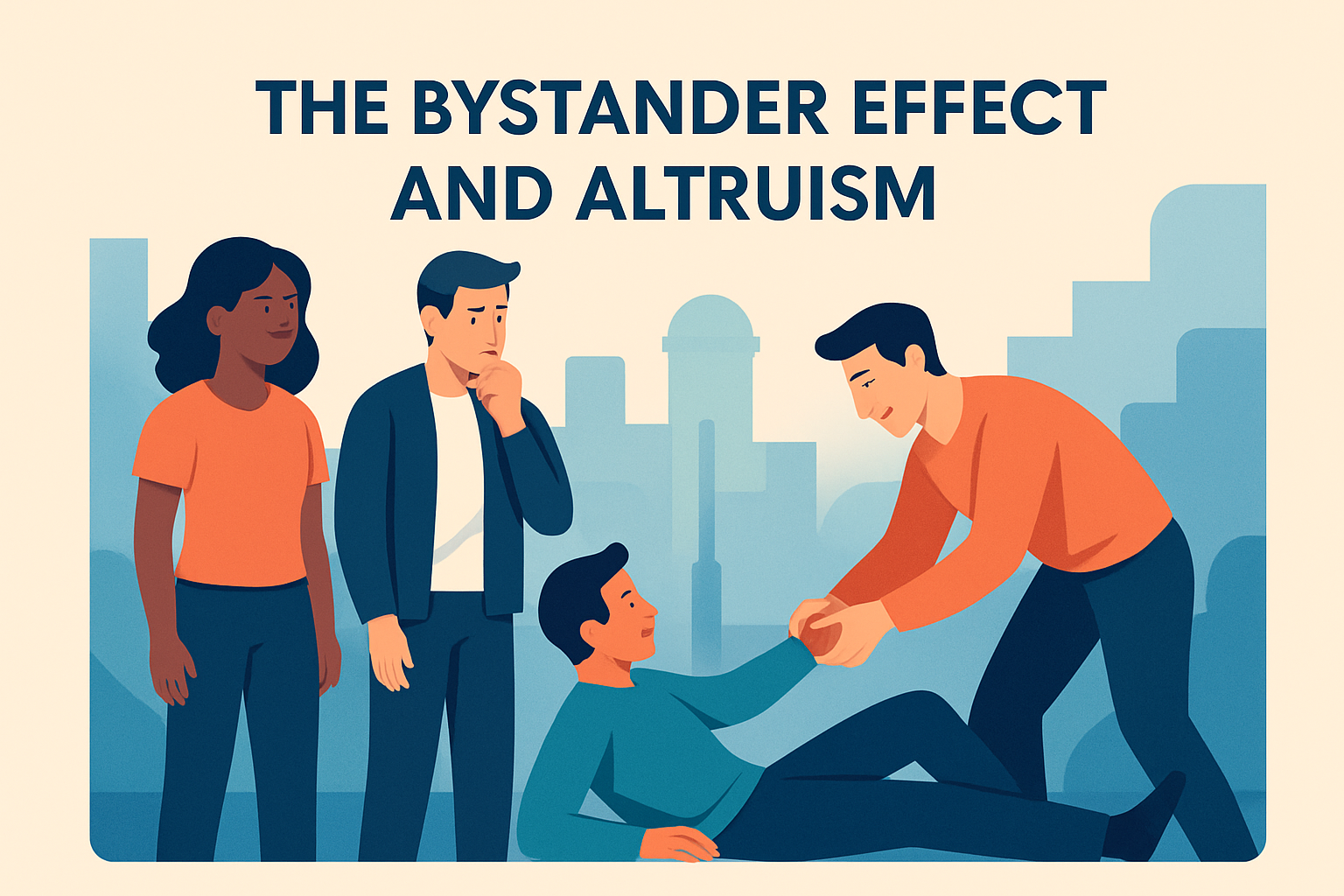
The concept of the bystander effect refers to a psychological phenomenon where individuals are less likely to offer help to a victim when other people are present. The more bystanders there are, the less likely it is that any one of them will step forward to assist. This peculiar behavior has been studied extensively since the 1960s and continues to spark interest in behavioral psychology and sociology. On the other hand, altruism is the selfless concern for the well-being of others, which seemingly contradicts the bystander effect. Understanding these concepts is essential as they reveal much about human social behavior and the ethical and moral responsibilities we hold within our communities. If we can understand the mechanisms that lead to inaction in emergencies, we can cultivate environments that nurture altruistic behavior, leading to more supportive societies.
The Origins and Psychology Behind the Bystander Effect
The term “bystander effect” was coined following the infamous case of Kitty Genovese in 1964, where reportedly 38 witnesses did nothing to help as she was attacked in New York City. Researchers John Darley and Bibb Latané commenced a series of experiments to understand this effect. They proposed that the diffusion of responsibility among witnesses reduces the likelihood of action because each bystander assumes someone else will intervene. For instance, in a study where participants believed they overheard an intercom seizure, those who thought they were alone were far more likely to seek help than those who believed they were part of a larger group. The bystander effect stems from social and psychological factors such as ambiguity, fear of judgment, and partnership inaction, causing rationalizations for non-action.
Despite the often cited Genovese case, new research suggests the case might have been inaccurately reported. Conflicting accounts highlight the complexity of the bystander effect in real-world scenarios. Nevertheless, laboratory settings replicate the consistent theme that individual responsibility diminishes as group size grows, valid across cultures and contexts.
Real-World Examples of the Bystander Effect
Beyond the Genovese case, other alarming instances illustrate the bystander phenomenon. For example, the murder of Shanda Sharer involved witnesses and bystanders who were aware of her distress but failed to intervene in time. Similarly, video evidence of crimes and assaults often show crowds of people standing by, recording rather than acting. This apathy can sometimes be attributed to the “crowded desert” effect, where a dense population generates an illusion of safety and shared responsibility. Experts argue that increased urbanization and digital engagement exacerbate this phenomenon by fostering disconnection among individuals. In contrast, actions from trained professionals, such as police or healthcare workers, highlight that increased likelihood of intervention results when the perception of personal responsibility is clear.
Altruism and Its Underlying Motives
Contrary to the bystander effect, altruism involves actions taken to benefit others without expecting personal gain. Distinct forms of altruism exist, such as kin altruism, reciprocal altruism, and group-based altruism, each driven by different motivating factors. For example, kin altruism prioritizes the survival and well-being of family members, explained via evolutionary psychology in terms of gene preservation. Reciprocal altruism involves the exchange of favors among non-kin, where helping others increases the likelihood of receiving help in return, thus strengthening social bonds. Group-based altruism emerges from allegiance to societal or communal values, as seen in volunteer work or charitable giving, where individuals seek to improve the collective welfare.
Various external and internal factors enhance altruistic behavior. Empathy plays a critical role, fostering emotional connections that drive compassionate acts. Moreover, cultural and societal norms establish and reinforce expectations of altruism, defining shared responsibilities within communities. The power of observation and role modeling further encourages altruistic behavior; when people witness acts of kindness, they are more likely to emulate them.
Visual Representation of Motivations for Altruism
| Type of Altruism | Motivation | Example |
|---|---|---|
| Kin altruism | Gene preservation | Parents caring for children |
| Reciprocal altruism | Building social connections | Exchanging favors |
| Group-based altruism | Community welfare | Volunteering in a local shelter |
Combating the Bystander Effect Through Promoting Altruism
Mitigating the bystander effect and promoting altruism involves a multifaceted approach. Raising awareness of the bystander effect itself can incite individuals to consciously overcome the barriers of shared responsibility. Educational initiatives and public campaigns can emphasize the importance of stepping forward to offer help, bolstering a community’s collective sense of accountability. Training programs for emergency response not only teach practical skills but also reinforce personal responsibility, empowering individuals to act swiftly under pressure.
Creating environments that foster empathy and connectedness is equally crucial. Promoting social engagement and reducing isolation facilitate empathetic understanding and responsiveness. Research indicates that when people see others actively intervening in emergency situations, the likelihood of mimicking this helpful behavior increases significantly. By embedding altruistic values into societal norms and everyday practices, upholding these ideals becomes second nature, gradually diluting the negative impact of the bystander effect.
The Role of Social Media in Amplifying or Diminishing the Bystander Effect
Social media presents a unique paradox. On one hand, it connects individuals globally, often allowing actions driven by collective consciousness and providing platforms for social activism. Viral campaigns advocating immediate intervention in crises effectively rally resources and prompt quick responses. On the other hand, it can enable passive observation or “slacktivism,” where people believe that liking or sharing a post replaces substantive action. The apparent detachment inherent in digital interactions risks reinforcing a benign neglect of available aid, akin to the traditional confines of the bystander effect.
Strategically leveraging the potential of social media, therefore, requires a balance between awareness-raising and active participation. Encouraging individuals to take concrete steps, such as signing petitions or participating in community forums, aligns the incentives toward tangible outcomes beyond digital awareness.
Conclusion: Encouraging Proactive and Altruistic Behavior
Understanding the dynamics of the bystander effect and cultivating altruism is critically important in our interconnected world. The bystander effect sheds light on the collective hesitance in urgent scenarios, whereas altruism underscores the profound impact of selfless aid. By decoding these behaviors, individuals and communities can implement strategies to transform apathy into action. Building communal resilience entails fostering empathy, education, and responsibility.
Ultimately, the choice to intervene is both a personal and societal mandate. Encouraging this mindset fosters a supportive network where people help one another not due to obligation but through genuine altruism. Next time you find yourself witnessing a situation where someone may need assistance, ask yourself: am I waiting for someone else to step forward, or can I be the first to help?
Frequently Asked Questions
1. What exactly is the Bystander Effect?
The Bystander Effect is a social psychological phenomenon where individuals are less inclined to offer help to someone in need when there are other people around. This tendency increases with the number of bystanders present. It’s based on the idea that when we’re in a group, we often look to others for cues on how to behave. If no one steps up, we assume help isn’t needed, or we might think someone else will do it. This behavior was first studied in detail following the infamous 1964 murder of Kitty Genovese in New York City, where numerous people witnessed the attack but didn’t intervene. The Bystander Effect can be influenced by various factors, including group dynamics, perceived social norms, and individual reluctance to become involved in a situation that seems complex or dangerous.
2. Can you explain the relationship between the Bystander Effect and Diffusion of Responsibility?
Absolutely! The Diffusion of Responsibility is a crucial concept tied to the Bystander Effect. It refers to the idea that when more people are present, individuals feel less personal responsibility to take action. In other words, each bystander thinks, “I don’t have to do anything; surely someone else will.” This mindset makes it less likely that anyone will step forward to assist, as everyone assumes someone else will intervene. The presence of others dilutes a person’s sense of accountability, which can lead to inaction, even in critical situations requiring urgent help. This effect becomes particularly pronounced in large groups, where an individual’s role is minimized, and the fear of making a wrong decision or flouting social expectations can further compound inaction.
3. How does altruism fit into the context of the Bystander Effect?
Altruism and the Bystander Effect often seem at odds with each other, as altruism is the selfless concern for others’ wellbeing. Despite the Bystander Effect suggesting that people often don’t help when others are around, altruism shows that at times, individuals do act out of genuine care for others without expecting anything in return. Researchers have found that certain factors can motivate altruistic behavior, even in the presence of others. These include when a bystander feels a personal connection to the person in need, has similar experiences, receives clear social cues that help is necessary, or if the urgency of the situation triggers an empathetic response. Altruistic acts are indeed more common when a person feels a strong moral obligation, empathizes with the victim, or perceives themselves as capable of helping efficiently.
4. Are there ways to counteract the Bystander Effect?
Yes, there are several strategies to counteract the Bystander Effect. One approach is to be aware of this phenomenon and consciously make decisions to act, even when others aren’t. Educating people about the Bystander Effect can increase their likelihood of stepping up in critical moments. Developing a sense of moral obligation and empathy can also prompt action. In emergency situations, being specific when seeking help can make a difference; for example, pointing to a specific person and asking them to call for help can reduce the diffusion of responsibility. Creating a more supportive social culture, where helping others is seen as normative and encouraged, can gradually reduce the impact of the Bystander Effect.
5. Can modern technology influence the Bystander Effect and altruistic behavior?
Innovatively, technology can have both positive and negative impacts on the Bystander Effect and altruism. On one hand, the prevalence of smartphones and social media means that incidents are often recorded and shared, which can sometimes discourage people from intervening directly, as they might feel their role is merely to observe or document. However, the flip side is that technology can also mobilize support and make it easier to alert authorities or spread awareness about a situation. Social media platforms can foster communities that encourage altruism, educate about the Bystander Effect, and share stories of positive interventions, thus inspiring pro-social behavior. Additionally, online platforms and apps are increasingly being used to train people in emergency response skills, enhancing their confidence to act when necessary.