
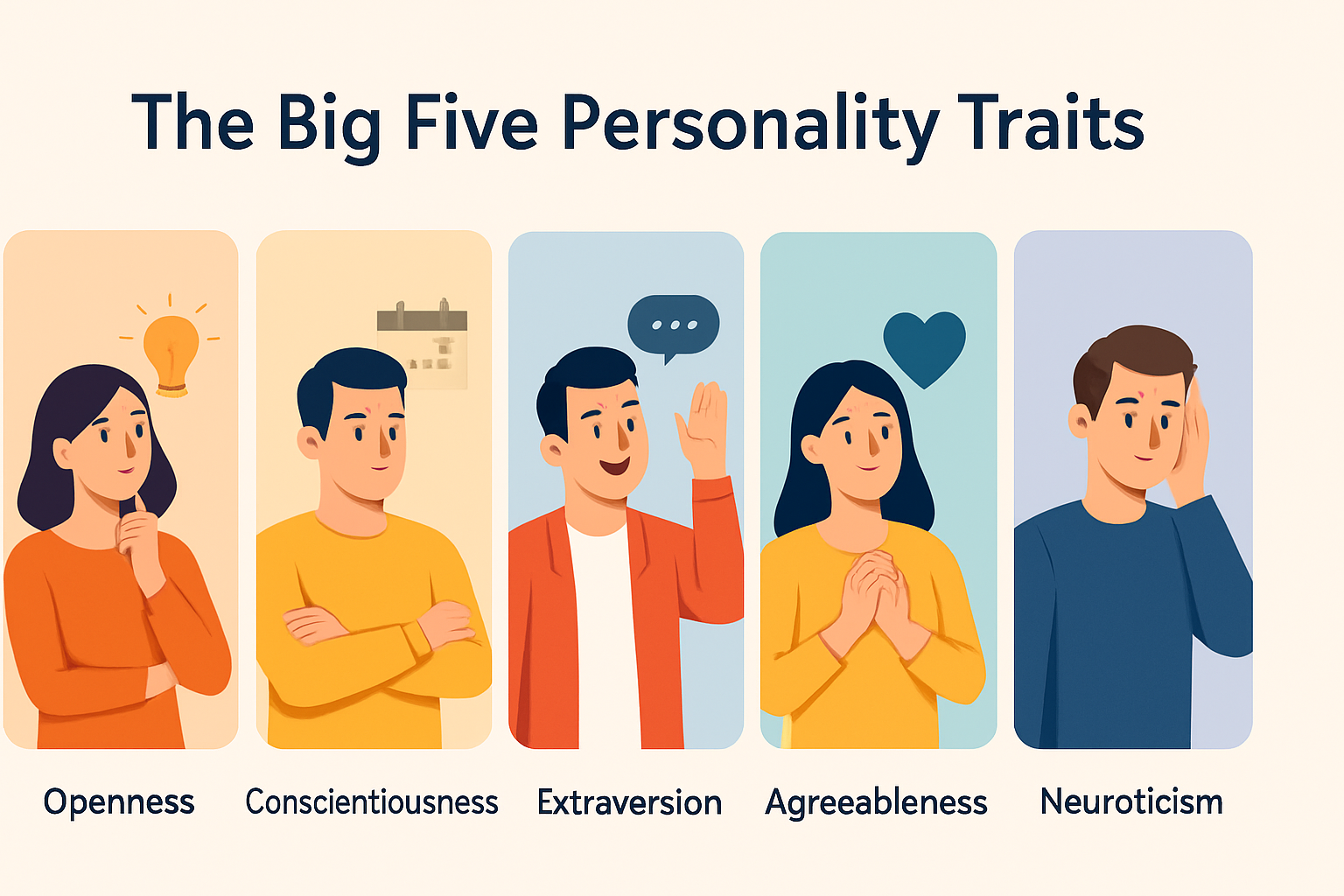
Introduction to the Big Five Personality Traits
The Big Five Personality Traits, also known as the Five-Factor Model (FFM), is a fundamental theory used to measure and understand human personality. This model has gained significant popularity and validation in the field of psychology due to its robust structure and comprehensiveness. It encompasses five broad dimensions of personality: Openness to Experience, Conscientiousness, Extraversion, Agreeableness, and Neuroticism. These dimensions provide a framework for understanding how individuals differ in their thoughts, emotions, and behaviors.
First developed during the 20th century, the Big Five model emerged from the study of language and the natural categorization of personality characteristics. Its emergence and refinement were achieved through lexical analysis, which involved cataloging and analyzing adjectives found in the dictionary that describe personality. The idea is that the core dimensions of personality are encapsulated by language since language reflects the most fundamental traits people use to describe each other.
Understanding the Big Five Personality Traits is crucial for numerous reasons. For individuals, it provides a lens to reflect on personal strengths and areas for development. For professionals in human resources or team management, it aids in optimizing team dynamics and improving interpersonal relationships. In personal relationships, it fosters empathy and understanding. Ultimately, understanding these dimensions contributes to greater self-awareness and a deeper comprehension of the people around us. It’s an essential tool not just for psychologists, but also for anyone interested in human behavior.
Exploring Each of the Big Five Personality Traits
Openness to Experience
Openness to Experience is characterized by an inclination towards creativity, curiosity, and a willingness to explore novel ideas and experiences. Individuals high in Openness tend to be more imaginative, eager for knowledge, and open-minded. They are often more inclined towards artistic pursuits and enjoy participating in various cultural activities.
A real-world example of high Openness can be seen in artists and inventors who are constantly learning new art forms or exploring innovative solutions. Conversely, individuals with lower Openness may prefer routine and traditional approaches and may not enjoy change or novel experiences as much.
Conscientiousness
Conscientiousness reflects how reliable, organized, and prudent an individual is. High Conscientiousness is associated with being disciplined, efficient, and responsible. People who score high on this trait are typically good at planning and executing tasks and are often viewed as reliable by others.
Consider the example of a project manager: high Conscientiousness is crucial as it facilitates the ability to manage timelines, adhere to budgets, and ensure team accountability. In contrast, someone with low Conscientiousness may struggle with organization and procrastination.
Extraversion
Extraversion encompasses traits such as sociability, assertiveness, and enthusiasm. Extraverts are outgoing and find energy in social interactions. They are often perceived as having a lively demeanor and tend to enjoy being the center of attention in social contexts.
In social domains such as sales or entertainment, high Extraversion can be a significant asset. A salesperson, for example, benefits from engaging easily with clients. Those lower in this trait may prefer solitude and solitary activities, finding extensive social interactions draining.
Agreeableness
Agreeableness measures a person’s tendency to be compassionate and cooperative rather than suspicious and antagonistic. High Agreeableness is indicative of empathy, kindness, and supportiveness, creating harmony in personal and professional relationships.
An educator with high Agreeableness is likely to create a nurturing classroom environment, supporting students both academically and emotionally. Low Agreeableness, however, might manifest in competitiveness or critical behavior, which could strain relationships.
Neuroticism
Neuroticism is associated with emotional instability and the tendency to experience negative emotions such as anxiety and irritability. Individuals high in Neuroticism may react more intensely to stressors, often perceiving situations as more threatening than they are.
An example of high Neuroticism can be seen in high-pressure environments like emergency services, where individuals need to manage their stress levels effectively to avoid burnout. A person low in Neuroticism may remain calm under pressure, showing emotional resilience.
Real-World Application and Insights of the Big Five
The Workplace and Organizational Behavior
In the workplace, the Big Five Personality Traits serve as a valuable tool for human resource departments and management teams. By understanding individual differences in personality, organizations can make informed decisions regarding job placements, team compositions, and leadership roles. For example, high Conscientiousness is a predictor of job performance, particularly in tasks requiring attention to detail and adherence to procedures.
Extraversion and Agreeableness, on the other hand, play a significant role in workplace culture and team collaboration. People high in Agreeableness contribute to a supportive and cooperative environment, enhancing team cohesion. In contrast, high Extraversion may be beneficial in roles requiring social engagement and networking, such as public relations or customer service.
| Trait | High Level Characteristics | Suitable Roles |
|---|---|---|
| Openness | Creative, open-minded | Research, Art |
| Conscientiousness | Organized, responsible | Management, Accounting |
| Extraversion | Outgoing, energetic | Sales, Public Relations |
| Agreeableness | Empathetic, cooperative | Teaching, Caregiving |
| Neuroticism | Emotionally resilient | Emergency Services |
Personal Relationships and Compatibility
Within personal relationships, awareness of the Big Five can enhance compatibility and conflict resolution. Partners who understand each other’s personality traits can better navigate situations that may lead to disagreements. For example, if one partner has high Neuroticism and the other high Conscientiousness, they might find a balance where one encourages planning and the other expresses concerns constructively, preventing unnecessary conflicts.
Extraversion and Agreeableness are key in maintaining a positive interpersonal dynamic. Individuals high in these traits are more likely to engage in behaviors that promote relationship satisfaction, such as active listening and expressing affection.
Education and Learning Styles
The Big Five also has applications in educational settings by recognizing that different personality traits affect learning styles. Openness to Experience contributes significantly to how students engage with abstract concepts and creative subjects. Students with high Openness may thrive in exploratory learning environments that encourage critical thinking and imagination.
Conscientiousness plays a role in academic success, influencing time management and persistence when faced with challenging tasks. Conversely, a student high in Neuroticism might benefit from support systems that help manage exam anxiety and stress to optimize their performance and well-being.
Conclusion: Embracing the Big Five for Growth
The Big Five Personality Traits provide invaluable insights into understanding human behavior and personality. They help illuminate why people think, feel, and act differently in similar situations and the impact of these differences on personal and professional interactions. By recognizing and embracing these traits, individuals can grow personally, enhance their relationships, and leverage their strengths in various environments.
The practical benefits of applying the Big Five model are far-reaching. They serve as a guide to greater self-awareness, allowing individuals to apply their strengths effectively and address areas for growth. In a broader sense, this model fosters empathy and better communication across diverse social and cultural settings.
To leverage the insights from the Big Five, take the time to explore your own personality and reflect on how these traits manifest in your life. Consider taking a verified personality assessment to gain a detailed understanding. Seek feedback from others around you, and use this knowledge to enhance your personal development journey and make informed decisions moving forward.
Frequently Asked Questions
1. What are the Big Five Personality Traits and why are they important?
The Big Five Personality Traits, also known as the Five-Factor Model, consist of five broad domains that help describe human personality. These traits are Openness to Experience, Conscientiousness, Extraversion, Agreeableness, and Neuroticism. Each one covers a specific aspect of your personality. Openness includes your level of creativity and willingness to try new things. Conscientiousness measures how responsible and organized you are. Extraversion assesses your sociability and enthusiasm. Agreeableness looks at your kindness and cooperative nature. Finally, Neuroticism evaluates your emotional stability and how you deal with stress.
Understanding these traits is crucial because they are incredibly useful in predicting human behavior, personal relationships, and even career success. They provide a comprehensive framework for researchers and clinicians to study personality and also help people gain insight into their strengths and weaknesses, guiding personal and professional development.
2. How were the Big Five Personality Traits developed?
The development of the Big Five Personality Traits came from a long history of research in psychology. It started with the lexical hypothesis, which posits that significant personality differences are encoded in language. Early studies conducted by Allport and Odbert in the 1930s involved collecting thousands of words that describe personality traits. Over time, analysts like Raymond Cattell refined these lists into fewer manageable categories.
Subsequently, through various statistical analyses, particularly factor analysis, researchers such as Lewis Goldberg narrowed down these traits to five highly significant factors. The model gained consensus among psychologists in the 1980s and has been validated through extensive research across different cultures and languages, proving that the Big Five represents universal traits of human personality.
3. Can the Big Five Personality Traits change over time?
Yes, the Big Five Personality Traits can change over time, although they tend to be relatively stable, especially in adulthood. Research indicates that personality is influenced by both genetic and environmental factors. Life experiences, relationships, and even significant life events like marriages, divorces, and career changes can cause shifts in one or more of these traits. Generally, people might become more conscientious and agreeable as they age, while other traits such as openness to experience may decline. However, the degree of change varies, and personality traits can differ substantially across different life stages and contexts.
4. How are the Big Five Personality Traits measured?
The Big Five Personality Traits are typically measured using self-report questionnaires and surveys. The most common tool is the NEOPI-R, which stands for the Neuroticism-Extraversion-Openness Personality Inventory-Revised. It includes a series of statements about general behavior and preferences that respondents rate in terms of accuracy or agreement. Other measures, such as the Big Five Inventory (BFI) and the Ten-Item Personality Inventory (TIPI), are used for shorter assessments. These tests provide scores indicating where someone falls on the spectrum for each trait, making it easier to compare personality profiles across individuals.
5. How do the Big Five Personality Traits impact career choices?
The Big Five Personality Traits have been shown to have a significant impact on career choices and job performance. For example, people who score high in conscientiousness often excel in roles that require attention to detail, reliability, and persistence. They tend to be successful in organizational settings where their ability to plan and execute tasks is valued.
Extraverts may thrive in social environments and often pursue careers in sales, public relations, or entertainment. Those high in agreeableness usually excel in roles that involve teamwork and support, such as counseling, teaching, or positions in customer service. On the other hand, people who exhibit high levels of openness might be drawn to creative industries or careers that allow for innovation and new experiences, like research or arts. Understanding where you fall in these personality dimensions can help guide career decisions and increase job satisfaction.