
Introduction
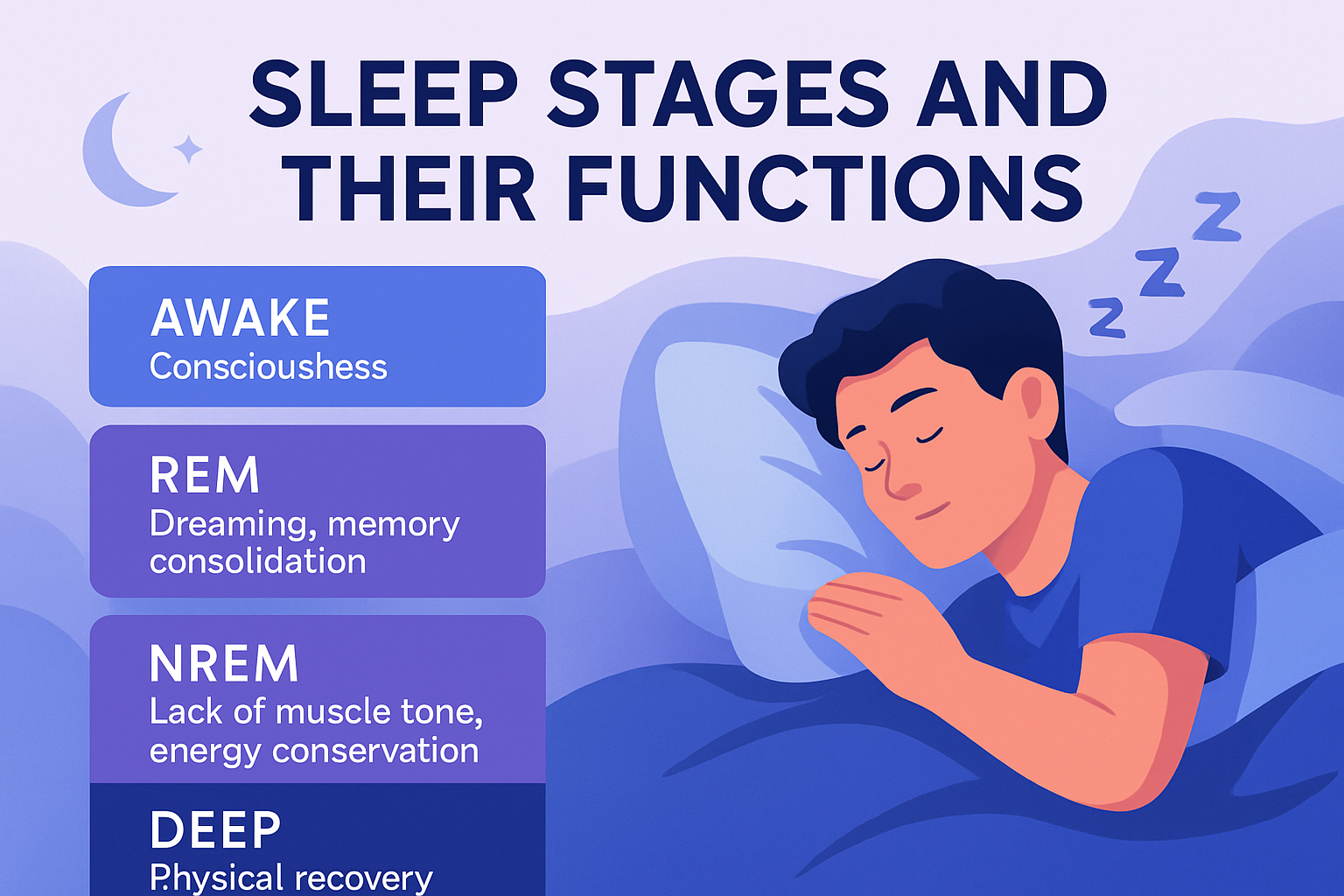
Sleep is an essential physiological process, deeply embedded in the human biological system. It plays a crucial role in maintaining our overall health and well-being. Understanding the stages of sleep and their functions can help highlight the significance of this nightly ritual and how it impacts various aspects of our lives. The human sleep cycle consists of several stages, each with distinct characteristics and purposes. These stages are part of what scientists refer to as the sleep architecture, encompassing both non-rapid eye movement (NREM) sleep and rapid eye movement (REM) sleep. Given the modern lifestyle with its inherent stressors and technology-related disturbances, it has become more critical than ever to understand sleep’s integral role in life. Analyzing the complex architecture of sleep aids in identifying sleep disorders, ensuring adequate rest, and optimizing performance, thereby offering a blueprint for improved quality of life. This article will delve into each sleep stage, examining its functionality and significance.
NREM Sleep: The Basics
The non-rapid eye movement (NREM) stage comprises most of the sleep cycle and is typically divided into three phases: N1, N2, and N3. Understanding these stages is crucial since they collectively form the foundation of restorative sleep.
N1, the lightest sleep stage, acts as the bridge between wakefulness and sleep. It is characterized by a transition from relaxed wakefulness to sleep and usually lasts only a few minutes. During this stage, muscle activity decreases, and the eyes move slowly. Within this phase, individuals can easily be awoken without realizing they have even been asleep. An adult spends roughly 5% of their sleep cycle in this phase.
Next comes N2, marking the onset of true sleep. Around 50% of sleep is spent in this phase. During N2, conscious awareness of the external environment fades completely, body temperature drops, and heart rate slows down. Additionally, sleep spindles and K-complexes, two distinct patterns of brain wave activity in N2, play a crucial role in memory consolidation and learning. This phase ensures that you are subtly disconnected from your surroundings, effectively preparing your body for the deeper sleep stages.
N3, also known as slow-wave sleep or delta sleep, is often considered the most restorative sleep stage. The brain produces delta waves, which are associated with the deepest sleep and it is during this stage that the body focuses on repairing tissues, growing muscle, strengthening the immune system, and regenerating cell structures. It is particularly vital for overall health. An example of its importance can be seen in athletes, who often require more N3 sleep than average individuals due to its role in physical recovery. For average adults, approximately 20% of the sleep cycle is spent in this phase.
REM Sleep: The Dream Stage
Rapid eye movement (REM) sleep is distinct not only for its characteristic eye movement but also for being the stage during which most dreaming occurs. Usually commencing after 90 minutes of sleep, REM’s significance cannot be overstated in its contribution to mental and emotional health.
During this phase, brain activity intensifies, nearing levels seen when we are awake, despite the body remaining temporarily paralyzed. This paralysis, called REM atonia, prevents individuals from acting out their vivid dreams. REM sleep plays an integral role in cognitive functions, particularly memory and emotional regulation. It is believed that dreams process and store emotions and experiences, aiding in problem-solving and creative thinking. A real-world example demonstrates the efficacy of REM in emotional regulation through the enhanced ability to cope with difficult emotions following a good night’s rest.
Though only accounting for about 20-25% of the sleep cycle, the REM stage is significant. Interruptions during this stage can affect mental health, manifesting as mood disorders and impaired cognitive function. Individuals experiencing prolonged REM sleep disruptions may suffer from conditions like anxiety or depression. Thus, ensuring adequate REM sleep becomes crucial for overall mental health stability.
Real-World Implications of Sleep Deprivation
In contemporary society, many grapple with sleep deprivation, often failing to appreciate its broad-reaching consequences. Lack of proper sleep significantly disrupts the natural progression through sleep stages, leading to health detriments.
Chronic sleep deprivation affects memory retention, emotional regulation, attention deficits, and decreased problem-solving abilities, largely due to missed crucial REM and N3 sleep stages. An apt real-world illustration is evident in the workplace, where performance fluctuations in sleep-deprived employees often translate to reduced productivity and efficiency, alongside increased workplace accidents and errors.
A lack of restorative sleep amplifies the body’s vulnerability to illnesses, contributing to chronic health issues like obesity, diabetes, hypertension, and cardiovascular diseases. Approximately 20% of serious vehicle crashes have a strong correlation to sleep deprivation, attributable to impaired reaction times and decision-making abilities, further emphasizing the importance of maintaining consistent, uninterrupted sleep cycles.
Table of Sleep Stage Functions
| Stage | Brain Activity | Key Functions | % of Sleep |
|---|---|---|---|
| N1 | Mixed-frequency waves | Transition from wakefulness | 5% |
| N2 | Sleep spindles, K-complexes | Memory consolidation | 50% |
| N3 | Delta waves | Physical recovery, cellular repair | 20% |
| REM | High brain activity | Dreaming, emotional processing | 20-25% |
Improving Sleep Hygiene
Recognizing the importance of the different stages of sleep compels us to adopt better sleep habits. Sleep hygiene refers to the practices and routines that facilitate quality sleep and allow for the effective passage through each cycle.
Adopting consistent sleep routines by going to bed and waking up at the same time daily, even on weekends, can significantly stabilize the body’s circadian rhythms. Creating a sleep-conducive environment—such as a comfortable mattress, cool room temperature, darkness, and minimizing noise—also enhances sleep quality.
Moreover, reducing caffeine intake, avoiding heavy meals close to bedtime, and limiting exposure to screens emitting blue light before sleep can help in maintaining the optimal progression of sleep stages. A real-world practice involves incorporating relaxation techniques like meditation or yoga as pre-sleep rituals, which help in calming the mind and preparing the body for restorative sleep.
Conclusion
The exploration of sleep stages and their distinct functions underscores the complexity and centrality of sleep in our daily lives. Each stage, from NREM’s initiation and strengthening of memory to REM’s critical role in emotional processing, collectively contributes to mental and physical well-being. Through recognizing these stages, the ramifications of sleep deprivation become evident, revealing the intricate link between sleep quality and overall health.
For individuals seeking improved health, productivity, and mental clarity, prioritizing sleep becomes indispensable. This means embracing robust sleep hygiene practices and creating conducive environments tailored for restorative sleep. By grasping and appreciating the functions of sleep stages, readers are encouraged to take proactive steps toward fortifying their health. As a closing thought, consider committing to improving sleep habits this week to reap the long-term benefits of quality sleep. After all, understanding that a third of our lives are spent asleep elevates its importance and impact on the remaining two-thirds.
Through conscious effort to enhance sleep, we lay the foundation for thriving in all facets of life.
Frequently Asked Questions
What are the different stages of sleep and what do they entail?
Sleep is commonly divided into two main types: Non-REM (Rapid Eye Movement) sleep and REM sleep. Non-REM sleep is itself divided into three stages: N1, N2, and N3. Each of these stages plays a unique role in our overall sleep architecture.
Stage N1 is the lightest stage of sleep, often called the transition phase from wakefulness to sleep. During this time, muscle activity decreases and eye movements slow down. It’s easy to be awakened during this stage and it functions primarily as the bridge into deeper sleep.
Stage N2 is also considered light sleep but slightly deeper than N1. It is marked by the presence of what are known as sleep spindles and K-complexes which are brief bursts of brain activity. N2 helps in making it harder to awaken the sleeper and contributes significantly to physical relaxation.
Stage N3, often referred to as slow-wave sleep or deep sleep, is the most restful and restorative phase. This is when your brain waves slow down considerably and your body undergoes essential restorative processes such as tissue growth and repair, energy restoration, and bolstering the immune system. Awakening from this stage can leave one feeling disoriented.
REM sleep, which constitutes about 20-25% of your sleep cycle, is when most dreaming happens. Your brain is almost as active as when you are awake, yet the body is essentially paralyzed – a phenomenon known as REM atonia. REM sleep is crucial for cognitive functions like memory consolidation, learning, and emotional regulation. It’s also thought to be when the brain processes emotional experiences and enhances problem-solving abilities.
How long does each stage of sleep typically last?
The duration of each sleep stage can vary throughout the night, but there are general patterns. A typical sleep cycle lasts about 90 to 110 minutes, during which all the stages of sleep are completed before the next cycle begins. Generally, N1 lasts just 1 to 5 minutes, as it is more of a brief transition phase. N2 is the stage you’ll spend the majority of your sleep time in, typically about 45-55% of the total sleep period, which translates to about 10 to 25 minutes per cycle.
Deep sleep, N3, usually occupies about 13-23% of your total sleep time, translating to 20 to 40 minutes per cycle. Importantly, deep sleep is more prominent in the earlier sleep cycles and decreases as the night progresses. REM sleep becomes more prolonged later in the night and can last up to 10 minutes during the first cycle, but can exceed an hour by the last cycle as the sleep progresses through the night.
Why is REM sleep considered important?
REM sleep is often heralded as essential for several significant cognitive and psychological functions. Firstly, it plays a pivotal role in the consolidation of memories, meaning that it helps in organizing and integrating new information with previously stored memories. This consolidation is essential for learning new skills, recalling facts, and emotional processing.
Furthermore, REM sleep is crucial for emotional regulation. It acts as a brain’s bridge to manage stress and negative emotions, processing them and boosting psychological resilience. Research even suggests that REM disturbances are linked to various mental health issues, including depression and anxiety disorders.
The phase also fosters creativity and problem-solving. Some insights and innovative ideas have been known to magnify during REM sleep due to the unique brain activity pattern present in this stage. The heightened brain activity during REM facilitates complex neurocognitive functions and strengthens neural connections.
What happens if we don’t get enough deep sleep?
Deep sleep, or N3, is absolutely vital for physical restoration. If you are consistently deprived of deep sleep, you may experience a range of negative health consequences. From a physiological standpoint, deep sleep is when your body releases growth hormone, which is crucial for bodily growth and the repair of tissues and muscle development. A lack of deep sleep can thus influence muscle repair and growth negatively.
Furthermore, during N3 sleep, the body’s energy levels are replenished, immune functions improve, and cells perform repair activities. Inadequate deep sleep can lead to fatigue, reduced immune response, and higher susceptibility to illness. It is especially concerning for growth in children and adolescents due to the crucial repair and development processes that are impeded without sufficient deep sleep.
Additionally, insufficient deep sleep can affect cognitive function; people can experience memory issues, concentration difficulties, and slow learning capabilities. Chronic lack of deep sleep is also linked to a greater risk of conditions such as obesity, heart disease, and diabetes.
How do lifestyle factors influence sleep stages?
Various lifestyle factors have a substantial impact on the quality and progression of sleep stages. Firstly, stress and anxiety can interfere with the ability to fall asleep quickly, reducing the time spent in restorative N3 deep sleep and potentially displacing REM sleep, leading to memory, learning, and emotional difficulties.
Caffeine consumption can severely disrupt sleep cycles, primarily by delaying the sleep onset and affecting deep sleep quality. It is known to block adenosine, a chemical that promotes sleep, thus keeping the brain awake longer and reducing deep and REM sleep time.
Alcohol, while initially sedative, may fragment sleep cycles and disrupt time spent in the REM stage later in the night. This can lead to a lower quality of sleep and impairment in cognitive recovery and emotional balance.
Excessive screen time, especially exposure to blue light from phones or computers before bedtime, can suppress melatonin production. Melatonin is a hormone which regulates sleep-wake cycles, and reduced production can lead to difficulties in achieving quick sleep onset and proper sleep cycles.
Healthy lifestyle choices like regular exercise (preferably not close to bedtime) promote better sleep quality by aiding in deeper restorative stage cycles. Ensuring a dark, quiet, and comfortable sleep environment also supports the body’s natural progression through the therapeutic stages of sleep.