
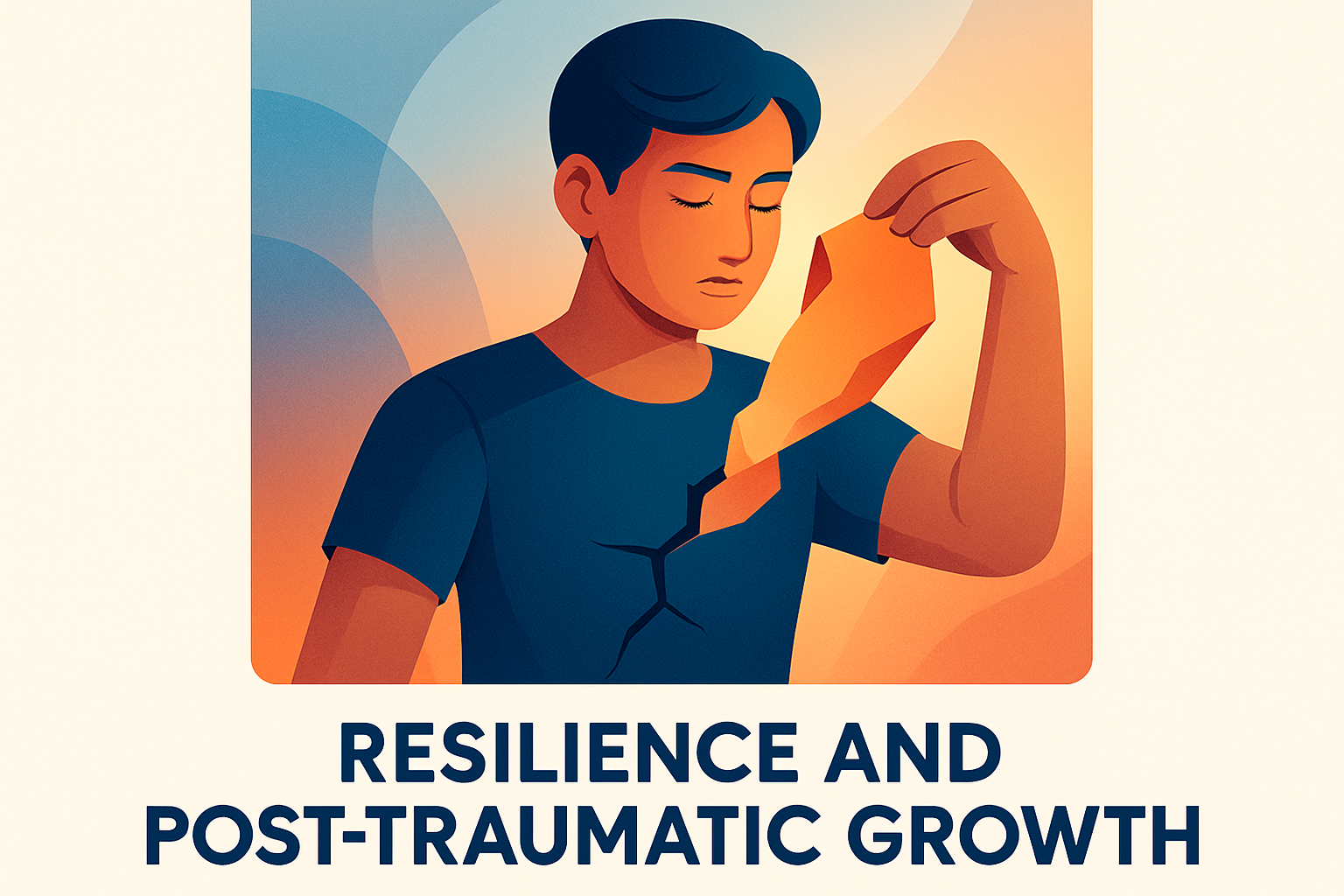
Resilience and post-traumatic growth are transformative concepts that are gaining increasing attention in psychological and wellness contexts. Resilience refers to the ability of individuals to bounce back from adversity, trauma, or significant stress. It is akin to psychological sturdiness allowing someone to maintain or return to baseline functioning. On the other hand, post-traumatic growth (PTG) occurs when individuals not only recover from a challenging experience but also experience positive growth as a result, leading to improvements in aspects of life such as relationships, self-perception, and life philosophy. These complementary concepts matter because they can radically change our understanding and management of trauma, helping individuals not just survive but truly thrive beyond their adversities.
Understanding both resilience and post-traumatic growth opens pathways to developing supportive environments and psychological interventions to empower individuals navigating life’s inevitable challenges. By exploring the nuances of these phenomena, we cultivate a toolkit for fostering mental wellness across various domains. Grasping the depth of these concepts is crucial for practitioners and individuals alike as they foster ways to cope with and transcend life’s adversities.
Understanding Resilience
Resilience is often seen as the foundation of mental toughness that allows individuals to withstand and adapt to life’s tribulations. A real-world example of resilience is seen in communities affected by natural disasters, such as hurricanes or earthquakes. Despite the destruction, communities often come together, rebuilding and supporting each other, showcasing the resilient spirit of individuals. For instance, in the aftermath of Hurricane Katrina, the residents of New Orleans demonstrated remarkable resilience by reconstructing their city and preserving cultural heritage, despite immense loss and hardship.
In plain terms, resilience is the psychological tool that helps people navigate stress. It’s about adaptability and maintaining psychological stability amidst chaos. Developing resilience involves cultivating a positive mindset, strengthening problem-solving skills, and fostering social support systems. These elements create a cushion for individuals, allowing them to cope with difficulties and prevent long-term psychological detriment from stressful experiences.
Exploring Post-Traumatic Growth
Post-traumatic growth refers to the positive psychological changes and development that can occur after working through trauma. While resilience stabilizes, PTG propels individuals toward transformative change. An illustrative example of PTG is seen in survivors of serious illnesses, such as cancer. Many report enhanced appreciation for life, deepened relationships, and renewed purposes after navigating the arduous journey to recovery. This transformation doesn’t mean the absence of pain or distress, but rather the emergence of new perspectives and priorities.
Understanding PTG in simple terms involves recognizing the potential for individuals to evolve positively after crises. This growth might manifest in improved relationships, greater personal strength, and the development of a more meaningful life. Encouraging PTG requires a supportive environment, therapy, and an individual’s willingness to find meaning in their circumstances.
Resilience vs. Post-Traumatic Growth: Key Differences
While resilience and PTG are interconnected, they are distinct paths. Resilience focuses on recovering and returning to functioning after adversity. In contrast, PTG is about surpassing previous levels of functioning and gaining enriching experiences from the trauma faced. A tangible way to explore this is by examining military veterans. Many show resilience by transitioning smoothly back into civilian life, maintaining their pre-deployment functioning. Others experience PTG, harnessing their experiences to foster community leadership or engage in advocacy, thus achieving personal and civic growth.
These differences highlight the varied pathways people take following trauma, underlining the importance of personalized approaches in therapeutic settings. Individual differences, including personality traits, support systems, and external resources, largely influence whether a person experiences resilience or PTG.
Building a Resilient Mindset
Building resilience involves cultivating a mindset equipped to handle stressors effectively. Research indicates that resilience can be learned and enhanced through intentional strategies. Techniques such as cognitive-behavioral therapy (CBT) are effective in teaching individuals to reformulate negative thoughts and effectively address stress. Countless workshops and resilience-training programs emphasize mindfulness, stress management, and emotional regulation to create a robust psychological framework.
| Strategy | Description |
|---|---|
| Mindfulness | Practice being present and fully engaging with the here and now, helping to reduce stress. |
| Emotional Regulation | Strategies to manage and respond to emotional experiences in a healthy way. |
| Social Support | Building networks of supportive family and friends to lean on during tough times. |
| Problem-Solving Skills | Developing the ability to analyze situations effectively and find practical solutions. |
By embedding these strategies in daily life, individuals can foster resilience, framing challenges as opportunities for growth rather than insurmountable hurdles. This mindset not only aids in recovery from specific events but also prepares one for future adversities.
Fostering Post-Traumatic Growth
Facilitating post-traumatic growth involves creating opportunities for individuals to reflect, rebuild, and find new meaning. Psychological support, such as therapeutic settings, plays a crucial role in fostering PTG. Therapy can assist individuals in processing trauma, challenging negative belief systems, and exploring meaningful goals beyond their experiences. Storytelling and sharing experiences, whether through support groups or creative outlets, also help individuals articulate personal growth narratives.
A compelling real-world example is the emergence of organizations such as TAPS (Tragedy Assistance Program for Survivors), which provides support for grieving military families. By engaging with personal stories, the organization helps individuals process loss constructively, highlighting stories of personal growth and community, turning shared pain into collective strength.
The encouragement of PTG focuses on shifting perspectives, valuing new insights, and leading to enriched transformations. This not only enhances personal well-being but also contributes to the broader community by inspiring shared resilience and growth.
The Interplay Between Resilience and PTG
Though distinct, resilience and PTG often intertwine, each enhancing the potential for the other. Resilience can facilitate PTG by maintaining a stable foundation, from which individuals can engage in deeper reflection and pursuit of new goals. Conversely, achieving PTG can bolster resilience, as positive growth reinforces one’s ability to handle future stressors.
For example, individuals who have undergone significant trauma and emerged with newfound goals might be more resilient when facing subsequent difficulties. Their previous growth experience equips them with better strategies and an improved mindset to navigate future life events, highlighting the mutual reinforcement of these concepts.
Understanding their interplay emphasizes the importance of fostering both resilience and growth before and after crises. Doing so can transform adversity into a powerful catalyst for personal and communal evolution.
Conclusion: Harnessing Resilience and Post-Traumatic Growth
In summary, resilience and post-traumatic growth are pivotal to navigating and flourishing in the face of life’s adversities. Resilience allows individuals to maintain stability during crises, while post-traumatic growth takes it a step further, enabling individuals to find meaning and new potential from their experiences. Understanding, nurturing, and promoting these phenomena create a robust framework for realizing personal and collective mental well-being.
By equipping oneself with resilience strategies and acknowledging the potential for growth beyond trauma, individuals and communities can transform their pain into progress. The real power lies in embracing the learning journeys from these challenges, fostering stronger, more resilient societies where individuals aren’t alone in their transitions.
The call to action is simple: reflect on personal challenges, seek supportive networks, and explore avenues for personal growth. Engaging with available resources like therapeutic guidance, community support, and educational tools can begin one’s journey towards resilience and transformative growth—leading to a life not only recovered but redefined and enriched.
Frequently Asked Questions
1. What is resilience, and how does it differ from post-traumatic growth?
Resilience is a fascinating concept within psychology that captures the essence of mental toughness and adaptability in the face of adversity. In simpler terms, it’s the ability to “bounce back” from tough situations such as trauma, loss, or significant life stressors. Imagine it as a mental elastic band that stretches during stress but returns to its shape once the stress has passed. Resilience does not necessarily mean returning unchanged, but rather maintaining basic functioning and coping skills rather effectively.
On the other hand, post-traumatic growth (often abbreviated as PTG) takes this idea a step further. While resilience focuses on recovery and regaining stability, PTG involves experiencing positive change as a result of the struggle with a major life crisis or trauma. It means that while someone has been through a tough time, they have emerged on the other side not just resilient but actually transformed in a way that they have realized new potentials, perceived personal strength, or a greater appreciation for life. Essentially, post-traumatic growth suggests that a person is doing more than just bouncing back; they actually propel themselves forward to reach new heights of personal development.
2. How can one develop resilience?
Building resilience is like building a muscle; it takes time, intentional effort, and consistent practice. First, fostering a viewpoint that considers change to be a normal part of life is foundational. Viewing difficult experiences as surmountable challenges rather than insurmountable obstacles is critical. Additionally, developing strong connections with family, friends, and community is known to help reinforce emotional resilience by providing external support systems.
Establishing realistic goals and working towards them incrementally also fortifies resilience since it creates a clear pathway through adversity. Cultivating self-awareness and understanding personal strengths and weaknesses allow individuals to manage stress better by leveraging those strengths and addressing weaknesses. Furthermore, spiritual practices or engaging in meaningful activities that align with personal values can provide comfort and guidance during tough times, enhancing resilience. Self-care, including maintaining physical health, getting adequate rest, and practicing mindfulness or meditation, cannot be understated. All these elements together create a reservoir of skills and support that bolster an individual’s capacity to withstand life’s hurdles.
3. What are the key signs of post-traumatic growth?
Post-traumatic growth is characterized by profound positive changes in various life domains following adversity. One noticeable sign is an enhanced appreciation of life, where individuals find new joy in previously mundane aspects of daily living. This newfound zest often leads to a change in priorities, where aspects such as relationships and personal time take precedence.
Another sign is improved relationships; individuals may experience a deeper connection to others, often developing a sense of empathy and compassion. Survivors of trauma frequently feel a greater sense of personal strength, with an acknowledgment that they have weathered a storm and emerged more robust and capable than before.
Spirituality or an exploration of existential changes can occur as well, with individuals seeking greater meaning and purpose in life. Lastly, PTG can incite a drive toward new possibilities, encouraging individuals to embrace new opportunities, pursue different paths, or engage in new interests, thus broadening life’s horizon and opening doors previously imagined closed.
4. Can everyone experience post-traumatic growth?
While not every person who undergoes trauma will experience post-traumatic growth, research indicates it’s a relatively common outcome. Several factors can influence whether someone experiences PTG, including the nature of the trauma, personal characteristics, and the available support systems.
One’s baseline level of resilience plays a role, predisposing individuals to perceive their experience in a framework that sees potential growth opportunities. Positive personal attributes like optimism and openness, as well as effective coping strategies, also correlate significantly with the likelihood of PTG. Support from family and community, access to mental health resources, and professional guidance can facilitate the cognitive processing required for growth. Notably, each person’s journey is unique; thus, the potential for post-traumatic growth exists, but its manifestation varies greatly from individual to individual.
5. How does understanding resilience and post-traumatic growth benefit mental wellness practices?
Understanding these concepts enriches mental wellness practices by providing crucial insights into human capacity for recovery and growth following adversity. Knowledge of resilience enables practitioners to design interventions that promote mental toughness and adaptive coping, which are essential components of preventive mental health care.
Integrating awareness of post-traumatic growth into therapy can guide individuals toward recognizing potential positive outcomes from their struggles, fostering hope and motivation. Mental health professionals frequently incorporate these concepts to help individuals navigate through their burdens by building on existing strengths and facilitating the healing process through recognition and expansion of personal capacities. Furthermore, laying focus on resilience and PTG tends to move the narrative from pathology and symptoms toward a more comprehensive understanding of human potentiality, paving the way for holistic healing and long-term wellness. Emphasizing these elements in practice often results in more effective therapeutic outcomes and foster enhanced overall wellbeing for individuals facing life’s varied challenges.