
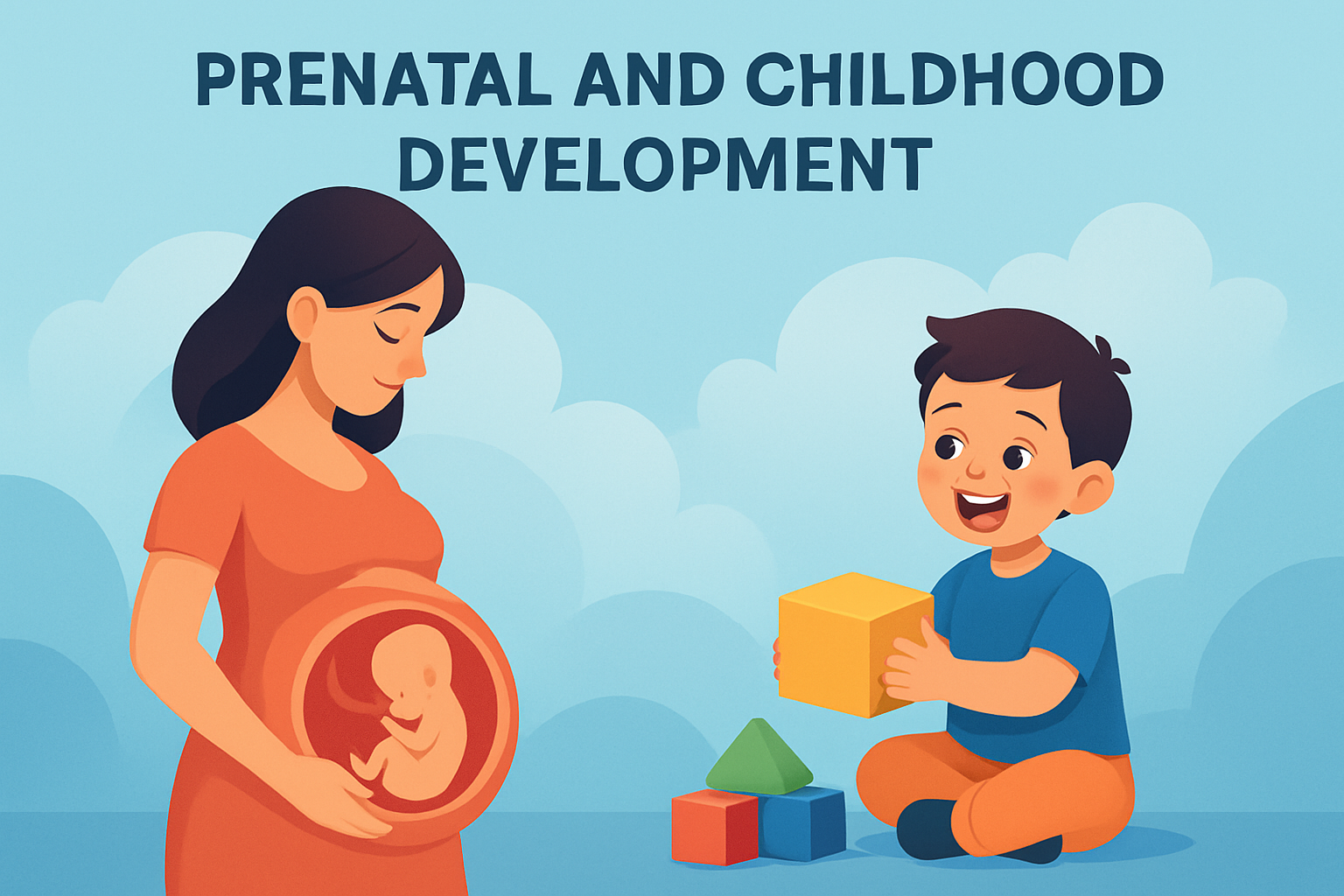
Understanding prenatal and childhood development is crucial in ensuring the healthy growth of children. These stages encompass everything from conception to adolescence, and each phase plays a significant role in shaping an individual’s life trajectory. Prenatal development refers to the process that occurs during the nine months before birth, while childhood development covers the period from birth to adolescence. This topic is essential not only for parents and caregivers but also for educators, healthcare professionals, and policymakers. Recognizing the factors that influence development during these critical stages can lead to better health outcomes and improved societal well-being. This article delves into the intricate details of prenatal and childhood development, providing readers with a comprehensive understanding of these vital life stages.
The Stages of Prenatal Development
Prenatal development is divided into three main stages: the germinal stage, the embryonic stage, and the fetal stage. Each of these stages is characterized by specific developments and changes that are crucial for the formation of a healthy fetus.
- Germinal Stage: This stage lasts from conception to about two weeks. The fertilized egg, or zygote, undergoes rapid cell division as it travels down the fallopian tube toward the uterus. By the end of this stage, the zygote implants itself into the uterine wall, where it begins to form the placenta.
- Embryonic Stage: Spanning from the third to the eighth week, the embryonic stage is when major organs and structures begin to form. This includes the development of the heart, brain, and spinal cord. The embryo is particularly vulnerable during this period, as exposure to harmful substances can cause developmental abnormalities.
- Fetal Stage: Lasting from the ninth week until birth, the fetal stage is characterized by further growth and development of the organs and structures formed during the embryonic stage. By the end of this stage, the fetus is fully developed and ready for birth.
A real-world example of prenatal development challenges is the impact of maternal nutrition on fetal growth. Poor nutrition during pregnancy can lead to low birth weight, which is associated with an increased risk of health issues later in life. Proper prenatal care, including nutritional support, is vital to ensuring optimal fetal development.
Influence of Genetics and Environment on Prenatal Development
The debate between nature and nurture is especially relevant in prenatal development. Genetics play a critical role in determining a child’s inherited traits, such as eye color, hair color, and other hereditary characteristics. However, the environment also significantly influences prenatal development.
For example, a mother exposed to harmful substances such as alcohol or tobacco may pass these negative influences on to her developing fetus, leading to conditions such as Fetal Alcohol Spectrum Disorders (FASD). Conversely, a healthy environment with proper nutrition, exercise, and medical care can lead to positive developmental outcomes.
To better understand the balance between genetics and environment, consider the following:
| Factor | Example | Impact on Development |
|---|---|---|
| Genetics | Inherited diseases like cystic fibrosis | Predisposition to certain health conditions |
| Environment | Exposure to toxins like lead | Possible developmental delays |
Key Stages of Childhood Development
Childhood development is a continuous process that can be divided into several key stages, each with its own characteristics and milestones.
- Infancy (0-2 years): During infancy, rapid physical growth and cognitive development occur. Infants develop basic motor skills, such as crawling and walking, and begin to form secure attachments with caregivers.
- Early Childhood (2-6 years): This stage is marked by significant language development and socialization. Children learn to communicate effectively and engage in imaginative play, which is crucial for cognitive and emotional development.
- Middle Childhood (6-12 years): As children enter school, they continue to develop cognitive skills, such as problem-solving and critical thinking. Social relationships become more complex, and children begin to gain a sense of independence.
- Adolescence (12-18 years): During adolescence, individuals undergo puberty, which includes rapid physical changes. This stage is also marked by increased emotional complexity and the development of a personal identity.
A real-world example of a challenge during childhood development is the impact of socioeconomic status on educational outcomes. Children from low-income families often face barriers to educational attainment, leading to lower achievement levels than their more affluent peers. Addressing these disparities requires targeted interventions, such as access to quality early childhood education and support services.
The Role of Parenting and Education in Childhood Development
Parents and educators play a vital role in shaping a child’s development. The quality of caregiver interactions, emotional support, and educational experiences all contribute to a child’s growth and learning.
Positive parenting practices, such as providing a nurturing and responsive environment, can enhance a child’s social and emotional development. Effective communication and active involvement in a child’s education are crucial for fostering a love for learning and building self-confidence.
For example, consider the impact of reading on child development. Reading to children from an early age stimulates brain development and strengthens language skills. Children who are read to regularly tend to perform better academically and have a larger vocabulary than those who are not.
Understanding Cognitive and Emotional Development
Cognitive and emotional development are critical components of childhood development that influence a child’s ability to think, learn, and interact with others. Cognitive development involves the growth of a child’s intellectual abilities, such as reasoning, memory, and problem-solving skills.
Emotional development, on the other hand, relates to how children understand and express their feelings. It’s also about how they develop empathy and establish their social identities.
A real-world example of emotional development in action is teaching children to manage frustration. When children learn to recognize and cope with their emotions, it leads to better interpersonal relationships and problem-solving abilities. Techniques such as role-playing and emotional regulation exercises can be effective in promoting emotional intelligence.
The Impact of Nutrition and Health on Childhood Development
Nutrition and overall health are pivotal factors that affect a child’s development. Adequate nutrition promotes physical growth and cognitive function, whereas malnutrition can lead to a range of developmental issues.
For instance, a lack of essential nutrients such as iron can cause anemia, which negatively affects a child’s attention span, energy levels, and academic performance. Ensuring that children have access to balanced diets rich in vegetables, fruits, whole grains, and proteins is necessary for optimal growth and development.
Health and nutrition initiatives, such as school meal programs, play a crucial role in supporting healthy childhood development. These programs ensure that all children have access to nutritious meals, regardless of their socioeconomic background, helping to mitigate some of the challenges associated with food insecurity.
Conclusion
Understanding prenatal and childhood development is essential for supporting the healthy growth of children and ensuring their well-being throughout their lives. From the stages of prenatal development to the complex interplay of genetics and environment, each aspect contributes to the unique developmental journey of every child. By acknowledging the significant impact of parenting, education, health, and nutrition, we can better support children as they grow and learn.
The key takeaway from this discussion is the importance of early intervention and support for both prenatal and childhood development. By fostering positive environments and promoting access to health and educational resources, we can create a society where all children have the opportunity to thrive.
For parents, caregivers, and educators, the next step is to actively engage in children’s lives and seek out opportunities to enhance their growth and development. By staying informed and proactive, you can help lay the foundations for a healthy, successful future for the children in your care.
Frequently Asked Questions
1. What are the key stages of prenatal development, and how do they impact the unborn child?
Understanding the key stages of prenatal development is vital for ensuring the health and well-being of an unborn child. Prenatal development can be divided into three main stages: the germinal stage, the embryonic stage, and the fetal stage. The germinal stage occurs in the first two weeks after conception, when the fertilized egg, or zygote, undergoes rapid cell division and attaches itself to the uterine wall. During this time, the foundations for the baby’s body structures and systems are being laid. It’s incredibly important because any disruptions, like chromosomal abnormalities or maternal health issues, can lead to pregnancy loss.
The embryonic stage spans from week three to week eight. This is a critical phase where all major organs and structures begin to form. The heart starts its first beats, and the foundations for the brain, spinal cord, and other vital systems are established. It’s also when the embryo is most vulnerable to environmental factors like toxins, drugs, and nutritional deficiencies, which can cause developmental issues or birth defects.
Finally, the fetal stage lasts from the ninth week until birth. It’s a period of growth and maturation where the organs and systems established during the embryonic stage continue to develop and differentiate. In this stage, the fetus grows rapidly, and features such as facial characteristics and gender become distinguishable. Movement begins, and the fetus reacts to external stimuli, highlighting the importance of a nurturing environment for sensory development. Proper nutrition and avoidance of harmful substances are crucial to fetal health, influencing childhood and even lifelong health trajectories.
2. What are some factors that can influence childhood development, and how can they affect a child’s future?
Childhood development is influenced by a multitude of factors, including genetic, environmental, and social elements, all of which can have lasting impacts. Genetics play a significant role in determining aspects like physical health, intelligence, and temperament. However, the environment in which a child grows up is equally crucial.
One major environmental factor is nutrition, which is fundamental for physical growth and cognitive development. Poor nutrition can lead to developmental delays and health issues such as obesity or nutrient deficiency-related diseases. Education and cognitive stimulation are another crucial element, as they foster intellectual growth, language acquisition, and problem-solving skills. Children exposed to a rich vocabulary, educational games, and reading tend to develop better cognitive skills, which set a foundation for academic success.
Social relationships and emotional security also play significant roles in shaping development. A nurturing and supportive environment helps establish secure attachments that lead to healthier social interactions and emotional regulation. Conversely, exposure to stress, neglect, or trauma can negatively affect brain development and emotional health, potentially leading to issues like anxiety, depression, or behavioral problems.
Finally, socio-economic factors, such as family income and access to resources, impact childhood development. Children from economically disadvantaged backgrounds may face more barriers to accessing quality education and healthcare, affecting their overall development and future socioeconomic status.
3. How does the brain develop in prenatal and early childhood phases?
Brain development is one of the most remarkable aspects of prenatal and early childhood growth. During prenatal development, the brain starts to form within the first few weeks, with basic neural structures and pathways beginning to develop in the embryonic stage. By the end of the fetal stage, the brain is structurally formed, although it continues rapid growth and refinement even after birth.
Once a child is born, their brain undergoes an astonishing pace of development, driven largely by the experiences they encounter. In the first few months, synaptic connections, the pathways through which signals travel between neurons, are produced at an extraordinary rate. This period is crucial as these connections lay the groundwork for denser networks that govern learning and memory. Stimulation through interaction, visual exploration, and auditory experiences enriches these connections, enhancing cognitive abilities.
By age two, the brain has achieved about 80% of its adult size. Language, motor skills, and social behaviors are increasingly sophisticated thanks to the continuous neurodevelopment. Throughout early childhood, experiences and environments significantly impact which synaptic connections are strengthened and which are pruned, optimizing the brain’s efficiency. High-quality, responsive caregiving and educational experiences during these years are vital for cognitive and emotional development, directly influencing a child’s future intellectual and psychological outcomes.
4. How can parents and caregivers support healthy childhood development?
Parents and caregivers play a central role in supporting healthy childhood development. A core aspect of this is providing a nurturing environment that meets the child’s physical, emotional, and intellectual needs. Firstly, proper nutrition is essential from infancy through adolescence, influencing physical growth and brain development. A balanced diet rich in essential vitamins and minerals helps mitigate health risks like obesity and developmental delays.
Emotional support and strong, positive relationships are also crucial. Secure attachments formed through consistent caregiving, love, and assurance foster emotional health and resilience. Encouraging social interaction and empathetic communication helps children develop strong social skills and emotional intelligence, which are assets throughout life.
Cognitive development can be enhanced through education and play. Engage children in activities that stimulate learning such as reading together, playing educational games, and providing opportunities for creative play. Tailor activities to their developmental stage and interests to maintain engagement and motivation.
Lastly, it’s vital to offer a safe and stable environment. This involves creating and maintaining routines and boundaries, reducing exposure to stress and trauma, and ensuring a safe physical environment that reduces the risk of accidents. Access to healthcare and regular medical checkups allows for early detection and intervention for developmental issues, contributing to overall health and well-being.
5. What role does play have in childhood development?
Play is an essential part of childhood development, serving as a natural and enjoyable way for children to learn and grow. It supports various developmental domains, including physical, cognitive, social, and emotional growth. Through physical play, such as running or climbing, children develop motor skills, balance, and coordination, as well as overall physical health.
Play also fosters cognitive development. Activities like puzzles, building blocks, and role-playing encourage problem-solving, creativity, and critical thinking. As children engage in imaginative play, they expand their understanding of the world and enhance their language skills by storytelling or acting out scenarios. They also learn to negotiate, take turns, and follow rules, which are foundational social skills.
On an emotional level, play provides opportunities for children to express themselves freely, manage emotions, and cope with various feelings such as frustration or joy. It also teaches them how to deal with success and failure, building resilience and self-confidence. Socially, play promotes cooperation, teamwork, and empathy, as children often learn to understand different perspectives through group interactions.
Overall, play is a vital component of a child’s daily life. Allowing for both guided and free playtime helps balance structured learning with personal exploration, enabling children to fully develop their potential and thrive in various aspects of life.