
Introduction to Major Psychological Perspectives
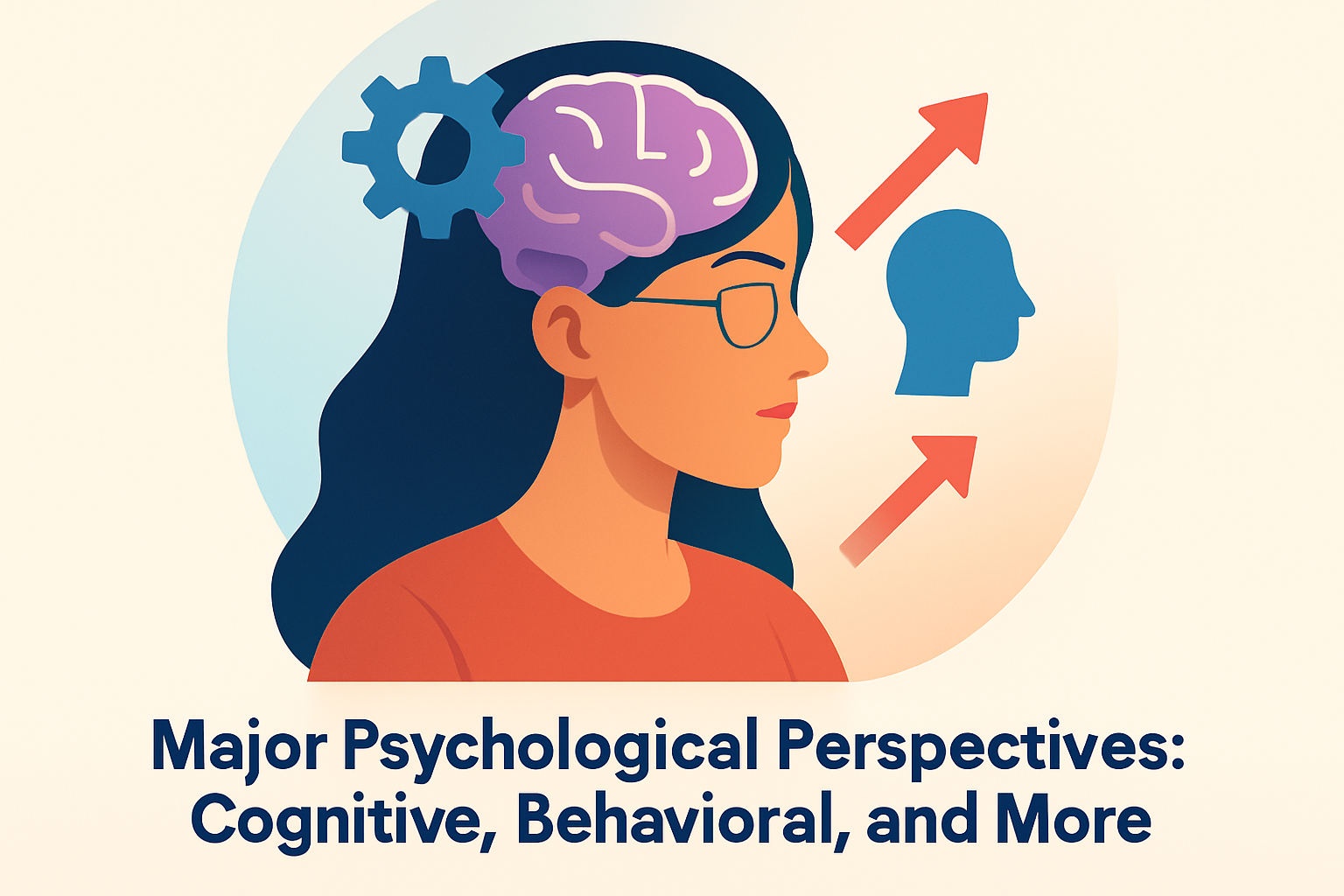
The field of psychology is vast and encompasses a variety of perspectives, each offering unique insights into human behavior and mental processes. Understanding these perspectives is essential for anyone interested in the study of psychology, as they provide the foundation for analyzing behavior, understanding the mind, and providing clinical treatment. Key terms in this context include cognitive psychology, which examines internal mental processes such as problem solving and memory, and behaviorism, which focuses on observable behaviors and their relationship with stimuli in the environment. This article will delve into the major psychological perspectives, offering a comprehensive overview of each, relevant examples, and explanations in layman’s terms to illustrate their significance in the real world.
Cognitive Psychology
Cognitive psychology delves into the inner workings of the human mind. It studies how people think, perceive, remember, and learn. As an example, consider how cognitive psychology is instrumental in understanding learning disabilities. For instance, students diagnosed with dyslexia often receive interventions designed based on cognitive insights that focus on improving their reading and comprehension skills. This approach not only aids in educational settings but also contributes to program development tailored to maximize individual learning styles.
This perspective matters because it allows us to understand how information is processed and stored, ultimately influencing how decisions are made and actions are carried out. Consider how advertisements are crafted based on cognitive principles to catch and sustain consumer attention, ensuring key messages are retained. Insights from this perspective are thus pivotal in fields ranging from education to marketing.
Behavioral Psychology
Behaviorism, primarily associated with psychologists like B.F. Skinner and John Watson, examines observable behaviors and discards internal thoughts as a subject of study. The behaviorist perspective suggests that all behaviors are learned through interaction with the environment via conditioning. For instance, consider the phenomenon of classical conditioning, famously demonstrated by Ivan Pavlov’s experiments with dogs. Pavlov showed how a neutral stimulus, when paired with a stimulus that elicits a natural response, can eventually cause the elicitation of that response when presented alone. This principle has broad applications, such as in developing behavior modification programs or treating phobias through desensitization techniques.
Understanding behaviorism is vital as it highlights the importance of environmental influence over human actions. Applications of this perspective are visible in various realms, such as educational systems that use reinforcement techniques to mold student behavior or therapeutic approaches like cognitive-behavioral therapy (CBT), which aim to change patterns of thinking and behavior.
Biopsychological Perspective
The biopsychological perspective seeks to understand how biological processes affect the mind and behavior. This area of psychology considers physiological processes such as brain function, neurotransmitters, and genetic factors. It is crucial in exploring mental illnesses with a strong biological component, like depression or schizophrenia, providing a basis for treatment options involving medication.
A practical application is in the use of drugs that affect neurotransmitter systems to manage mood disorders. For example, selective serotonin reuptake inhibitors (SSRIs) are utilized to increase the availability of serotonin, thereby addressing chemical imbalances in the brain associated with depression.
By considering biological factors, the biopsychological perspective provides a more comprehensive picture of mental health, emphasizing the interplay between biological elements and psychological phenomena. This integrative approach is key in advancing holistic treatment strategies, combining both medical and psychological methods for better outcomes.
Social-Cultural Psychology
Social-cultural psychology places behavior within a broader context, considering how social and cultural environments influence individual behavior and thought processes. For example, a social-cultural perspective can explain differing norms and behaviors between cultural groups, such as variations in communication styles or family dynamics.
Consider how cultural differences impact international business practices. Companies that understand and appreciate these differences are often more successful in global markets, as they can tailor their approaches to suit diverse cultural expectations and practices.
By examining how culture and society influence behavior, this perspective has profound implications for broaching issues like multiculturalism, diversity, and inclusion within societies. It advocates for a deeper understanding of cultural contexts and promotes sensitivity in interactions across different societal sectors.
Psychodynamic Psychology
Originating with Sigmund Freud, the psychodynamic perspective focuses on how unconscious motives and early developmental experiences shape behavior. This approach highlights the influence of childhood events and believes that much of our mental life impacts behavior in ways we may not be consciously aware of.
In practical terms, this perspective is often applied in settings that require intensive personal insight, such as therapy sessions aimed at uncovering repressed thoughts and feelings to aid in personal development or emotional healing.
Understanding the psychodynamic approach is essential for those interested in the depth of human experiences and how past events influence present behavior. It offers valuable tools for therapists working with individuals seeking to understand their inner conflicts uncovered through therapeutic dialogues.
Humanistic Psychology
The humanistic perspective emphasizes individual potential and stresses the importance of growth and self-actualization. It suggests that people possess inherent goodness and the drive towards self-improvement. In therapeutic contexts, such as client-centered therapy developed by Carl Rogers, the humanistic approach encourages an individual to understand themselves and to work towards their potential.
Consider how this perspective informs positive psychology, which focuses on enhancing well-being and subjective experience. By emphasizing personal strengths, creativity, and self-fulfillment, the humanistic approach enriches personal and professional growth strategies as employed by life coaches asking clients to focus on achievable personal goals and personal development.
Humanistic psychology offers valuable insights into fostering motivation and happiness, advocating for a deeper understanding of how personal agency and growth contribute to human behavior and mental health.
| Perspective | Focus | Real-World Application |
|---|---|---|
| Cognitive | Thinking, memory, problem-solving | Education, advertising |
| Behavioral | Learned behaviors | Therapy, education |
| Biopsychological | Biological processes | Mental health treatments |
| Social-Cultural | Social and cultural influences | Global business, diversity training |
| Psychodynamic | Unconscious processes | Therapy, emotional health |
| Humanistic | Self-actualization | Personal growth, well-being |
Key Takeaways and Next Steps
Exploring the major psychological perspectives provides a richer understanding of human behavior and mental processes. Each perspective offers a unique lens through which to view the complexities of the human mind, highlighting the importance of an integrative approach to psychology. From the detailed processes studied in cognitive psychology to the cultural insights of the social-cultural perspective, these approaches form the backbone of various applications, from therapy to business strategy and education.
Readers are encouraged to reflect on how these perspectives may apply to their own lives, whether it be through understanding personal behaviors or in professional environments. Those interested in delving deeper into specific topics such as the evolutionary basis for cognition and behavior might explore expert SEO Consulting services at LSEO, aiding in further exploration and application of psychological principles across various domains.
Ultimately, understanding these psychological perspectives equips individuals with tools to explore behavior and thought more comprehensively. For those seeking a better grasp of how these approaches manifest in real-world outcomes, revisiting studies and consulting specialized resources can enrich their learning experience. With ample educational resources available online, individuals can continue their exploration beyond this article, adding depth to their knowledge and practical application.
Frequently Asked Questions
What are the major psychological perspectives, and why are they important in understanding human behavior?
The major psychological perspectives offer distinct frameworks through which psychologists understand human behavior, emotions, and mental processes. These perspectives include Cognitive, Behavioral, Psychodynamic, Humanistic, Biological, Evolutionary, and Sociocultural perspectives. Each perspective provides unique insights and methodologies, helping to analyze behavior comprehensively. By studying these perspectives, individuals can grasp the complexity of human psychology, enabling more effective clinical treatments, better understanding of mental disorders, and improved strategies for enhancing individual well-being. For instance, the Cognitive perspective focuses on understanding internal mental processes such as perception, memory, and problem-solving, offering deep insights into how people think and learn. Meanwhile, the Behavioral perspective emphasizes observable behavior, suggesting that all behaviors are learned through interaction with the environment. Mastery of these perspectives is crucial for psychology students and professionals, as it equips them with a multi-faceted approach to studying and interpreting human behavior.
How does cognitive psychology differ from behavioral psychology?
Cognitive psychology and behavioral psychology are two major areas within the field of psychology that provide distinct approaches to understanding human behavior. Cognitive psychology is interested in internal mental processes—things like attention, memory, problem-solving, and language. It investigates how people understand, diagnose, and solve problems, focusing on how they process information. The Cognitive perspective suggests that understanding internal processes is crucial for understanding how we behave and learn. It is often utilized in therapeutic settings to help individuals change their thinking patterns as a way to alter behavior. On the other hand, behavioral psychology is concerned with observable and measurable aspects of human behavior. It argues that all behavior is learned and emphasizes the role of environmental factors in shaping behavior. According to this perspective, behaviors can be modified through reinforcement and punishment. Techniques derived from behavioral psychology are frequently used in treatments for various psychological disorders and are particularly effective in behavior modification therapies. Despite their differences, both perspectives have significantly contributed to various fields, including education, therapy, and cognitive-behavioral interventions.
What role does understanding psychological perspectives play in mental health treatment?
Understanding psychological perspectives is paramount in delivering effective mental health treatment. Each psychological perspective provides a different lens through which practitioners can understand and address mental health issues. For example, the Cognitive perspective often leads to cognitive-behavioral therapy (CBT), which focuses on changing thought patterns to alter feelings and behaviors. This approach is effective for treating anxiety disorders, depression, and other mental health conditions by helping individuals reframe negative thoughts. The Behavioral perspective can guide behavior modification strategies, including exposure therapy for phobias or using reinforcement to encourage positive behaviors in individuals with developmental disorders. Additionally, the Psychodynamic perspective, which focuses on unconscious processes, helps in exploring unresolved conflicts and the influence of past experiences on present behavior. By integrating multiple perspectives, clinicians can create holistic and tailored treatment plans that also accommodate individual differences and specific client needs. This comprehensive understanding fosters more effective and personalized interventions, increasing the likelihood of successful outcomes in mental health treatment.
Can you explain the Historical development of the major psychological perspectives?
The development of major psychological perspectives spans over a century, evolving as new theories and research methods emerged. Initially, psychology was rooted in philosophy, with early thinkers like Descartes focusing on the dualism of mind and body. With the formal establishment of psychology as a scientific discipline in the late 19th century, perspectives began to form. The founding of Wilhelm Wundt’s lab in 1879 marked the beginning of experimental psychology, emphasizing introspection to study the mind. The late 1800s saw the rise of the Psychodynamic perspective, introduced by Sigmund Freud, focusing on unconscious processes and childhood experiences. In the early 20th century, Behaviorism took center stage, with John Watson and B.F. Skinner stressing the importance of studying observable behavior and learning. By the mid-20th century, the Cognitive perspective emerged, challenging behaviorism by emphasizing mental processes. This cognitive revolution brought attention to internal processes like memory and information processing. The Humanistic perspective arose in the 1950s and 60s as a reaction against the deterministic nature of psychodynamic and behaviorist theories, focusing on personal growth and self-actualization. More recently, the Evolutionary perspective developed, exploring how evolution influences behavior, while the Biological perspective began examining the links between physiological processes and behavior. Today, psychology integrates these perspectives to offer a comprehensive understanding of human behavior, reflecting its dynamic and diverse history.
How have psychological perspectives influenced educational approaches?
Psychological perspectives have profoundly influenced educational methods, shaping teaching strategies and learning environments. The Cognitive perspective has directly impacted educational psychology by advocating for teaching methods that enhance cognitive processes such as memory, problem-solving, and critical thinking. Techniques like metacognition, where students are taught to think about their thinking, improve self-awareness and learning efficiency. Behavioral psychology has contributed to classroom management and instructional strategies, emphasizing reinforcement and feedback. Teachers use positive reinforcement to encourage desirable behaviors, creating structured environments that facilitate learning. The Humanistic perspective fosters student-centered approaches, emphasizing the whole person and their potential. In education, this translates to environments that prioritize students’ emotional well-being, encouraging creativity and self-expression. Additionally, the Sociocultural perspective highlights the role of social interaction and cultural backgrounds in learning. This perspective’s impact is seen in collaborative learning approaches and culturally responsive teaching that respect and incorporate students’ diverse backgrounds. By integrating these psychological perspectives, educators develop enriched, adaptive, and inclusive learning experiences that address the varying needs of students, ultimately enhancing educational outcomes and nurturing lifelong learners.