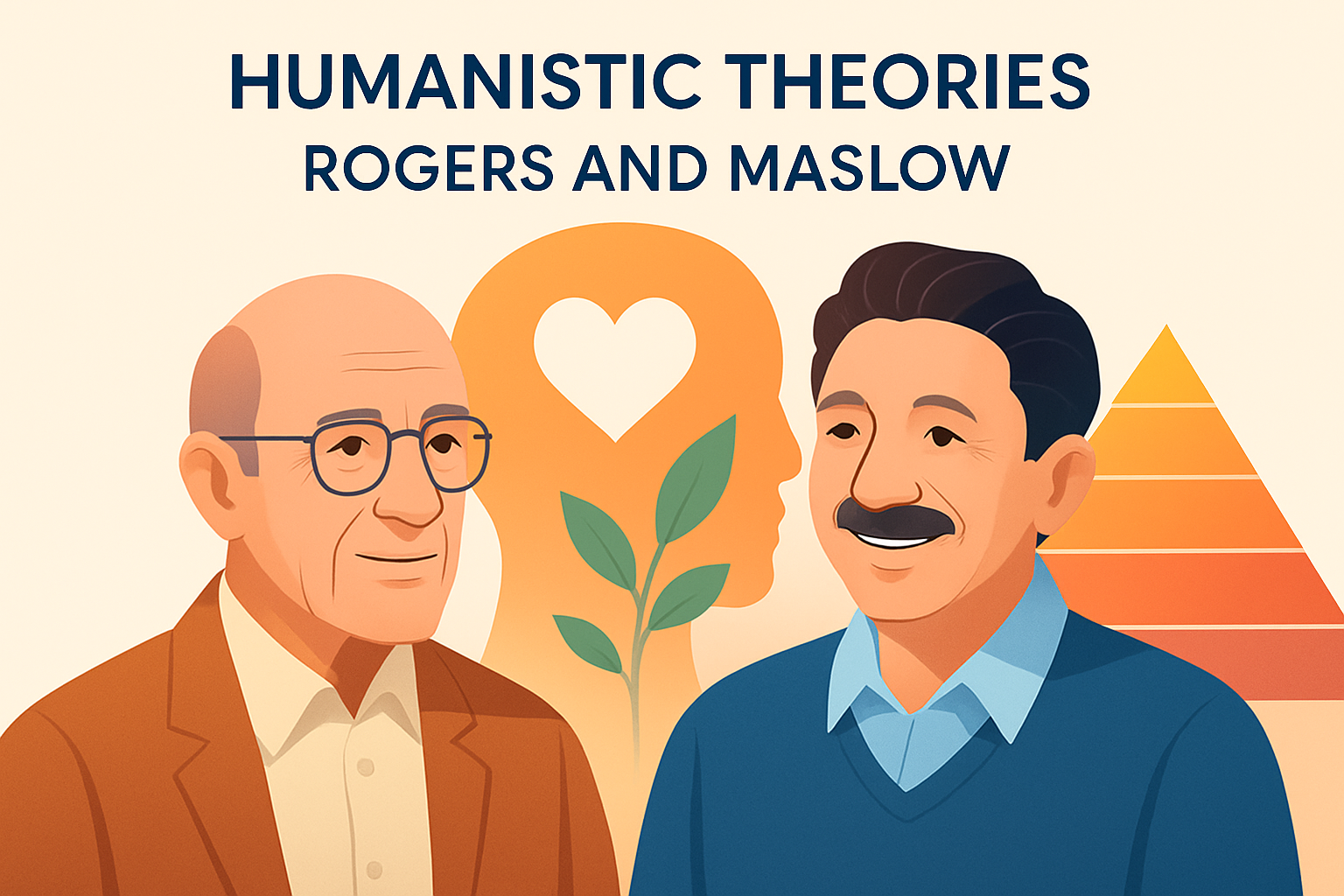
Introduction to Humanistic Theories
Humanistic theories arose as a compelling response to the deterministic perspectives of behaviorism and psychoanalysis. Unlike traditional theories that often focused on pathology, humanistic psychology places emphasis on the individual’s inherent potential for growth and the importance of free will. This paradigm shift in psychology is crucial as it suggests a more optimistic and holistic view of human nature, promoting personal agency, self-actualization, and an understanding of the whole person. Two of the most prominent figures in this movement are Carl Rogers and Abraham Maslow. Their theories have not only shaped psychological practice but have also permeated educational and management fields.
Carl Rogers pioneered the person-centered approach, emphasizing the importance of a supportive environment where individuals can unleash their full potential. His concepts of unconditional positive regard, empathy, and congruence have revolutionized the therapist-client relationship. On the other hand, Abraham Maslow introduced the theory of the hierarchy of needs, proposing that individuals are motivated by a series of needs from basic physiological ones to the pinnacle of self-actualization. Together, Rogers and Maslow’s theories bring critical insights into personal development, psychotherapy, and even organizational behavior, underscoring the importance of understanding the human psyche in a nuanced manner.
Rogers’ Person-Centered Approach
Carl Rogers’ person-centered approach, also known as client-centered therapy, posits that individuals possess an inherent tendency to develop positively if given the right conditions. At the core of his theory are the concepts of unconditional positive regard, empathy, and congruence. Rogers believed that for individuals to grow and fulfill their potential, they need to be in an environment of acceptance, genuine understanding, and transparency.
For instance, in a therapeutic setting, instead of the therapist acting as an authority figure who holds the answers, the client is given the autonomy to explore their feelings and experiences in a supportive atmosphere. Let’s consider the case of John, who struggled with low self-esteem. Traditional approaches might focus on diagnosing and treating symptoms. However, in a person-centered approach, John’s therapist would create a space where John feels valued and understood, enabling him to explore his self-concept and gradually build confidence. Such an approach has broad implications beyond therapy, influencing education where teachers nurture student potential by providing a supportive environment and in management where leaders empower employees to contribute creatively.
Maslow’s Hierarchy of Needs
Abraham Maslow’s theory of the hierarchy of needs provides a structured understanding of human motivation. Maslow proposed that humans are motivated by a progression of needs, starting from the foundational physiological necessities to safety, love and belongingness, esteem, and finally self-actualization. This framework helps explain why individuals pursue certain goals and how unmet needs can impact psychological well-being.
Consider a person working in a high-stress job without job security. In Maslow’s hierarchy, this individual may struggle with fulfilling the basic need for safety, making it more challenging to focus on higher-order needs such as esteem or self-actualization. In practical terms, companies may utilize this theory to create supportive environments addressing these foundational needs to enhance employee satisfaction and productivity.
One real-world illustration of Maslow’s theory can be seen in educational settings. For students to excel in academic pursuits (esteem needs), the foundation of safety—both physical and emotional—must be ensured. Schools and universities can leverage this insight to create environments where students are not only physically safe but also feel valued and included as part of the community.
Application of Humanistic Theories in Real World
Humanistic theories extend beyond psychotherapy into the realms of business, education, and everyday life, offering strategies that promote personal growth and fulfillment. They emphasize the importance of environments that nurture human potential. Let’s explore a few key applications:
- Education: The inclusive and growth-focused environment advocated by both Rogers and Maslow is increasingly seen in modern education methods, such as Montessori or student-centered learning, where the emphasis is on allowing students to explore their interests and develop their abilities in a supportive atmosphere.
- Business and Management: In the corporate world, adopting a humanistic approach translates into creating a work culture that values employee well-being, autonomy, and creative input. This can lead to greater job satisfaction and innovation, as employees feel secure, appreciated, and engaged.
- Personal Development: On a personal level, individuals can apply these theories by recognizing and addressing their own hierarchy of needs or by engaging in self-reflective practices that promote personal growth and authenticity.
As a concrete example, companies like Google have implemented humanistic principles by offering flexible working conditions, wellness programs, and environments that encourage creativity and collaboration. This not only caters to employee well-being but also drives productivity and innovation, demonstrating the effectiveness of humanistic theories in fostering healthy, thriving communities.
Comparing Rogers and Maslow
While both Rogers and Maslow provide frameworks that focus on human potential and fulfillment, they diverge in their approach and emphasis. Rogers centers on the interpersonal conditions required for personal growth, emphasizing the therapeutic relationship as a transformative tool. He argues that a non-judgmental, empathetic environment empowers individuals to become their true selves. Meanwhile, Maslow outlines a hierarchical structure of needs that individuals must navigate to reach self-actualization. His model suggests that personal growth is contingent on the satisfaction of foundational physiological and safety needs, leading to higher-order psychological fulfillment.
Consider the example of a university student who is navigating academic pressures. In a Rogerian framework, a counselor would focus on providing an empathetic, understanding environment for the student to express their concerns without fear of judgment. This, in turn, fosters the student’s personal growth and self-understanding. Conversely, a Maslownian approach might assess whether the student’s basic and psychological needs are being met, such as access to food, shelter, a supportive social network, and self-esteem, addressing deficits to facilitate the student’s journey toward self-actualization.
The two theories can be seen as complementary rather than mutually exclusive, providing multiple lenses through which to understand human behavior and motivation in various contexts.
Conclusion
Humanistic theories, through the pioneering work of Carl Rogers and Abraham Maslow, offer profound insights into the nature of human potential and motivation. By emphasizing the importance of empathy, supportive environments, and the fulfillment of needs, these theories provide a rich framework for understanding and fostering personal and collective growth. The implications of these theories span across various domains, including psychotherapy, education, business, and personal development, underscoring their continued relevance and applicability in contemporary society.
For anyone seeking to enhance their understanding of human behavior, adopting a humanistic perspective can be both transformative and empowering. Whether you are a professional in fields like education or management or someone interested in personal growth, integrating the insights of Rogers and Maslow into your practice or daily life can pave the way for more authentic, fulfilling experiences.
As the next step, consider how the principles of unconditional positive regard, empathy, and a focus on personal needs might be applied in your personal or professional context. Engage with resources or training focused on humanistic approaches and reflect on how these principles can be integrated into everyday practices to promote well-being and self-improvement.
Frequently Asked Questions
1. What are Humanistic Theories and why are they important in psychology?
Humanistic theories are approaches in psychology that emphasize human potential, self-growth, and self-actualization. These theories emerged as a response to the more deterministic perspectives of behaviorism and psychoanalysis, which often concentrated on pathology and dysfunction. Instead, humanistic psychology views humans as inherently capable and places a significant emphasis on free will. This optimistic and holistic approach to understanding human nature is important because it encourages personal agency and empowerment, highlighting individuals’ ability to make choices that lead to personal fulfillment. By focusing on positive aspects of human nature, humanistic theories inspire both researchers and practitioners to explore what drives personal development and well-being.
2. Who are the key figures in Humanistic Psychology, and what are their contributions?
The key figures in humanistic psychology are Carl Rogers and Abraham Maslow. Carl Rogers is best known for his client-centered approach to therapy, emphasizing the therapeutic relationship and the importance of an empathic and non-judgmental therapeutic environment. He introduced the concept of the “self” and believed that individuals have a natural tendency toward growth and development, which he termed self-actualization. Rogers’ theory emphasized the idea of unconditional positive regard, where acceptance and support are provided without condition or judgment. On the other hand, Abraham Maslow is recognized for his Hierarchy of Needs theory, which illustrates the progression of human needs from basic physiological necessities to higher-level psychological growth, culminating in self-actualization. Maslow reasoned that satisfying these needs in a progressive order leads to personal development, with self-actualization representing the fulfillment of one’s highest potential. Both theorists shifted the focus of psychology from solely understanding dysfunction to exploring the positive potential of individuals.
3. What is Carl Rogers’ concept of ‘unconditional positive regard’, and why is it significant?
Unconditional positive regard is a concept developed by Carl Rogers that plays a crucial role in his client-centered approach to therapy. It involves accepting and supporting a person without any conditions or judgments. Rogers believed that for individuals to grow and reach their fullest potential, they need an environment characterized by openness, acceptance, and empathy. This means that therapists should offer consistent acceptance and trust, allowing clients to explore and understand their true selves without the fear of being judged or criticized. The significance of unconditional positive regard lies in its ability to foster an environment of safety and openness, encouraging clients to engage in self-exploration and personal development. It is a foundational aspect of creating a trusting therapeutic relationship that facilitates healing and growth.
4. How does Maslow’s Hierarchy of Needs explain human motivation and self-actualization?
Abraham Maslow’s Hierarchy of Needs is a theory developed to explain human motivation through a five-tier model of human needs, often depicted as a pyramid. The hierarchy starts with basic physiological needs necessary for survival, such as food, water, and shelter. Once these are fulfilled, individuals can move on to safety needs, which include security and protection. The third level includes love and belonging needs, which encompass relationships and social connections. The fourth level is esteem needs, reflecting the desire for self-respect and recognition from others. At the top of the pyramid is self-actualization, which represents the realization of an individual’s potential and the fulfillment of personal goals and aspirations. Self-actualization is achieved through the ongoing pursuit of personal growth, creativity, and self-improvement. According to Maslow, individuals must satisfy lower-level needs to fully focus on higher-level growth toward self-actualization. This hierarchical structure emphasizes that while basic needs are fundamental, reaching one’s full potential involves a lifelong journey focused on personal development and self-discovery.
5. How do Humanistic Theories differ from traditional psychological approaches like Behaviorism and Psychoanalysis?
Humanistic theories represent a significant departure from traditional psychological approaches such as behaviorism and psychoanalysis by focusing on the positive aspects of human nature and the inherent potential for growth. Behaviorism mainly emphasizes observable behaviors and the role of external stimuli in shaping behavior, often overlooking individual choice and internal experiences. Psychoanalysis, on the other hand, places importance on unconscious processes and early childhood experiences, frequently highlighting pathology and dysfunction. In contrast, humanistic theories prioritize personal agency and self-determination, emphasizing the whole person rather than fragmented parts. They focus on individuals’ subjective experiences and assert that humans are naturally inclined toward personal growth and self-improvement. The humanistic approach fosters a more optimistic view of human nature, arguing that individuals have the power to make choices and shape their own destinies. This paradigm shift contributes to a more comprehensive understanding of human behavior, encouraging positive psychological health and self-discovery.