
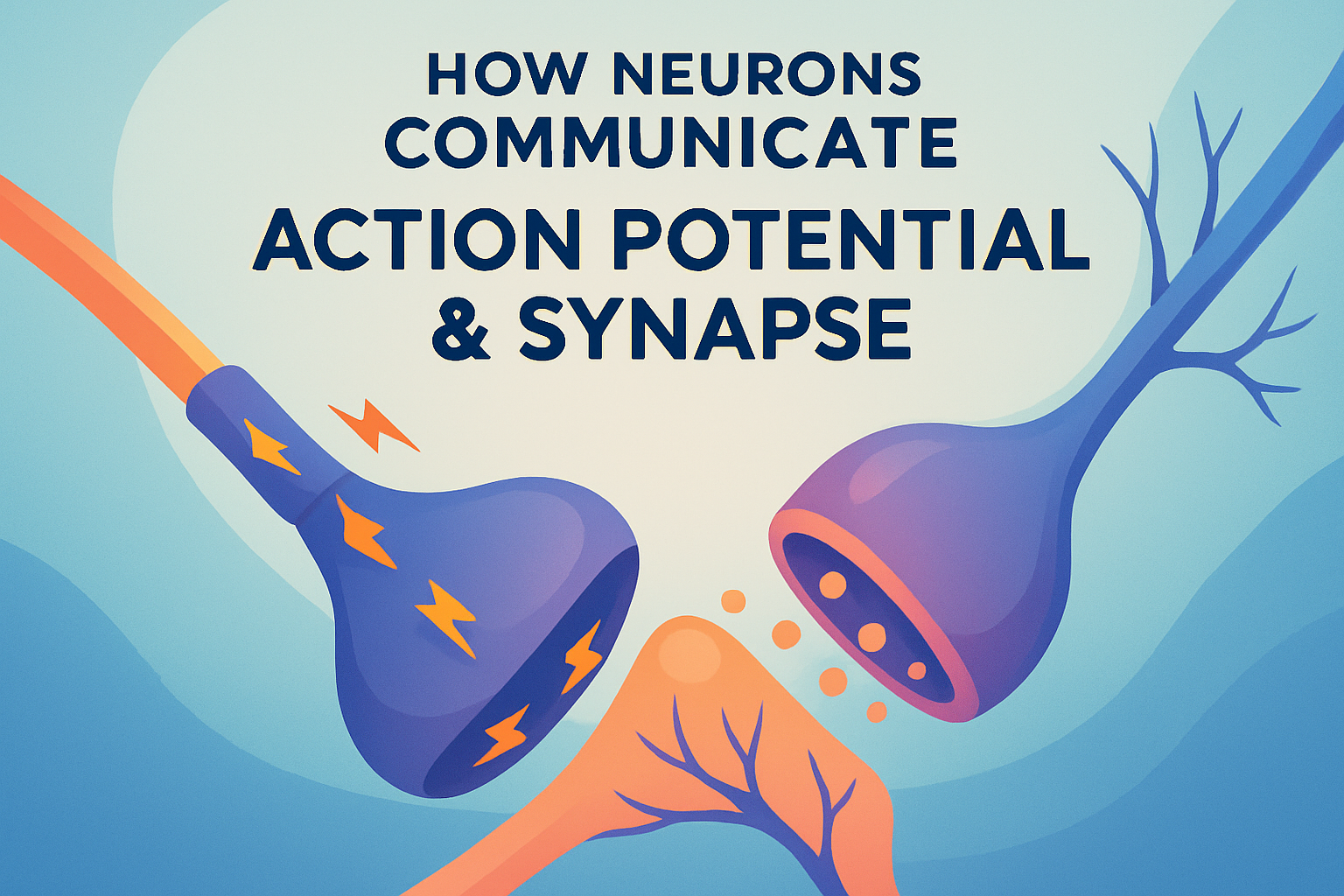
The human brain is a marvel of complexity, coordinating every thought, movement, and sensation we experience. At the heart of this sophisticated system are neurons, the fundamental units of the brain and nervous system. Neurons communicate with each other through a unique and intricate process, ensuring the seamless flow of information necessary for survival. This communication relies on two key processes: the generation of action potentials and the functioning of synapses. Understanding how neurons communicate is essential because it underpins our understanding of human behavior, medicine, and even artificial intelligence. As we delve deeper into this topic, we’ll explore the intricacies of these processes, rendering this complex subject accessible and meaningful.
Understanding the Action Potential: The Neuron’s Electrical Signal
An action potential is the electrical signal that travels along the neuron’s axon, allowing it to communicate with other neurons. This process begins when a neuron receives enough excitatory stimuli to reach a critical threshold. Upon reaching this threshold, voltage-gated sodium channels along the cell membrane open, causing sodium ions to flood into the neuron. This influx changes the electrical charge inside the cell, generating an action potential that propagates down the axon.
An everyday analogy to understand this process is the ignition of a spark plug in an engine, which sets off a chain of reactions needed for the engine to run. Just as a vehicle won’t move without an initial spark, neurons require action potentials to transmit information quickly and efficiently.
Interestingly, the speed at which an action potential travels can vary, influenced by factors such as the diameter of an axon and the presence of myelination. Myelination is the insulation provided by oligodendrocytes in the central nervous system and Schwann cells in the peripheral nervous system, and it significantly speeds up the transmission of signals, akin to insulating electrical wires to reduce current loss.
The Role of Ion Channels and Membrane Potential
To comprehend how action potentials work, one must understand the role of ion channels and membrane potential. Ion channels are proteins that control the flow of ions across the neuron’s membrane, critical to maintaining the neuron’s resting potential. The resting potential is the baseline electrical charge inside the neuron, usually around -70 millivolts. This negative charge is maintained by the sodium-potassium pump, which actively expels sodium ions while importing potassium ions, creating a stable environment primed for action potential generation.
When a neuron is activated and depolarized due to excitatory stimuli, potassium channels close while sodium channels open, leading to a rapid inflow of sodium ions and a reversal of membrane potential. Once the action potential peak is reached, sodium channels close and potassium channels reopen, repolarizing the membrane and restoring the resting potential.
From Axon to Synapse: Bridging the Gap
Once the action potential reaches the end of an axon, it encounters the synapse, the junction between neurons. The synapse acts as a bridge where electrical signals are converted into chemical signals to communicate across this gap. This conversion occurs in the presynaptic terminal of the neuron, where the arrival of an action potential causes voltage-gated calcium channels to open, allowing calcium ions to enter the neuron and trigger the release of neurotransmitters stored in vesicles.
Once released, these neurotransmitters cross the synaptic cleft and interact with receptors on the postsynaptic neuron’s membrane. This interaction can either excite or inhibit the postsynaptic neuron, depending on the type of neurotransmitter and receptor involved. For example, glutamate usually has an excitatory effect, while gamma-aminobutyric acid (GABA) is generally inhibitory.
| Neurotransmitter | Primary Effect | Example Function |
|---|---|---|
| Glutamate | Excitatory | Learning and memory |
| GABA | Inhibitory | Regulating anxiety |
| Dopamine | Modulatory | Reward and pleasure |
| Serotonin | Modulatory | Mood regulation |
Neuroplasticity: A Flexible Network of Synapses
Synaptic strength and efficiency can change over time, a phenomenon known as neuroplasticity. This flexibility allows for the adaptation of the nervous system in response to new experiences, learning, and memory. For example, when practicing a new skill like playing a musical instrument, repeated use strengthens the synaptic connections associated with the task, resulting in faster and more coordinated neural responses.
Neuroplasticity doesn’t just allow for developmental and experiential learning, it also plays a vital role in recovery after brain injuries. By forming new connections and sometimes rerouting function around damaged areas, the brain can regain lost functions, demonstrating the synapse’s capacity for plasticity and adaptation.
Synaptic Pruning: Refining Communication Networks
Another critical aspect of synapse function is synaptic pruning, the brain’s method of optimizing neural circuitry. During early development and into adolescence, the brain produces an abundance of synaptic connections, many of which are redundant. Synaptic pruning eliminates weaker connections while preserving and strengthening the more useful ones, enhancing the efficiency of neural communication.
Think of synaptic pruning like a gardener thinning out a dense forest, removing weaker trees to allow sunlight and resources to reach and strengthen the healthier, more robust trees. This process is crucial for the proper development of cognitive abilities and functionality.
Real-World Implications: From Medicine to Psychology
The understanding of how neurons communicate has profound implications on multiple facets of human health and cognition. In medicine, knowledge of synaptic transmission and action potentials is crucial for developing treatments for neurological disorders such as epilepsy, depression, and schizophrenia. Many pharmaceutical interventions work by modulating synaptic transmission or receptor activity to restore normal function.
In psychology, understanding synaptic communication allows for deeper insights into human behavior, motivation, and mental health. For instance, alterations in neurotransmitter levels are often linked to various psychiatric conditions, leading to tailored treatment approaches that focus on chemical modulation.
Moreover, the field of artificial intelligence draws inspiration from neuronal communication models to develop more human-like decision-making algorithms. Neural networks, key components of AI, mimic the structure and function of the brain’s neuronal networks, involving nodes and connections similar to action potentials and synapses.
Conclusion
The study of neuronal communication through action potentials and synapses offers invaluable insights into how our brains function, influencing fields ranging from neurology to artificial intelligence. Action potentials serve as the electrical impulses that make rapid neural communication possible, while synapses ensure these signals can traverse the chaotic neural landscape, converting electrical into chemical messages seamlessly.
By understanding these processes, we not only enhance our capacity to treat neurological and psychiatric disorders, but also deepen our comprehension of human behavior and advance technology that mimics these biological systems. As we continue to unlock the secrets of neural communication, it promises not only to transform our health and well-being but also to propel technological innovations that bridge the gap between biological intelligence and machine learning.
The continuous exploration of neuronal communication invites not just scientists and healthcare professionals, but anyone interested in understanding the intricacies of human cognition. Engage more deeply with the wonders of neuroscience—whether through courses, reading, or collaboration—and contribute to advancing this exciting field.
Frequently Asked Questions
1. What are neurons and why are they essential for brain function?
Neurons are the fundamental units of the brain and nervous system responsible for receiving sensory input, transmitting motor commands, and transforming and relaying electrical signals at every synapse. They are vital for every aspect of brain function. Neurons communicate through intricate chemical and electrical processes, making it possible for us to think, move, and experience the world around us. Each neuron has a cell body, dendrites, and an axon that work together to facilitate communication within the nervous system. They interconnect in a vast network, processing and transmitting the essential information that underpins all our thoughts and actions.
2. How do neurons generate action potentials?
An action potential is a crucial electrical signal conducted along the axon of a neuron. It is generated when a neuron sends information down its axon away from the cell body. The process begins when a neuron receives a sufficient stimulus, leading to a temporary change in the electrical state of the cell membrane. Neurons reach a ‘threshold’ level, which triggers voltage-gated sodium channels to open. Sodium ions rush into the neuron, causing depolarization. This is followed by the opening of voltage-gated potassium channels, allowing potassium ions to exit the cell, which repolarizes the neuron. This sequence of depolarization and repolarization is what constitutes an action potential, and this signal travels down the neuron, enabling communication with other neurons.
3. What is a synapse and how does it function in neuronal communication?
A synapse is a critical structure that facilitates communication between neurons. It is a small gap at the end of a neuron that allows a signal to pass from one neuron to the next. Typically, synaptic communication occurs chemically through neurotransmitters. When an action potential arrives at the axon terminal of a presynaptic neuron, it triggers the release of neurotransmitters stored in vesicles. These chemicals cross the synaptic cleft and bind to receptor sites on the postsynaptic neuron, influencing it to generate its own action potential if the signal is excitatory, or to inhibit it if the signal is inhibitory. This intricate dance of neurotransmitters and receptors is crucial for the relay and modulation of neuronal signals.
4. What role do neurotransmitters play in the synaptic process?
Neurotransmitters are the chemical messengers of the nervous system. They play a crucial role in transmitting signals across the synapse from one neuron to another. When an action potential reaches the axon terminal, it causes the release of neurotransmitters into the synaptic cleft. These molecules then bind to specific receptors on the postsynaptic neuron, initiating a response that can either excite or suppress neuron activity. Different neurotransmitters have different effects; for example, dopamine and serotonin are involved in mood regulation, while acetylcholine is essential for muscle movement. The balance and proper function of neurotransmitters are essential for healthy brain function and impact emotions, cognition, and overall behavior.
5. How are diseases related to disturbances in neuron communication?
Disorders of neuronal communication can lead to a range of neurological and psychiatric diseases. For example, Parkinson’s disease is associated with reduced dopamine levels due to neuron degeneration in a specific brain region. Alzheimer’s disease involves disrupted synaptic connections and accumulation of abnormal protein plaques, impairing memory and cognitive functions. Similarly, in epilepsy, excessive neuronal firing leads to seizures, while mood disorders like depression and anxiety have links to imbalances in neurotransmitters like serotonin and norepinephrine. These conditions often result from disrupted action potentials or synaptic efficiency, affecting normal neuron signaling. Understanding these disruptions can guide treatments and interventions for the affected individuals, offering hope for symptom relief or disease modification.