
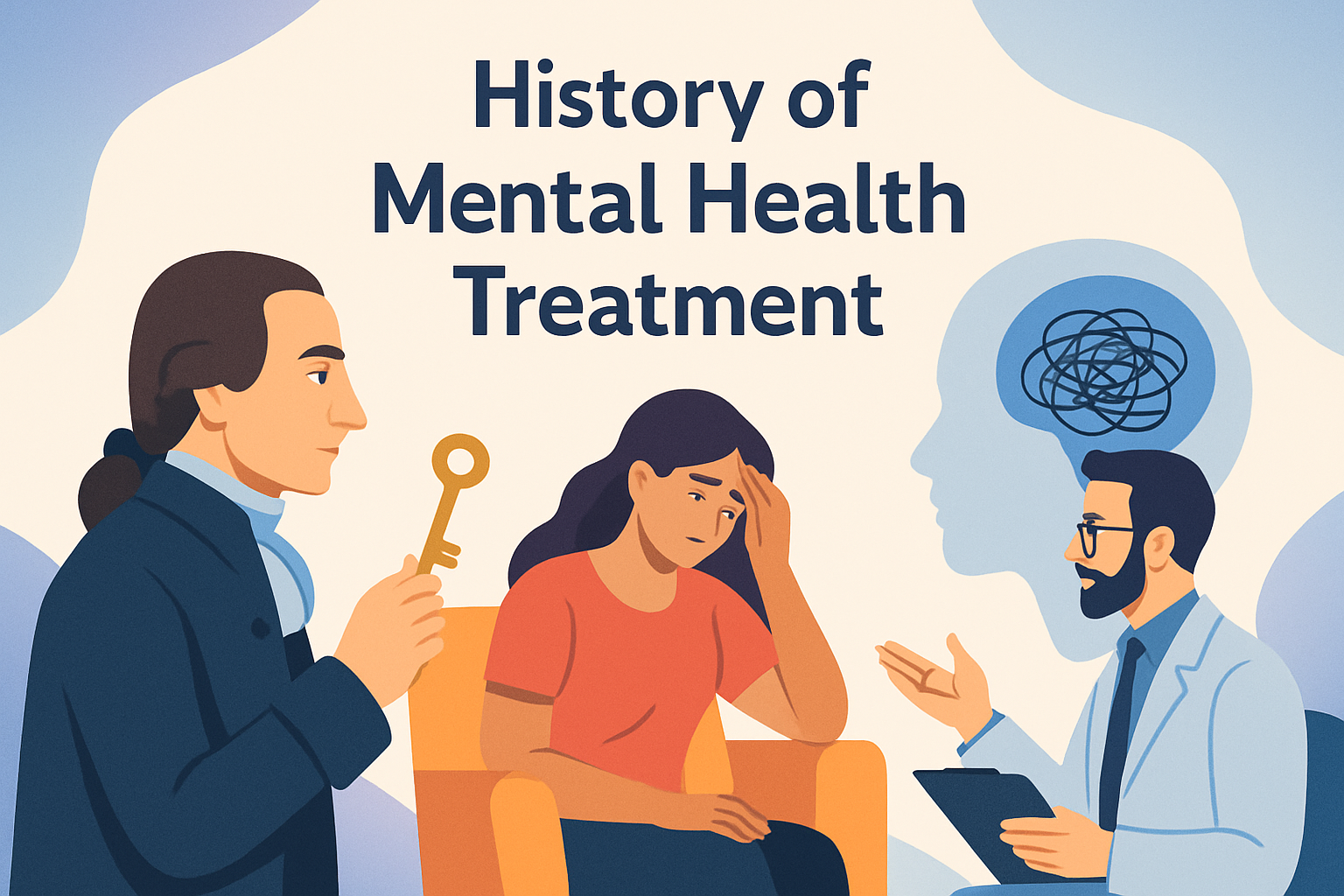
Mental health treatment has evolved significantly over the centuries, reflecting the changing understanding of mental health disorders and the development of medical science. At its core, mental health treatment involves therapeutic and medical approaches aimed at improving the mental well-being of individuals experiencing mental health challenges. Key terms such as “psychotherapy,” “psychiatry,” and “pharmacotherapy” are essential to understanding the landscape of mental health treatment. Psychotherapy refers to a range of psychological techniques employed to address mental health issues, while psychiatry involves medical interventions, including the prescription of medications. Pharmacotherapy is the use of drugs specifically for treating psychological disorders. This history of mental health treatment matters because it demonstrates how far we’ve come in understanding and managing mental illnesses, reducing stigma, and improving the quality of life for many individuals. Understanding this evolution not only provides context for current practices but also highlights how society’s perception of mental health has transformed over time—from seeing these conditions as personal failures or manifestations of evil to recognizing them as medical conditions requiring appropriate treatment and compassion.
Early Approaches to Mental Health Treatment
The treatment of mental health issues dates back to ancient civilizations. In early human history, mental illnesses were often misunderstood and attributed to supernatural forces. Many ancient cultures, including the Mesopotamians, Greeks, and Egyptians, believed that mental disorders were caused by demonic possession or the wrath of gods. These beliefs led to treatments that ranged from exorcisms to trepanning—drilling holes in the skull to release evil spirits. Trepanning, one of the earliest forms of surgery, was practiced as early as 7,000 years ago. Although barbaric by today’s standards, it reflects the first attempts at medical intervention for mental health issues.
During the Middle Ages, the understanding of mental illnesses was heavily influenced by religious and superstitious beliefs. Individuals with mental health issues were often considered to be witches or sinners, leading to brutal treatments such as confinement, torture, and even execution. Asylums began to appear during this time, primarily acting as holding facilities for those deemed “mad.” These institutions offered no real treatment but served to isolate the “insane” from society.
The Enlightenment and Humanitarian Reforms
The Enlightenment period sparked a shift toward more humane treatment of individuals with mental illnesses. Philippe Pinel in France and William Tuke in England were pivotal figures in advocating for compassionate care. Pinel is famed for unchaining inmates at the Bicêtre Hospital in Paris, arguing that mental illness deserved to be treated as a medical condition. His actions marked the beginning of the moral treatment movement, emphasizing humane care and rehabilitation.
William Tuke founded the York Retreat in 1796, offering a model for asylums worldwide. At York Retreat, patients lived in a family-like setting, were treated with kindness, and were encouraged to engage in creative and recreational activities. This pioneering approach demonstrated how environmental changes and compassionate care could significantly improve mental health outcomes, setting a precedent for 19th-century reforms.
The Rise of Psychiatry and Institutional Care
By the 19th century, psychiatry emerged as a distinct medical discipline. The opening of specialized institutions for mental illnesses paved the way for more systematic approaches to care. Dorothea Dix, an American activist, played a critical role in increasing public and governmental support for the establishment of state mental hospitals in the United States.
The use of institutional care expanded, but the conditions within these hospitals varied. Some offered innovative therapies, such as occupational and music therapy, while others became overcrowded and abusive. The rush to institutionalize individuals, combined with insufficient funding, often led to appalling conditions and ineffective care.
| Key Figures | Contributions |
|---|---|
| Philippe Pinel | Introduced moral treatment, promoted humane care. |
| William Tuke | Established York Retreat, proposed a family-like care model. |
| Dorothea Dix | Advocated for state hospitals; improved institutional care. |
20th Century: Advances and Setbacks
The early 20th century saw both progress and challenges in mental health treatment. Sigmund Freud’s development of psychoanalysis revolutionized the understanding of the human psyche, influencing therapy practices worldwide. However, this period also witnessed questionable treatments, such as insulin shock therapy, lobotomy, and electroconvulsive therapy (ECT). While ECT has since been refined and is effective for some conditions, lobotomy and insulin shock were largely abandoned due to their severe side effects and ethical concerns.
The introduction of antipsychotic drugs in the 1950s marked a turning point in psychiatric treatment. Chlorpromazine, the first antipsychotic, allowed many individuals to live outside institutions, fostering the deinstitutionalization movement. However, the shift from hospital care to community-based treatment was not without challenges, often resulting in inadequate support for individuals transitioning to community living.
Modern Mental Health Treatment
Contemporary mental health treatment embraces a multifaceted approach, integrating psychotherapy, pharmacotherapy, and community support. Cognitive-behavioral therapy (CBT), developed by Aaron Beck and Albert Ellis, is one of the most effective psychotherapeutic methods today. CBT helps individuals identify and change negative thought patterns, effectively treating mood disorders, anxiety, and other conditions.
Advancements in pharmacotherapy continue to enhance treatment options. Newer medications, such as selective serotonin reuptake inhibitors (SSRIs) and atypical antipsychotics, offer safer and more effective alternatives than earlier drugs. The development of psychotropic drugs has significantly improved symptom management and quality of life for many with mental illness.
Emerging therapies, including mindfulness-based therapies and integrative health approaches, reflect an increasing interest in holistic and individualized care. Today, mental health treatment strives not only to alleviate symptoms but also to empower individuals to lead fulfilling lives, supported by a network of healthcare providers, peers, and family.
Conclusion: Evolving Perceptions and Approaches
The history of mental health treatment reveals a journey from superstition and isolation to understanding and support. This evolution underscores the importance of viewing mental health through a compassionate and informed lens, recognizing the dignity and potential of those affected by mental illness. Advances in treatment have transformed not only the lives of individuals receiving care but also societal attitudes toward mental health.
The key takeaway from this exploration is the significance of continued progress toward accessible, humane, and effective mental health care. By supporting mental health initiatives and challenging stigma, we contribute to a more inclusive society. The next step is to advocate for policies that enhance mental health resources and education, ensuring that everyone has the opportunity to thrive. As a society, embracing this evolving understanding of mental health marks a pivotal step toward enhancing the well-being of all individuals.
Frequently Asked Questions
1. How has the understanding of mental health and its treatment evolved over time?
Understanding mental health and its treatments has undergone a profound transformation from ancient times to modern-day practices. In ancient civilizations, mental disorders were often attributed to supernatural forces or moral failings, with treatment methods ranging from trephination, where holes were drilled into the skull to release evil spirits, to exorcisms and religious rituals. As societies advanced, perspectives began to shift towards more natural explanations. The Greeks, notably Hippocrates, suggested that mental health issues could arise from imbalances in bodily fluids or “humors,” which laid early groundwork for biological understandings of mental health.
By the 18th century, mental illness was often perceived as a moral issue, and individuals were confined in asylums under deplorable conditions, essentially removed from society. The 19th and early 20th centuries, however, saw a critical shift with the advent of reform movements advocating for the humane treatment of the mentally ill, leading to the moral treatment era where kindness and rehabilitation were emphasized. This paved the way for the development of psychotherapy in the late 19th century, led by figures like Sigmund Freud, who introduced psychoanalysis as a treatment for mental illness.
The mid-20th century brought about revolutionary changes with the rise of psychopharmacology, introducing medications that could effectively manage symptoms of mental disorders, reducing the need for long-term institutionalization. Concurrently, the field of psychiatry expanded, incorporating a more scientific approach to understanding and treating mental illness, with research advancing on psychological, biological, and socio-environmental factors contributing to mental health. This holistic view is mirrored today in integrated treatment plans combining medication, psychotherapy, and community support, constantly refined with ongoing research.
2. What role does psychotherapy play in the treatment of mental health disorders?
Psychotherapy, also known as talk therapy, has been a cornerstone of mental health treatment for over a century. Its primary role is to help individuals understand and resolve the issues contributing to their mental health struggles through structured conversations with trained therapists. The process involves exploring thoughts, emotions, and behaviors to foster self-awareness and help in developing coping strategies.
There are numerous approaches within psychotherapy itself, each tailored to specific needs and disorders. Cognitive Behavioral Therapy (CBT), one of the most researched and common modalities, focuses on identifying and modifying negative thought patterns and behaviors. Dialectical Behavior Therapy (DBT) is beneficial for individuals dealing with emotional regulation issues, while psychodynamic therapy delves into subconscious processes influencing behaviors. Other methods, like Humanistic Therapy, center on self-exploration and growth.
Psychotherapy not only provides a supportive space to discuss issues and improve mental health but also empowers individuals by equipping them with skills to manage their conditions actively. Its role is foundational to comprehensive mental health care, often used in conjunction with medication and other interventions to optimize outcomes.
3. How have medical treatments for mental health conditions evolved?
Medical treatments for mental health conditions have seen dramatic changes, particularly with the development and application of psychopharmacology. In the past, treatments were largely experimental and often harmful, including lobotomies and electroconvulsive therapy (ECT) applied without proper scientific backing or humane consideration. These practices reflected a limited understanding of mental health as purely neurological problems needing radical intervention.
The 1950s marked a turning point when chlorpromazine, the first antipsychotic medication, was introduced, greatly altering the landscape of mental health treatment by improving symptoms of severe mental disorders like schizophrenia. Following this breakthrough, antidepressants like tricyclics and selective serotonin reuptake inhibitors (SSRIs) were developed, transforming the treatment of depression and anxiety disorders by correcting neurotransmitter imbalances in the brain.
Today, an array of medications, including mood stabilizers, anti-anxiety drugs, and stimulant medicines for disorders like ADHD, are used alongside emerging novel therapies targeting specific pathways in the brain. The evolution of medical treatments for mental health reflects ongoing advancements in neuroscience and pharmacology, offering hope for better-targeted, effective interventions. Ongoing research continues to broaden our understanding of mental illness, aiming to develop medications with fewer side effects and increased efficacy.
4. What is the significance of community support and other social interventions in mental health treatment?
While individual therapy and medication play critical roles in the treatment of mental health disorders, community support and social interventions are equally important in promoting holistic recovery and enhancing quality of life. These approaches address the broader psychosocial aspects of living with a mental health condition, acknowledging that individuals thrive not only through clinical interventions but also through robust social support systems.
Community support can manifest in various forms, such as support groups, peer networks, and community-based programs that provide education, resources, and companionship. These spaces allow individuals to connect with others who have similar experiences, reducing feelings of isolation and stigma. Educational workshops and community engagement initiatives can also raise awareness, fostering a more inclusive and supportive environment for those affected by mental health issues.
The role of social interventions extends to addressing social determinants of mental health, such as housing, employment, and access to services, which can profoundly impact mental well-being. By supporting individuals in these areas, community interventions can alleviate stress and improve mental health outcomes, facilitating recovery and helping individuals lead fulfilling lives. These approaches highlight the importance of a comprehensive treatment strategy that reflects the diverse needs of individuals across various life domains.
5. How does psychiatry integrate with other mental health approaches to improve treatment outcomes?
Psychiatry is a medical discipline that focuses on diagnosing, treating, and preventing mental health disorders, often working alongside other mental health approaches to provide a comprehensive treatment plan. As a field rooted in medical science, psychiatry offers unique insights into the biological and physiological underpinnings of mental health conditions, allowing for targeted interventions using pharmacotherapy and other medical treatments.
In modern mental health care, psychiatrists often collaborate with psychologists, therapists, and other mental health professionals to create multidisciplinary treatment plans. This integrated model ensures that patients receive well-rounded care that includes medical management through medication, psychological therapy to address emotional and cognitive aspects, and support from community resources to cater to social needs.
For example, a patient with depression might receive medication to help balance neurotransmitters, alongside regular sessions of cognitive behavioral therapy (CBT) to tackle negative thought patterns. Furthermore, engagement with support groups can provide a sense of community and understanding. This collaborative approach maximizes the potential for recovery by leveraging the strengths of each discipline, addressing the diverse factors contributing to the patient’s mental health condition. Integration of these approaches reflects the complexity of mental health care, emphasizing personalized and adaptable treatment paths that recognize the unique experiences of individuals.