
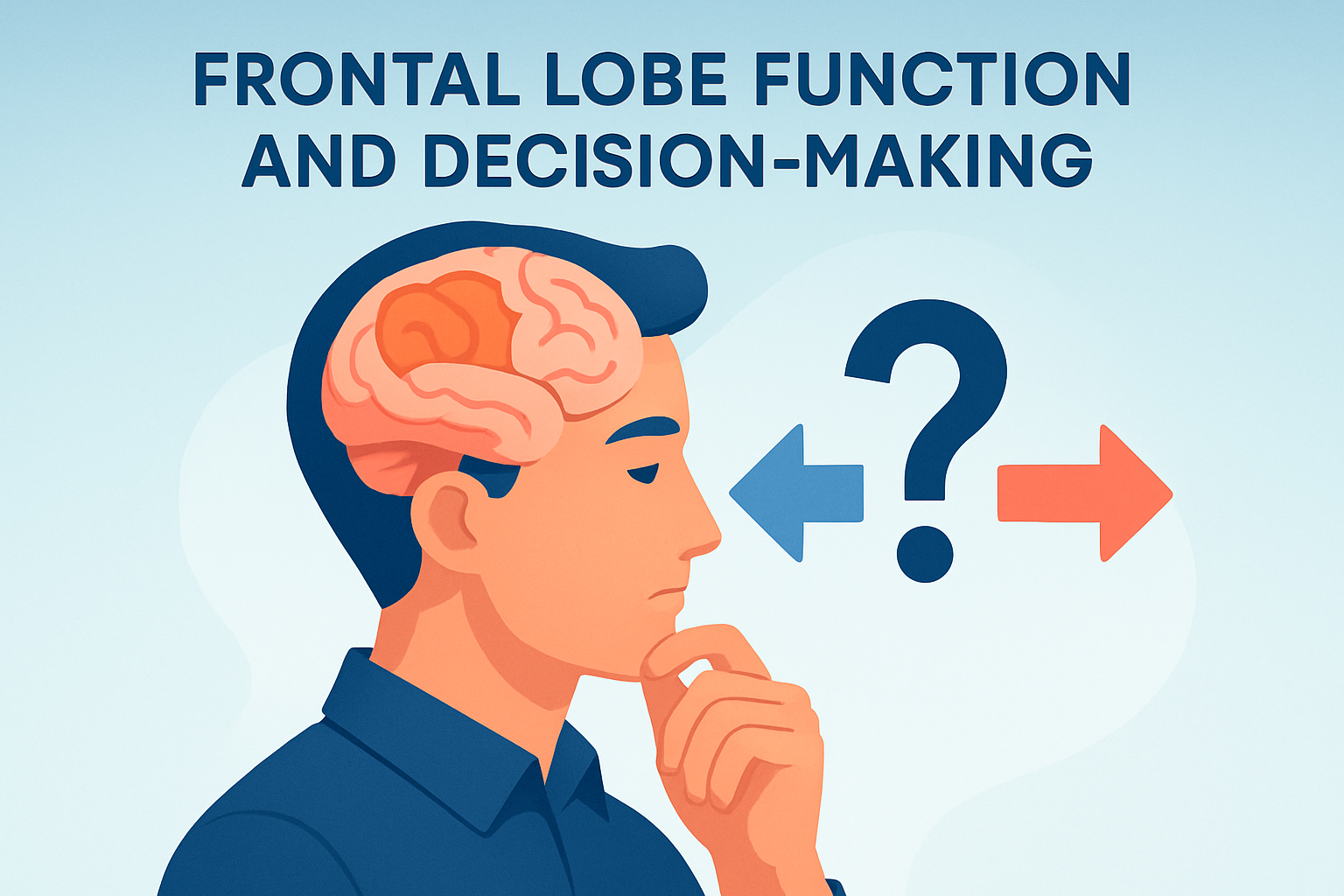
The human brain is a marvel of complex networks, with each section responsible for different tasks. At the forefront of cognitive complexity, the frontal lobes play a pivotal role in decision-making, a process that underpins nearly every choice we make daily. The frontal lobe is the largest part of the brain’s cortex, located directly behind the forehead, and is critical in regulating behavior, controlling impulses, problem-solving, and navigating social situations. This area of the brain effectively makes us human by enabling the high-level cognitive processes necessary for planning, flexibility, and setting goals.
Understanding the functions of the frontal lobe and its influence on decision-making can have a life-altering impact. Its dysfunction may lead to significant impairments, affecting one’s ability to make sound decisions, maintain relationships, or adapt to changing environments. Therefore, examining how the frontal lobe works, its role in decision-making, and the consequences of its impairment is crucial, not only for neurology and psychology professionals but also for anyone who wishes to optimize their cognitive health and daily decision-making. By exploring these aspects, we can foster a more profound knowledge of ourselves and how to manage behavior effectively.
The Role of the Frontal Lobe in Cognitive Functions
The frontal lobe functions as the brain’s command center, executing processes necessary for reasoning, planning, and problem-solving. The prefrontal cortex, a specific region within the frontal lobe, is heavily involved in complex cognitive behavior and decision-making. This area of the brain handles everything from focusing attention, predicting outcomes, controlling emotional responses, and adapting behaviors to new situations.
An everyday example can be seen when learning a new instrument, like the piano. Initially, you must consciously think about each note, finger placement, and rhythm—a process requiring active engagement from the frontal lobes. As you practice, the process becomes more automatic, yet the decision to practice and improve relies heavily on the executive functions of your frontal lobe. Thus, the frontal lobe not only assists in making decisions about learning but also persists in refining actions until they become second nature.
Influence of the Frontal Lobe on Emotional Regulation
Emotional regulation is a key aspect of decision-making impacted by the frontal lobe. This part of the brain helps us manage and respond appropriately to our feelings and those of others, a necessary skill for healthy relationships and making decisions based on emotional information. People with intact frontal lobe function typically consider consequences and act with regard to social norms.
Consider a scenario in a workplace where a colleague receives an undeserving promotion. An impulsive reaction, perhaps fueled by emotions like jealousy, might be to confront the colleague or undermine their achievements. However, someone with strong frontal lobe control might assess the situation, decide on a strategic, calm discussion with a supervisor, or choose to let emotions settle before reacting. Such emotional regulation enables a more constructive outcome, illustrating how the frontal lobe’s decision-making capabilities extend to social and emotional intelligence.
Impact of Damage to the Frontal Lobe
Damage to the frontal lobe can result in a spectrum of difficulties, often shifting a person’s personality and impairing decision-making capabilities. This can happen due to traumatic brain injuries, strokes, or diseases like Alzheimer’s and Parkinson’s. Individuals with frontal lobe damage may experience challenges with impulse control, changes in mood, and difficulty planning or adhering to social norms.
A well-documented case is that of Phineas Gage, a railroad worker in the 19th century who survived a severe injury to his frontal lobe. While he physically recovered, his personality changed drastically. Gage was once responsible and thoughtful, but post-accident, he became impulsive, rude, and unable to adhere to plans. This historical example dramatically showcases how frontal lobe integrity is crucial for maintaining consistent personality traits and decision-making skills.
| Frontal Lobe Function | Impact of Impairment |
|---|---|
| Impulse Control | Heightened impulsivity and risky behavior |
| Planning and Organization | Difficulty with goal-setting and following through |
| Emotional Regulation | Increased emotional outbursts and mood swings |
Frontal Lobe Development and Its Effects on Young Adults
Understanding that the frontal lobe is one of the last areas of the brain to mature, often not fully developing until a person’s mid-20s, is vital. This slow development explains why adolescents and young adults often struggle with impulse control, risk assessment, and long-term planning. The burgeoning capacity for sophisticated cognitive processes correlates with the ongoing development of the frontal lobes during these years.
For example, a teenager might choose to attend a party instead of studying for an important exam, prioritizing immediate social rewards over future academic success. Over time, as their frontal lobes mature, their decision-making abilities improve, enabling them to make choices based on a balance of immediate desires and future consequences. Hence, understanding this developmental process can guide expectations and support during the critical years leading up to full maturity.
The Role of the Frontal Lobe in Executive Functions
Executive functions are a set of mental skills governed by the frontal lobe essential for organizing, flexible thinking, and multitasking. These functions allow individuals to process information, filter distractions, remember tasks or goals, and adjust behaviors in line with life objectives. Executive function deficits can considerably impair daily living, affecting everything from job performance to family life.
A practical illustration of executive function in action is seen during a complex project at work. Planning requires setting timelines and objectives, chunking tasks into manageable parts, and constantly reviewing progress and adjusting strategies accordingly. The frontal lobe holds the keys to successfully navigating these complex tasks, illuminating its role in a productive and organized lifestyle.
Maintaining Frontal Lobe Health for Better Decision-Making
Protecting and enhancing frontal lobe function is vital for effective decision-making and sustained cognitive health. Engaging in activities that challenge the brain—such as puzzles, learning new skills, or rigorous exercise—can fortify neural connections within this region. Additionally, maintaining a healthy lifestyle, which includes proper nutrition, adequate sleep, and stress management, directly supports brain health, bolstering frontal lobe functions.
Just as one would exercise to keep the body fit, stimulating the brain can maintain cognitive agility and decision-making capabilities. Consider setting time aside daily for activities that challenge your cognitive skills, be it strategic games like chess, memory tasks, or social interactions that require quick thinking and adaptability.
Technology’s Impact on Frontal Lobe Function and Decision-Making
Modern technology hinges on rapid information processing and multitasking, which is closely linked to the frontal lobe’s capabilities. However, excessive dependency on technology may alter cognitive processes, potentially diminishing attention spans and decision-making ability over time.
For instance, relying heavily on smartphones for tasks like navigation or memory functions can lessen the need for relying on one’s cognitive maps or recall abilities, somewhat degenerating these frontal lobe functions. Balancing technology use with real-world cognitive exercises can promote a healthy equilibrium, allowing the frontal lobe’s decision-making processes to remain sharp amidst a tech-intensive lifestyle.
Effects of Stress on the Frontal Lobe and Decision-Making Process
Stress can profoundly affect frontal lobe function, often leading to impaired decision-making and cognitive performance. Chronic stress results in the release of cortisol, a hormone that, in high levels, can damage brain cells in the frontal lobe. This impact can lead to difficulties in concentrating, memory challenges, and reduced capacity for effectively managing tasks or emotions.
To reduce stress impact, practices like mindfulness, meditation, and deep breathing exercises can be introduced. Engaging in these practices promotes a calm and focused mind, restoring the frontal lobe’s optimal functioning and improving decision-making skills. Emphasizing the importance of stress management in everyday life is an indispensable approach for maintaining robust frontal lobe health and efficacious decision-making.
Conclusion: Harnessing the Frontal Lobe for Optimal Decision-Making
The frontal lobe is undeniably key to the intricate dance of decision-making, influencing almost every conscious choice. Understanding its roles in emotional regulation, executive functions, and response to environmental stimuli allows for more precise interventions and self-awareness. Furthermore, appreciating the brain’s capacity to adapt and grow through lifelong learning and healthy lifestyle choices reinforces the potential power of conscious behavior modification.
Readers should leave with a reinforced understanding of the critical nature of frontal lobe function in everyday life, and the tangible steps that can be implemented to fortify cognitive health. Encouraging engagement with activities that challenge the brain, while ensuring the maintenance of physical and psychological well-being, promises enhanced decision-making and a superior quality of life.
Take action now by incorporating brain-health activities into your routine and being mindful of how everyday choices can impact frontal lobe health and decision-making. By doing so, you prepare yourself to face the world’s complexities with insight, foresight, and resilience.
Frequently Asked Questions
1. What exactly does the frontal lobe do in terms of decision-making?
The frontal lobe, often hailed as the control center of the brain, serves as the HQ for decision-making. It orchestrates a symphony of complex processes that involve weighing pros and cons, analyzing risks, and predicting outcomes of various actions. Essentially, it helps us ponder options and foresee potential consequences, enabling us to make informed choices. Whether it’s deciding what to eat for breakfast or figuring out the next career move, the frontal lobe is actively engaged in assessing the information, drawing on past experiences, and planning future actions. Its ability to delay gratification and consider long-term benefits over immediate rewards underscores its crucial role in fostering rational decisions.
2. How do the frontal lobes contribute to impulse control?
Impulse control is one of the hallmark functions of the frontal lobes. This part of the brain acts like a manager, keeping impulsive behaviors—and therefore rash decisions—in check. It intervenes between the stimulus (say, an enticing smell of cookies) and the immediate reaction (lunging for the cookie jar) by leveraging executive functions like evaluation and restraint. This allows for more measured responses as the frontal lobes evaluate if the immediate urge aligns with our goals, values, and social appropriateness. It’s like having an inner counselor debating the value of that brisk new shoe purchase versus the savings it might deplete, hence avoiding regrettable snap decisions.
3. Why is the frontal lobe important for navigating social situations?
Social interactions are a dance of nuances, emotions, and cues. The frontal lobe’s intricate networks facilitate this dance by enabling us to pick up on subtle social signals and respond appropriately. It’s the area responsible for empathizing, understanding social norms, planning communicative strategies, and engaging in conflict resolution. Imagine attending a social gathering: your frontal lobe helps you remember names, gauge when it’s your turn to speak, and adjust your tone based on your audience. It even aids in reading facial expressions, interpreting body language, and navigating complex social hierarchies. This is why damage to the frontal lobes often manifests as changes in personality or inappropriate social behavior.
4. How does problem-solving relate to the functioning of the frontal lobes?
The frontal lobes are akin to your brain’s engineer, meticulously crafting solutions to problems. When confronted with an issue, the frontal lobe is activated to analyze the problem, hypothesize potential solutions, and deduce logical steps needed to resolve it. Whether it’s a tangled headphone cord or a cryptic puzzle, this area works by breaking down the problem into smaller, more manageable tasks, while simultaneously utilizing cognitive agility to adapt to new information or methodology. This problem-solving prowess is essential in not just mundane tasks but also in critical situations that may require rapid decision-making under pressure.
5. Can changes in the frontal lobes affect behavior and if so, how?
Absolutely, changes in the frontal lobes can significantly impact behavior. Since the frontal lobes are integral for planning, impulsivity control, and social interactions, any damage or deficiencies in this area can lead to a myriad of behavioral alterations. This might range from impulsivity, lack of initiative, difficulty in understanding the consequences of actions, to challenges in maintaining social norms, which are often seen in conditions like ADHD or after traumatic brain injuries. Individuals may experience shifts in personality; for example, becoming more irritable or indifferent. It’s like having a disruption in the executive suite—the higher-order decision-making is skewed, affecting both complex thinking and day-to-day functionality.