
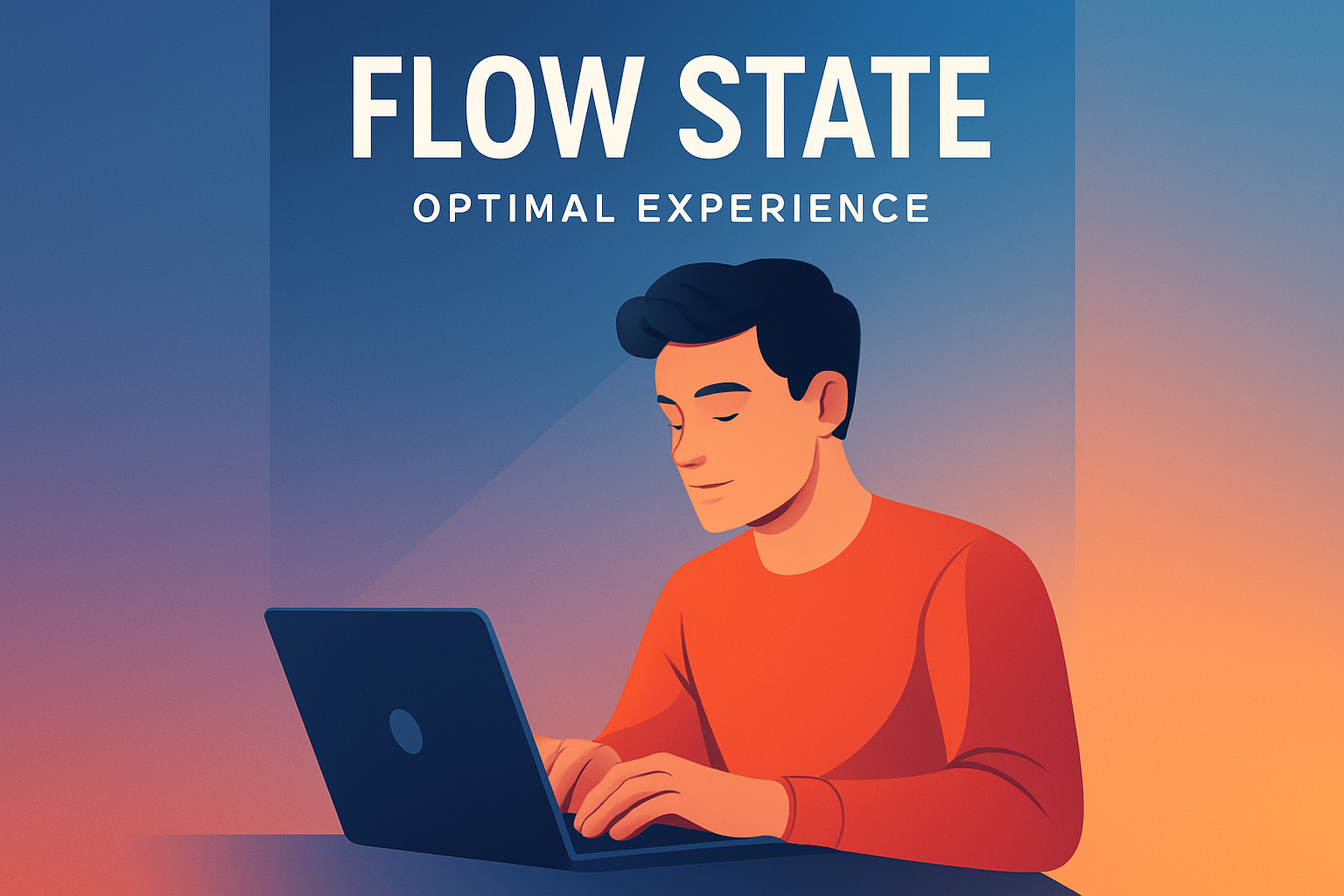
The concept of “flow state” might sound like some esoteric mumbo jumbo to the uninitiated, but delve into it, and you’ll uncover a phenomenon of human psychological potential that has intrigued scientists, athletes, and professionals across fields. So, what exactly is flow state, and why does it matter? In its essence, flow state is an optimal state of consciousness characterized by a sense of complete immersion, focus, and enjoyment in an activity. This mental state leads to peak performance and has been described as “being in the zone.” Popularized by psychologist Mihaly Csikszentmihalyi in the mid-1970s, the flow state has been widely studied as a key component of what makes an activity intrinsically rewarding, leading to what’s known as an optimal experience.
Understanding flow matters because it directly impacts productivity and well-being. For individuals, accessing flow can enhance creativity, improve performance, and increase satisfaction in both personal and professional tasks. For organizations, fostering environments that encourage flow can lead to higher employee engagement, innovation, and efficiency, creating a significant competitive advantage. Flow is a vital concept for anyone interested in maximizing personal and collective potential.
The Psychology of Flow
Flow is not a mystical concept but a psychological phenomenon grounded in measurable components. Csikszentmihalyi identified nine elements that characterize this state: a balance of challenge and skills, clear goals, immediate feedback, deep concentration, a sense of control, loss of self-consciousness, altered time perception, intrinsic motivation, and an autotelic experience.
Take, for example, the case of a professional painter. When working, they might find themselves lost in their art, hours sweeping by without notice. For the painter, the challenge and skill levels are well-balanced, the objectives are clear (express their vision), feedback is immediate (through the evolving artwork), and their concentration is unwavering. This is flow, and it is not limited to the arts. Athletes, programmers, and even surgeons report similar experiences.
The Role of Challenge and Skills Balance
One of the critical aspects of achieving flow is the balance between the challenge of the task and the individual’s skill level. When the challenge surpasses the skill level, anxiety can occur, while a task that is too easy can lead to boredom. Flow occurs within the sweet spot where challenges and skills are perfectly aligned. This balance fosters an environment where engagement can naturally occur, enabling the task performer to immerse themselves fully.
Imagine a chess player immersed in a high-stakes game. If their opponent is vastly superior, frustration might set in, preventing flow. However, if the opponent is weaker, the player might quickly lose interest. Flow occurs when the opponent presents just the right level of challenge to keep the player engaged, neither overwhelmed nor under-stimulated.
Real-World Applications of Flow
Flow has tangible applications across various fields. In the workplace, for example, managers can foster flow by ensuring employees have clear goals, sufficient resources, and frequent feedback. This environment encourages workers to engage deeply with their tasks, boosting productivity and job satisfaction.
Let’s delve into how flow manifests in corporate environments. At Google, for instance, employees are given latitude to spend 20% of their time on projects they are passionate about. This practice aligns with fostering flow by allowing individuals to pursue challenging and meaningful work, thereby promoting creativity and innovation.
Creating Flow-Friendly Environments
To cultivate flow in any setting, several conditions need to be met. Establishing clear objectives helps anchor focus, while providing timely feedback ensures that individuals can adjust their performance as necessary. In sports, this could be the coach’s role, offering immediate responses that help players maintain their concentration and performance levels. In education, instructors can create lesson plans that are challenging yet attainable, prompting students to engage with the material actively.
- Define explicit, achievable goals
- Provide consistent, constructive feedback
- Ensure a good match between skills and challenges
- Create an environment conducive to concentration
- Promote intrinsic motivation through meaningful activities
Intrinsic Motivation and Its Role in Flow
Intrinsic motivation is a vital driver of flow. When individuals engage in an activity out of sheer enjoyment or personal satisfaction, rather than external rewards or pressures, they experience greater engagement and are more likely to enter a flow state. This is particularly evident in creative endeavors where artists, writers, and musicians often find themselves fully absorbed in their work, driven by passion rather than monetary gain.
A musician, for example, may spend hours composing a piece purely for the joy of creating music. In such cases, the musician is motivated by an inner desire to explore soundscapes and express emotions. The absence of outside distractions and pressures allows them to focus deeply, facilitating the emergence of flow.
The Neuroscience Behind Flow
Flow not only has psychological benefits but also triggers specific neurological responses. Research suggests that during flow, the prefrontal cortex, responsible for self-critical analysis and doubt, becomes less active. This process is known as transient hypofrontality, allowing a person to act without the interference of self-judgment. Additionally, the brain releases neurochemicals like dopamine, norepinephrine, and endorphins, which enhance focus, elevate mood, and consolidate learning.
Consider the realm of athletics, where the ability to remain focused and perform at one’s peak can mean the difference between victory and defeat. When a marathon runner experiences flow, their perception of fatigue diminishes, their stride feels effortless, and they become intensely focused on the race. This optimal experience is driven by the same neurochemical cocktail that fosters flow, providing them with the physical and mental edge needed to succeed.
Impact of Technology on Achieving Flow
In today’s digital age, accessing flow can seem challenging due to constant distractions from technology and social media. However, technology can also be a facilitator of flow when used correctly. Digital tools that reduce friction in task execution or provide immediate feedback can enhance flow experiences.
Take, for instance, the realm of coding. Developers often report experiencing flow while writing code, losing track of time as they solve complex problems. Modern integrated development environments (IDEs) provide them with real-time feedback, syntax highlighting, and debugging tools that allow for seamless problem-solving. This technology supports the conditions necessary for flow, enhancing the coder’s engagement and productivity.
Conclusion: Embracing Flow for a Better Experience
The flow state is more than just a fleeting moment of immersion; it’s a powerful tool for personal and professional development. By understanding and nurturing the conditions for flow, individuals can unlock heightened creativity, productivity, and satisfaction in their endeavors. Organizations, on the other hand, can leverage flow to enhance employee engagement, drive innovation, and foster a culture of high performance.
As you explore pathways to flow in your own life, consider setting clear goals, seeking meaningful challenges, and cultivating environments that minimize distractions and foster deep concentration. Whether you’re painting a masterpiece, playing a musical instrument, or solving complex problems at work, inviting flow into your life can lead to richer, more fulfilling experiences.
So, start today by identifying activities that naturally align with your skills and interests. Create conditions that foster engagement and prioritize intrinsic enjoyment. Embrace the flow, and experience the transformation in how you work, play, and live.
Frequently Asked Questions
1. What is a flow state, and how can one identify it?
Flow state is often described as an optimal state of consciousness where an individual is completely absorbed in an activity, to the point that time seems to disappear, and nothing else seems to matter. When you’re in flow, your performance soars to heights that you might not have thought possible. The term was popularized by Mihaly Csikszentmihalyi, a psychologist who spent decades researching this phenomenon.
Identifying a flow state is a bit like recognizing a dream. You know when you’re in it. You’re deeply focused, almost effortlessly tackling challenges. Even complex tasks become practically automatic, like you’re on another level of consciousness. Despite being specific, it’s a universal experience. People in flow report losing track of time – a two-hour session might feel like ten minutes. It’s when you find a perfect balance between the challenge an activity presents and your skill level – not too easy to bore you and not too hard to frustrate you.
2. Why is achieving a flow state considered beneficial?
The buzz around flow states isn’t without merit. Being in flow comes with a bucket full of benefits. First up, we have enhanced performance. People from all walks of life, whether athletes, musicians, software developers, or writers, find that their best work often comes while in flow. It’s like unlocking a hidden reservoir of potential, one where you are both highly productive and incredibly satisfied.
Flow also boosts creativity. While deeply engaged, your brain is firing on all cylinders, sparking new ideas and solutions to problems you might have struggled with otherwise. In professional settings, this can lead to breakthroughs that push boundaries and drive innovation. Moreover, flow states contribute to personal well-being. The joy and satisfaction of losing yourself in a task can improve your mood, reduce stress, and enhance overall life satisfaction. It’s about being fully present and finding joy in the process rather than fixating on the end result. Engaging in activities that induce flow can become a fulfilling way to spend leisure time, ultimately weaving a richer tapestry of life experiences.
3. How can someone achieve a flow state in their daily life?
Entering a flow state isn’t about luck; certain conditions can ease you into it. A sweet spot lies at the intersection of high skill and high challenge. If you find activities that stretch your capabilities without overwhelming you, you’re on the right track. It’s crucial to choose tasks that genuinely engage you, ideally something you’re passionate about. The beauty of flow is it’s accessible in multiple contexts – whether you’re playing an instrument, coding, cooking, or even engaging in an intense game of chess.
Prepare yourself with a conducive environment. You’ll need a distraction-free space with minimal interruptions, allowing for prolonged focus. Manage time effectively and set clear goals to create momentum. It’s also vital to practice mindful breathing or mindfulness techniques to center your attention. Starting these practices can guide you towards absorbing your surroundings with clarity, which significantly enhances focus. Lastly, regular practice can help your brain adapt; the more you strive for flow, the more often you’ll find it.
4. Can anyone access a flow state, or is it reserved for certain people or activities?
Absolutely anyone can experience a flow state. While the narrative might paint flow as exclusive to extreme athletes or artists, everyday activities can usher you into this realm. Whether you’re typing a report at work, working in your garden, or building a complex spreadsheet, flow can be found in both professional and personal spheres. It’s about the approach more than the activity itself.
The universal nature of flow is particularly captivating. Diverse cultures, ages, and personalities report experiences that align with flow characteristics. So, it’s not anchored in specific demographics. What determines one’s capacity to get into flow is largely the individual’s approach: their ability to match tasks to their skill level, pick goals that are clear yet challenging, and their knack for maintaining focus amidst potential distractions. Consistency, curiosity, and openness to exploration are hallmarks for inviting flow into various parts of life.
5. Does entering a flow state have any impact on one’s mental health?
Engaging in flow states has promising implications for mental health. As mentioned earlier, flow can enhance overall well-being, bringing a deep sense of satisfaction and contentment. It provides an active respite from daily stressors. Flow becomes like a mental elixir, offering immersion and distraction from life’s typical anxieties.
Many who find themselves in flow report experiencing reduced levels of anxiety and depression symptoms. This is possibly because the brain is preoccupied with the task at hand, leaving little room for worrying thoughts. Also, since flow requires one to be fully present, it can serve as a form of active meditation, aligning closely with principles from mindfulness practices. Furthermore, flow-induced joy and accomplishment can lead to improved self-esteem and confidence. Therefore, encouraging pursuits that foster these engrossing states might play a helpful role in maintaining mental health balance.