
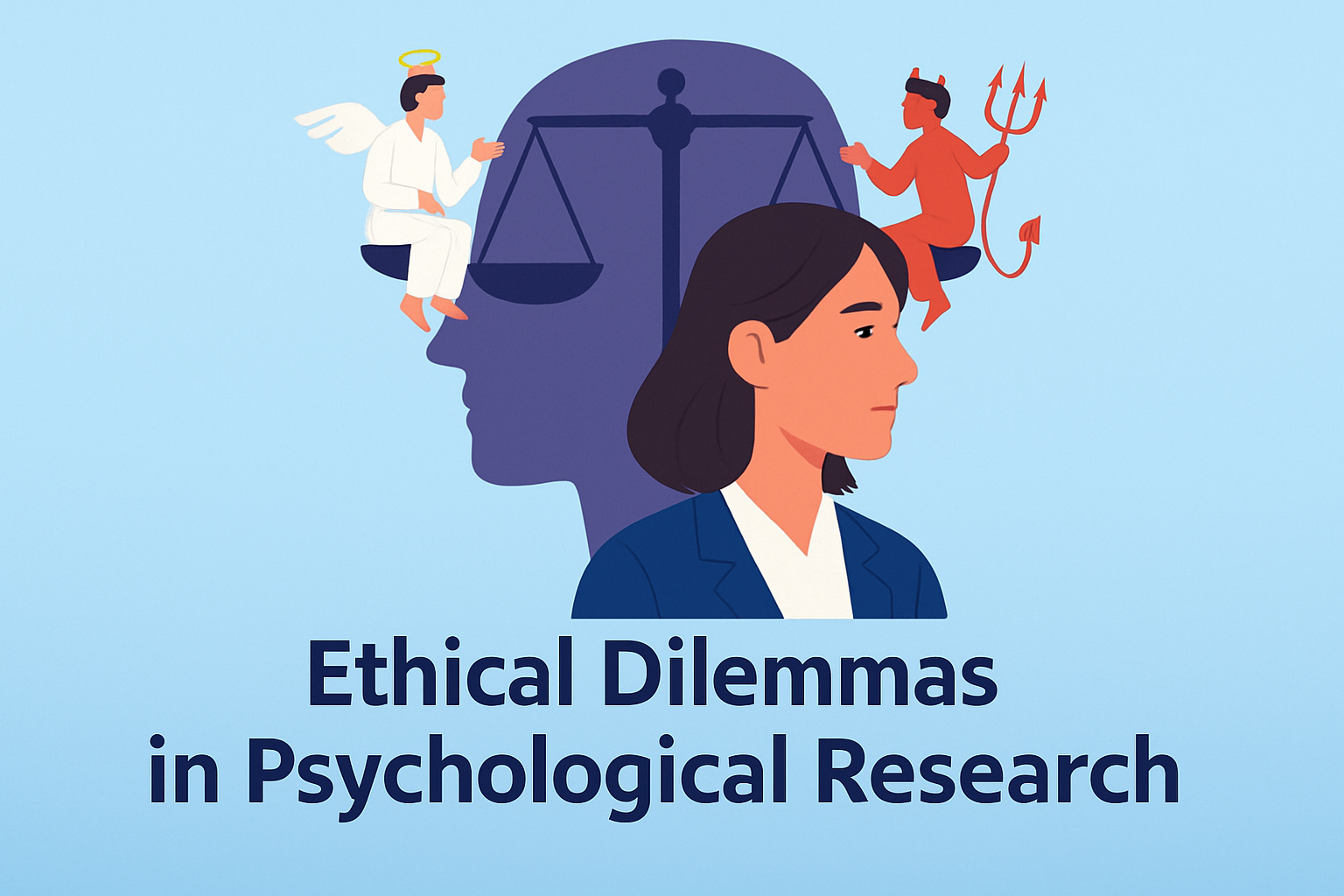
Introduction to Ethical Dilemmas in Psychological Research
The landscape of psychological research is riddled with ethical dilemmas, raising critical questions about the welfare of participants and the integrity of study findings. An ethical dilemma occurs when a choice must be made between two equally challenging moral paths, leaving researchers torn between competing ethical principles. Key terms such as ‘informed consent’, ‘deception’, and ‘participant welfare’ frequently emerge in ethical discussions within psychology. Understanding these dilemmas is vital because the pursuit of scientific knowledge should not overshadow the moral obligations researchers have towards their human subjects.
Psychological research often probes deeply personal and emotional territories, necessitating a keen awareness of ethics. It seeks to uncover the human psyche, offering valuable insights, but can tread perilously close to violating individual rights if proper guidelines are not strictly followed. Violations can have lasting impacts, not only harming participants but also discrediting the field as a whole. Therefore, addressing ethical dilemmas is not merely procedural but foundational to maintaining trust and credibility in psychological research.
Significance of Informed Consent in Research
Informed consent is a cornerstone of ethical research practices. It requires researchers to fully disclose the nature of the study, the procedures involved, potential risks, and benefits to participants, allowing them to make an educated decision about their involvement. The Tuskegee Syphilis Study is a classic example of the violation of informed consent, where participants were misled about their treatment, causing outrage and necessitating reforms in research ethics.
Ensuring informed consent upholds the principle of respect for autonomy by empowering individuals to make informed choices about their participation. However, achieving truly informed consent can be complicated, particularly in cases involving vulnerable populations like children or those with cognitive impairments. Here, obtaining consent from guardians or applying assent protocols becomes essential to safeguard these individuals’ rights.
The Role of Deception in Psychological Experiments
Deception involves misleading or withholding information from participants during a study, often used to maintain the integrity of research outcomes. Consider the famous Milgram Experiment, where participants were deceived about administering electric shocks to others. While it revealed crucial insights into obedience to authority, it also sparked debate over its ethical propriety.
Although deception may be necessary to prevent demand characteristics or social desirability bias, it raises concerns about the honesty and transparency that should exist between researcher and participant. The American Psychological Association (APA) allows deception under stringent conditions: it must be justified by the study’s significant value and absence of alternatives, and participants must be debriefed post-study to clarify any misconceptions.
Balancing Harm and Benefit in Psychological Studies
Researchers must constantly weigh the potential harm a study might cause against the prospective benefits. The Stanford Prison Experiment exemplifies an ethical failure in harm-benefit analysis. Participants assigned roles of guards and prisoners manifested disturbing behavior changes, leading to psychological distress, yet the study was continued longer than ethically acceptable.
The principle of beneficence obliges researchers to maximize benefits and minimize harm. This often involves stringent pre-study risk assessments, designing less intrusive methods, and ensuring participants have access to necessary support services. Institutions often have Institutional Review Boards (IRBs) to evaluate studies and ensure ethical standards are met, providing an additional layer of oversight and protection for participants.
Privacy and Confidentiality Concerns
In the digital age, ensuring participant privacy and confidentiality is more critical than ever. Researchers must navigate the challenges of collecting and storing sensitive data securely. Consider a study exploring sensitive topics, such as sexual orientation or mental health. Breaches of confidentiality could cause significant distress or discrimination against participants.
Implementing robust data protection measures, such as encryption and anonymization, is essential to safeguard participant information. Furthermore, researchers should be transparent about how data will be used and stored, ensuring participants’ ongoing consent and understanding of their rights. This transparency fosters trust and complies with legal frameworks like the General Data Protection Regulation (GDPR).
- Participant Anonymization: Remove identifying information to prevent tracing identities.
- Data Encryption: Secure digital information against unauthorized access.
- Confidentiality Agreements: Formalize the commitment to protect participant data.
- Regular Audits: Conduct evaluations to ensure compliance with ethical standards.
Conflict of Interest and Research Integrity
Conflicts of interest can compromise the integrity and objectivity of psychological research. Financial ties, personal relationships, or intellectual biases can skew study outcomes, leading to mistrust and ethical breaches. A notable example is when pharmaceutical companies sponsor studies on their drugs’ efficacy, potentially influencing results to favor their products.
To safeguard against conflicts of interest, transparency is crucial. Researchers should disclose any potential conflicts and ensure that study designs are not influenced by external pressures. Journals and funding bodies often require such disclosures as part of ethical compliance. Independent replication of studies can further enhance reliability and validate findings.
The Dilemma of Cultural Sensitivity in Research Design
Cultivating cultural sensitivity is fundamental to ethical research design, yet it presents its own set of challenges. Diverse cultural contexts can influence how research questions are perceived and responded to. An ethnocentric approach can lead to biased interpretations and disregard participants’ cultural identities, violating the principle of respect for persons.
For example, Western-centered research tools may not accurately capture the psychological constructs relevant to non-Western populations. Researchers must strive to develop culturally adapted methodologies and collaborate with local scholars to design studies that are respectful and relevant to all cultural contexts. This approach not only addresses ethical concerns but enriches the research by incorporating diverse perspectives.
Summary
In conclusion, navigating ethical dilemmas in psychological research is a complex yet vital endeavor. Key elements like informed consent, responsible use of deception, harm-benefit analysis, privacy, and conflict of interest must be continually balanced to uphold ethical integrity. Real-world examples highlight the far-reaching implications of ethical lapses, underscoring the necessity for stringent ethical standards and vigilant adherence to them.
For researchers, the stakes are high; they have the responsibility to protect participant welfare while contributing valuable insights to humanity’s understanding of itself. By prioritizing ethics, they foster trust and maintain the credibility of the psychological research community. As we continue to push the boundaries of what is known, let each step forward also reaffirm our commitment to these ethical principles.
The call to action for researchers and institutions is clear: enhance ethical literacy through ongoing education, strengthen institutional review processes, and engage multidisciplinary perspectives to address ethical challenges. As participants, understanding one’s rights and the ethical frameworks guiding research will empower informed decision-making.
Engage with ethical research proactively. Whether you are conducting, reviewing, or participating in studies, a solid understanding of these ethical issues is essential for the responsible advancement of psychological science.
Frequently Asked Questions
1. What is an ethical dilemma in psychological research, and why does it matter?
In the context of psychological research, an ethical dilemma arises when researchers are faced with a decision involving two or more conflicting ethical principles. This often means choosing between options that can have both positive and negative ethical implications. For instance, a researcher might be torn between the drive to gather authentic, unbiased data by using deception, and the obligation to obtain informed consent from participants. Addressing these dilemmas is crucial because the integrity of the research, the safety and trust of participants, and the credibility of the psychological community hinge on ethical decision-making. If researchers ignore these dilemmas, they risk causing harm to participants, producing unreliable data, and potentially misrepresenting scientific truths. Resolving these issues not only ensures the welfare of participants but also upholds the moral standards of psychological research.
2. Why is ‘informed consent’ such a critical issue in psychological research?
‘Informed consent’ is a cornerstone of ethical research practice. It refers to the process through which researchers provide potential participants with all necessary information about the study, including its purpose, procedures, potential risks, and benefits, enabling them to make a knowledgeable decision about their participation. This process ensures respect for participant autonomy and underscores the obligation to involve them willingly and with full awareness. The absence of informed consent can lead to issues such as participant exploitation, emotional distress, or even physical harm. Furthermore, it can betray participant trust, damage the credibility of the research, and result in ethical and legal repercussions for the researchers involved.
3. How is deception used in psychological research, and what ethical concerns does it raise?
Deception in psychological research involves misleading participants or withholding certain information about the study’s true nature to maintain the validity of the results. While it can be an essential tool for minimizing bias and obtaining genuine behaviors, it poses significant ethical concerns. For one, it conflicts with the principle of informed consent, as participants are not fully aware of the study conditions. It also risks causing psychological harm or distress if participants feel they were tricked into participating under false pretenses. To ethically justify deception, researchers must demonstrate that it is essential for the study’s design, that the potential benefits outweigh the risks, and that participants are debriefed thoroughly afterward to mitigate potential harm and restore trust.
4. What steps can researchers take to ensure participant welfare in psychological studies?
Ensuring participant welfare is a fundamental ethical obligation in psychological research. Researchers can take several steps to uphold this duty. First, they should conduct a thorough risk-benefit analysis to minimize potential harm. Implementing strict confidentiality measures protects participants’ privacy, which is crucial for their psychological well-being. Designing studies that safeguard physical, emotional, and mental safety will help maintain a respectful environment. Moreover, obtaining informed consent and providing participants the right to withdraw at any stage reinforces their autonomy. Finally, debriefing participants after studies involving deception or sensitive subject matter allows them to understand the study’s purpose and regain trust, reducing any lingering distress.
5. How does the institutional review board (IRB) play a role in addressing ethical dilemmas in psychological research?
The institutional review board (IRB) is a critical component in the oversight of ethical standards in psychological research. Its primary role is to review research proposals to ensure they comply with ethical guidelines and principles, thereby safeguarding participants’ welfare. When faced with potential ethical dilemmas, researchers must seek approval from the IRB, which scrutinizes the study design, methodology, consent processes, data confidentiality measures, and risk assessments. The IRB serves as a check and balance, ensuring that research involving human subjects is conducted responsibly and ethically. By doing so, it helps prevent potential ethical violations and bolsters public confidence in psychological research endeavors.