
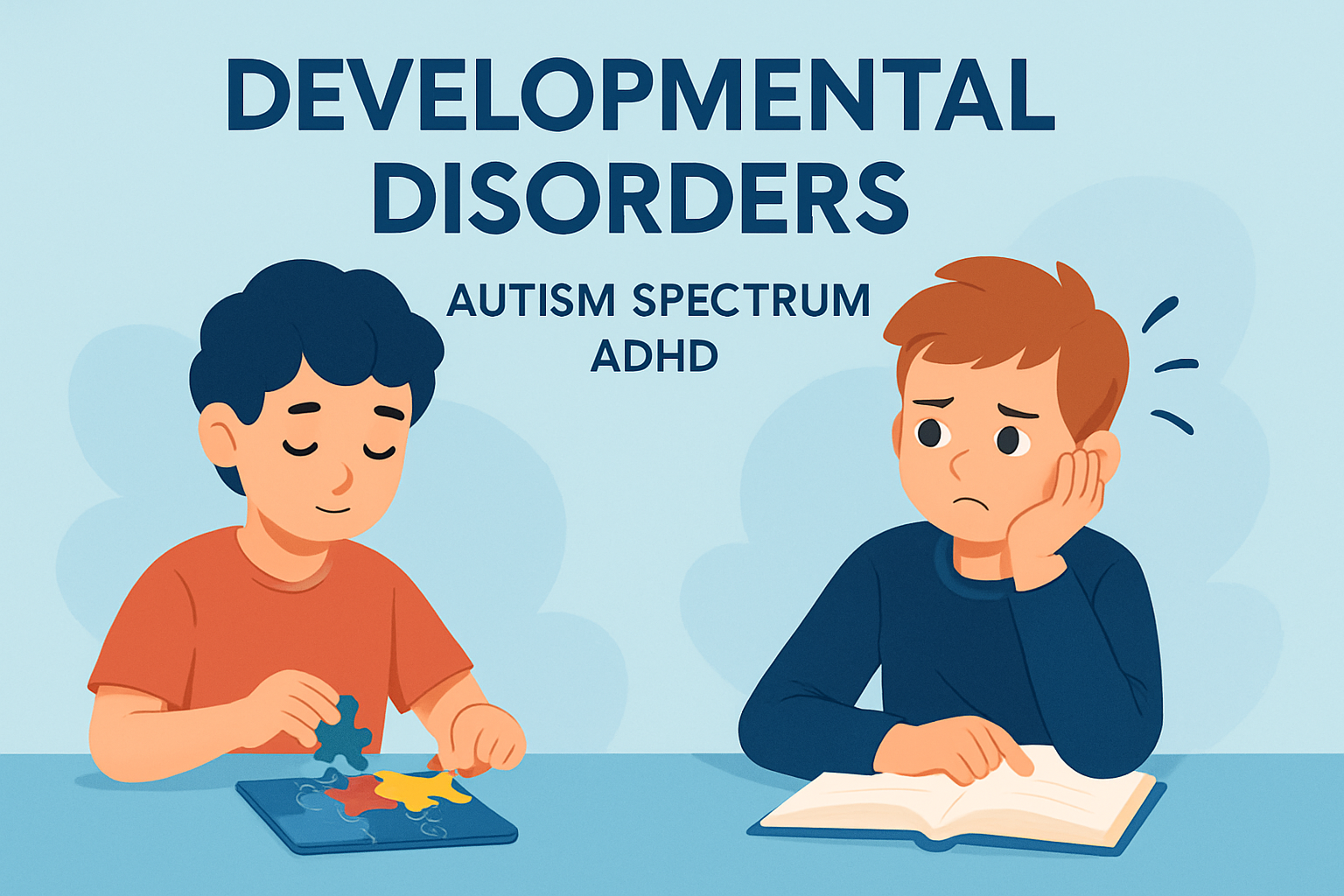
Understanding Developmental Disorders
Developmental disorders are a group of psychiatric conditions originating in childhood that involve serious impairment in different areas. This article focuses on two of the most common developmental disorders: Autism Spectrum Disorder (ASD) and Attention-Deficit/Hyperactivity Disorder (ADHD). These disorders can significantly impact a child’s ability to develop to their full potential, affecting communication skills, behaviors, attention span, and more.
Understanding developmental disorders is crucial as they affect a substantial portion of the population. According to the Centers for Disease Control and Prevention, approximately 1 in 44 children are diagnosed with Autism Spectrum Disorder, while ADHD affects about 5% of children. These disorders not only impact the individual diagnosed but also influence families, educational systems, and healthcare resources. Recognizing and addressing developmental disorders can lead to better support strategies and improved outcomes for those affected.
Though ASD and ADHD differ in their characteristics and challenges, they can sometimes co-occur, further complicating diagnosis and treatment. Through this exploration, we aim to provide parents, educators, and healthcare providers with a deeper understanding of these disorders and promote seeking the best possible care and support.
Autism Spectrum Disorder (ASD): Characteristics and Impacts
Autism Spectrum Disorder is a complex neurodevelopmental disorder characterized by difficulties with social interactions, communication challenges, and a tendency to engage in repetitive behaviors. The term “spectrum” is used because the symptoms and severity can vary greatly among individuals.
For example, one child might only have mild difficulties with communication, while another might have severe challenges speaking or interpreting non-verbal cues. These variations require personalized approaches in support and therapy. Social settings can often pose significant challenges for individuals with ASD. Real-world example: consider an 8-year-old child named Alex, who struggles to make eye contact and engage with peers during school activities. Alex’s parents noticed these challenges early, allowing for early intervention with speech therapy and social skills groups, which have been beneficial in enhancing Alex’s ability to communicate effectively.
Attention-Deficit/Hyperactivity Disorder (ADHD): An Overview
Attention-Deficit/Hyperactivity Disorder is another developmental disorder marked by patterns of inattention, hyperactivity, and impulsivity. These symptoms can manifest differently in each individual but generally result in difficulties in maintaining attention, completing tasks, and organizing activities.
In the classroom, children like Jamie, a 10-year-old with ADHD, may struggle to sit still, keep focus on assignments, or follow through with instructions. ADHD can significantly affect learning processes and academic performance if not properly addressed. Teachers play a critical role in offering support by implementing strategies like frequent breaks, clear instructions, and positive reinforcement. These strategies are essential to help children with ADHD reach their potential.
Diagnostic Procedures and Challenges
The path to diagnosing ASD and ADHD involves a series of observations, behavioral assessments, and, in some cases, specialized medical evaluations. These assessments are usually carried out by clinical psychologists, pediatricians, neurologists, or other specialists trained in developmental disorders.
Early diagnosis is key, as it allows for early intervention, yet it remains a challenge due to the overlap of symptoms among different disorders and variations in symptom presentation. Comprehensive evaluations that gather input from parents, teachers, and healthcare providers are vital to paint a complete picture of the child’s behaviors and needs. A lack of standardized diagnostic tools can also complicate matters, making an informed judgment based on observations critical.
Intervention Strategies and Support Systems
Once diagnosed, intervention strategies are tailored to the individual’s specific needs. This can include speech therapy for communication issues in ASD or behavioral therapy and medication management for ADHD. Early and continuous intervention is known to facilitate better outcomes in both ASD and ADHD.
Support systems can include a variety of approaches:
- Therapies: Behavioral therapy, occupational therapy, and counseling can assist in developing skills and managing behaviors.
- Educational Modifications: Incorporating Individualized Education Programs (IEPs) and other adjustments can help engage and assist affected children in the learning environment.
- Medications: For ADHD, stimulants like Ritalin or Adderall may be prescribed to help with focus and behavioral control.
- Family Support: Family counseling and support groups provide caregivers with coping strategies and a support network.
The Role of Education and Awareness
Increasing awareness and understanding of ASD and ADHD is crucial in reducing stigma and promoting acceptance. Educational programs for parents, educators, and the public can foster greater empathy and support for affected individuals. Schools that embrace neurodiversity and employ inclusive teaching methods help create environments where all children can thrive.
New technologies and tools, like educational apps and software designed specifically for children with developmental disorders, are also becoming more prevalent. These offer additional support, providing children with interactive and tailored learning experiences that can enrich their educational journey. Real-world example: a school district implemented a new program using tablet-based learning for students with ASD, resulting in improved engagement and academic performance.
Conclusion: The Path Forward
Recognizing and understanding developmental disorders such as Autism Spectrum Disorder and Attention-Deficit/Hyperactivity Disorder is vital for supporting affected individuals. By fostering environments that provide early intervention and customized support, we can empower children and families to navigate these challenges successfully.
The key takeaways from this article emphasize the importance of early diagnosis, tailored intervention strategies, and the role of education and awareness in supporting children with ASD and ADHD. By increasing understanding and creating supportive communities, we open pathways to greater potential and better quality of life for those affected.
For parents, educators, and healthcare providers, the next steps involve staying informed, seeking resources, and advocating for effective support systems. By doing so, we can better support individuals living with these disorders and foster a more inclusive society.
If you suspect a child may be exhibiting signs of ASD or ADHD, seek evaluation from a qualified professional to begin the journey toward understanding and support. The earlier these disorders are addressed, the better the outcomes for everyone involved.
Frequently Asked Questions
1. What are developmental disorders, and how do they affect children?
Developmental disorders refer to a group of psychiatric conditions that start in childhood and lead to significant challenges in various aspects of a child’s development. These disorders can affect how a child communicates, behaves, and learns. Two of the most well-known developmental disorders are Autism Spectrum Disorder (ASD) and Attention-Deficit/Hyperactivity Disorder (ADHD). Children with these disorders may struggle with understanding social cues, maintaining attention in class, or following instructions. These challenges can hinder their ability to reach developmental milestones at the same pace as their peers, impacting their learning, social interactions, and overall quality of life.
2. What exactly is Autism Spectrum Disorder (ASD), and what are its major symptoms?
Autism Spectrum Disorder, often abbreviated as ASD, is a developmental disorder characterized by challenges with social interactions, communication, and repetitive behaviors. The symptoms can vary widely from one individual to another, hence the term “spectrum.” Common symptoms include difficulty understanding social cues, limited eye contact, repetitive actions or routines, and a strong focus on unusual interests or subjects. Some individuals with ASD may also have heightened sensitivity to sensory inputs like lights, sounds, or textures. It is important to remember that each person with ASD is unique and may exhibit a different combination of symptoms.
3. How is Attention-Deficit/Hyperactivity Disorder (ADHD) diagnosed in children?
The diagnosis of ADHD is a comprehensive process that involves various steps and assessments. It often begins with observations from parents, caregivers, or teachers who notice behaviors such as inattention, hyperactivity, or impulsiveness that seem more pronounced and frequent than in other children of the same age. A healthcare professional, typically a pediatrician, psychiatrist, or psychologist, will conduct a thorough evaluation. This may include interviews, questionnaires for parents and teachers, and potentially some standardized tests to assess attention span and impulse control. Since other conditions can mimic ADHD symptoms, the professional may also make sure to rule out other causes before making a diagnosis. Accurate diagnosis is crucial to ensure proper management and intervention.
4. What treatment options are available for children diagnosed with ASD or ADHD?
For Autism Spectrum Disorder (ASD), a range of therapies exist designed to improve communication, social skills, and essential life skills. Speech therapy, occupational therapy, and applied behavior analysis (ABA) are common interventions that can help children with ASD learn new skills and better integrate into everyday activities. For Attention-Deficit/Hyperactivity Disorder (ADHD), treatment often consists of a combination of behavioral therapy and medications. Behavioral therapy aims to teach children strategies for managing attention and impulsiveness. Medications, such as stimulants or non-stimulants, can help improve concentration and control impulsive behavior. It is crucial to tailor these treatments to each child’s specific needs, and ongoing evaluation and adaptation of the treatment plan may be necessary.
5. How can parents support a child with ASD or ADHD at home?
Supporting a child with ASD or ADHD involves understanding their unique needs and creating a supportive home environment. For children with ASD, maintaining a predictable routine can be comforting and reduce anxiety. Parents can also use visual aids to help with communication and understanding expectations. Engaging in their interests and practicing social interactions in a controlled setting can further bolster their development. With ADHD, breaking tasks into manageable steps and providing structure can aid with attention and task completion. Parents should encourage physical activity, as it helps expend energy and improve focus. Open communication with educators and healthcare professionals also plays an essential role in coordinating effective support strategies both at home and school. As all children are different, it might take some time and experimentation to find the best approaches that work for your family.