
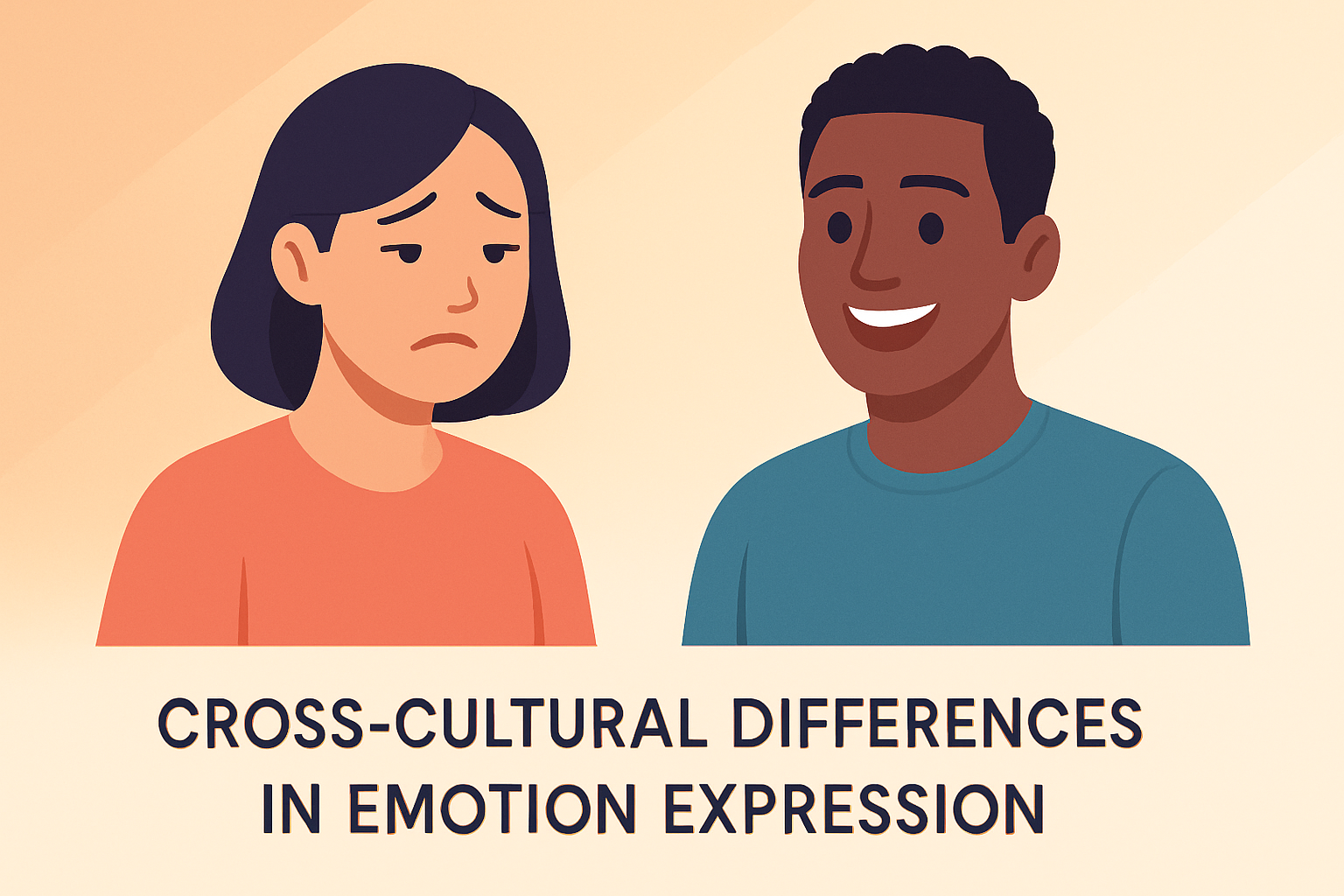
In an increasingly interconnected world, understanding cross-cultural differences in emotion expression is no longer just an academic exercise; it’s a necessity for everyone from business professionals to social workers. When we talk about emotion expression, we’re referring to the ways individuals from different cultural backgrounds express feelings such as happiness, anger, fear, and sadness. These expressions can occur through facial expressions, body language, or verbal communication, and they are not universal. Culturally specific practices often shape how emotions are displayed or concealed. The importance of understanding these differences lies in its potential to reduce cross-cultural misunderstandings, enhance relationships, and promote better communication in social and professional settings.
Understanding Emotion Expression Across Cultures
Emotions are experiences that can be felt worldwide, yet the ways they are expressed can vary dramatically from one culture to another. For example, in many Western cultures like the United States, Japan, and countries in Southern Europe, showing emotions openly is often encouraged, as it is seen as an authentic expression of self. People in these cultures may smile when they’re happy or display frustration openly when something bothers them. On the other hand, in various Eastern cultures, such as China or India, emotion expression may be more reserved. In these societies, openly displaying emotions, especially negative ones, may be regarded as rude or disruptive.
- Western Cultures: Open emotion expression is often the norm. There is an emphasis on individuality and self-expression.
- Eastern Cultures: Emotions are often expressed more subtly. There’s an emphasis on maintaining harmony and avoiding conflict.
The difference often stems from cultural norms that value either individualism or collectivism. In individualistic cultures, personal achievements and individual rights are paramount, so emotions are often expressed in a way that emphasizes individual experiences. Conversely, in collectivist cultures, group harmony and social stability take precedence, leading to emotional restraint.
The Role of Facial Expressions
Facial expressions have long been considered a universal language of emotion. However, research indicates that this is not entirely true. While there are some facial expressions that are recognized across cultures, the nuances can differ significantly. For example, in the United States, a smile is frequently a sign of friendliness or happiness. Yet, in Russia, a smile from a stranger might be interpreted differently – perhaps as insincere or even condescending.
Similarly, in countries like Japan, avoiding eye contact is often a sign of respect, whereas in many Western cultures, it might suggest that someone is hiding something or being dishonest. The interpretation of facial expressions can lead to misunderstandings if we’re not aware of these cultural differences. Being mindful of these nuances is key to fostering effective communication across cultures.
Body Language and Gesture Nuances
Body language and gestures are powerful tools of emotion expression. Just as with facial expressions, their meanings can vary widely across different cultural contexts. In the United States, crossing your fingers is commonly a gesture signaling good luck, whereas in some Asian countries, it could be seen as inappropriate.
Furthermore, handshakes are a standard greeting gesture in many cultures. In European countries, a firm handshake denotes confidence, while in Latin American nations, a gentle handshake might be more culturally appropriate. Misinterpretation of these gestures can easily lead to misunderstandings. Understanding these differences is particularly crucial in international business settings, where interpreting body language correctly can make or break negotiations.
Cultural Variations in Verbal Emotional Expression
Verbal expression of emotions varies significantly from culture to culture. The United States and Australia are examples of high-context communication, where the content of the message carries more importance than the context within which it is delivered. On the flip side, countries like Japan and Brazil are low-context communicators, meaning that the context and the use of language are of paramount importance to understand the full meaning of the message.
In some cultures, like Finland, people may be more reserved in verbal expressions and may display less emotion vocally. Conversely, Italians are often known for their expressive and passionate way of speaking, using tones and volume as an integral part of their communication style. Knowing how different cultures employ verbal cueing can help prevent miscommunication and foster more meaningful interactions.
Real-World Examples
Let’s examine some real-world examples where cross-cultural differences in emotion expression play a role.
| Situation | Western Interpretation | Eastern Interpretation |
|---|---|---|
| Smiling during a job interview | Enthusiasm and interest | Lack of seriousness, especially in formal settings |
| Making direct eye contact in a business meeting | Confidence and honesty | Aggressiveness or disrespect |
| Nodding | Agreement | Often used simply to indicate listening |
These examples highlight why it is crucial to be culturally informed. Through cultural literacy, misunderstandings and conflicts can be minimized or even avoided. For instance, an American businessman might be perceived as overly aggressive if he maintains extensive eye contact during a negotiation in Japan. Similarly, a Japanese executive might be seen as evasive if they divert their gaze in a U.S meeting.
The Impact of Globalization
As globalization increases, cultures come into contact with one another more frequently, influencing how we express our emotions. There is a growing trend towards cultural convergence, where people are more aware of and can blend different cultural norms of emotion expressions. Modern technology further enhances this by allowing for real-time communication across continents, diminishing historical barriers to cultural exchange.
Nevertheless, this does not eliminate the unique cultural perspectives entirely. Instead, cultural expressions evolve. For instance, international schools often serve as melting pots where children learn and adapt multiple cultural ways of emotional responses. This expanded understanding allows these individuals to operate adeptly in multicultural environments throughout their lives.
Technology and Emotion Expression
Advancements in technology also play a role in how people express emotions across different cultures. Emojis, GIFs, and meme culture serve as new, universal forms of emotion expression in digital platforms. Yet, even these can be misinterpreted across cultural contexts. What might be a fun emoji in the United States can have a completely different meaning in Europe or Asia.
Technology serves both as a facilitator and a barrier in understanding cross-cultural emotional communication. While it allows for instant sharing of emotions globally, understanding the subtleties still requires cultural knowledge and awareness. Active learning and experience can bridge this gap, enabling clearer global communication.
Conclusion
Understanding cross-cultural differences in emotion expression is a vital skill in our interconnected world. From recognizing the significance of facial expressions and gestures to grasping the nuances of verbal cues, this knowledge is invaluable in reducing misunderstandings in both personal and professional interactions. Each culture has its unique way of expressing emotions, greatly influenced by their social norms and values.
By expanding our awareness of these differences, we equip ourselves to foster genuine, effective communication with people from diverse backgrounds. The benefits are vast—improving interpersonal relationships, enhancing professional collaborations, and contributing to a more harmonious global community. We encourage readers to practice mindfulness in their interactions, seek out cultural learning opportunities, and approach cross-cultural communication with empathy and openness. Your next conversation could unveil a world of deeper understanding and enrich your global competence.
Frequently Asked Questions
1. What are cross-cultural differences in emotion expression?
Cross-cultural differences in emotion expression refer to the variations in which people from different cultural backgrounds display their emotions. This can involve anything from facial expressions and body language to the tone of voice or even the way words are chosen to articulate emotions. For instance, while a smile could generally signify joy worldwide, the context and intensity might differ. In some cultures, a wide, toothy smile is appropriate, whereas, in others, a subtle lip smile is more customary. Similarly, the extent to which emotions are openly expressed or suppressed can vary; some cultures encourage open emotional expression, while others may promote restraint. Recognizing these differences is critical in our interconnected world, as misinterpretations can lead to misunderstandings in professional and personal interactions.
2. How do cultural norms influence emotion expression?
Cultural norms play a significant role in shaping how emotions are expressed. Each culture has its own set of emotional rules, often unconsciously followed by its members. For instance, in collectivist cultures, like many in Asia, the emphasis is often on group harmony over individual expression, which can translate into more subdued emotional expressions. Conversely, in individualist cultures, such as those in Western Europe and North America, there’s often greater acceptance or even encouragement for openly expressing one’s feelings. These norms can influence which emotions are considered acceptable to express publicly and to what degree. Understanding these cultural expectations helps avoid potential faux pas and facilitates smoother, more effective communication.
3. What are some common misunderstandings that arise from cross-cultural differences in emotion expression?
Misunderstandings can easily occur when people from different cultures interpret emotions through their own cultural lens. For instance, if someone from a more expressive culture doesn’t recognize a subtle cue used by someone from a less expressive culture, they might misinterpret that person’s emotional state or intention. A person might mistake restrained anger as disinterest, simply because they are accustomed to more overt expressions of emotion. Another common misunderstanding can take place regarding personal space and touch, which are often tied to emotional expression. Cultures with little physical expressiveness might see gestures like a hug as inappropriate, whereas others might see it as a standard, warm greeting. Such misunderstandings highlight the importance of cultural awareness and sensitivity in interpreting gestures, facial expressions, and tonal variations correctly.
4. How can one improve their understanding of cross-cultural differences in emotion expression?
There are several strategies for enhancing one’s understanding of cross-cultural differences in emotion expression. Firstly, educating oneself about different cultural norms is crucial. This can be done through research, attending cultural workshops, or engaging in cultural exchanges. Secondly, observing people from other cultures closely and respectfully can provide much insight—watching how they converse, their reactions, and their non-verbal cues. Thirdly, asking questions in a respectful manner can dismantle assumptions one might have about other cultures. When in doubt, it’s appropriate to seek clarification rather than jumping to conclusions. Lastly, practicing active listening can help you pick up on subtleties you might miss otherwise. Patience and openness go a long way in fostering a deeper understanding of anyone from a different cultural background.
5. Why is it essential for professionals to understand cross-cultural differences in emotion expression?
For professionals, understanding cross-cultural differences in emotion expression is indispensable for multiple reasons. In a globalized business environment, misinterpreting a cross-cultural counterpart’s emotions can lead to failed negotiations or partnerships. In healthcare settings, misreading a patient’s emotional cues might lead to improper diagnoses or treatments. In social work, understanding these differences can mean better communication with clients and the ability to provide more effective support. Additionally, in team environments, understanding these differences can enhance team collaboration and conflict resolution by reducing misunderstandings that can stem from misinterpreted emotional displays. By fostering an environment of empathy and understanding, professionals can build stronger, more resilient, and culturally competent organizations.