
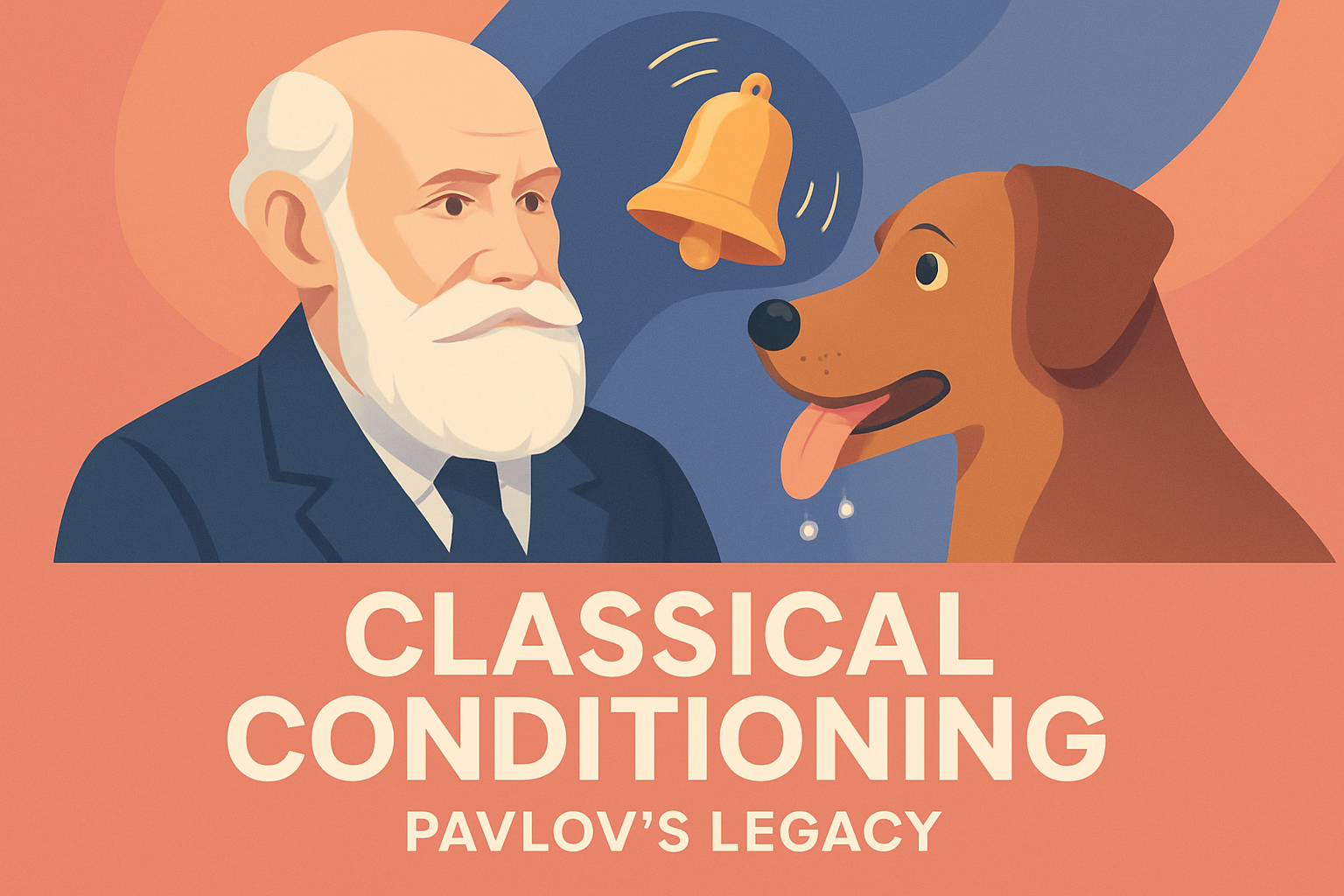
Classical conditioning is a fundamental psychological concept discovered by the renowned Russian physiologist Ivan Pavlov in the early 20th century. This groundbreaking theory has had a profound impact on our understanding of human and animal behavior. At its core, classical conditioning is a learning process that occurs when a previously neutral stimulus becomes associated with an unconditioned stimulus to elicit a conditioned response. What makes this concept so significant is its wide-ranging applicability — from understanding how phobias develop, to its practical applications in therapy, education, and even marketing.
In this article, we will delve deeper into the nuances of classical conditioning, exploring its mechanisms, applications, and ongoing relevance. This exploration is critical because classical conditioning provides invaluable insights into why we react the way we do to certain stimuli, and how these responses can be modified. For educators, marketers, psychologists, or anyone interested in behavioral science, comprehending Pavlov’s legacy enhances our ability to effect change and enhance outcomes in various fields.
Understanding the Basics of Classical Conditioning
The process of classical conditioning involves several key components. The unconditioned stimulus (US) is something that naturally and automatically triggers a response — for example, food causing salivation. The unconditioned response (UR) is the natural reaction to the US — like salivation when food is present. The neutral stimulus (NS) initially produces no specific response other than catching attention. However, when the NS is consistently paired with the US, it becomes a conditioned stimulus (CS) that elicits a conditioned response (CR), similar to the UR.
Pavlov’s experiments with dogs are the most cited example of classical conditioning. He discovered that by ringing a bell (NS) before presenting food (US) to the dogs, the bell eventually triggered salivation (CR) even without food. This highlighted how associations between stimuli can shape behavior.
Applications of Classical Conditioning in Therapy
Classical conditioning has been extensively applied in therapeutic settings, particularly in the treatment of phobias and anxiety disorders through systematic desensitization. This approach involves gradually exposing a person to the feared object or context in a safe environment to diminish the fear response. For instance, someone with a phobia of spiders (arachnophobia) might start by looking at pictures of spiders, then progress to videos, and eventually to actual exposure, all while employing relaxation techniques to produce a new, calming response to the spider stimulus.
Additionally, classical conditioning principles are at the heart of aversion therapy. A person with an undesirable habit or addiction, such as smoking, is exposed to an unpleasant stimulus when engaging in the habit. This association aims to discourage the habit by linking it with unpleasant feelings.
Classical Conditioning in Education
In the educational sphere, classical conditioning can be leveraged to create positive classroom environments. Teachers can pair pleasant experiences, like rewarding students with praise or activities they enjoy, with learning. For example, if a teacher consistently uses praise when students correctly answer questions, students begin associating answering questions with positive feelings, thus encouraging more participation.
Moreover, classical conditioning can help in managing classroom behavior. The conditioned association between specific classroom cues — like a bell signifying the start of a lesson — and positive behaviors can enhance learning experiences. Over time, students automatically adapt to expected behaviors associated with those cues.
Marketing and Advertising: Tapping into Consumer Behavior
Marketers have long utilized classical conditioning to influence consumer behavior. By pairing products with positive stimuli, such as attractive imagery, pleasant music, or celebrity endorsements, marketers can create favorable associations that might increase the likelihood of purchase. This technique is prevalent in television and online advertisements where visual and auditory cues are strategically used to create emotional connections with the audience.
Consider how luxury car brands often showcase their vehicles in advertisements alongside scenic landscapes, soothing music, or luxurious lifestyles. The objective is to create an association between these desirable elements and their cars, making the product appear more aspirational.
Classical Conditioning’s Role in Everyday Life
Beyond specific fields, classical conditioning plays an integral role in our daily lives. Think about how certain smells can trigger memories or emotional responses. For instance, the smell of fresh cookies might remind you of childhood, creating a sense of nostalgia. This response occurs because our brains have formed an association between the smell and past experiences.
Daily routines are often shaped by conditioned responses, such as feeling alert when you hear your alarm clock in the morning or feeling relaxed when hearing a particular song. These responses demonstrate the pervasive nature of classical conditioning in shaping our behaviors and emotions.
Classical Conditioning’s Legacy: A Table of Key Aspects
| Aspect | Description | Example |
|---|---|---|
| Unconditioned Stimulus (US) | Stimulus naturally triggering a response | Food causing salivation |
| Unconditioned Response (UR) | Natural response to an unconditioned stimulus | Salivating when food is present |
| Neutral Stimulus (NS) | Initially does not elicit a response | Sound of a bell |
| Conditioned Stimulus (CS) | Previously neutral stimulus that elicits a conditioned response | Bell ringing causing salivation |
| Conditioned Response (CR) | The learned response to a conditioned stimulus | Salivation in response to a bell |
Challenges and Criticisms of Classical Conditioning
Despite its wide-ranging applications, classical conditioning is not without challenges and criticisms. One primary critique is that it may oversimplify complex human behaviors and emotional responses, ignoring cognitive processes that could influence learning. Critics argue that behavior cannot always be explained solely through stimulus-response associations.
Furthermore, ethical considerations arise, particularly when using classical conditioning in experiments or therapeutic settings. The well-being of participants or clients must be prioritized to avoid potential harm during conditioning sessions.
Moreover, the effectiveness of classical conditioning can vary significantly among individuals, as personal experiences, genetic influences, and environmental factors could shape learning and response strength.
The Future of Classical Conditioning Research
As we advance in neuroscience and psychology, classical conditioning research continues to evolve. Modern studies explore how brain circuitry and neurotransmitters are involved in the conditioning process. This research aims to provide deeper insights into how learning occurs at a neurological level and how it could be enhanced or manipulated for therapeutic purposes.
The integration of technology in experiments allows researchers to observe classical conditioning in real-time, offering more granular data. Additionally, virtual reality environments provide novel platforms to apply classical conditioning principles in safe, simulated settings for learning and therapy.
Key Takeaways and Next Steps
Classical conditioning remains a foundational component of psychology, providing essential insights into behavior, learning, and emotional responses. Understanding this concept is crucial for anyone looking to influence behavior in various fields, whether through teaching, therapy, marketing, or daily interactions.
By grasping the mechanisms of classical conditioning, individuals can consciously create or change associations, fostering better behavioral outcomes. For educators, this means enhancing student engagement; for marketers, influencing consumer decisions; and for therapists, improving client well-being.
As a next step, consider how classical conditioning principles might be applied to personal or professional challenges you face. Whether it’s fostering a more supportive work environment, reducing stress responses, or improving study habits, the principles of Pavlov’s legacy offer a practical framework for creating positive change.
Keep exploring classical conditioning’s intricacies and applications, and contemplate how these insights could broaden your understanding of behavior and potential behavioral modifications.
Frequently Asked Questions
1. What is classical conditioning and who discovered it?
Classical conditioning is a type of learning that happens unconsciously when a neutral stimulus becomes linked with a meaningful stimulus to produce a similar response. This fascinating process was discovered by Ivan Pavlov, a distinguished Russian physiologist, in the early 1900s. Pavlov stumbled upon this discovery while studying the digestive systems of dogs when he noticed that the dogs would start salivating not just at the sight of food but also at the lab assistant’s footfalls. This led to his hypothesis that salivation was connected to other stimuli through an associative process. The fundamental significance of classical conditioning lies in its ability to demonstrate how animals and humans can learn new responses and adapt to different environments, impacting fields ranging from psychology to advertising and beyond.
2. How did Pavlov’s experiments with dogs contribute to the understanding of classical conditioning?
Pavlov’s experiments with dogs were crucial in showcasing the mechanisms of classical conditioning in action. Initially, Pavlov presented food to the dogs, which naturally triggered salivation, an unconditioned response to an unconditioned stimulus. Pavlov then introduced a neutral stimulus – the sound of a bell – and paired it with the presentation of food. After repeated pairings, the dogs began to salivate at the sound of the bell alone, even when no food was present. This demonstrated that the neutral stimulus had become a conditioned stimulus, eliciting a conditioned response, which was salivation. Pavlov’s meticulous observations provided invaluable insights into how associative learning occurs, highlighting the powerful ways in which organisms can learn and respond to environmental cues. His work also set the stage for further research into behavior modification and learning theories.
3. What are the essential components of classical conditioning?
Classical conditioning consists of several key components, which play integral roles in the learning process. First, there’s the unconditioned stimulus (UCS), which naturally elicits an unconditioned response (UCR). In Pavlov’s experiments, the UCS was the food, and the UCR was the salivation automatically prompted by the food. Next comes the neutral stimulus (NS), which is initially unrelated to the strong emotional or physiological response. Through the process of repeated pairings with the UCS, the NS transforms into a conditioned stimulus (CS). This once-neutral trigger, now a CS, induces a conditioned response (CR), similar to the UCR. The novelty of this breakthrough was that it demonstrated how new stimuli could influence behaviors and reactions through the power of association. Understanding these components illuminates how we come to learn and anticipate events, which forms the foundation of behavior change strategies across numerous fields.
4. In what ways has classical conditioning influenced modern psychology and other fields?
Classical conditioning has left an indelible mark on modern psychology and several other fields, influencing theories and practices well beyond Pavlov’s original experiments. In psychology, it served as the bedrock for behaviorism, a major school of thought spearheaded by figures like John B. Watson and B.F. Skinner. Behaviorism prioritizes observable behaviors over inner mental states, focusing on how behaviors are acquired and modified through conditioning. Furthermore, classical conditioning principles are foundational in therapeutic techniques such as systematic desensitization and aversive conditioning, used to treat phobias and other psychological disorders. Beyond psychology, the impact of classical conditioning is seen in areas like education, where it’s used to shape behavior and learning processes. Moreover, in marketing and advertising, companies often use classical conditioning strategies to forge associations between their products and desired emotions or responses in consumers. These applications highlight the omnipresence and enduring relevance of Pavlov’s legacy.
5. Can classical conditioning occur in humans, and how does it manifest in everyday life?
Absolutely, classical conditioning is not only applicable to animals like Pavlov’s dogs but is also a fundamental aspect of human learning and behavior. In everyday life, classical conditioning manifests in countless ways, guiding our responses to various stimuli subconsciously. For instance, consider the common experience of hearing the sound of a text message notification and feeling an immediate urge to check your phone. Originally, the notification sound was just that—a sound. However, through associative learning, it has become conditioned to signify incoming communication, prompting a response. Additionally, emotions like nostalgia or aversion can also be classical conditioning products. For example, a particular song that played during a memorable event can later evoke feelings related to that memory whenever heard. These occurrences exemplify how classical conditioning pervades numerous aspects of our lives, effortlessly shaping our behaviors, preferences, and reactions to the world around us.