
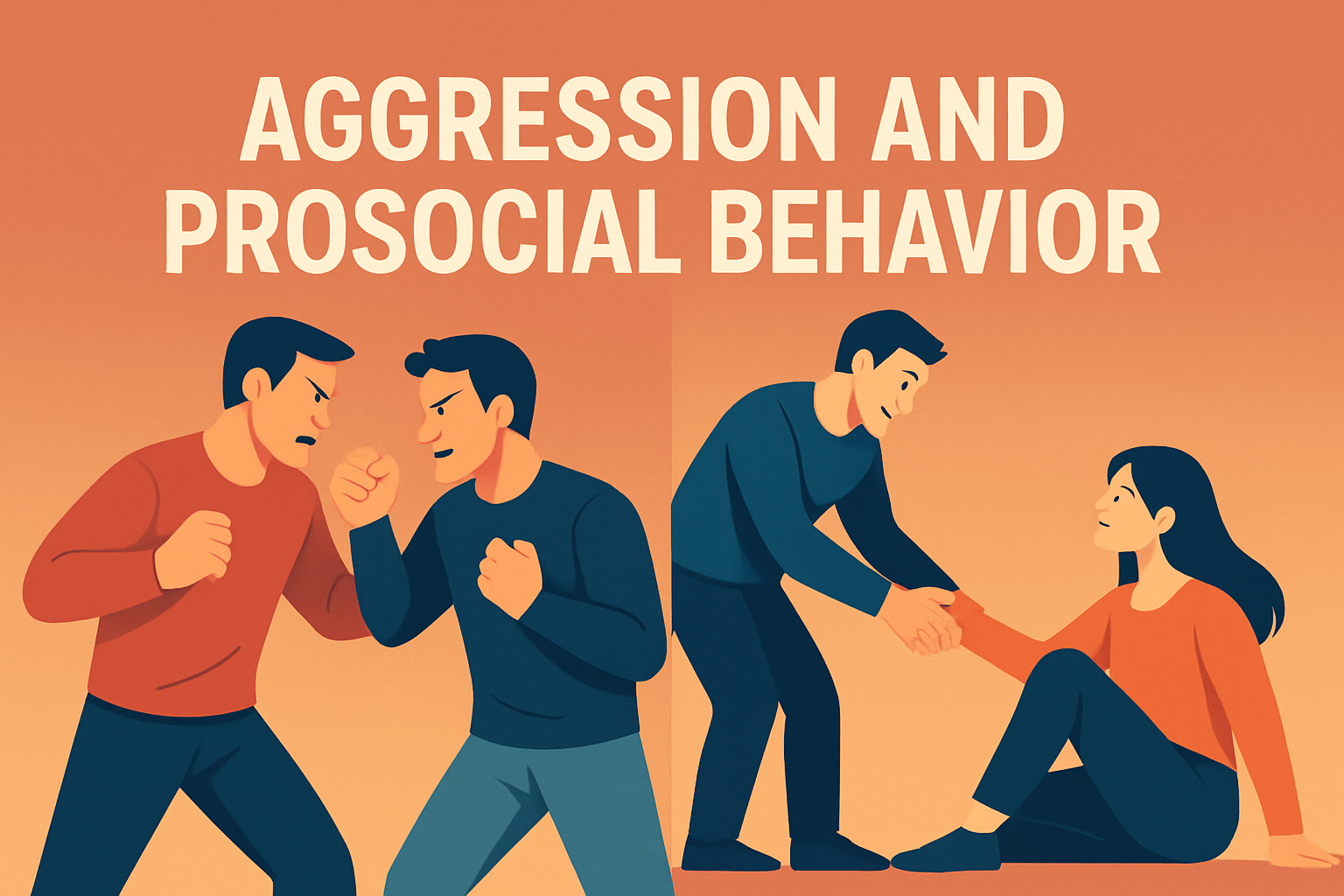
Introduction to Aggression and Prosocial Behavior
Aggression and prosocial behavior are two complex phenomena that shape human interaction in profound ways. Understanding these behaviors is crucial as they can significantly impact individuals and entire communities. Aggression is generally understood as behavior intended to harm or disrupt, whereas prosocial behavior is characterized by actions that benefit others or society at large. The distinction between these two types of behavior is essential for fostering a harmonious society.
Why does understanding these behaviors matter? By studying aggression and prosocial behavior, we can develop strategies to mitigate conflict and enhance cooperation. These behaviors are prevalent in educational, workplace, and social settings, where their impact can range from personal relationships to organizational success. By establishing frameworks to enhance prosocial behavior and reduce aggression, individuals and communities can thrive.
The Nature and Types of Aggression
Aggression can manifest in numerous ways and is often categorized into different types. Each type is driven by distinct motivations and outcomes. Below is a comprehensive breakdown of the primary types of aggression:
- Hostile Aggression: Driven by anger and intended to cause pain or harm. This form is typically impulsive, such as a sudden outburst during a heated argument.
- Instrumental Aggression: Applied as a means to achieve a goal other than causing pain. For instance, a workplace competitor might attempt to undermine a colleague to secure a promotion.
- Relational Aggression: Entails harming someone’s social relationships or status. Spreading rumors to isolate someone in a social circle is a classic example.
An example of instrumental aggression in the real world is professional sports. Athletes often engage in aggressive tactics to secure victory. However, they stay within the confines of the rules, distinguishing it from hostility. Understanding these nuances allows us to devise necessary interventions to manage inappropriate aggression while maintaining healthy, competitive environments.
Prosocial Behavior: Characteristics and Influences
Prosocial behavior is any action intended to help others. It is foundational for societal well-being and involves empathy, cooperation, and altruism. Factors influencing prosocial behavior include cultural norms, socialization, and personal values. Here’s how they come into play:
- Cultural Norms: In collectivist societies, prosocial behavior is encouraged, often prioritizing group harmony over individual gain. This cultural influence can increase communal support.
- Socialization and Family Influence: Individuals raised in nurturing environments with strong role models are more likely to engage in helping behaviors. Parents who model empathy tend to raise empathetic children.
- Personal Values and Beliefs: Personal beliefs, often rooted in philosophical or religious teachings, guide many to act in prosocial ways. Charity work is an expression of this influence, seen widely in various communities.
Consider volunteer work in response to natural disasters. Communities often band together to assist affected areas by donating money, supplies, and time. Such actions underscore the vital role of prosocial behavior in crisis situations, fostering resilience and recovery.
Factors Contributing to Aggression
The rise of aggressive behavior is not without cause. Various factors contribute to its emergence, shaping how individuals and groups interact. These factors include biological, environmental, and psychological influences:
- Biological Factors: Genetic predispositions and hormonal influences, particularly testosterone, have been linked to aggressive behavior. Studying these aspects can aid in developing targeted interventions.
- Environmental Factors: Exposure to violence, whether in media or one’s environment, can normalize such behavior, particularly in impressionable youth. Witnessing aggression can increase its recurrence.
- Psychological Factors: Mental health issues, such as depression and anxiety, may heighten aggressive tendencies, sometimes as defensive mechanisms. Addressing such underlying issues can curb aggression.
A real-world example of environmental factors at play is the influence of violent video games. While some argue these games provide safe outlets for aggression, others point to potential desensitization to violence. This debate prompts consideration of responsible media consumption and education on discerning fiction from reality.
Mediating Aggression and Encouraging Prosocial Behavior
To ensure harmonious living and productivity, efforts to mediate aggression and promote prosocial behavior are paramount. These efforts often involve educational programs, policy changes, and cognitive behavioral strategies. Here’s a detailed insight into these approaches:
- Education and Awareness Programs: Schools adopting anti-bullying campaigns encourage constructive peer interactions. Educators use conflict resolution training to mediate aggressive tendencies early on.
- Policy and Institutional Changes: Workplaces adopting zero-tolerance for harassment can minimize hostile environments. Policies that encourage inclusive cultures foster prosocial engagement.
- Cognitive Behavioral Strategies: Therapy can equip individuals with strategies to manage anger and replace it with assertive communication and empathy training.
| Approach | Aim | Outcome |
|---|---|---|
| Education Programs | Promote understanding of aggression and its impacts | Reduced instances of bullying |
| Policy Changes | Ensure a safe and supportive environment | Increased workplace harmony |
| Cognitive Behavioral Therapy | Equip individuals to handle aggression | Better interpersonal relationships |
For instance, incorporating empathy-building activities in early education can make a significant difference. When children learn to see the world from others’ perspectives, they develop essential prosocial skills that serve them throughout life. Schools that integrate these practices reap benefits such as improved student relationships and academic performance.
Conclusion
Understanding and addressing aggression and prosocial behavior is pivotal for societal progress. When communities recognize the telltale signs and sources of aggression, they can employ effective strategies to lessen its impact. Conversely, by reinforcing prosocial behavior, societies enrich communal bonds, foster inclusivity, and enhance collective well-being.
The insights shared here equip you with knowledge that influences daily interactions and broader societal dynamics. Apply these concepts in your immediate surroundings, whether in educational, professional, or social settings, to nurture environments where aggression is minimized, and prosocial behavior thrives.
Act today by advocating for educational reforms, supporting community initiatives promoting social cohesion, and engaging in self-reflection to identify areas for personal growth. Together, we can cultivate communities where each member is valued and aggression is no longer a barrier to peace and prosperity.
Frequently Asked Questions
1. What is the main difference between aggression and prosocial behavior?
Aggression and prosocial behavior are two distinct types of actions that people show in interactions. The key difference lies in their intent and impact. Aggression involves behavior that is meant to hurt, intimidate, or disrupt another person. For example, this could include physical harm, verbal attacks, or even tactics of manipulation. It’s all about causing harm or asserting dominance. On the other hand, prosocial behavior is all about actions that aim to help others or improve the social environment. It’s the kind of behavior that makes society feel more compassionate and connected. This can involve acts like helping someone in need, sharing resources without expecting anything in return, or even just being supportive and nurturing. While it might seem like they are complete opposites—and in many ways they are—they both offer insight into human motivation and social interaction. Trying to understand why someone might choose aggression offers us different insights than understanding why someone chooses to engage in prosocial behavior. Both behavior types play vital roles in the dynamics of personal relationships, societal structures, and cultural norms.
2. Can aggression ever be considered a prosocial behavior?
This is an intriguing question as it challenges us to look beyond the immediate context of behaviors. Typically, aggression and prosocial behaviors are viewed as opposites; however, there can be scenarios where aggression may indirectly result in prosocial outcomes. Consider, for instance, a situation where an individual uses aggressive behavior to defend another person from harm, like breaking up a violent altercation. In such cases, the intent and result could be considered prosocial, as the aggression serves the greater good of protecting someone else or restoring peace. That said, such instances don’t fit the traditional definitions of either behavior. It’s essential to think about intention and consequences here. Aggression, when used to stop harm, may have prosocial results, but the aggressive act itself doesn’t transform fundamentally into a prosocial one unless its core intention is primarily to benefit others. Viewing aggression through this lens means accepting complexity in human behavior, acknowledging that ‘aggression’ doesn’t always equate to negative or socially destructive intentions. As complex beings, our interactions often involve a mix of motivations that may both clash and align in unexpected ways.
3. Are aggression and prosocial behavior influenced by biological or environmental factors?
Both biological and environmental factors profoundly influence aggression and prosocial behavior. Starting on the biological side, genetic predispositions, brain structures, and chemical balances play a significant role. For instance, higher levels of certain neurotransmitters—like serotonin and dopamine—are linked to increased aggression. Some people might have a genetic predisposition that makes them more prone to aggressive reactions. Hormonal influences, particularly testosterone, have been observed to correlate with aggressive behavior too. Prosocial behavior also has biological underpinnings. For example, the hormone oxytocin, sometimes known as the ‘love hormone,’ can promote prosocial behaviors like empathy and altruistic acts. Its presence can enhance bonding and cooperation among individuals. Environment factors are equally important. The culture we grow up in, our life experiences, and social interactions all shape how we understand and enact both aggressive and prosocial behaviors. Children who witness aggressive behavior in families may learn to see it as normal, whereas those who engage in community service from a young age may become more naturally inclined toward prosocial behavior. Moreover, situations can influence behavior. High-stress environments may trigger aggression in some people, whereas supportive and nurturing environments can encourage prosocial acts. In this sense, both aggression and prosocial behavior arise from a complex interplay of our biology and the environment we interact with.
4. How do cultural differences impact aggression and prosocial behavior?
Culture plays a crucial role in defining and influencing aggression and prosocial behavior, primarily by dictating the norms and expectations for behaviors. For instance, some cultures may normalize certain forms of aggression, viewing it as a valid means of conflict resolution or an assertion of independence. Cultural teachings, historical contexts, and prevalent societal ideologies all contribute to how aggression is perceived and rationalized across different societies. Prosocial behavior, too, is heavily shaped by cultural values. In individualistic cultures, where personal achievement and autonomy are emphasized, prosocial behaviors might focus on personal responsibility and volunteerism. On the flip side, in collectivist cultures, where kinship and community are central, there’s often a stronger emphasis on cooperation, shared resources, and family obligations. For example, the concept of ‘Ubuntu’ in many African cultures emphasizes community welfare, cooperation, and shared humanity, encouraging behaviors that benefit the group. Furthermore, cultural rituals, traditions, and educational systems nurture particular behaviors. What one society defines as polite, cooperative, or even aggressive may differ markedly from another. Thus, understanding how cultural contexts shape—and sometimes clash with—individual behaviors is integral to comprehending both aggression and prosocial conduct in a globalized world.
5. Can interventions effectively shift individuals from aggressive to prosocial behavior?
Yes, interventions can be quite effective in redirecting individuals from aggressive to prosocial behavior, although the success of such strategies depends on various factors, including the individual’s background and the specifics of the intervention. Cognitive Behavioral Therapy (CBT), for instance, is one popular approach for reducing aggressive tendencies. By focusing on changing thought patterns and developing new coping mechanisms, CBT helps individuals understand the triggers of their aggression and fosters healthier ways to manage emotions and reactions. Educational programs in schools focusing on social-emotional learning (SEL) also aim to reduce aggression by teaching children skills related to empathy, emotional regulation, and conflict resolution. By instilling prosocial values early in life and offering tools for peaceful interaction, such interventions lay the foundation for more constructive social behaviors. Community-based interventions offer support networks and positive role models, encouraging individuals to engage more in prosocial activities and reinforcing the benefits that such behavior can have on personal and community well-being. For more persistent forms of aggression, targeted programs that include family counseling and community involvement can address underlying issues and implement broad-based support systems. The objective of these interventions is not just to suppress aggressive behavior but to empower individuals with the emotional tools and social support to cultivate more enriching, prosocial relationships.