
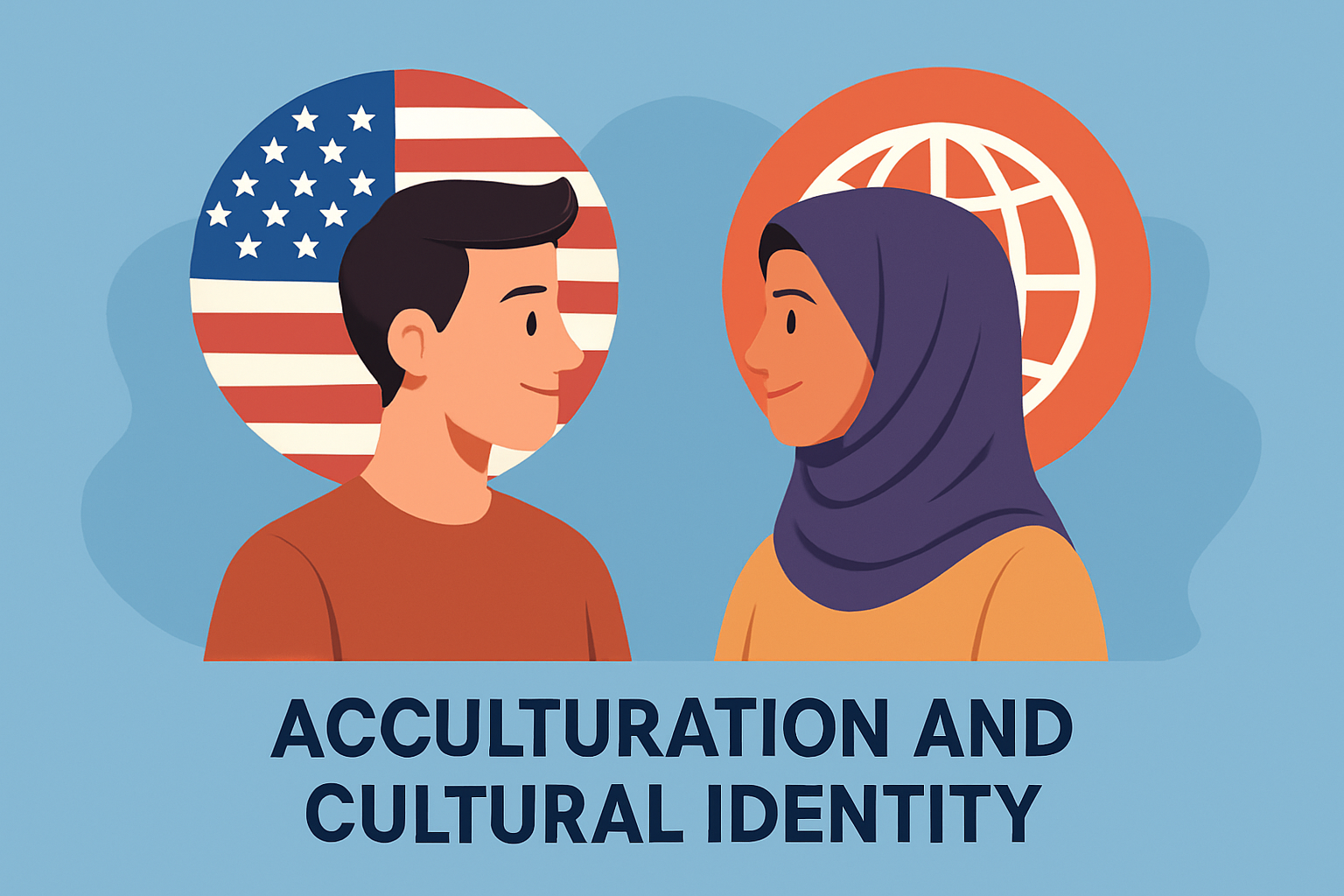
Acculturation is a concept that has fascinated scholars and the general public alike. It involves the process through which individuals from one culture come into continuous, firsthand contact with another culture, leading to subsequent changes in the original cultural patterns of either or both groups. Closely intertwined with this is the idea of cultural identity – a person’s sense of belonging to a particular culture or group. Cultural identity is a reference point in how individuals relate to the world around them. This topic matters greatly in today’s globalized society, where movement across borders is common and multicultural interactions are routine. Understanding acculturation and its impact on cultural identity can help navigate the challenges and opportunities in our increasingly diverse society. It offers insights into issues of integration, adaptation, and cultural preservation, which are crucial for fostering harmonious multicultural communities.
Understanding Acculturation
Acculturation is not a one-size-fits-all process. It can manifest differently depending on various factors like individual background, the nature of cultures involved, and the contexts in which interactions occur. Generally, acculturation is categorized into four main types: assimilation, integration, separation, and marginalization. Each type offers a different strategy for managing cultural interaction and identity.
Assimilation occurs when an individual adopts the cultural norms of a dominant or host culture, and forgoes the cultural norms of their original culture. Integration involves maintaining one’s original culture while also adopting aspects of the host culture. Separation refers to a scenario where individuals preserve their original culture and avoid interaction with the host culture. Marginalization happens when individuals cannot maintain their original culture, nor can they fully integrate into the new culture.
For instance, consider a teenager from India who moves to the United States and learns to embrace elements of American culture, such as language and social norms, while also continuing to celebrate Indian festivals at home. This scenario illustrates integration. Understanding these dynamics is crucial for assessing how acculturation impacts an individual’s identity.
The Role of Cultural Identity in Acculturation
Cultural identity serves as a compass for individuals undergoing acculturation. It influences how they perceive, negotiate, and adapt to new cultural settings. Cultural identity often involves language, traditions, norms, and values – all of which are susceptible to transformation during acculturation. The strength and rigidity of one’s cultural identity can determine the level and type of acculturation.
For example, third-culture kids (TCKs), or children raised in a culture other than their parents’ culture, often develop a unique cultural identity. This identity can be enriched by elements of multiple cultures but may also lead to feelings of cultural rootlessness or confusion. TCKs might feel at home everywhere and nowhere at the same time. This sense of belonging can significantly influence their acculturation process and how they relate to new environments.
Real-World Applications: Acculturation and Multicultural Societies
In multicultural societies, managing acculturation is critical for social cohesion. Policymakers and community leaders often face the challenge of integrating minority groups without erasing their cultural identities. Acculturation strategies can therefore influence social policies and programs that aim to support cultural diversity.
Canada, known for its multiculturalism policy, serves as a prominent example. The Canadian government encourages immigrants to maintain their cultural heritage while integrating into Canadian society. This policy has been instrumental in creating a mosaic of cultures, rather than a melting pot. Such an environment allows citizens to express their cultural identities freely without fear of marginalization. This approach not only respects immigrants’ cultural heritage but also enriches the society as a whole by embracing diversity.
| Acculturation Type | Characteristics | Example |
|---|---|---|
| Assimilation | Adopting host culture norms entirely | Abandoning original language for the host country’s language exclusively |
| Integration | Combining elements of both original and host cultures | Celebrating traditional festivals while engaging in local customs |
| Separation | Maintaining original culture solely, avoiding host culture | Living in cultural enclaves with little outside interaction |
| Marginalization | Lack of connection with either original or host culture | Feeling of cultural isolation and loss |
The Psychological Impact of Acculturation
Acculturation can have profound psychological effects on individuals. It can influence mental health, self-esteem, and overall well-being. The stress associated with cultural adaptation, commonly known as acculturative stress, can lead to anxiety, depression, and identity confusion. Managing this stress requires support systems, both formal and informal, to aid individuals in navigating their acculturation journey.
A practical example is the immigrant support programs offered by various non-profit organizations. These programs often include language classes, social integration activities, and counseling services to assist newcomers in adjusting to their new environment. Such initiatives can ease the psychological burden by providing a network of support, which is critical for positive acculturation outcomes. By promoting resilience and adaptability, these programs help individuals strengthen their cultural identity while navigating new cultural landscapes.
Strategies for Successful Acculturation
To foster successful acculturation, it’s important to have strategies that can support individuals in their cultural adjustment process. Encouraging open-mindedness, fostering cultural empathy, and promoting social interactions are key strategies that can amplify positive acculturation experiences.
Educational institutions can play a vital role by incorporating multicultural education and diversity training into their curricula. By doing so, they equip students with the skills to interact respectfully and effectively in diverse settings. Furthermore, workplace diversity initiatives encourage inclusivity by creating environments where all cultural identities are valued and respected. Initiatives like cultural awareness workshops and intercultural communication training can enhance understanding and improve relationships within multicultural teams.
Conclusion: Enhancing Cultural Harmony
In summary, acculturation and cultural identity are pivotal to understanding the dynamics of multicultural interactions. Acculturation processes shape how individuals integrate, separate, assimilate, or marginalize within their cultural contexts. Through real-world examples and strategies, it’s evident that managing acculturation with sensitivity and intent leads to positive outcomes for individuals and society as a whole. By appreciating and respecting diverse cultural identities, we pave the way for a harmonious coexistence.
Readers are encouraged to reflect on their own cultural experiences and consider how they navigate multicultural environments. Learning about and understanding diverse cultures builds bridges and fosters empathy, which are essential skills in our interconnected world. By engaging with different cultural perspectives, individuals can contribute positively to the global community, creating a tapestry of cultural diversity that is both rich and vibrant.
Frequently Asked Questions
1. What is acculturation and how does it occur?
Acculturation is the process that takes place when individuals from one cultural background come into close and ongoing contact with a different culture. This interaction can result in changes to cultural patterns of the original culture, the host culture, or both. Imagine moving to a new country where customs, language, and social norms are different. Over time, you may start embracing some of these new practices while possibly altering or abandoning some of your own original ones. This isn’t a one-way street, either. The host culture can also absorb new elements from the immigrant group, leading to a blending or transformation of existing cultural practices on both sides. The depth and nature of these changes can vary significantly and can influence several aspects of life like language, food, dress code, social values, and even worldviews.
2. How does acculturation relate to cultural identity?
Cultural identity is an individual’s sense of belonging to a particular cultural group, and it acts as a major reference point for how people relate to the world around them. When acculturation occurs, it can have significant effects on one’s cultural identity. For instance, an immigrant may start identifying more with certain aspects of their host culture, while still maintaining key elements of their original cultural identity. This can result in a multicultural or hybrid identity, where individuals adeptly navigate between different cultural contexts. However, acculturation may also lead to identity conflicts, where individuals struggle to reconcile differing cultural expectations or feel pressured to “choose” one identity over another. Ultimately, cultural identity can become more fluid as individuals are influenced by multiple cultures, contributing to a richer and more complex sense of self.
3. Are there different types of acculturation strategies, and what are they?
Yes, there are different acculturation strategies which individuals and groups may employ depending on their goals and circumstances. These strategies are often described using the four-part model by John Berry: assimilation, integration, separation, and marginalization. Assimilation involves fully adopting the host culture while letting go of one’s original cultural identity. Integration, sometimes viewed as the most adaptive strategy, involves maintaining one’s original culture while simultaneously adopting elements of the host culture. Separation focuses on retaining one’s original culture and avoiding interaction with the host culture. Marginalization occurs when individuals feel alienated from both their original and the host culture, often resulting in a sense of loss or lack of identity. Each strategy comes with its own set of challenges and can influence aspects of social wellbeing and mental health.
4. How does acculturation impact relationships and family dynamics?
Acculturation can significantly influence relationships and family dynamics. For individuals and families undergoing acculturation, differences in the rate and extent of cultural adaptation among family members can lead to conflict. For instance, younger family members who may adapt more quickly to the host culture might experience tension with older members who hold onto traditional practices. This can create an intergenerational gap in values, language proficiency, and lifestyle choices. On the other hand, acculturation can also lead to greater relational flexibility and mutual understanding if family members are open to embracing new cultural practices while respecting each other’s diversity. Furthermore, families that navigate acculturation successfully often demonstrate high levels of resilience, resourcefulness, and adaptability.
5. What are some common challenges people face during acculturation?
The acculturation process can present several challenges. One key challenge is cultural shock, which occurs when individuals face disorientation upon encountering unfamiliar cultural practices. Language barriers can also be a significant issue, hindering communication and social integration. Additionally, individuals may experience feelings of alienation or discrimination, which can lead to mental health challenges such as anxiety or depression. There is also the potential loss of cultural heritage and a sense of identity, which can create an internal conflict about allegiance and identification with the host culture versus one’s original culture. Despite these obstacles, many individuals and communities find ways to strike a balance, fostering cultural resilience and contributing to a more multicultural society.