
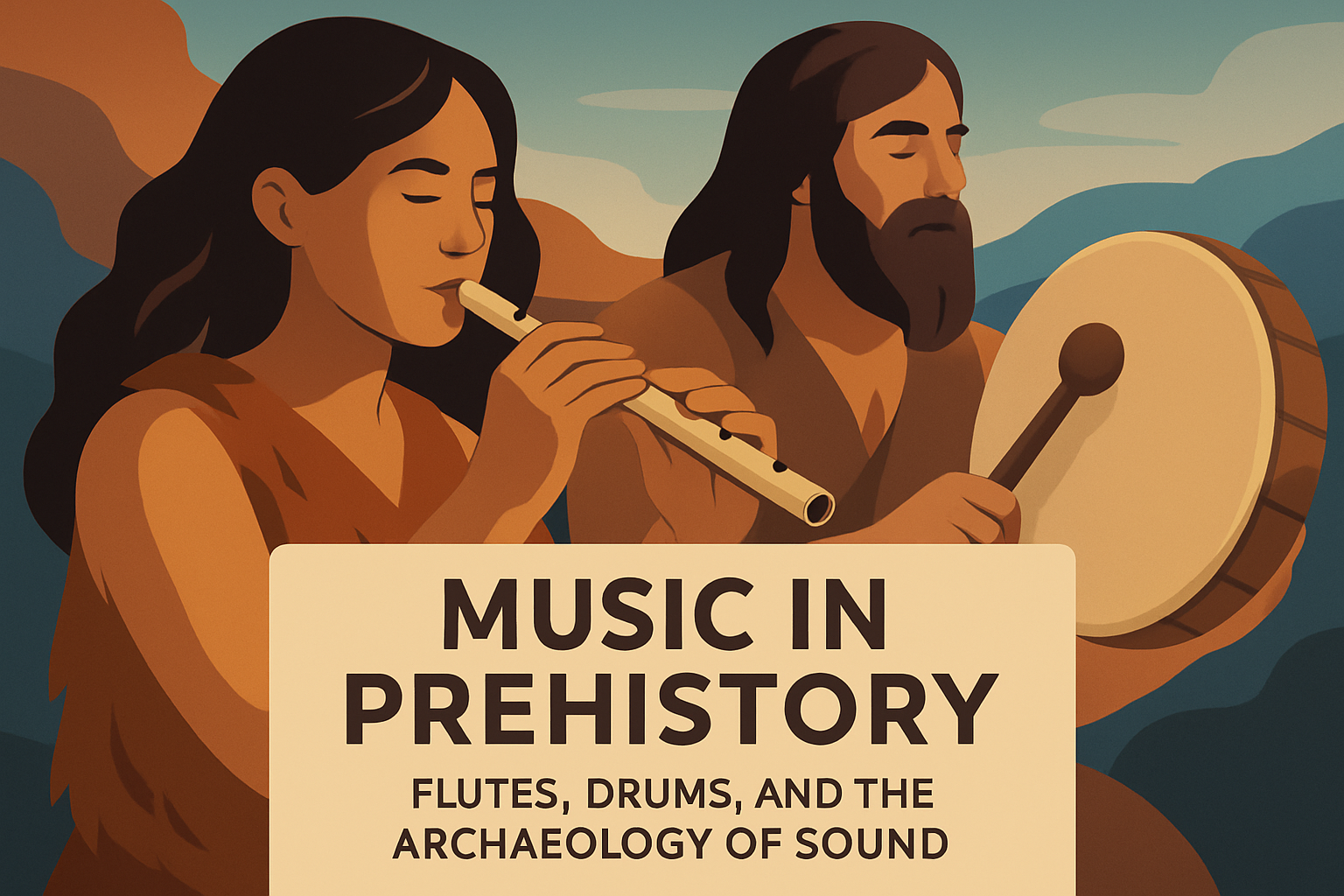
Music, a universal language, has been a part of human culture for thousands of years, deeply embedded in the tapestry of social and spiritual life. From the earliest known artifacts of the human lineage, evidence suggests that our prehistoric ancestors were engaging in musical practices. But what exactly is “prehistoric music,” and why does it matter today? In examining music in prehistory, we dive into archaeological findings such as flutes, drums, and other ancient sound-making instruments to understand the role and significance of music in early human societies. This exploration reveals not only the creative and cultural dimensions but also offers a window into the social structures, communication styles, and even cognitive developments of our ancestors. Understanding prehistoric music not only enriches our knowledge of the past but also deepens our appreciation of the diversity and evolution of human expression through sound.
The Origins and Archaeological Evidence of Music
The story of prehistoric music begins with the discovery of ancient musical instruments. One of the most remarkable findings is the bone flute, an artifact discovered in various archaeological sites across Europe, dating back to approximately 40,000 years ago. These flutes, often crafted from bird bones or ivory, provide tangible evidence of early humans’ abilities to create tools for specific, non-survival purposes. The oldest known flute, made from a vulture’s wing bone, was found in the Hohle Fels cave in Germany, offering insights into how music might have been intertwined with daily life, rituals, and ceremonies.
To reconstruct the prehistoric soundscape, archaeologists and ethnomusicologists study not only these instruments but also the possible motivations behind their creation and use. The existence of such sophisticated instruments suggests a developed auditory culture, which might have played a role in social bonding, cultural rituals, and even in the realm of spiritual communication. The intricate craftsmanship involved in creating these flutes indicates a level of sophistication in artistic expression, pointing to a society where music was an integral component of cultural identity.
Drums and Rhythmic Instruments in the Prehistoric Era
Complementing the flute are various percussion instruments, particularly drums, which have roots tracing back to prehistoric times as well. Drums are assumed to have been some of the earliest instruments used by humans, primarily because they could have been created from materials found readily in nature, such as hollow logs and animal skins. Archaeological evidence of prehistoric drums is more challenging to obtain due to the perishable nature of materials used, but illustrations in ancient cave paintings and rock art worldwide depict scenes that suggest drumming and dancing.
Drumming likely played a crucial role in early human societies much akin to heartbeat-like rhythms that connect emotionally on a primal level. These rhythmic sounds might have been used in communal gatherings, dances, or as a mode of communication across distances. Examples from indigenous tribes like the Maori of New Zealand, where traditional drumming is central to community gatherings, illustrate how such practices are revitalized in modern times, offering a direct link to ancient practices.
The Role of Music in Prehistoric Communities
The role of music within prehistoric communities extends beyond mere entertainment. Music was likely an important facet of ritualistic and ceremonial life, providing a means of storytelling, emotional expression, and community cohesion. Sounds produced by flutes and drums would have been imbued with meaning, used in rites of passage, healing ceremonies, and funerals, thus marking significant milestones in the human experience.
- Sociocultural cohesion: Music brought communities together, enhancing unity and cooperative spirit.
- Spiritual and ritualistic functions: Integral to ceremonies, music acted as a bridge to the spiritual world.
- Means of communication: Sounds may have been used to convey messages or signals over distances.
Much like the Shamanic traditions observed among Siberian communities today, where sound and music are integral to spiritual practices, prehistoric music also served as a conduit for transcendent experiences. This further suggests the dual nature of music as both a community and an individual experience used for achieving altered states of consciousness or connecting with the divine.
Symbolic and Cognitive Dimensions of Prehistoric Music
As we explore the symbolic nature of music, its cognitive dimensions become apparent. Music involves complex brain functions, such as memory, attention, and creativity. By examining prehistoric music, anthropologists and archaeologists infer the cognitive capabilities of early humans, extending our understanding of their development and social structures.
For instance, creating a flute requires abstract thinking and technical skill, pointing to advanced cognitive abilities. The process of music-making demands an understanding of patterns and structure, indicative of cognitive evolution. This is exemplified in how music influences modern cognitive and emotional development, thus shedding light on the potential impacts of music on early human brain development.
Moreover, the symbolic quality of music allowed for the sharing of cultural narratives and preservation of collective memory among prehistoric communities. Music might have served as a means of sharing and reinforcing cultural beliefs, forging collective identity and continuity across generations, akin to how oral traditions play a pivotal role in societal cohesion in present-day indigenous cultures across the world.
Prehistoric Innovations: The Technical Craft of Music Creation
Creating music in prehistoric times required ingenuity and technical innovation. The craftsmanship necessary to produce musical instruments like flutes and drums demonstrates the ability of early humans to manipulate natural materials creatively. This technical aspect of prehistoric music creation highlights the ingenuity required to solve problems, satisfy the aesthetic desire, and express emotional or spiritual sentiments.
For example, the carving of the bone flute from the Hohle Fels cave involved intricate techniques to create sound holes that needed precision and understanding of acoustics. This innovation suggests that prehistoric humans possessed knowledge about sound properties, tuning, and resonance. Similarly, the process of stretching an animal hide to create a drum skin would require understanding material properties to ensure sound quality, showing a high level of technical skill and foresight.
| Instrument | Material | Era | Region |
|---|---|---|---|
| Bone Flute | Vulture bone | 40,000 BCE | Germany |
| Drum | Wood and Animal Skins | Unknown | Global |
| Lithophone | Stone | Neolithic | Vietnam |
These instruments represent some of the early creative achievements in tool-making for the purpose of music, demonstrating a blend of function and artistry that reflects early human innovation.
Conclusion: The Echo of Prehistoric Music Today
Music as an art form and cultural practice has deep prehistoric roots that continue to resonate in contemporary society. The archaeological study of music in prehistory offers valuable insights into the social, cognitive, and symbolic lives of our ancestors. It highlights how music, then as now, was not only a means of entertainment but also a vital component of community structure, spiritual expression, and cognitive development. The convergence of technical innovation, cultural expression, and social function in prehistoric music offers a blueprint for understanding music’s role in human societies today. For modern researchers, educators, and enthusiasts, exploring the origins of music can inspire a greater appreciation for the art form. It encourages us to embrace the diversity and transformative power of music in our lives.
Take the time to listen to some of the oldest recorded music or engage in a community drumming circle to experience the unifying and transcendental power that prehistoric music first offered. By doing so, we connect with the echoes of our ancestors and celebrate the enduring legacy of music in human history.
This exploration invites you to dig deeper into your own cultural roots or to learn about others’ musical traditions, broadening your horizons and fostering a sense of global interconnectedness through the shared language of sound.
Frequently Asked Questions
1. What is considered “prehistoric music” and why is it significant?
Prehistoric music refers to the musical practices of ancient human societies that existed before recorded history or written documentation – a time period that could stretch back tens of thousands of years. This era pre-dates the invention of written language, so we rely on archaeological evidence to understand these ancient cultures. The significance of prehistoric music lies in its ability to provide insight into the cultural, spiritual, and social lives of our ancestors. It helps us piece together how early humans communicated and expressed themselves when words weren’t yet part of the equation. By studying flutes, drums, and other instruments unearthed from ancient sites, we learn about community rituals, religious ceremonies, and even the day-to-day life of our ancestors. This exploration enriches our understanding of where music, as a fundamental aspect of human culture, began and how it has evolved over the millennia.
2. What are some examples of instruments used in prehistoric music?
A variety of instruments have been discovered from the prehistoric era, with flutes and drums being among the most common. The oldest known musical instrument is the Neanderthal flute, crafted from a bear femur and discovered in Slovenia. This instrument dates back over 40,000 years. Flutes from this period were often made of bone or wood and featured simple construction, yet they produced a range of sounds. Drums, another important prehistoric instrument, were likely made from animal hides stretched over hollow wooden or stone forms. These instruments are believed to have been used in rituals, ceremonies, and communal activities. Other sound-producing artifacts include lithophones, stones that produce musical tones when struck, and even early prototypes of stringed instruments. Each discovery unravels a bit more of the tapestry of prehistoric life and musical expression.
3. How do archaeologists determine that an artifact was used as a musical instrument?
Archaeologists use a mix of evidence and techniques to identify musical instruments. When considering an artifact, they look for signs of intentional craftsmanship and wear, such as holes drilled in bones that mimic the scale and formation of known wind instruments or chisel marks on stones indicating they were struck to produce sound. Experimental archaeology plays a crucial role; this involves replicating ancient techniques and instruments to understand their functionality. Additionally, contextual evidence can be very telling. For instance, if an artifact was found in a site rich with ceremonial artifacts or where signs of community gatherings are evident, it’s possible it was used in a musical context. Advanced technologies like 3D scanning and sound frequency analysis can also help determine how these instruments may have sounded, adding to the evidence that an artifact was used musically.
4. Why do flutes and drums, in particular, appear throughout prehistoric findings?
Flutes and drums appear so frequently in prehistoric findings likely because of their relative simplicity and the wide range of cultural functions they served. Flutes, made from readily available materials such as animal bones or hollow reeds, provide a straightforward way to produce music by varying breath and finger positioning. They are also portable and easy to construct, making them accessible to many ancient communities. Drums, on the other hand, come from a long tradition of rhythm and pulse within human culture. They are primarily made from materials that are both abundant and resonant, such as wood, stone, and animal hides. Drums hold a special place in history due to their role in communal and ceremonial activities, suggesting they were pivotal in prehistoric gatherings and rituals. The pervasive appearance of these instruments highlights their central role in the day-to-day life and spiritual practices of our ancestors.
5. How does the study of prehistoric music impact modern music or cultural studies?
The study of prehistoric music profoundly impacts how we understand modern music and cultural studies by offering a foundational perspective on the evolution of musical expression. Understanding the roots of music provides context for the diverse musical traditions we see today, linking modern practices with ancient rituals and soundscapes. It invites musicians, historians, and cultural scholars to explore themes of universality in music – aspects like emotional resonance, communal bonding, and spiritual communication that transcend time and culture. Moreover, this study challenges contemporary musicians to innovate by incorporating sounds, structures, and motives used by our ancestors, forging a deeper connection with the foundational aspects of human creativity. As cultures continually evolve, recognizing music’s ancient roots allows us to appreciate the continuity and dynamism of human expression across millennia.